Commonplace Books in the Classroom: Organizing Ideas and Making Art

art, Classes, Environment, Humanities, STS Faculty

By Christy Tidwell and Erica Haugtvedt

This semester, we both asked students in our classes (Introduction to Humanities and Environmental Literature & Culture) to create commonplace books. We found this to be a successful way to get students thinking about core ideas from class and to encourage creative activity. Read on for more information about commonplace books, how we used them, and how students responded!

What Are Commonplace Books?

Commonplace books have a long history – extending as far back as people have had easy access to paper and writing utensils – and are a way of organizing information for yourself. They can overlap with journals or diaries, but they’re also for classifying and indexing information to find later, and they have taken various shapes over time as they have served different purposes for different groups of people. Religious leaders’ commonplace books in the 17th century, for instance, look and function differently than young ladies’ commonplace books in the 19th. Adam Smyth provides a pretty standard definition of them: “the commonplace book presents a series of thematic headings under which aphorisms are distributed, gathered from reading, or, more rarely, from conversation, and deemed in some way useful or exemplary” (91).
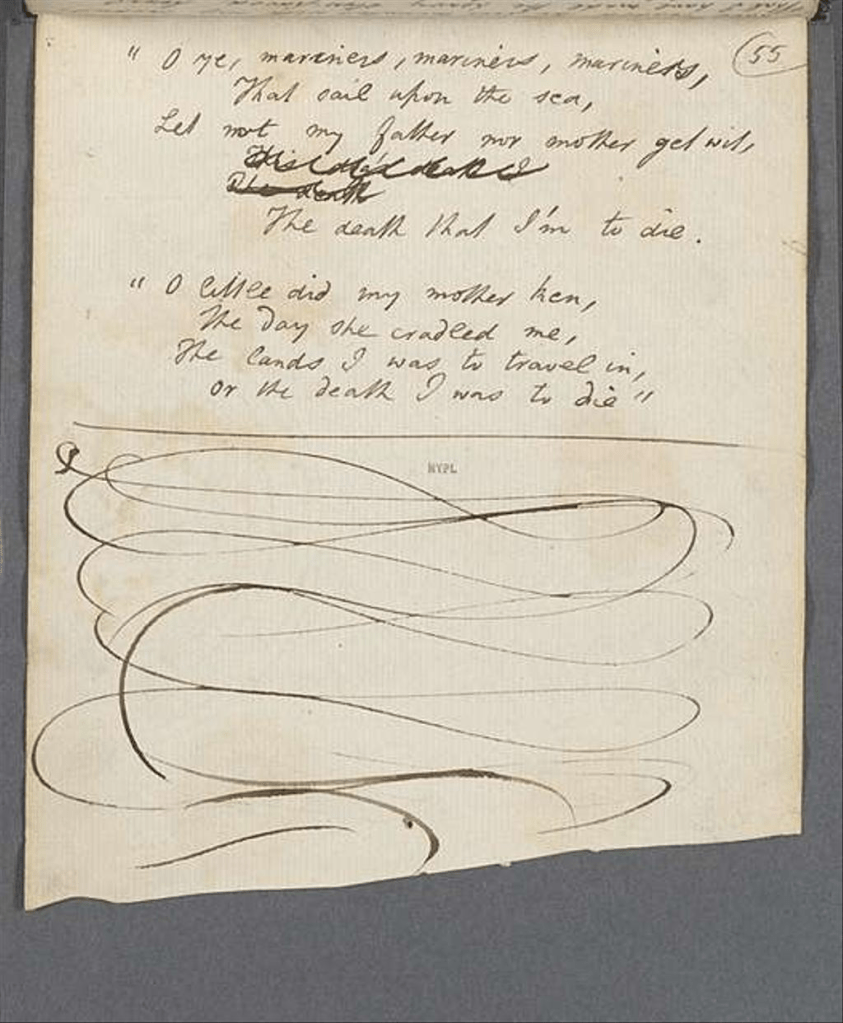
Page from a commonplace book by author Charles Lamb (1775-1834). Public domain.

However, Smyth also notes that actual commonplace books only sometimes followed this description. He writes,

The experience of reading manuscript commonplace books is often an experience of baffled delight – delight at pages so crammed with text that annotations spill over the binding and covers; at devotional aphorisms jostling with bawdy epigrams and recipes . . . ; at scraps of printed pages glued into the manuscript; at prose merging with verse merging with financial accounts merging with illustrations; at blank pages, and gaps; at entire printed books bound into the centre of manuscripts; at the construction of a single manuscript out of many different sized pages; at the recycling of old, often medieval texts in the binding of manuscripts; at texts that simultaneously ‘begin’ from various points within their pages and    proceed in various directions, so that it becomes meaningless to talk of a front or back, a beginning or an end. (90-91)

Smyth goes on to describe this as an “eclecticism of inclusions” and “rampantly inventive materialism” (91), descriptions which beautifully highlight the flexibility and openness of commonplace books and their inherently physical nature. Both of these elements are closely tied to goals of humanities classrooms that emphasize practicing and learning about a wide range of modes of expression (e.g., film, art, literature, philosophy) and that value creators’ and students’ experiences of the world.
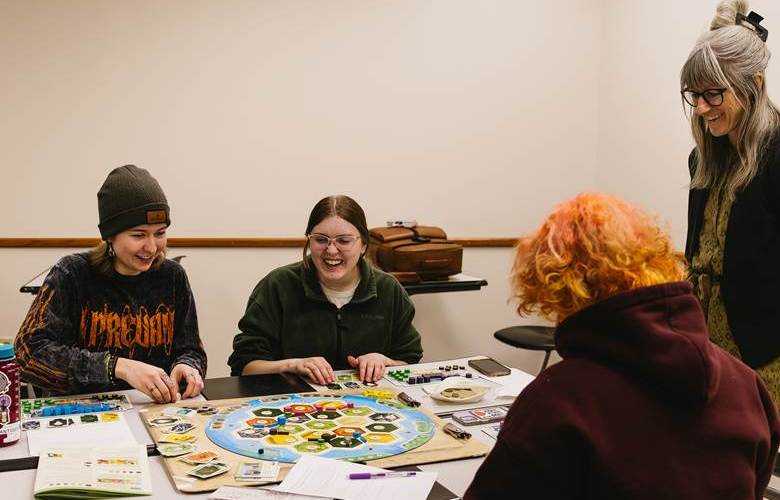
Students sit at a table playing the board game while Dr. Witlacil observes.

What can games teach us about climate change?: Playing CATAN – New Energies for World Climate Games Day

Environment, Classes

By Mary Witlacil

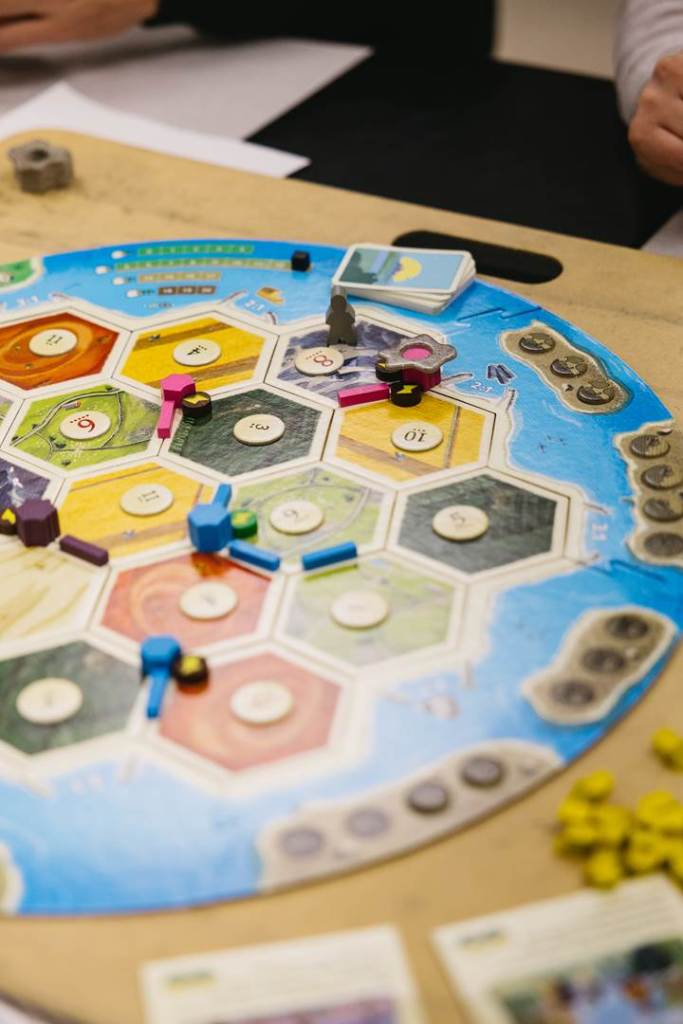
Earlier this semester, students in Environmental Law and Policy (POLS 407) played CATAN – New Energies for the second annual Worldwide Climate Games Day. New Energies is an updated version of CATAN, where players jockey to collect enough resources to build out their society and develop their energy infrastructure. Players can choose to develop cheaper fossil fuels to collect more resources or opt for more expensive renewable energy plants. With more fossil fuel power plants the global footprint climbs higher, which increases the likelihood of triggering a natural disaster or a pollution event.

A Catan game board midway thorugh play, featuring tokens distributed across the game world.

The game gives players a choice between working collaboratively to bring down their global carbon footprint, or teaming up against each other to build out their fossil fuel energy grids. One group of students played cooperatively by trading resources with each other and exclusively building out renewable energy. Reflecting on this strategy, one student noted that the game helped them recognize the role international cooperation plays in combatting climate change.

Upcoming Upper-Level Courses – Fall 2026

Classes

This fall, the Humanities, Arts, and Social Sciences department and STS program are offering upper-level classes covering a range of topics:

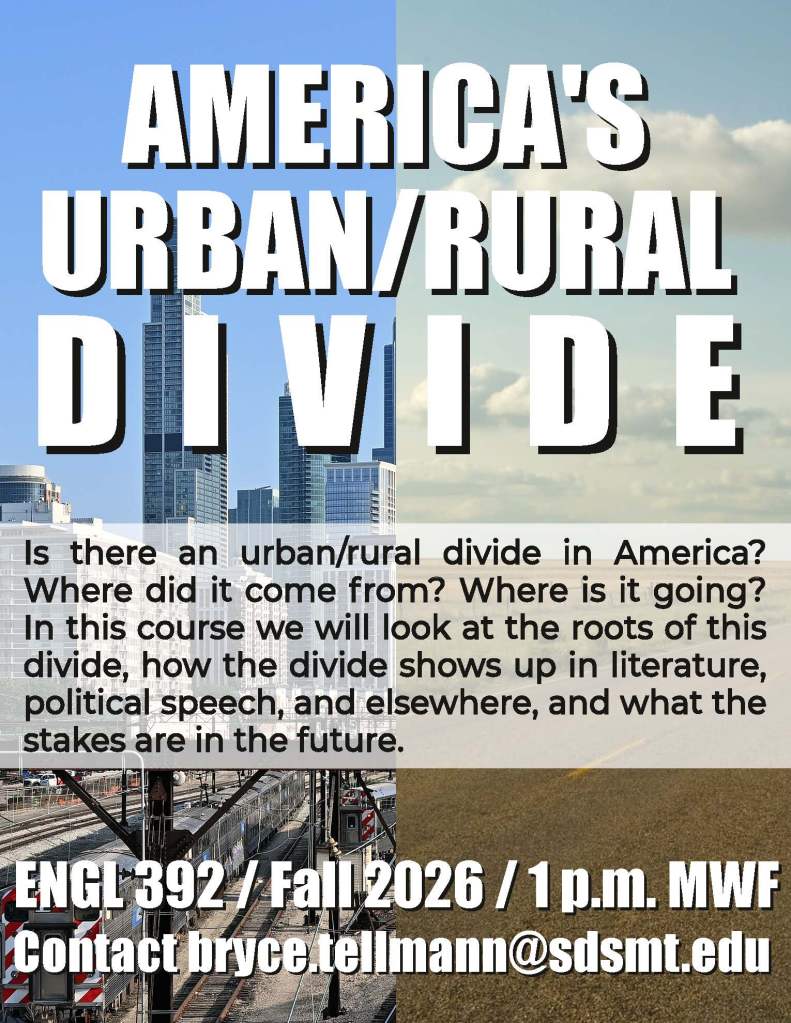
  • Topics: Urban/Rural Divide in American (ENGL 392) – MWF at 1 pm
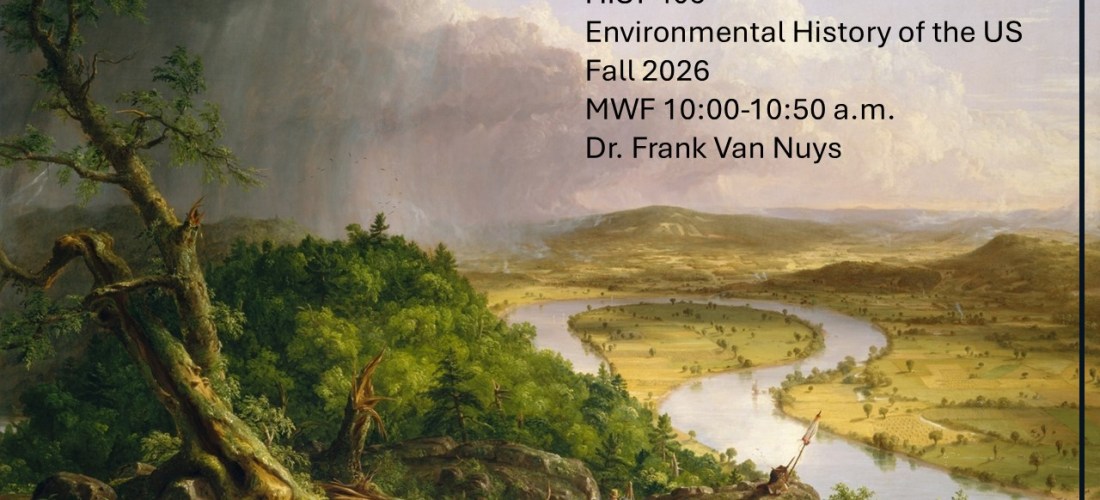
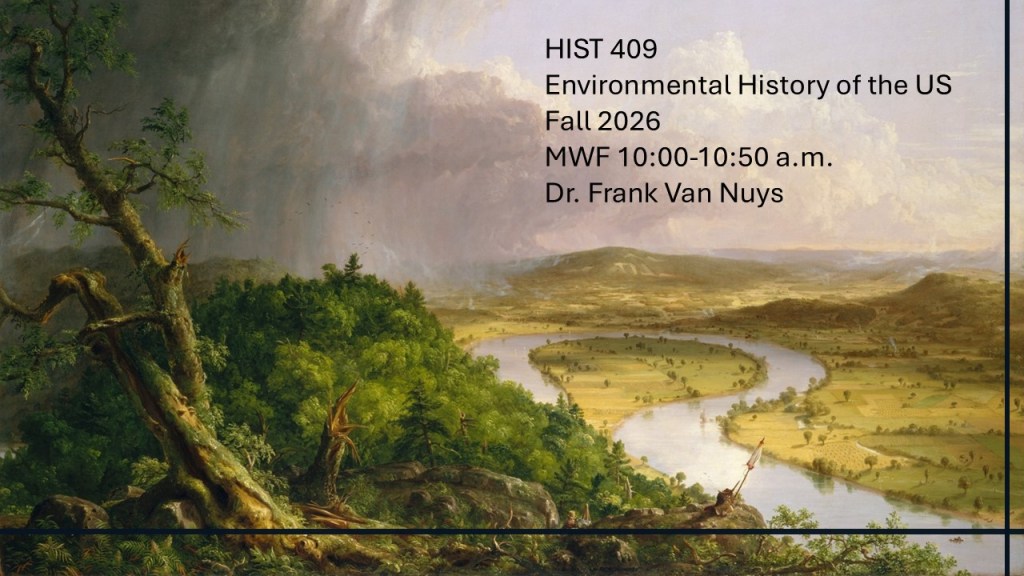
  • Environmental History of the US (HIST 409) – MWF at 10 am
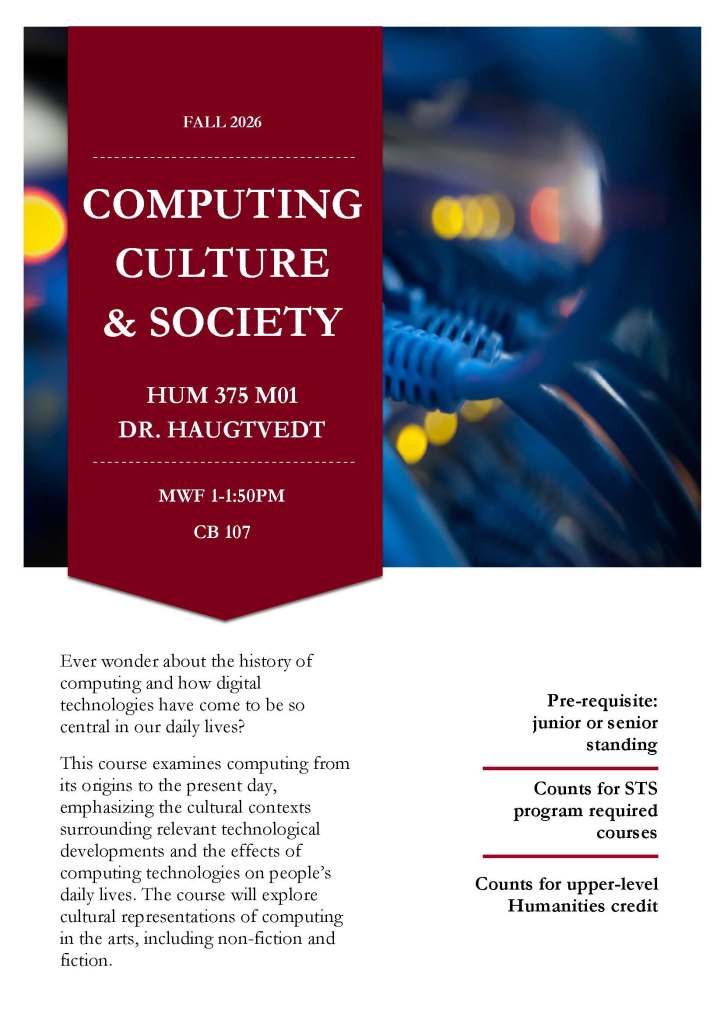
  • Computing, Culture, and Society (HUM 375) – MWF at 2 pm
  • Music in Performance II (MUS 317) – TBD
  • History and Philosophy of Science (PHIL 335) – MWF at 11 am
  • Theories of Personality (PSYC 461) – MWF at noon
  • Criminology (SOC 351) – MWF at 9 am
  • Senior Seminar in STS (STS 401) – 1 pm

Given this range, there’s almost certainly something interesting for everyone to take – and there’s very little conflict in times between them, so imagine the fascinating semester a Mines student could have by taking several!

For a taste of a few of these classes, check out the posters below.

Service Learning at Trinity Eco Prayer Park III: Choosing Native Grasses

Classes, communication

Reflections on Service Learning Lessons with Trinity Eco Prayer Park in Dr. Haugtvedt’s Fall 2025 STEM Communication for Public and Technical Audiences Course

Mario Dominguez: Restoring a Prairie, One Volunteer Step at a Time

When our class partnered with Trinity Eco Prayer Park this semester, I expected a simple clean-up project. What I discovered instead was a living example of how small ecological changes can ripple through an entire landscape. One of the most striking lessons came from learning how invasive species, especially Canada thistle, can spread quickly and choke out native grasses. These native plants aren’t just background scenery; they anchor soil, trap moisture, and support insects, birds, and even the microorganisms underground. Removing an invasive patch doesn’t just make the park look nicer, it helps restore the natural cycles that keep the prairie healthy.

Our time in the park also revealed how restoration is as much about people as plants. Every volunteer who pulled weeds or cleared debris added visible progress, but they also became connected to the ecosystem they were helping. Science communication often talks about “ecosystem services,” but seeing the concept firsthand–cleaner soil, healthier growth, and a space that brings peace to visitors–made the science feel personal. Trinity Eco Prayer Park isn’t just a project site; it’s a reminder that anyone can make a meaningful impact when they understand the science behind their actions.

By the end of the semester, our team didn’t just complete a service project, we contributed to a small but powerful example of community-driven ecological restoration. And that’s what I hope others see when they visit the park: a place where science, stewardship, and community come together to revive a prairie one season at a time.

Lucas Geiger

While our team was researching possible alternatives for the Kentucky Bluegrass lawn at Trinity Eco Prayer Park it became clear that the simplest and most sustainable solution could be found right outside of town. We thought that native South Dakota grasses like prairie dropseed, western wheatgrass and buffalo grass are naturally built for the local climate and would be great options for the park’s ideology. In their own ways, they can all handle droughts, bounce back after foot traffic and survive through large temperature swings. Creating a mix of the three seemed like the best option to maximize each species’ strengths and weaknesses. This is contrary to the existing Kentucky Bluegrass which is unable to take care of itself without significant work.

Choosing native grasses for the park isn’t just a design choice, it fits in with the park’s ecological values. These grass species will help improve the existing soil’s health, support the local insect diversity and create a landscape that changes more naturally throughout the year. Our goal for the lawn conversion was to give the park a stronger connection to South Dakota’s natural landscaping by replacing one of the last non-native areas in the park.

Park sign featuring QR code.

Service Learning at Trinity Eco Prayer Park II: Installing QR Codes

Classes, communication

Reflections on Service Learning Lessons with Trinity Eco Prayer Park in Dr. Haugtvedt’s Fall 2025 STEM Communication for Public and Technical Audiences Course

Josiah Gibbs

When I first walked into room 206W in the Classroom Building, I was expecting a typical English class. I was not expecting Professor Haugtvedt to outline our main project for the semester as a real-world research project for Trinity Eco Prayer Park in Rapid City, a nonprofit organization. We would not be assigned a prompt. Instead, we would be forming groups and researching problems the park faced, writing first a project proposal, then a recommendation report, then presenting our findings in person to the Board of Trinity Eco Prayer Park.

English assignment? This was more like a senior design project.

I was suddenly excited. When my team of five chose to research how Trinity Eco could install QR codes in the park, I knew our research would impact the Rapid City community. I also knew that, because this was a real client, the project would prepare me for communicating outside of a college environment. Often, classes are a little too “safe” – isolated from industry – but this class was industry.

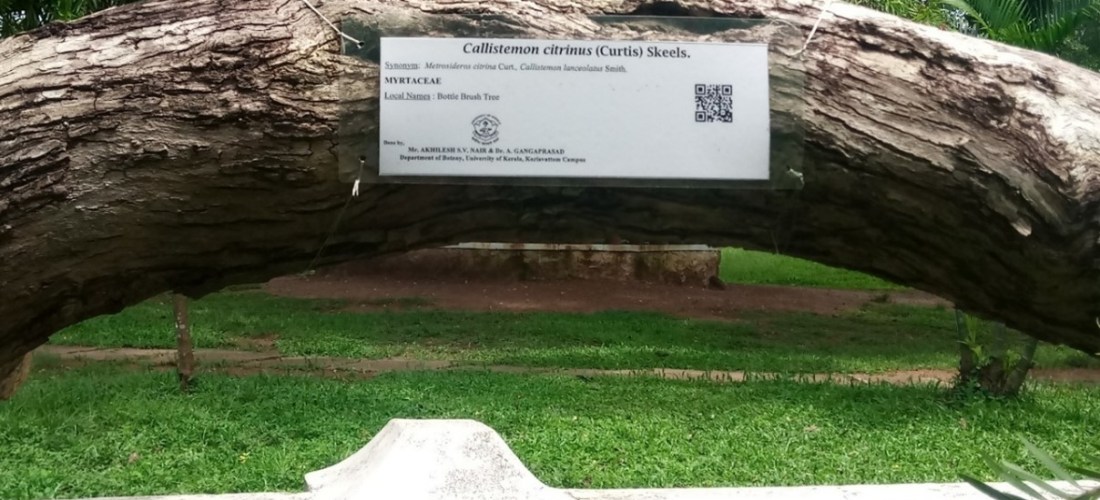
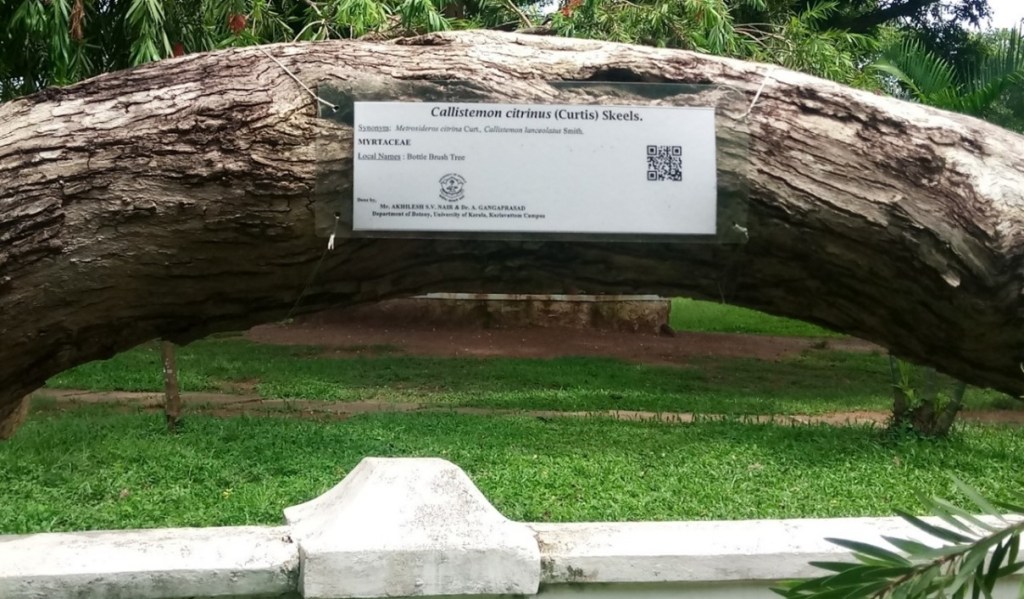
QR Code Used as a Plant Label at Kanakakkunnu Palace. Photo: ASV Nair, CC BY-SA 4.0 <https://creativecommons.org/licenses/by-sa/4.0&gt;, via Wikimedia Commons.

Our team had a picture of Trinity Eco’s future – we wanted to research ways to install QR codes. In a normal project, that would be the end of it, but here we had to communicate with our client and make sure our vision lined up with theirs. Part of my role was to talk to the park’s director, Ken Steinken, to clarify our budget and make sure our plans would match Trinity Eco’s own picture of the park’s future. And, with five team members, we had to communicate among ourselves as well. Everyone needed to know their role and communicate their progress to the group. This was all besides our main communication with Trinity Eco: the proposal and the report we were writing. To make a real impact, we had to be able to share information on multiple fronts. The same will be true in a career. With this project behind me, though, I know I can communicate on that level. When I stood in front of Trinity Eco’s Board with my team, describing our plans for QR code installation, I realized we had succeeded – the Board understood our research, and they resonated with it. I’m taking that confidence with me into the future. After this project, I know I can communicate.

Laptop on the grass in a park

Service Learning at Trinity Eco Prayer Park I: Improving the Website

Classes, communication

Reflections on Service Learning Lessons with Trinity Eco Prayer Park in Dr. Haugtvedt’s Fall 2025 STEM Communication for Public and Technical Audiences Course

Krista Burkman

Service learning is beneficial in many ways, from learning more about a local organization to seeing the impact one person or a group of people can have on a community. The project we completed in Dr. Haugtvedt’s Fall 2025 ENGL 289 does just this. Through working to help the Trinity Eco Prayer Park find potential solutions to one of their problems, I learned how a person or a group of people can have a larger impact on the community than I previously thought.

One of the issues the park is currently facing is finding ways to utilize its website to show off all the park has to offer and recruit donors. I spent time reading articles to learn more about the different audiences the park would like to reach and the content each audience prefers. After compiling all my newfound information, I was able to compose a recommendation for the park board. This included several options for creating strong and effective content for their website, which can also be used on social media platforms if the park were to utilize them.

Even though this may seem like something small, this will help the park improve its website and be more well-rounded when trying to create content to entice viewers. This also helps them gain donors, which then helps the broader Rapid City community. The park may have the funds to continue doing upkeep, general maintenance, and taking on new projects to update or improve the park. The park board’s mission is to bring together people in Rapid City. By maintaining the park and creating a safe environment for residents and visitors of Rapid City, they continue to bring people together and strengthen the community.

Science communication in the community: Trinity Eco Prayer Park

Classes, communication, Environment

By Erica Haugtvedt

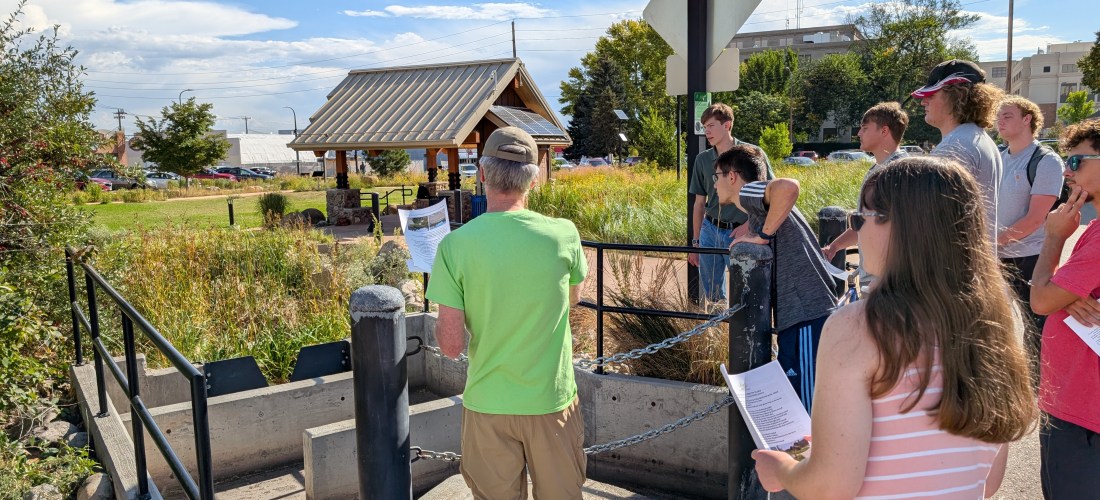
Students in ENGL 289: STEM Communication for Public and Technical Audiences are partnering with Trinity Eco Prayer Park to leverage their science expertise and science communication skills to help the park face real-world problems. Trinity Eco Prayer Park is a private park owned by the Trinity Lutheran Church Foundation that models sustainable stewardship of the environment. The park naturally filters stormwater for 2/3 of its concrete-heavy city block through native plant species that represent five local biomes from the Great Plains and Black Hills. 

Zinefest: World-Making, Creativity, & Technology

Apex Gallery, Arts, Classes, communication, Events, Humanities

By Christy Tidwell

“[Zines] are practices of ‘poetic world-making’—poetic not in the sense of a poem on the page (although they can be this too),
but in the sense of poesis: the process of creating something that did not exist before.” 
– Gwen Allen

The classes I teach create communities. Students get to know each other as they learn the course material, and they share ideas and work with each other. This is a form of world-making, even if temporary, and I love this about my classes. But I don’t want the connections and sharing to stop at the classroom door or to be forgotten when the semester ends. The goal is for my students to connect what they’re learning in class with the rest of the world, to share what they’ve learned with others, to hear what others have learned, and to join and build other communities.

Finding ways to do this can be challenging, but it’s not impossible.

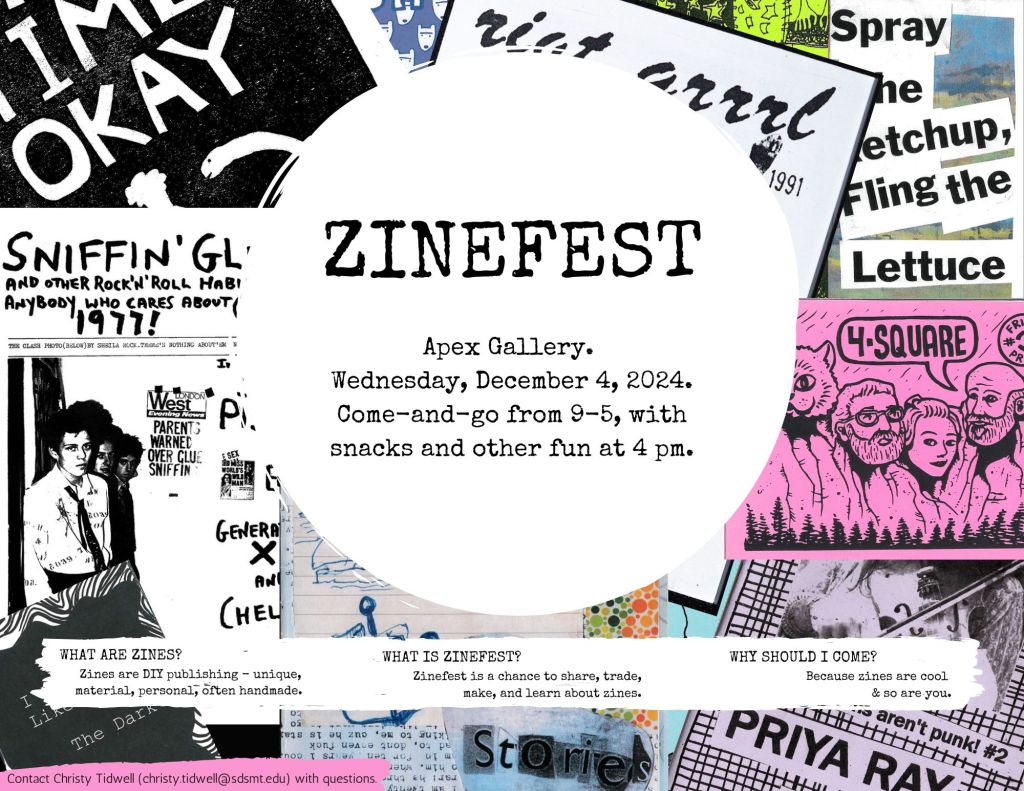
This semester, as a way for students to connect across classes and share work with broader audiences, a few of us in the Humanities, Arts, and Social Sciences department (myself, Matt Whitehead, Evan Thomas, Erica Haugtvedt, and Mary Witlacil) put on a series of zinemaking events that culminated in a Zinefest in the Apex Gallery on December 4th. Zinefest was an all-day come-and-go event that displayed the zines students made in classes (and, in a few cases, just for fun!), provided some examples of interesting zines made by others, and gave visitors a chance to make their own zines. (If you missed it this year, watch out for another event next year!)

This event let students share some of what they have learned this semester, giving them a broader audience, and it also connected them to students in other classes and to the audiences who came to Zinefest. While I did not count the number of visitors during Zinefest, the gallery filled several times and was rarely empty. Some people walked through relatively quickly and took in only a few zines; others stayed for quite a while, standing and reading multiple zines before finally deciding on some they wanted to keep. One student – who will remain nameless for obvious reasons – wrote in a reflection afterward, “I spent almost 2 hours there and accidentally missed class, so I would say I had a good time.” Although I would (of course) never encourage a student to miss class, this indicates that Zinefest offered this student something meaningful.

Because most students were asked to bring multiple copies of their zines, visitors could take a copy of one if they were particularly interested in its ideas or really loved it. Hopefully, they will re-read any zines they took, remember the event, and maybe even be inspired to make their own! Leaving with a material artifact helps the experience and community created through this event extend past Zinefest itself.

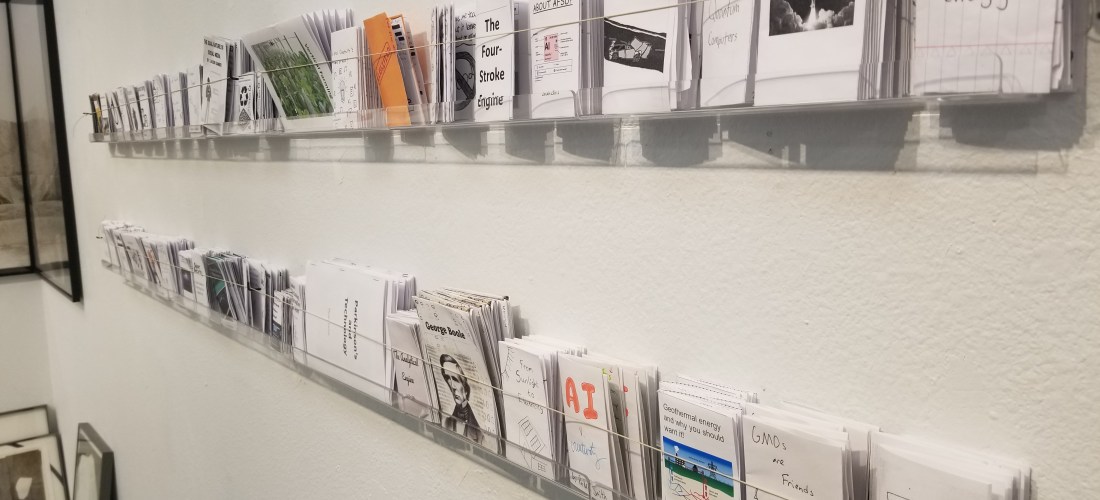
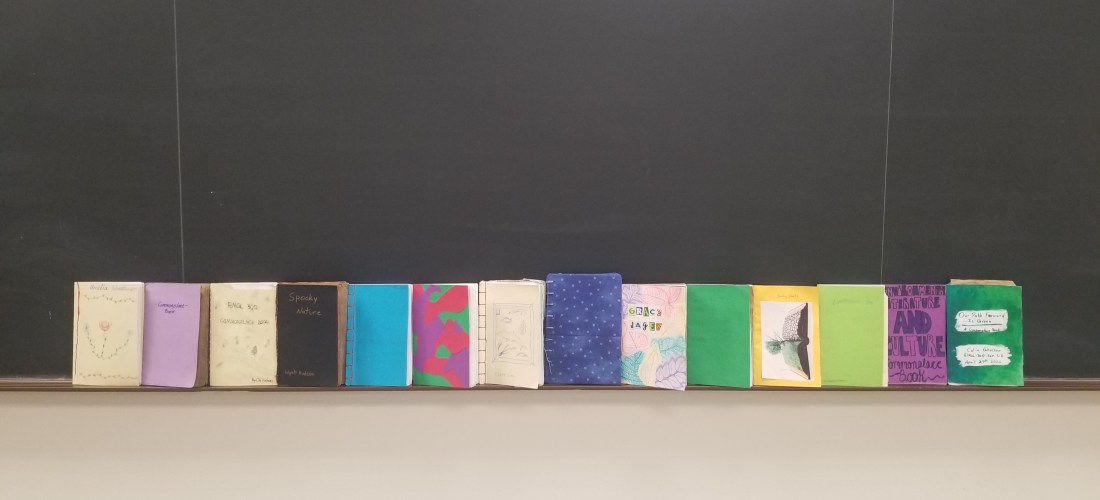
Two rows of zines displayed on the wall, with a handwritten sign above them: See a zine you like? Feel free to take it. Just don't take the last one! Thanks for stopping by.
Student zines on display with an invitation to take a zine.

As an event, Zinefest promoted connections and community; as a practice, making zines (even without an event like Zinefest) provides us all with an opportunity to create something new – to engage in world-making – and to share that something with others, without requiring elaborate technology or infrastructure, refined skills, or many resources. Anyone can make a zine, and that’s what’s so beautiful about them.

Printing in the Classroom: Hands-On Creation & History of Technology

art, Classes, Humanities, teaching, Technology

By Christy Tidwell

This semester, I am teaching a section of Connections: Humanities & Technology (HUM 200), which is one of our core STS courses as well as a general education course that students from across the university take to fulfill their humanities requirement. There are many ways to teach this course to get students to think more critically and more deeply about the relationships between the humanities and various technologies, and this particular semester’s class begins with a few weeks exploring printing technologies.

What better way to understand printing technologies than to try them out?

To incorporate a hands-on approach to printing in the class, I worked with our art professor, Matt Whitehead, to prepare an activity for students in the art room. We wanted to give students a chance to work with printing presses in a couple of different ways, to try using a typewriter and a Leroy lettering set, and to check out some old toy moveable type presses. These toy presses date from the 1940s and are no longer totally functional, so they were more on display than for use, but they still allowed students to get a better sense of what a moveable type printing press is like on a small scale.

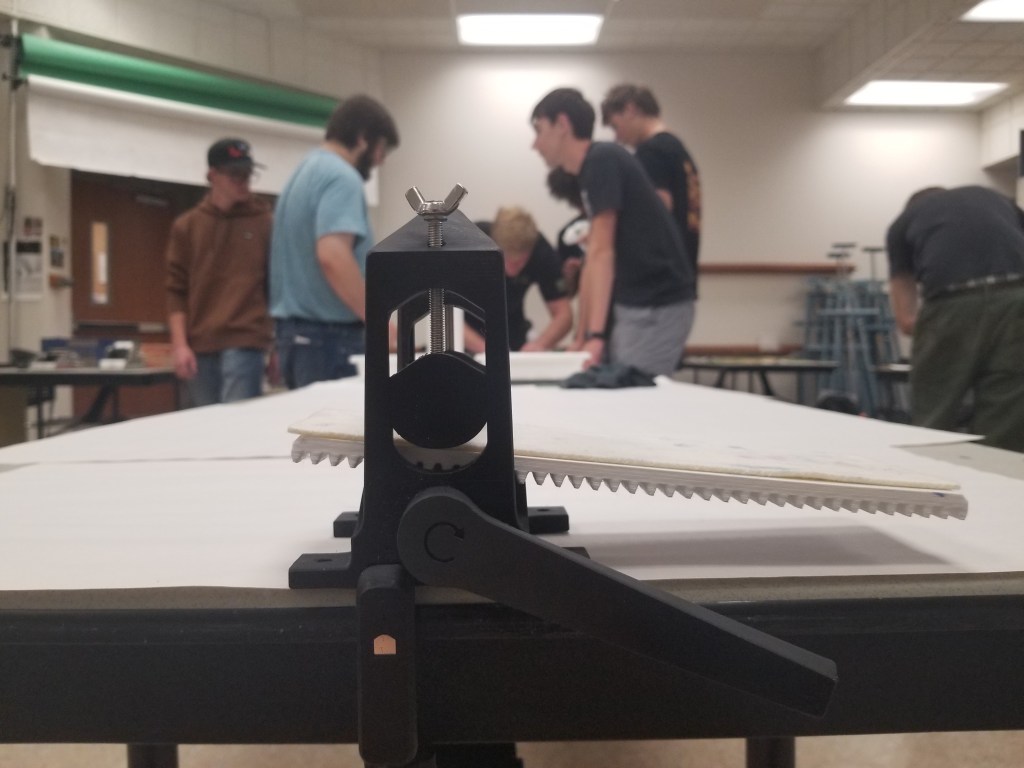
Photo of a mini printing press ready for use.
A mini printing press from the Open Press Project, with students working in the background.

After a brief introduction to some basic printing techniques and explanation of what was available, students were given the freedom to explore these technologies in whatever order they wished. Some made an effort to try everything and even combined elements (the printing press with text from the typewriter or lettering set, for instance); some really focused in on one technology or technique and tried it multiple times or in multiple ways.

Welcome Back! Fall 2024 STS News & Events

Apex Gallery, Arts, Classes, Events, Humanities, STS Faculty

As we begin this academic year, the Science, Technology, & Society program has plenty of news to share and exciting events coming up. Check out some of what’s been going on with us and keep an eye out for events you can attend in the coming weeks and months!

Faculty News

We are excited to welcome Carlie Herrick as a Lecturer in English. She has taught English classes here at South Dakota Mines for many years already and is a wonderful colleague, so we’re glad to have her take on this new position! We are also pleased to announce that Kayla Pritchard has been promoted from Associate Professor and is now Professor of Sociology.

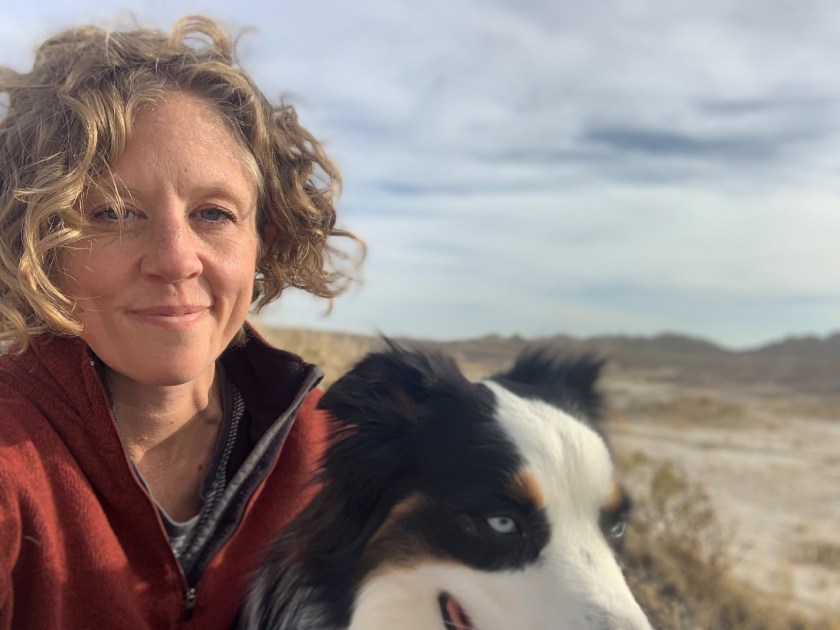
Photo of Carlie Herrick outdoors and smiling, with her dog.
Carlie Herrick (and dog)
Photo of Kayla Pritchard, outdoors in the woods, smiling.
Kayla Pritchard

STS Program News

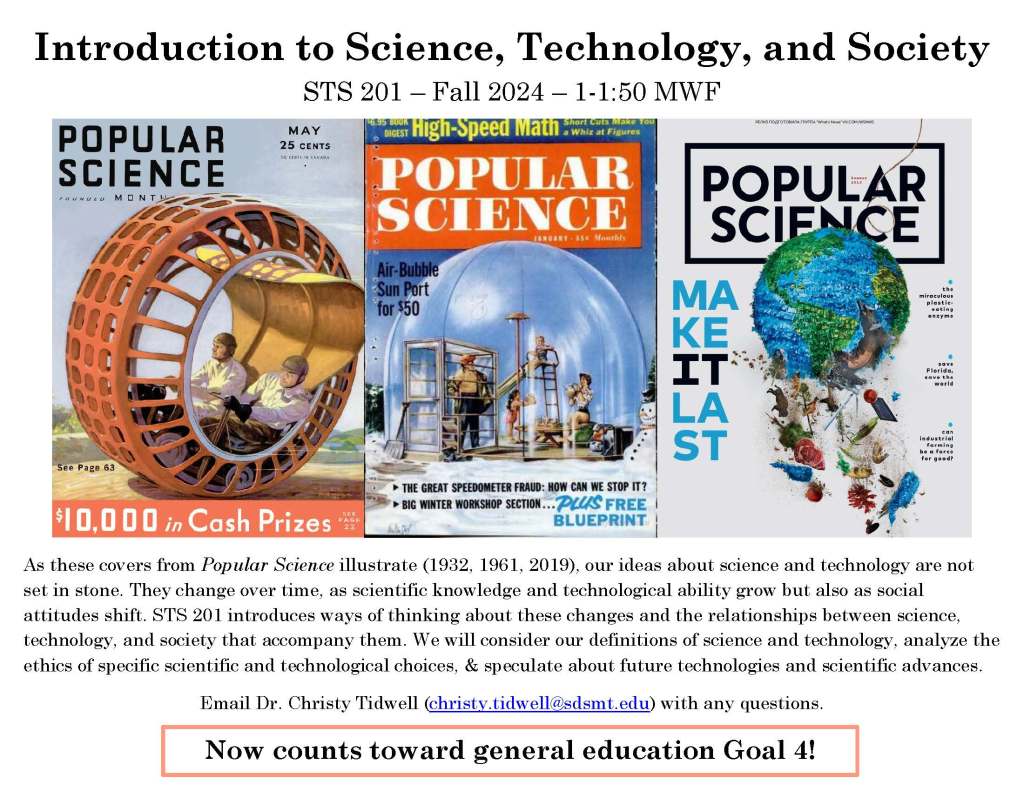
One of our core STS courses – STS 201: Introduction to Science, Technology, & Society – now counts as a Goal 4 general education course. This doesn’t change the course itself in any significant way, but it does mean that there’s now a good reason for students of all majors to take the course. The class gives students a chance to do the kind of work STS scholars do and to gain a different perspective on their own disciplines. In STS 201, students thoughtfully examine the relationships between science, technology, and society; explore the ways we define these terms and the effects of defining them in these ways; and learn about the history and ethical consequences of scientific research and technological innovations.

Poster for STS 201 in Fall 2024. It features some images from the covers of Popular Science magazine featuring past technological ideas and an image about trash on planet Earth. The description of the course reads: As these covers from Popular Science illustrate (1932, 1961, 2019), our ideas about science and technology are not set in stone. They change over time, as scientific knowledge and technological ability grow but also as social attitudes shift. STS 201 introduces ways of thinking about these changes and the relationships between science, technology, and society that accompany them. We will consider our definitions of science and technology, analyze the ethics of specific scientific and technological choices, and speculate about future technologies and scientific advances.

Upcoming Events

If you’re looking for cool things to do, STS has you covered this year! Here’s a list of upcoming events sponsored by the STS program and/or the Humanities, Arts, and Social Sciences (HASS) department. Add them to your calendar and come to as many as you can!

  • The Office of Student Engagement and Department of Humanities, Arts, and Social Sciences (the STS program’s home) are hosting a 2024 Local Election Forum the evening of Thursday, September 12 (7-9 pm), in the Beck Ballroom in Surbeck Center. Come hear from local candidates, learn about ballot initiatives, and ask questions!
  • On Tuesday, September 17 at 6 pm, Erica Haugtvedt, Associate Professor of English, will present an introduction to George Eliot, the Victorian novel, and science as part of the university’s STEAM Cafe series. These presentations are free to the public and take place at Hay Camp Brewing Company (601 Kansas St., Rapid City).
  • The STS program is sponsoring a series of zinemaking events, culminating in a zinefest at the end of the fall semester. We will set up with materials, examples, instructions, and plenty of enthusiasm for a zinemaking event from 9:30-2:30 on Wednesday, September 18, on the second floor of the Classroom Building and then for another from 9:30-2:30 on Wednesday, November 13, on the first floor of the Devereaux Library. Zinefest will show off some of what has been created this semester as well as featuring some information about the history of zines, and will take place in the Apex Gallery (2nd floor of the Classroom Building) on Wednesday, December 4.
  • The STS program is also sponsoring an STS Book Club beginning this semester. It’s open to faculty, staff, students, and their friends and will provide a space to read and discuss books related to science, technology, and society. The first book will be Annalee Newitz’s Autonomous, a science fiction novel, but future books (to be determined by participants) may include science writing, biographies of scientists/inventors, histories of science and technology, memoirs, or other fiction addressing science. The group’s first meeting will be held in CB 334 (the Stoltz faculty and staff lounge) – Thursday, September 26 at 5 pm.
  • A grant-funded collaboration between South Dakota Public Broadcasting, Dick Termes, and South Dakota Mines presents an event exploring connections between art and science. The event is scheduled for Saturday, October 5, from 1-4:30 pm on the second floor of the Devereaux Library and will include a screening of parts of the new Ken Burns documentary about Leonardo Da Vinci, a talk by Dick Termes, a chance to use VR goggles to explore Termespheres, and screenprinting with Matt Whitehead (Director of the Apex Gallery and Lecturer in art) and SD Mines students. All are welcome to come check out the various parts of the event at their own pace.
Poster for the STS Book Club with date, time, and location, plus a description of the group and the first book.

Fundraising

Finally, we want to highlight a fundraising effort to support SD Mines music students. The South Dakota Mines Concert Choir has been invited to perform in the festival choir at the 2025 Salzburg International Choral Festival next summer. Choir members are raising money now to fund their trip, so if you’re able to donate, please consider doing so – it would help them immensely! This supports not only STS students and HASS faculty but students from across the university. You can find out more and donate to support their trip here.