Last week, the 16th Annual Student Research Symposium was held on campus, and two of our STS students presented posters about their senior capstone research. Colin Gholson presented “Communicating Climate: The Role of a Scientist in Communicating Climate Change,” and Paul Roques presented “Prehistoric Films and Ethics: A Blurring of Fact and Fiction.” (Colin also presented his poster the next day at Black Hills State University’s student symposium in Spearfish.)
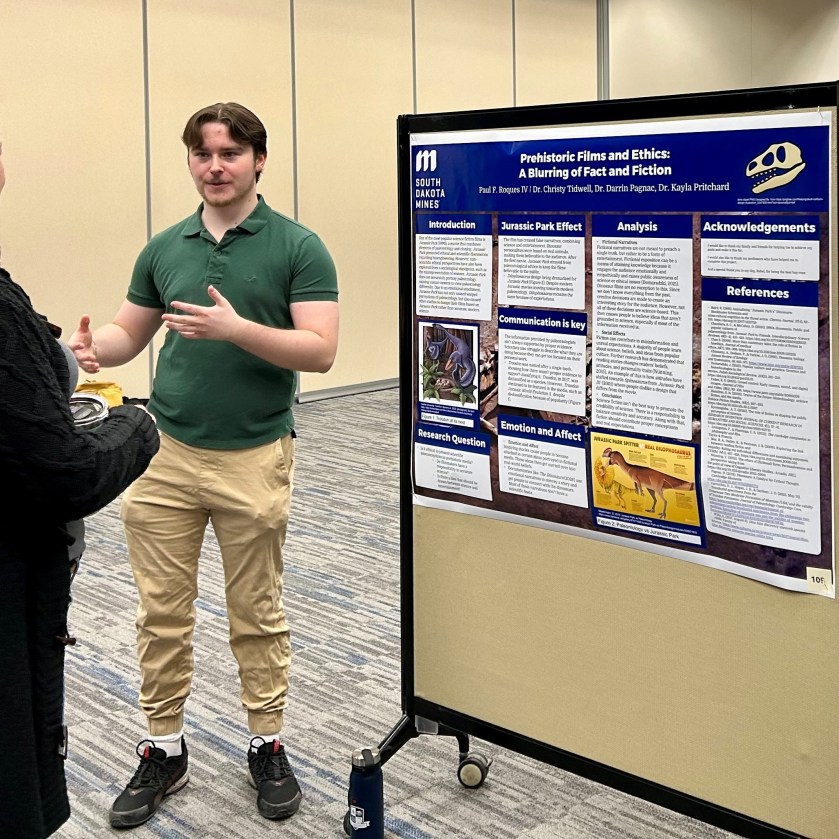
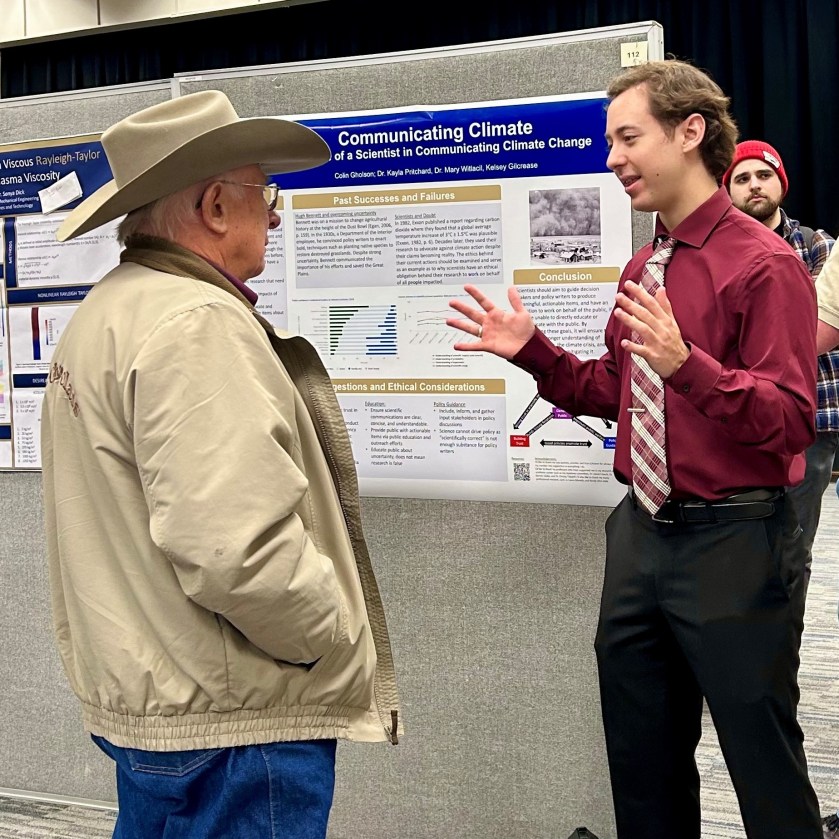
Paul’s poster anlyzed media representations of paleontology, including the Jurassic Park franchise and dinosaur documentaries (for more on Paul’s topic, you can read his post about his capstone proposal from last fall), and Colin’s examined real-world examples of climate communication while developing ideas about climate communication-related education and policy. Although their topics may seem at first glance to be quite different, the two posters emphasize what’s at the heart of STS: the relationship between people and science. Whether raising questions about how movies influence our understandings of paleontology or about how we can help people to understand climate change, STS is fundamentally about how people engage with science and technology.
Presenting their research at the symposium allowed them to experience sharing their ideas with a wider audience, receiving feedback and answering questions on their research, and having the opportunity to further refine their ideas before completing their capstone projects later this semester.