By Mary Witlacil
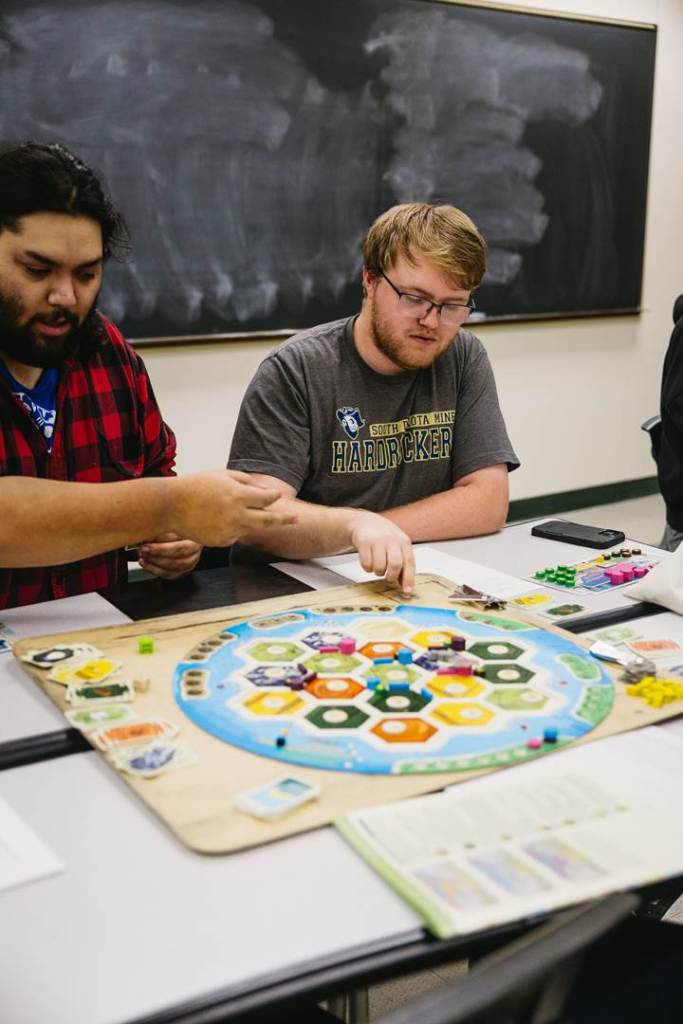
Earlier this semester, students in Environmental Law and Policy (POLS 407) played CATAN – New Energies for the second annual Worldwide Climate Games Day. New Energies is an updated version of CATAN, where players jockey to collect enough resources to build out their society and develop their energy infrastructure. Players can choose to develop cheaper fossil fuels to collect more resources or opt for more expensive renewable energy plants. With more fossil fuel power plants the global footprint climbs higher, which increases the likelihood of triggering a natural disaster or a pollution event.
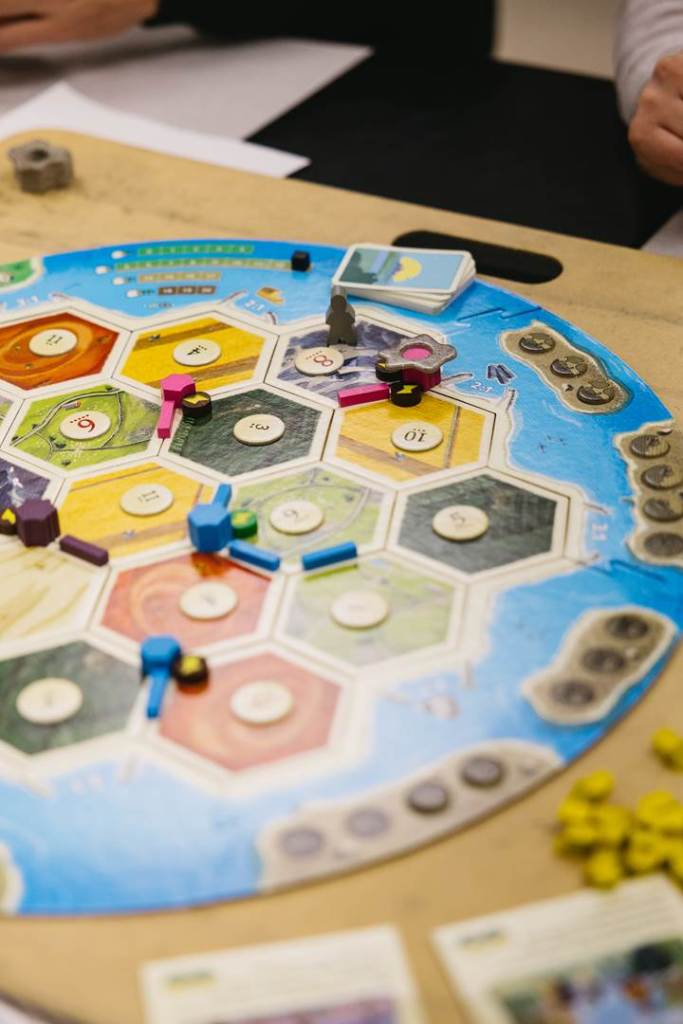
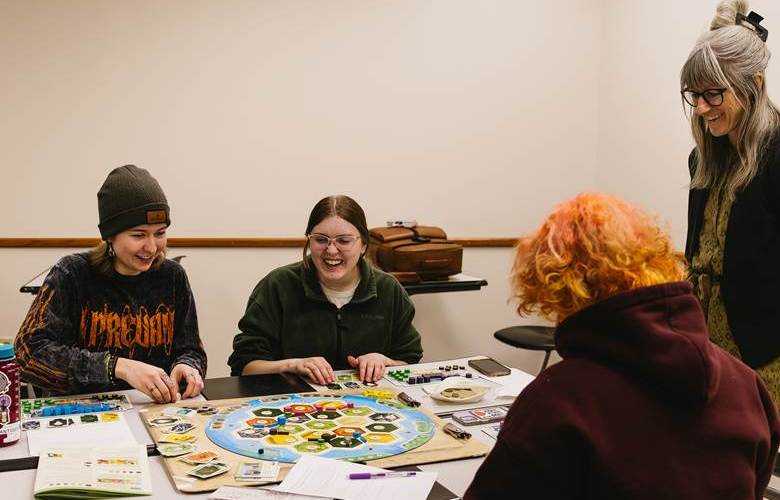
The game gives players a choice between working collaboratively to bring down their global carbon footprint, or teaming up against each other to build out their fossil fuel energy grids. One group of students played cooperatively by trading resources with each other and exclusively building out renewable energy. Reflecting on this strategy, one student noted that the game helped them recognize the role international cooperation plays in combatting climate change.
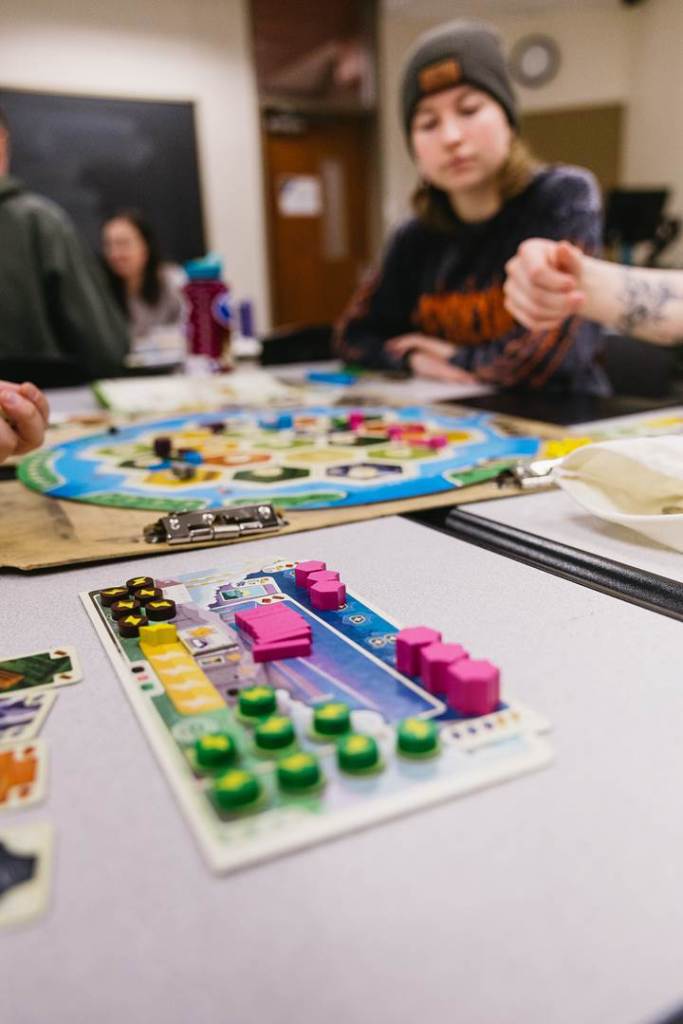
Now that renewables are less costly per kilowatt hour than fossil fuels, New Energies does not accurately represent the price of energy (see for e.g., Lazard’s 2025 Levelized Cost of Energy), but the game’s design does reflect how most countries have struggled to transition to renewables when their energy systems were initially developed using fossil fuel energy sources. Players with lots of dirty power amass more individual resources while increasing the likelihood of collective catastrophes. One student noticed how the game represents the challenge of “balancing production… with conservation.” Much like in the real world, there are barriers to adopting renewable energy grids, even though fossil fuel energy systems guarantee more pollution and natural disasters.
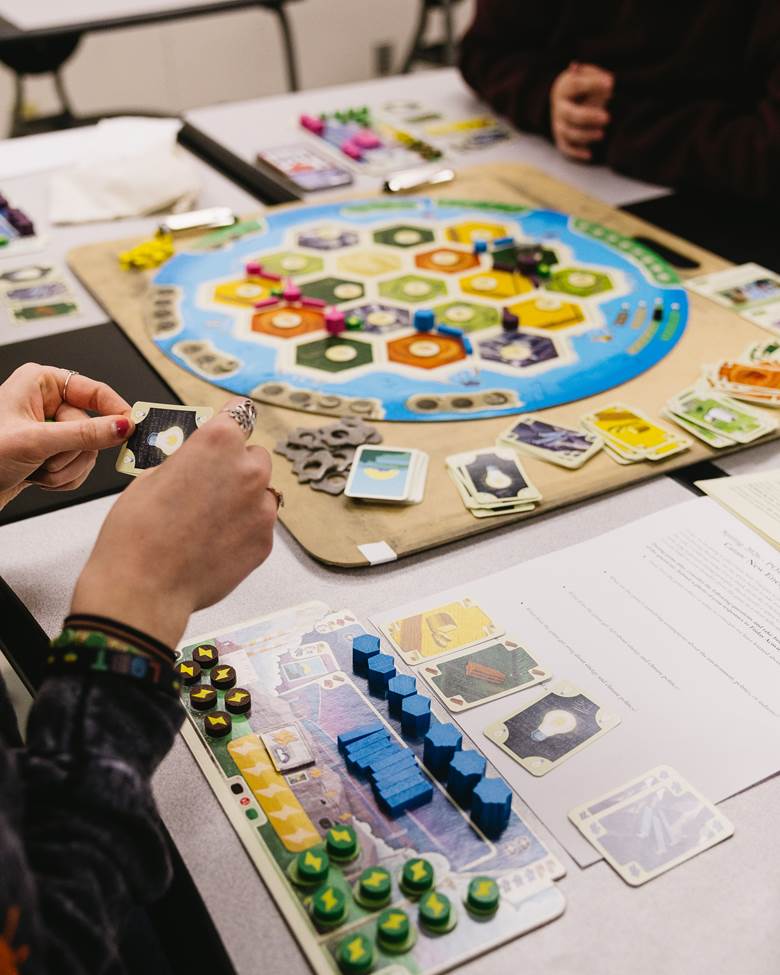
Students shared that the game reflected a number of concepts or ideas from class, including collective action problems, the environmental impacts of energy production, the tragedy of the commons, free-market capitalism, and environmental justice. One student identified how the game illustrated the logic of climate injustice, because players have different access to resources and those with the least resources will still suffer from natural disasters even if they could not afford to build their energy grid and did not contribute to the problem.
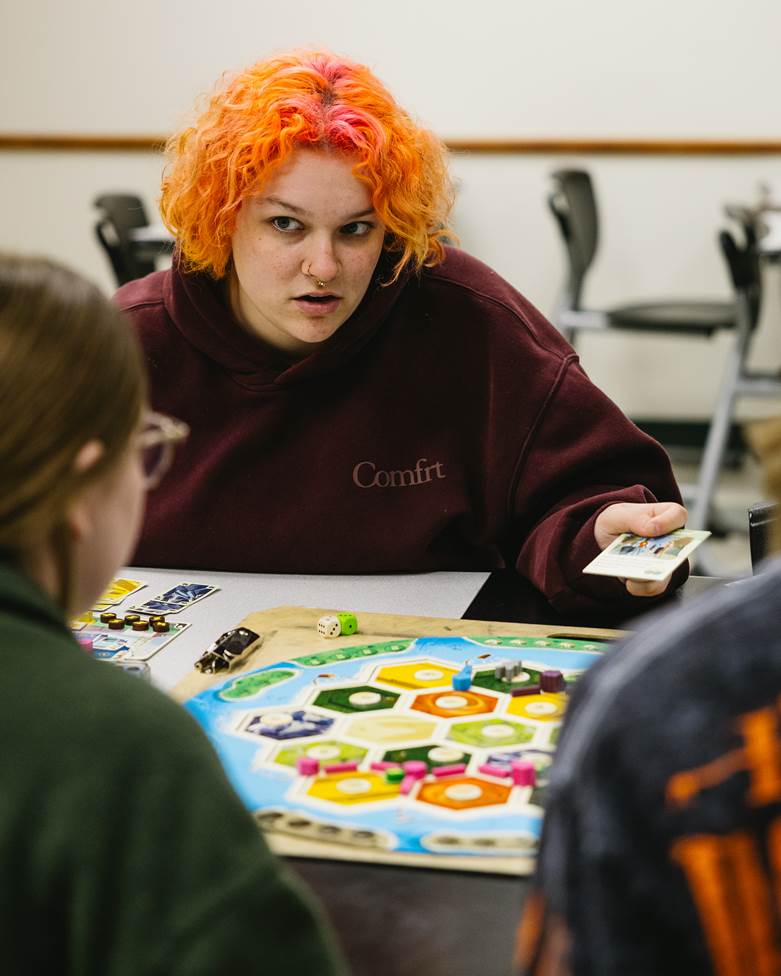
POLS 407 meets three times a week for only 50 minutes, so it took some front-loading to ensure students had enough time to play the game in class. To make sure that I could quickly explain the rules and facilitate a smooth game day, I played the game a number of times with different groups of friends. At the tail-end of class on Wednesday, students watched a video about how to play the game, and they were encouraged to read the rules before class on Friday. On game day, I set up each game board on large drawing clipboards (though cardboard would do the trick) so students could start playing immediately when class started and then gave students a quick run-down of the rules during the first few minutes of class. None of the student groups finished their games in the 50-minute class, but they did have enough time to develop their strategy, play several rounds, and get a sense for what they could learn from the game. Overall, CATAN – New Energies was an effective tool for helping students recognize how politically fraught it is to address climate change and transition to a renewable power system.