By Christy Tidwell and Erica Haugtvedt
This semester, we both asked students in our classes (Introduction to Humanities and Environmental Literature & Culture) to create commonplace books. We found this to be a successful way to get students thinking about core ideas from class and to encourage creative activity. Read on for more information about commonplace books, how we used them, and how students responded!
What Are Commonplace Books?
Commonplace books have a long history – extending as far back as people have had easy access to paper and writing utensils – and are a way of organizing information for yourself. They can overlap with journals or diaries, but they’re also for classifying and indexing information to find later, and they have taken various shapes over time as they have served different purposes for different groups of people. Religious leaders’ commonplace books in the 17th century, for instance, look and function differently than young ladies’ commonplace books in the 19th. Adam Smyth provides a pretty standard definition of them: “the commonplace book presents a series of thematic headings under which aphorisms are distributed, gathered from reading, or, more rarely, from conversation, and deemed in some way useful or exemplary” (91).
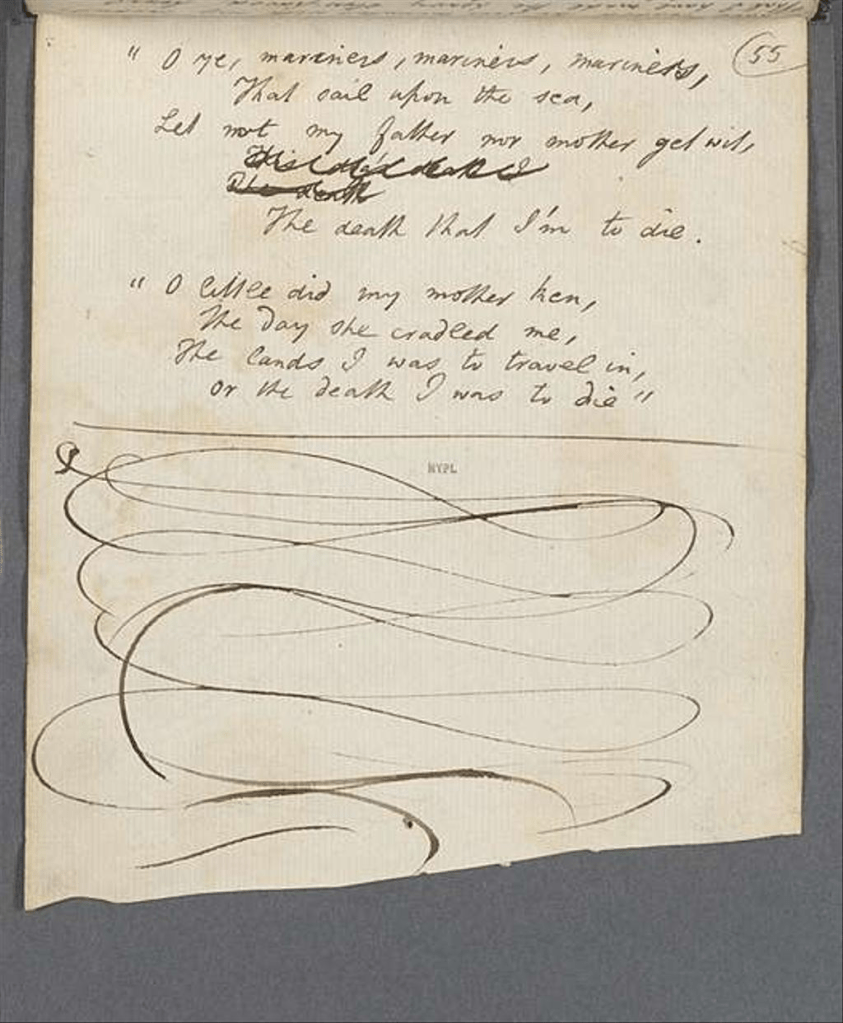
However, Smyth also notes that actual commonplace books only sometimes followed this description. He writes,
The experience of reading manuscript commonplace books is often an experience of baffled delight – delight at pages so crammed with text that annotations spill over the binding and covers; at devotional aphorisms jostling with bawdy epigrams and recipes . . . ; at scraps of printed pages glued into the manuscript; at prose merging with verse merging with financial accounts merging with illustrations; at blank pages, and gaps; at entire printed books bound into the centre of manuscripts; at the construction of a single manuscript out of many different sized pages; at the recycling of old, often medieval texts in the binding of manuscripts; at texts that simultaneously ‘begin’ from various points within their pages and proceed in various directions, so that it becomes meaningless to talk of a front or back, a beginning or an end. (90-91)
Smyth goes on to describe this as an “eclecticism of inclusions” and “rampantly inventive materialism” (91), descriptions which beautifully highlight the flexibility and openness of commonplace books and their inherently physical nature. Both of these elements are closely tied to goals of humanities classrooms that emphasize practicing and learning about a wide range of modes of expression (e.g., film, art, literature, philosophy) and that value creators’ and students’ experiences of the world.
Introduction to Humanities: Erica Haugtvedt
Early in the semester, I introduced students to the history of commonplacing, and I highlighted the information-organizational purpose of commonplace books while also encouraging students to approach writing in their physical notebooks as an artistic project: they could collage, scrapbook, use stickers, draw etc.
Throughout the semester, students had to copy down and cite at least two quotations from the prior week’s readings and then reflect on those quotes in some way. How they chose to do this was largely up to them. The commonplace books had several purposes in our class: 1) they were notes that students would eventually use as starting points for major essays, and 2) they were notes that students could bring with them to the blue book in-class exams at the end of the semester, and finally 3) they were souvenirs of the students’ personal engagements and experiences with the readings throughout the semester.
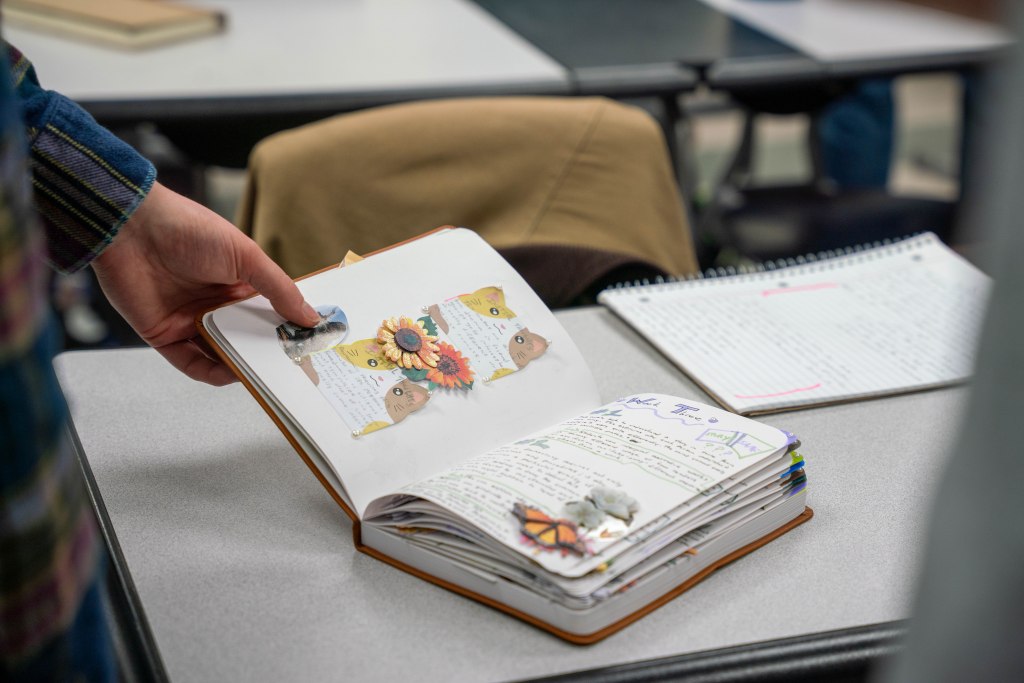
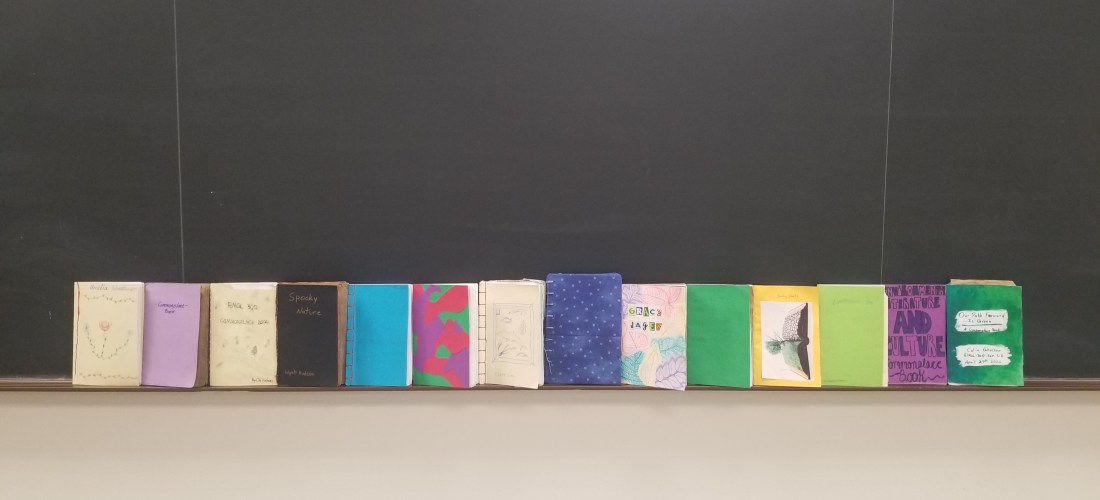
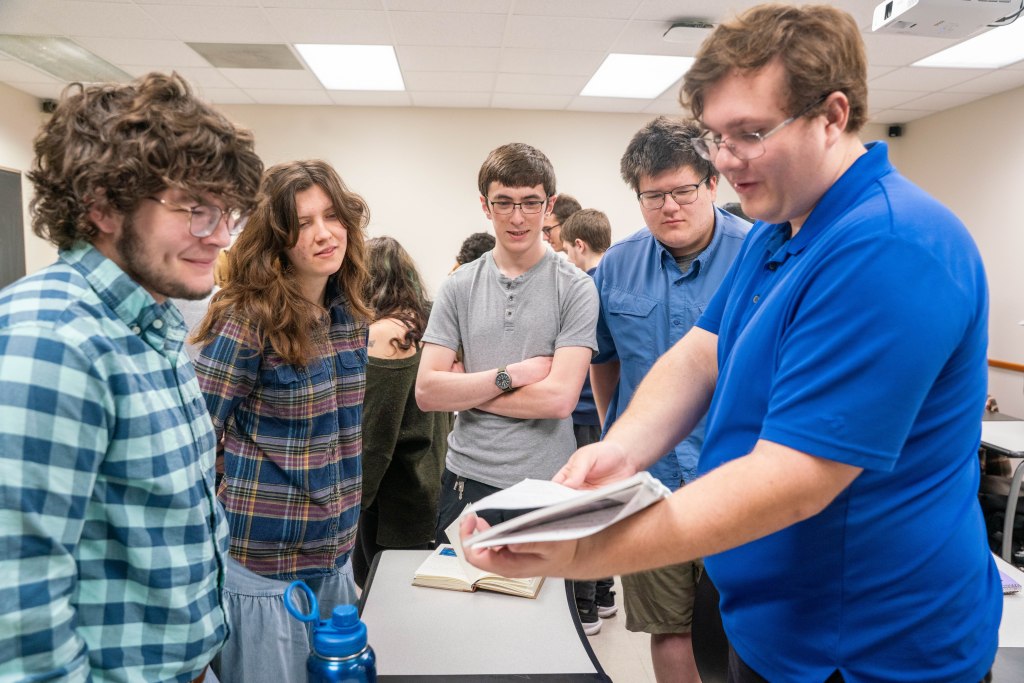
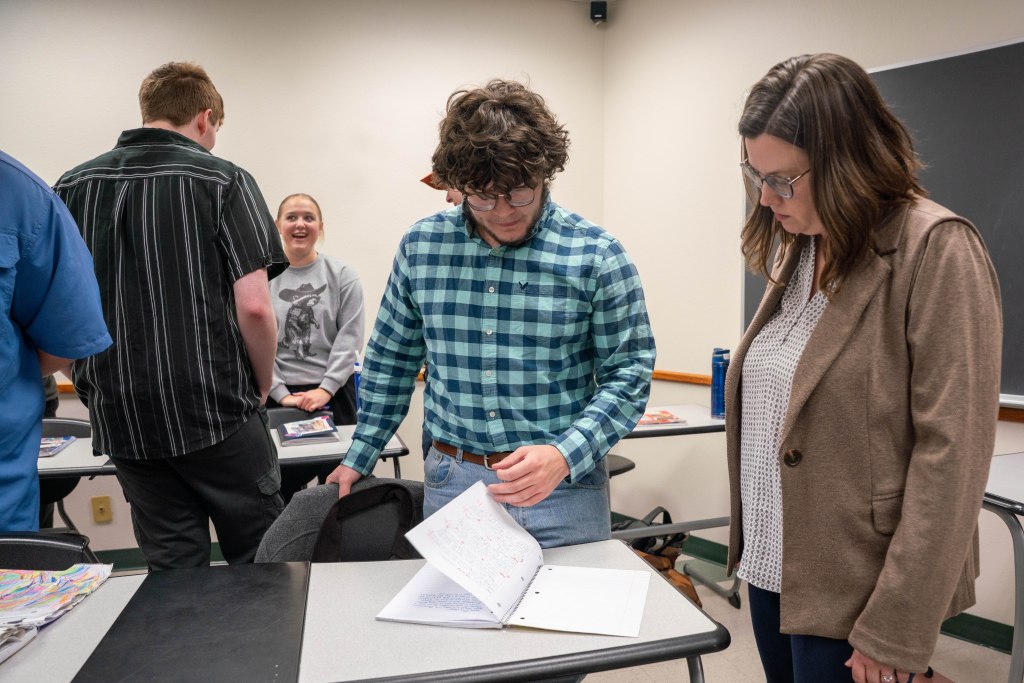
At the end of the semester, students showcased their finished books to each other, faculty from across campus who dropped into our classroom, and a photographer from university marketing.
I was excited to see students take personal ownership of their own commonplace book, and to realize that their own concerns and life experiences manifested throughout their book as they interacted with course material through the semester. I think the pen-and-paper medium helped students focus and express themselves in a way that is harder in increasingly distracting digital environments, and several students expressed to me that they felt the commonplace books helped “cement” concepts in their memory better than if they had just done the reading alone.
Environmental Literature & Culture: Christy Tidwell
I similarly began the semester with a history of commonplace books, providing some scholarly context by providing an overview of Adam Smyth’s article (quoted above) and emphasizing this project as a way to both collect meaningful information and present it creatively. I encouraged students to include material directly assigned or covered in class but also to bring in images, references, and experiences from outside the classroom that were relevant to class content.
At the end of the first week of class, I set aside a class day for this history and for them to make their own books to use. I provided materials and instruction for making small (30-40 page) pamphlet-style books. These materials included cardstock for covers; regular copy paper, used paper from my office, and brown packing paper that I had cut to size for interior pages; bookbinding thread and tools; and art supplies for decorating if they had time. Students were also invited to bring their own materials to incorporate, and some did – including one student who made their own hardcover book and wrapped it in fabric and another who brought magazine pages and other scraps to bind into the book as pages. I encouraged them to use their own materials and to make their own books both to prompt a sense of ownership and to emphasize the physical nature of the project. For an environmental class, it was also particularly appropriate to be able to re-use paper and other materials.
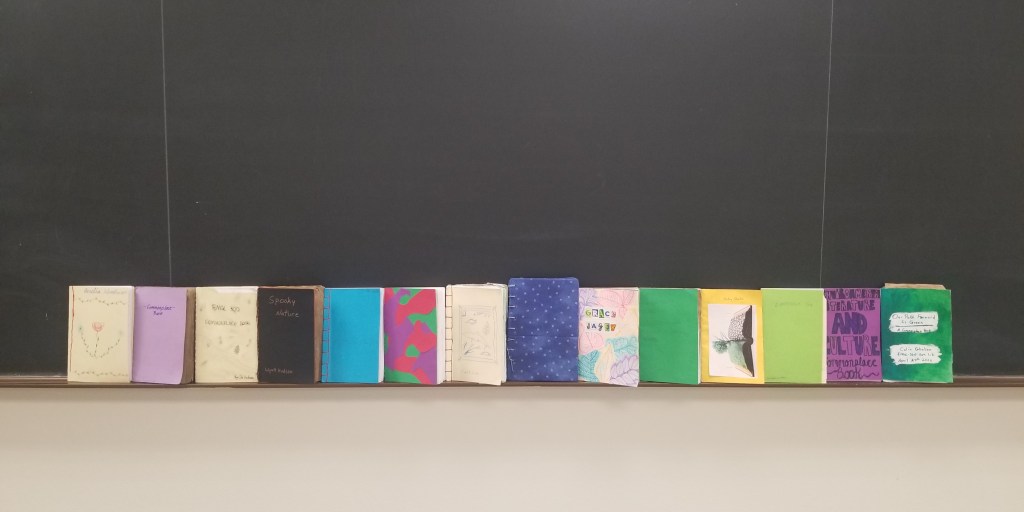
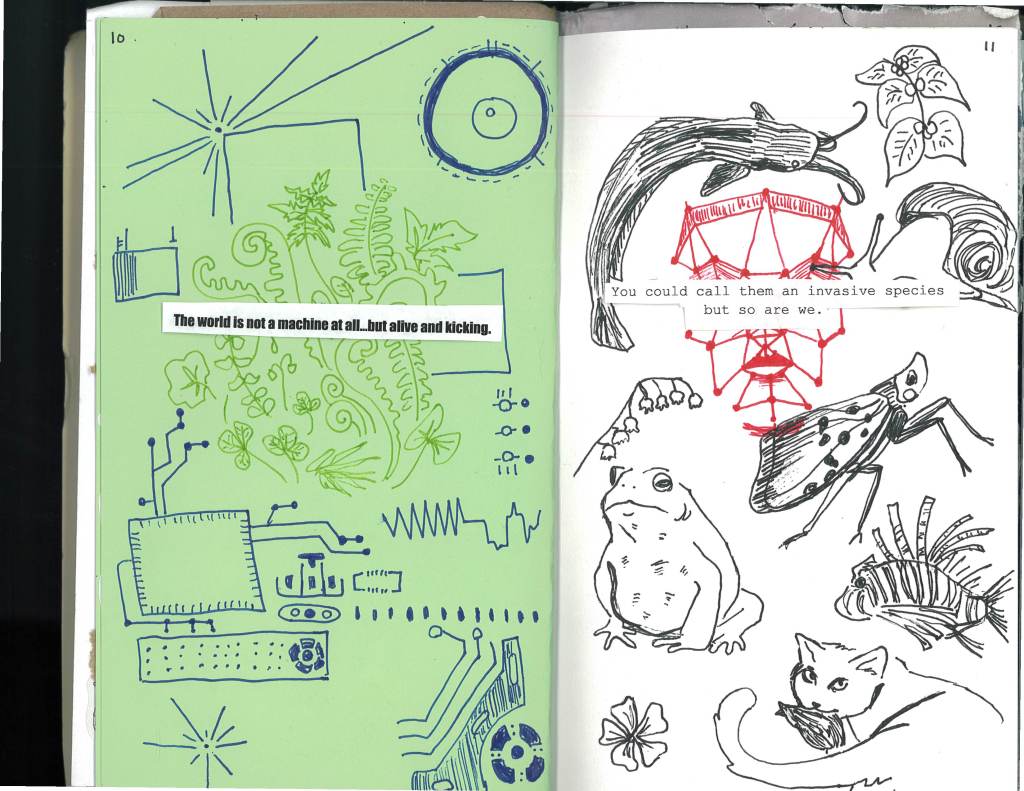
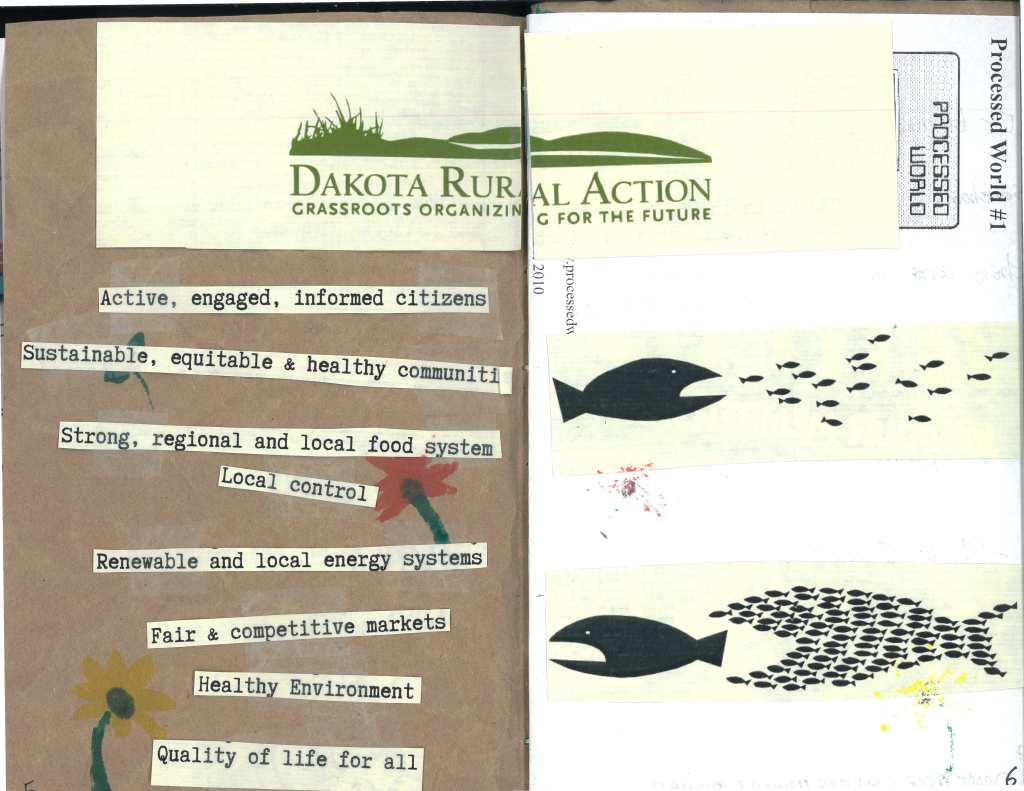
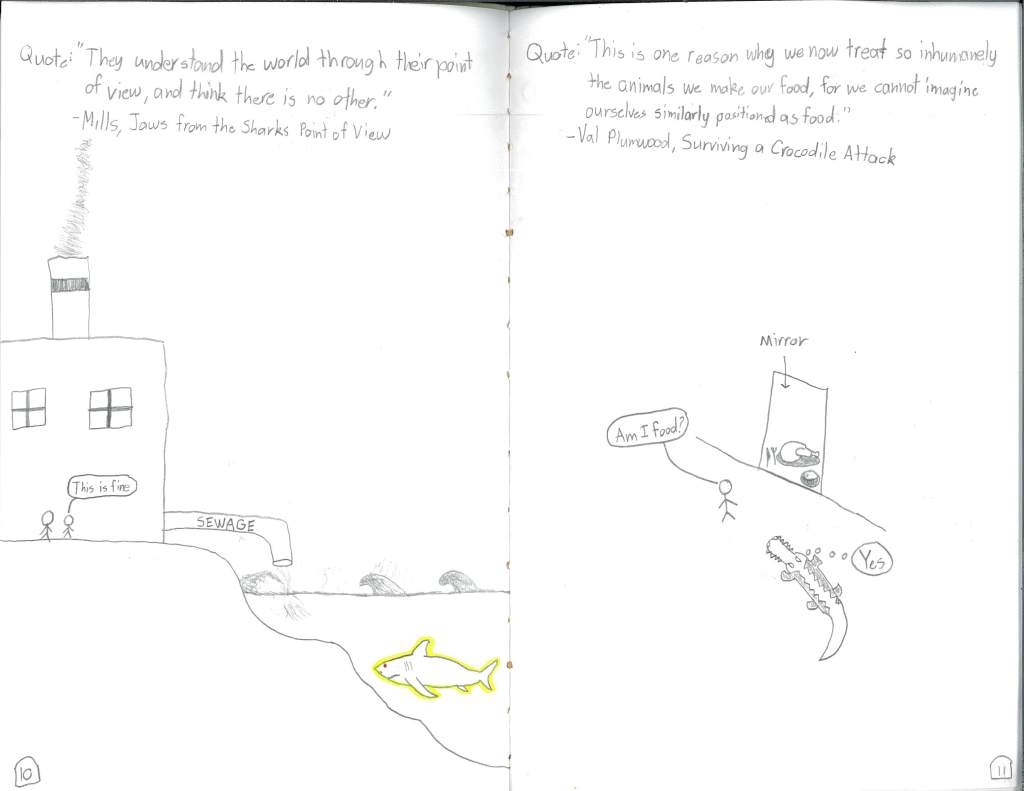
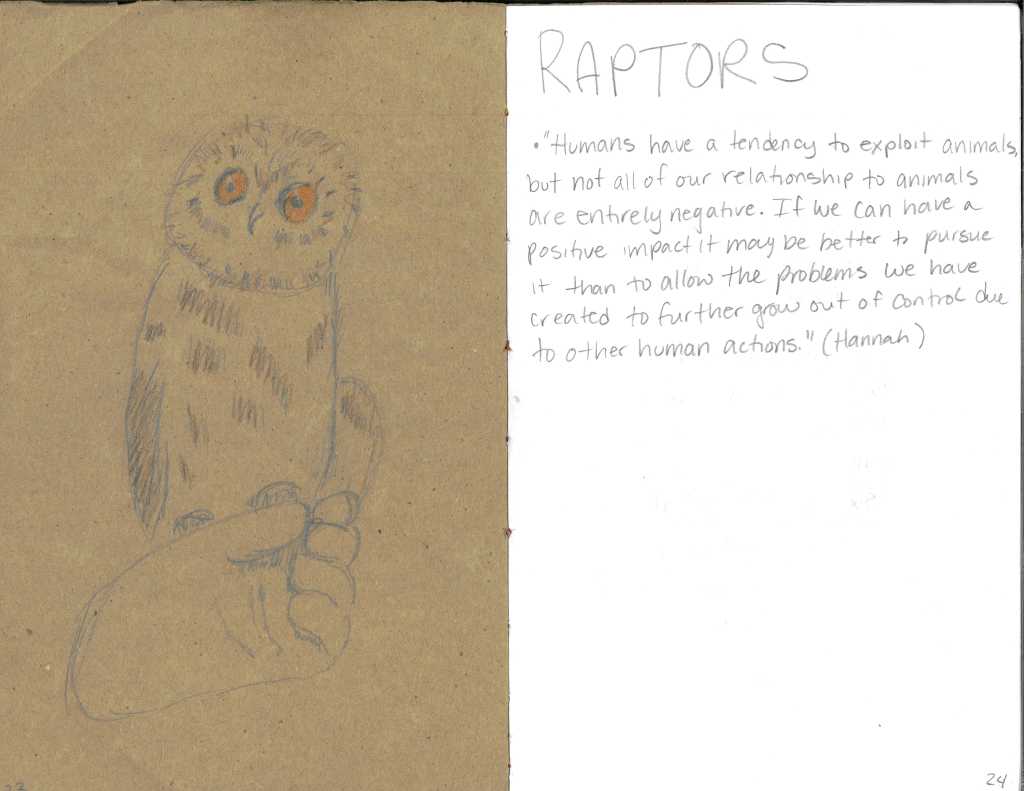
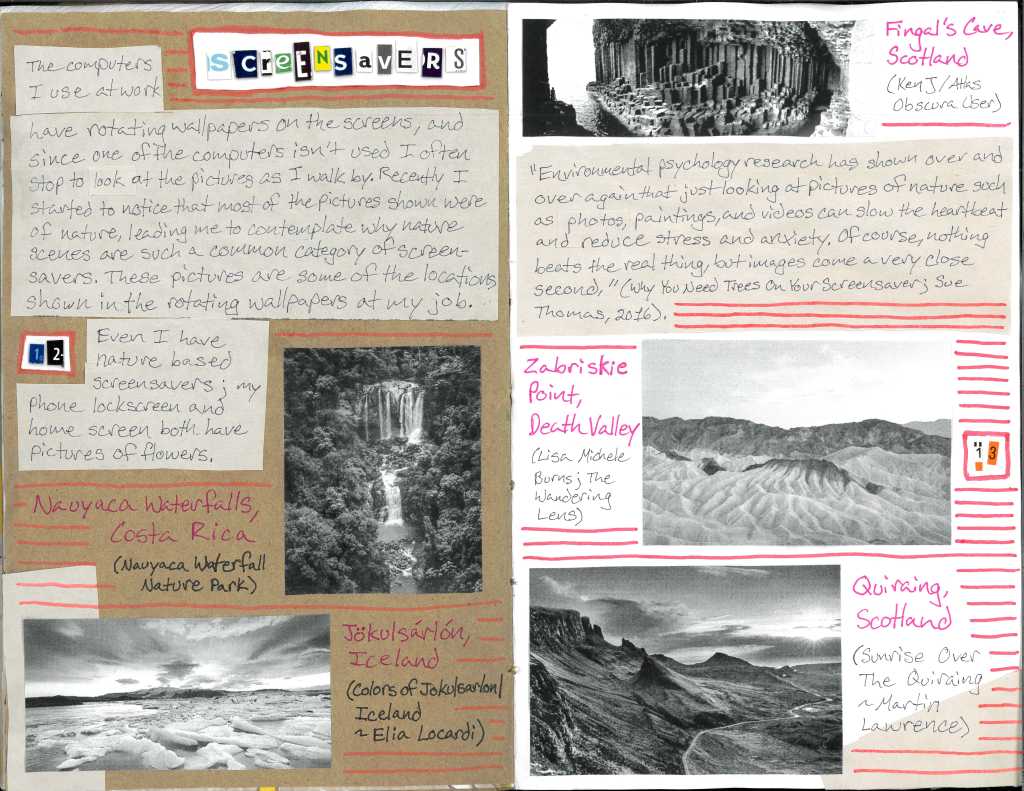
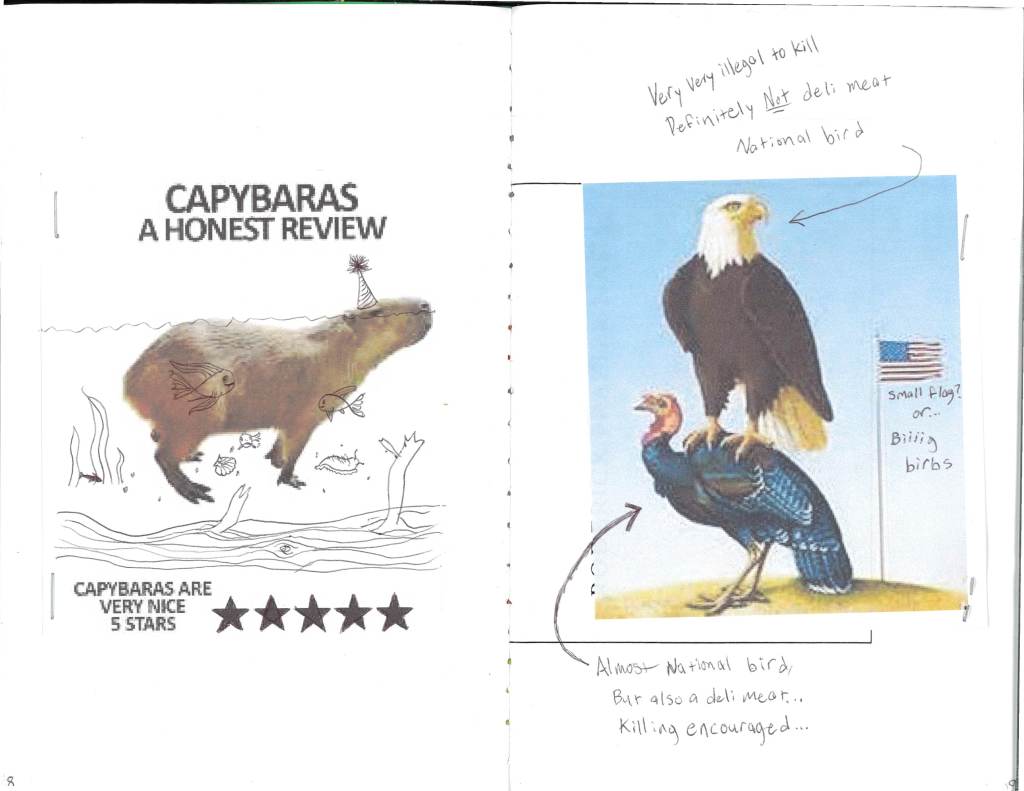
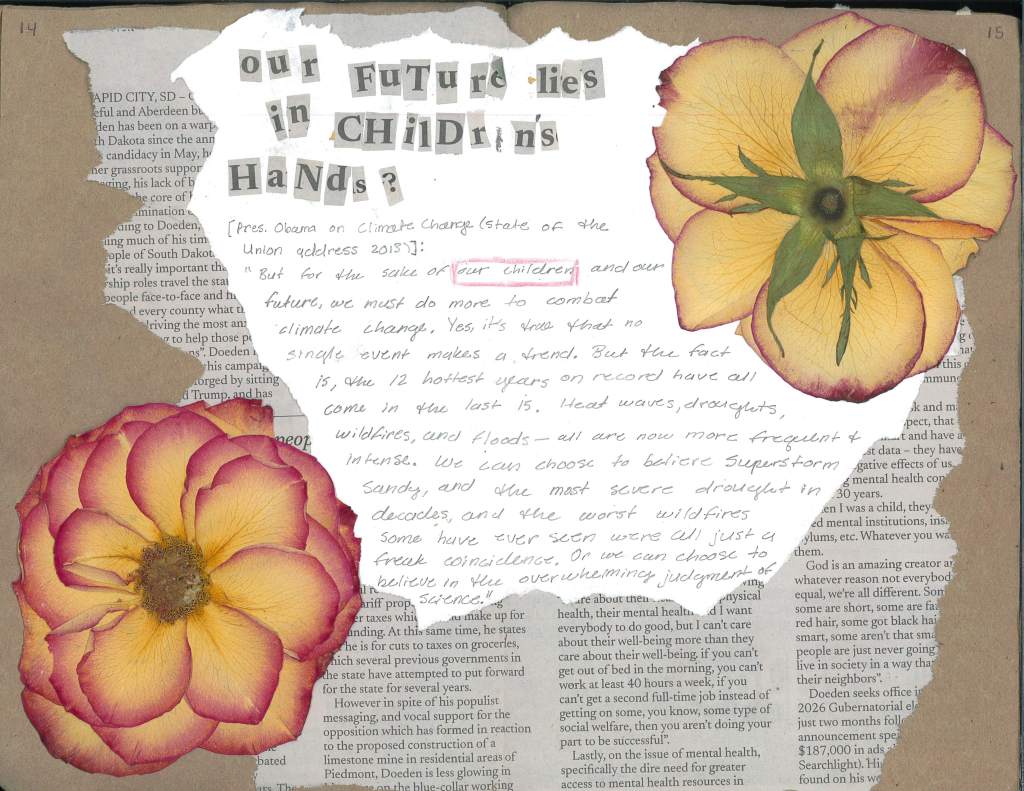
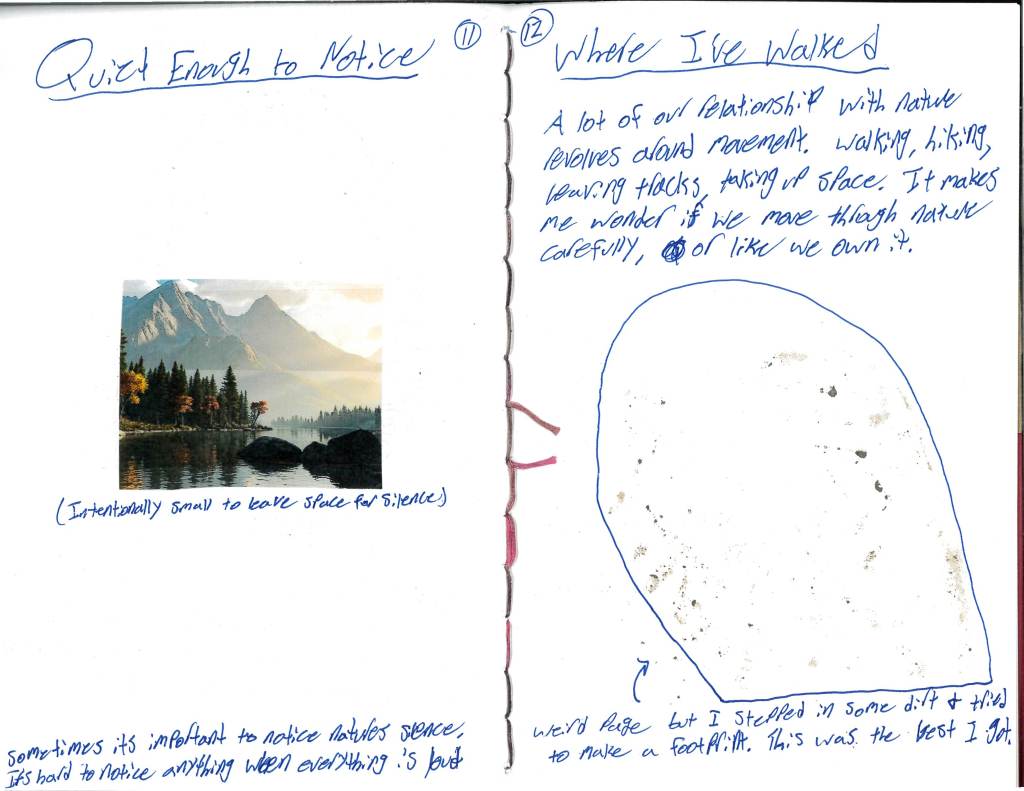
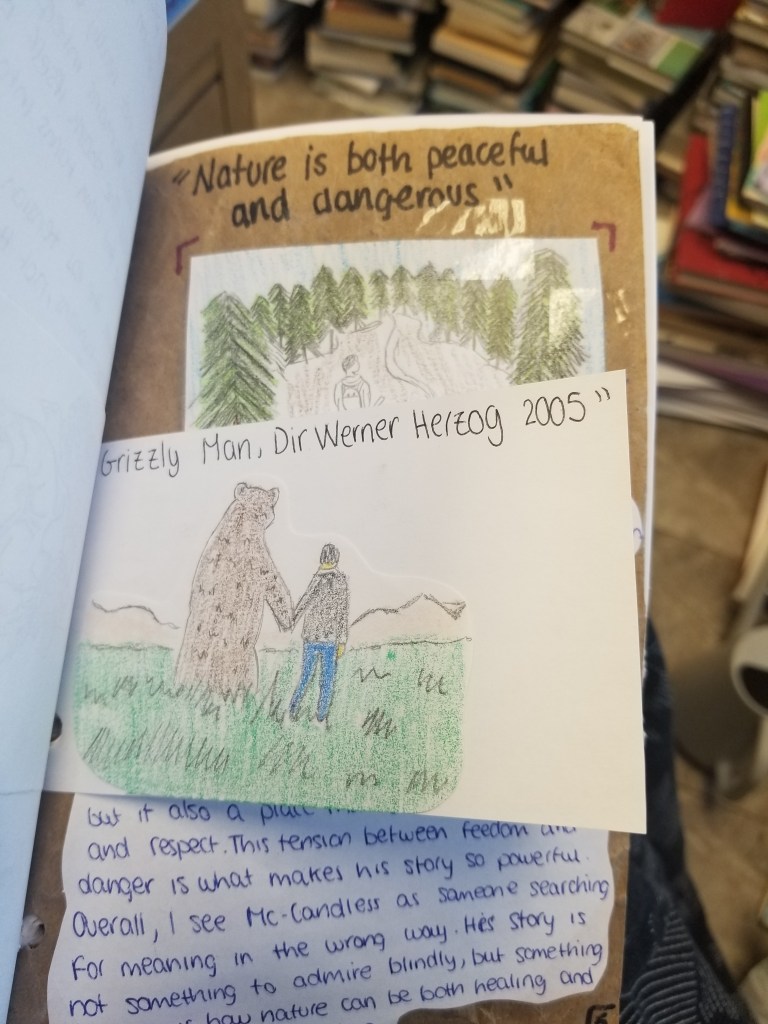
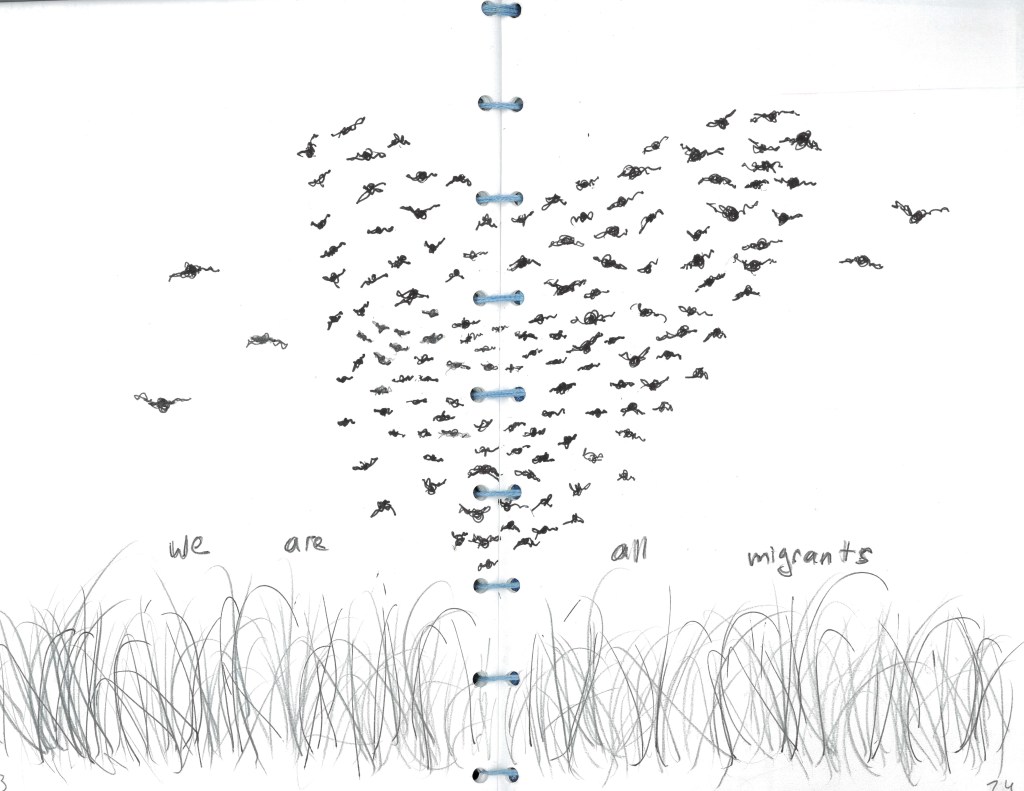
Students were also given almost total freedom in what ideas to include, how to organize their books, and what artistic approach to take. Nonetheless, there were some commonalities; for instance, most students engaged with ideas of wilderness and personhood in meaningful ways because those were throughline concepts of the course. But there was also tremendous variety in execution. Some chose to primarily include quotes from assigned texts, some incorporated more quotes and material from texts outside of class, some took a more scrapbook-style approach, some drew original art, and some included plants, dirt, or other elements of the natural world. Some students organized ideas chronologically as we came to them in the semester, some invented their own topical approach, and some saved materials to organize more systematically.
At the end of the semester, students were asked to complete their commonplace books by reviewing their contents and creating an index to provide a sense of organization and identify common themes. They then shared their commonplace books with me and with their classmates and took time to observe the wide range of approaches, look for patterns, and reflect on what they had learned through the process of making their books.
Most students reported feeling a little overwhelmed initially because of the openness of the assignment, but they also ultimately found the project rewarding. Seeing the variety in their classmates’ projects helped reinforce the sense that there are lots of wonderful ways to collect ideas, and most felt positive about their final products. Despite some initial hesitance about the value of the project, multiple students reported finding this a useful way to remember ideas and make connections, and some even said they would do it again on their own.
Below are some selections from Environmental Literature & Culture’s commonplace books, all shared with permission.