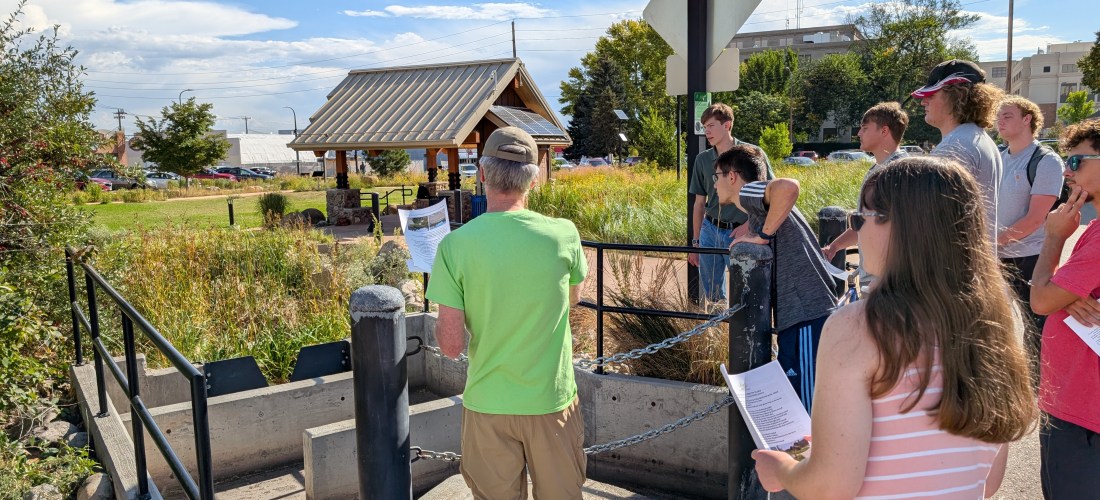
Students in ENGL 289: STEM Communication for Public and Technical Audiences are partnering with Trinity Eco Prayer Parkto leverage their science expertise and science communication skills to help the park face real-world problems. Trinity Eco Prayer Park is a private park owned by the Trinity Lutheran Church Foundation that models sustainable stewardship of the environment. The park naturally filters stormwater for 2/3 of its concrete-heavy city block through native plant species that represent five local biomes from the Great Plains and Black Hills.
Director Ken Steinken stands next to a sign about native prairie restoration.Buffalo grass.
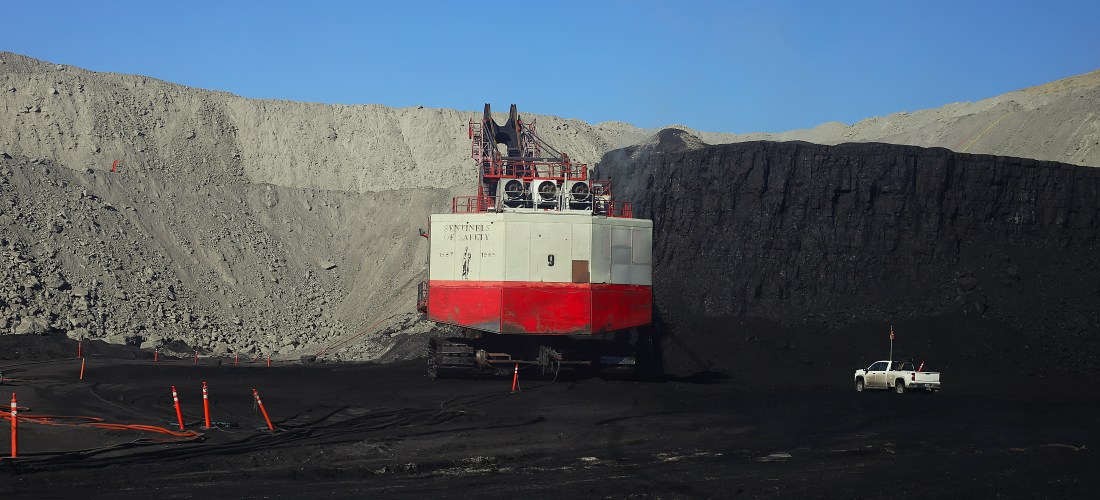
Land rights and mineral rights are a big issue in the mining industry. Mineral rights apply to most solids and liquids beneath the surface of the Earth, like coal, gold, and oil. The distinctions are more complex when you start to look at the laws. Materials like gravel and sand can be mined but are under a “materials” label. Other things are listed under “locatable minerals,” which includes metallic minerals (e.g., gold and silver) and non-metallic minerals (e.g., mica and asbestos).
Mining companies don’t usually own mineral rights to the land they mine. Depending on how the mineral rights are owned, a mining company has to go through different means to get them. If they’re privately owned, they have to discuss leasing or purchase with the owner. If the government owns them, they can request to mine them out.
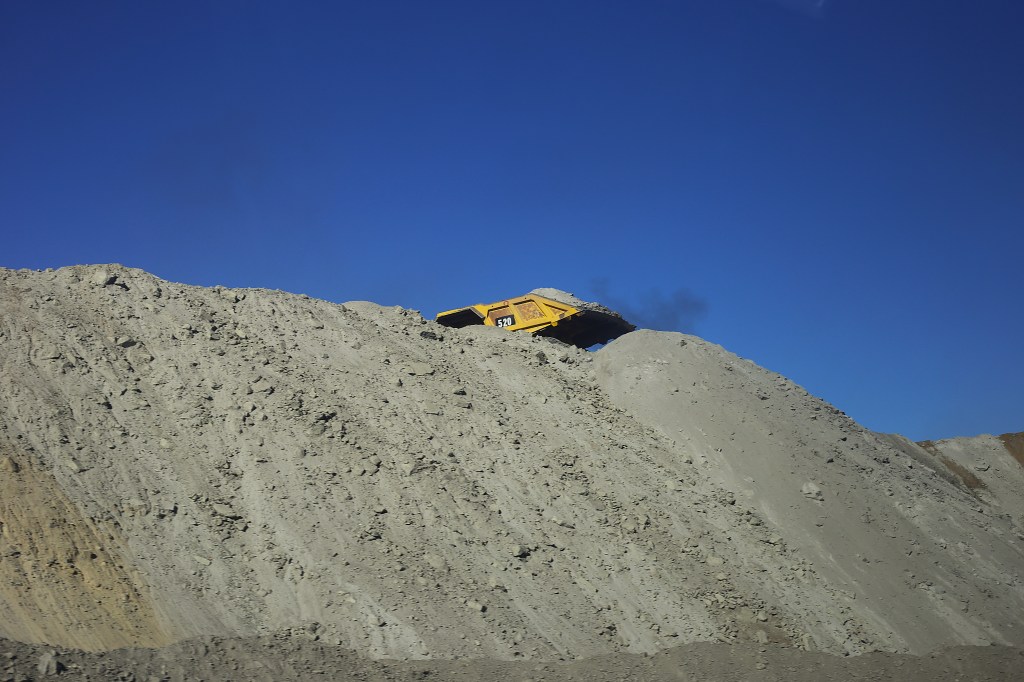
Haul truck dumping overburden. Photo by Parker Smith.
The General Mining Act of 1872 allowed the federal government to give private citizens and companies the “right to locate.” This right isn’t a transfer of mineral rights but instead gives private citizens and companies a right to mine out the materials and use, sell, or modify them. The only updates to this mining legislation have been for workplace safety and minor edits, nothing that would change the structure of mining or the system of claims.
Claims are sorted into two most common categories: lode claims and placer claims. Lode claims are characterized by their well-defined boundaries including one main mineral, whereas placer claims provide for all the minerals in the area affected by the claim. For example, gravel mines are usually placer claims because they aren’t characterized by one distinct vein. This system is also managed and overseen by two separate government organizations: the US Bureau of Land Management and the US Forest Service. If the leasable minerals are on National Forest Service land, then the two organizations work together to decide if and how to lease them.
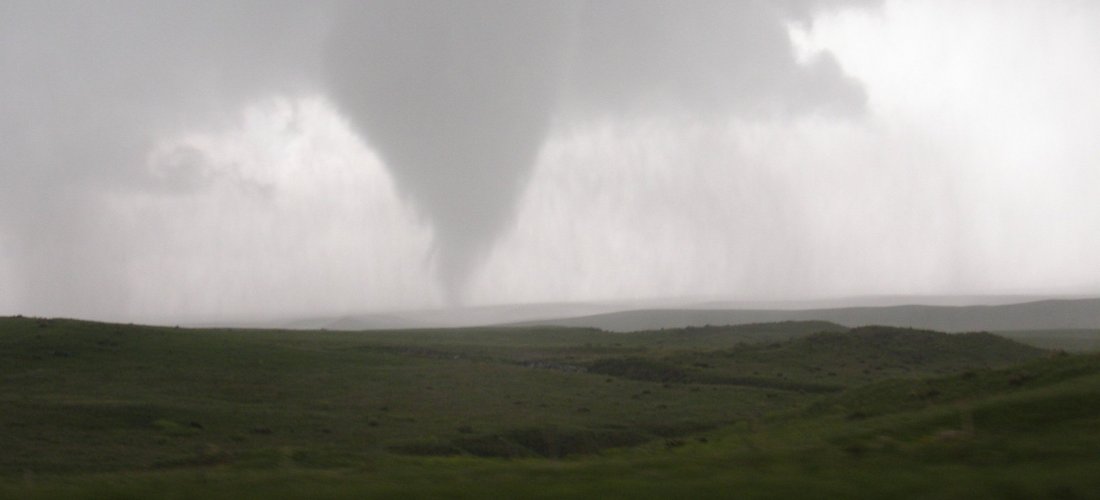
If you look at the annual average number of tornadoes per country, the United States reigns supreme, whether we like it or not. And if we look at South Dakota, the state is not without its share of tornadic activity. For instance, as Dennis Todey, Jay Trobec, and H. Michael Mogil write, “A massive outbreak of tornadoes placed the state in the severe weather record book on the evening of June 24, 2003” (19). On that day, sixty-seven tornadoes touched down over a 6-hour period, a single-state record tornado occurrence.
So, you may be thinking to yourself right now, “I live in the Black Hills region of South Dakota. We don’t have a problem with tornadoes.” Well, what if I told you that tornado activity has increased in the Northern Black Hills of South Dakota in the last decade? This increase in activity is not typical for the Northern Black Hills, since only nine tornadoes have been reported in this region since NOAA started gathering tornado data in 1950. What makes this even more alarming is that, of these nine cases, four have occurred in the last decade. This increase is the focus of my capstone with my two-part research question: Do the Northern Black Hills tornadoes that occurred in 2015, 2018, and 2020 have any similar characteristics to each other? Will this help determine when new tornadoes will form over the same region?
Map of Northern Black Hills tornado tracks and strengths on the EF scale. Red circles indicate tornadoes being researched for this capstone. Source: National Oceanic and Atmospheric Administration
My Environmental Ethics & STEM class asks big questions about knowledge, values, justice, and responsibility – both individual and systemic – related to environmental issues. Although I try to situate these conversations in specific, real-world examples, they can still sometimes seem abstract or beyond the scale of my students’ reach. They may wonder what they can do to address climate change, for instance, or to change corporate policy.
But they can, of course, make a difference, and we look for ways to identify the actions they can take (again, not just individually but within larger contexts). In the meantime, to help connect us more fully to the environment, this semester I asked my students to plant seeds and to do their best to grow them and keep them alive. It’s my hope that working to protect and nurture one small plant will give the class a personal connection that issues of pollution, plastics, or water rights may not always have.
This week’s recommendations stick with the emphasis on ecohorror introduced last week. Instead of presenting monsters like Godzilla or crocodiles, though, these two films find both wonder and horror in exploring the agency of the nonhuman world. How do other species communicate? How do they act upon us and shape our actions?
In any case, monsters demonstrate something about both the world we live in and what we fear. In the 1950s, people feared nuclear war; now, we fear climate change. The two horror movies I’m recommending for this week directly address those fears, presenting viewers with monsters that embody the harm of nuclear warfare/testing in one case and that are the direct result of climate change’s superstorms and unpredictable weather patterns in the other.
Many, perhaps most, of the students I teach are from the Dakotas, Nebraska, and Kansas, all states that are frequently referred to as “Plains States.” (We can spend a lot of time debating the inclusion criteria for a state to qualify as a “Plains State,” but that’s a different post.) At some point in the semester, I usually ask them, as a group, to complete this sentence: “The landscape of my state is ______.” Almost invariably, I am met with a unison chorus of “flat!” or “boring!” This response is more than mere topographical observation.
I grew up in western North Dakota, seeing the landscape much as my students do: essentially flat and nondescript. Not until years later did I realize that I lived in a very dramatic landscape: knuckles of stone push their way out of ancient hills, the last evidence of resistance to glacial domination thousands of years ago. Stretches that appear flat are actually cascading downward, racing toward whatever rare stream or coulee will collect the sparse rainfall. The grass itself frustrates efforts to touch the ground, as one must dig through several inches of dense, matted undergrowth to find soil. This immense complexity is most evident at dawn and dusk, when the extreme angle of sunlight throws easily elided variation into sharp relief.
Climate change can seem overwhelming. It’s so big, and responding to it will involve more than individual actions, so it’s easy to feel discouraged or fearful. It’s also tempting to simply deny that it’s happening and hope for the best. In This Changes Everything: Climate Change Vs. Capitalism, Naomi Klein writes about how easy it is for us to “look for a split second” and then look away, joke about it, “tell ourselves comforting stories about how humans are clever,” etc. She writes, “All we have to do is not react as if this is a full-blown crisis. All we have to do is keep on denying how frightened we actually are. And then, bit by bit, we will have arrived at the place we most fear, the thing from which we have been averting our eyes. No additional effort required.” Obviously, this denial does not solve the problem.
Poetry works against this denial in a variety of ways. Some poets simply describe the losses we face. Risa Denenberg’s “Ice Would Suffice” (2017), for instance, emphasizes how “species are lost, / spotted frogs / and tufted puffins forsaken” and observes how we remain “heedless of lacking space / or how long / our makeshift planet will host us.” From its title’s reference to Robert Frost’s “Fire and Ice” (1920), a poem about how the world might end, to its emphasis on failure and loss, Denenberg’s poem demands that readers face our own human decline and likely extinction.
In 1976 my eighth-grade science teacher gave us an assignment that seems as if it possibly aligned with that year’s Earth Day activities. I recall this primarily because of its embarrassing results. We were told to dig up some soil from our family’s yard and bring it to school to develop our own little in-door plot for growing some plant or other. Being part of the only family in southwestern Ohio not possessed of an old coffee can or some other suitable container, I dutifully filled a black plastic lawn bag with what seemed like a lot of dirt and stuffed that in a gym bag. Managing to lug my Earth Day “earth” on to the school bus, I stuffed the gym bag in my locker. When the time came for science class, I opened the locker and discovered that the plastic bag had ruptured. I suppose I somehow wrestled my embarrassingly overflowing bag of dirt into class and eventually grew something, but that sickening demoralization of middle-school level humiliation was all that really stuck with me.
Poster for the ENACT (Environmental Action for Survival) Earth Day Teach-In on the University of Michigan – Ann Arbor campus in March 1970.
My hapless effort at dirt transplantation offers a metaphor of sorts for the Earth Day phenomenon. Well-intentioned individual efforts on behalf of noble aspirations to better the planet, even if more successful than mine, amount to relatively small achievements. The first Earth Day on April 22, 1970, was certainly a masterstroke in terms of generating citizen engagement and marketing an increasingly popular sentiment into a mass movement spectacle. It can even be argued that bipartisan passage of significant federal environmental legislation, such as the Clean Air Act of 1970, the Clean Water Act of 1972, and the Endangered Species Act of 1973, fed on momentum provided by Earth Day. Additional impacts included a surge in environmental organization memberships during the 1970s and growing influence of such organizations in legal actions against corporations and government agencies.








 The Novum
