Last week, Matt Whitehead and I gave a presentation about the relationship between poetry and science for National Poetry Month as part of the STEAM Cafe series at Hay Camp Brewing. If you were not able to attend, this is a brief version of what we presented.
As members of the Humanities, Arts, and Social Sciences department, Matt and I (as Art and English faculty, respectively) spend a lot of time thinking about how to get students thinking creatively and engaging in creative projects. Given our work with the Science, Technology, & Society degree, we also work with connections between humanities/arts and science/technology, and we encourage our students to see creativity as something that they don’t do only in our classes but that is a part of their scientific and engineering work, too.
Our core question grows out of this work: What does poetry have to do with science?
The two might seem fundamentally dissimilar, belonging to different realms, but both offer opportunities to look carefully, communicate observations, make connections, and understand the world more fully – piece by piece, experience by experience.
“[Zines] are practices of ‘poetic world-making’—poetic not in the sense of a poem on the page (although they can be this too), but in the sense of poesis: the process of creating something that did not exist before.” – Gwen Allen
The classes I teach create communities. Students get to know each other as they learn the course material, and they share ideas and work with each other. This is a form of world-making, even if temporary, and I love this about my classes. But I don’t want the connections and sharing to stop at the classroom door or to be forgotten when the semester ends. The goal is for my students to connect what they’re learning in class with the rest of the world, to share what they’ve learned with others, to hear what others have learned, and to join and build other communities.
Finding ways to do this can be challenging, but it’s not impossible.
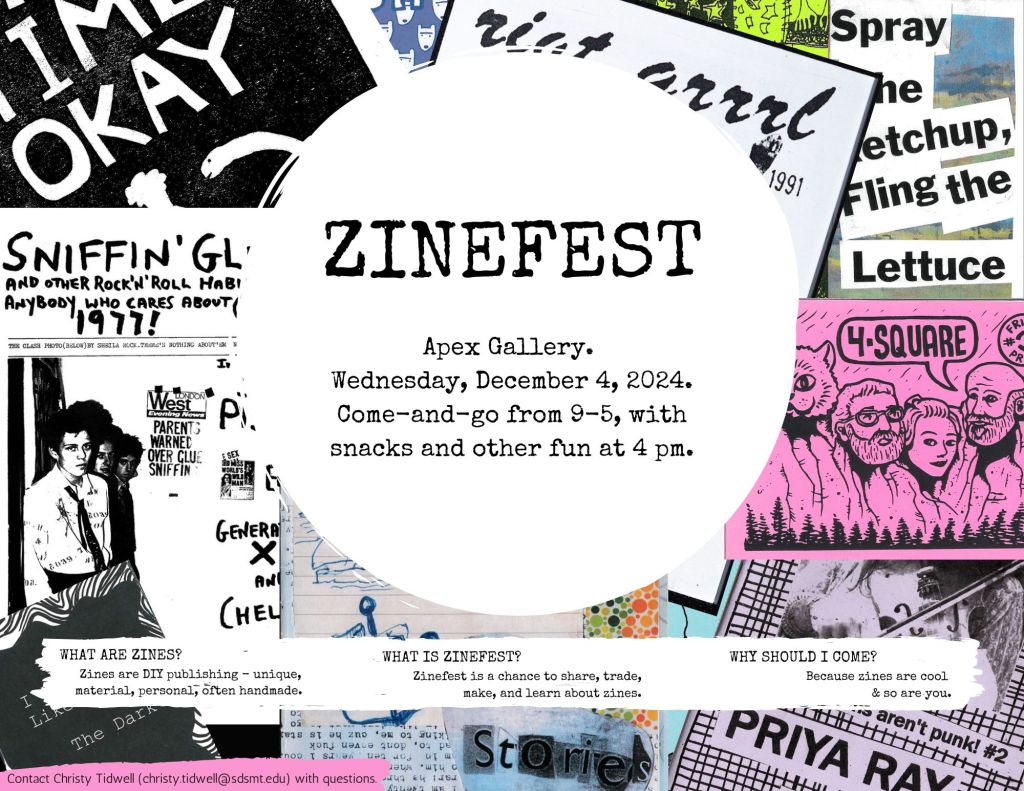
This semester, as a way for students to connect across classes and share work with broader audiences, a few of us in the Humanities, Arts, and Social Sciences department (myself, Matt Whitehead, Evan Thomas, Erica Haugtvedt, and Mary Witlacil) put on a series of zinemaking events that culminated in a Zinefest in the Apex Gallery on December 4th. Zinefest was an all-day come-and-go event that displayed the zines students made in classes (and, in a few cases, just for fun!), provided some examples of interesting zines made by others, and gave visitors a chance to make their own zines. (If you missed it this year, watch out for another event next year!)
This event let students share some of what they have learned this semester, giving them a broader audience, and it also connected them to students in other classes and to the audiences who came to Zinefest. While I did not count the number of visitors during Zinefest, the gallery filled several times and was rarely empty. Some people walked through relatively quickly and took in only a few zines; others stayed for quite a while, standing and reading multiple zines before finally deciding on some they wanted to keep. One student – who will remain nameless for obvious reasons – wrote in a reflection afterward, “I spent almost 2 hours there and accidentally missed class, so I would say I had a good time.” Although I would (of course) never encourage a student to miss class, this indicates that Zinefest offered this student something meaningful.
Because most students were asked to bring multiple copies of their zines, visitors could take a copy of one if they were particularly interested in its ideas or really loved it. Hopefully, they will re-read any zines they took, remember the event, and maybe even be inspired to make their own! Leaving with a material artifact helps the experience and community created through this event extend past Zinefest itself.
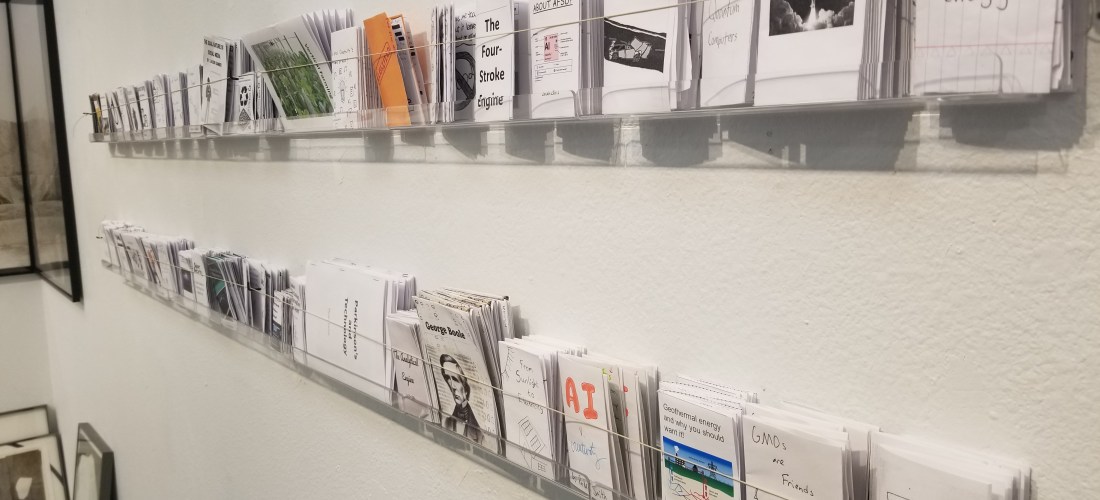
Student zines on display with an invitation to take a zine.
As an event, Zinefest promoted connections and community; as a practice, making zines (even without an event like Zinefest) provides us all with an opportunity to create something new – to engage in world-making – and to share that something with others, without requiring elaborate technology or infrastructure, refined skills, or many resources. Anyone can make a zine, and that’s what’s so beautiful about them.
Every year the United States suffers from millions of dollars of hail damage to crops, homes, businesses, etc. In 2023, hail resulted in $2.3 billion in damage in the United States alone (NOAA, 2024). Figuring out if we can minimize hail size could make a huge difference. My research focuses on the physics involved in cloud seeding and how this might influence hail formation.
Cloud seeding is a weather modification tool where substances like silver iodide are added to the atmosphere to produce precipitation if moisture is present in that atmosphere. The substances act as cloud condensation nuclei, which helps the formation of ice crystals. If the number of ice crystals were to increase, they would be competing to absorb water. As the water attaches to these particles, it freezes and combines with other droplets to form hail. This increased competition can result in smaller hailstones, which could cause less damage and help communities that are impacted by severe hailstorms. While a lot of research has been done on cloud seedings overall effects, like increasing rainfall, its ability to reduce hail size is not consistent in research. Studies have shown mixed results, some suggesting that cloud seeding does limit hail size, while other studies suggest that cloud seeding has no impact on hail size. These findings emphasize the need to further research to see if cloud seeding is a good tool to reduce hail size.
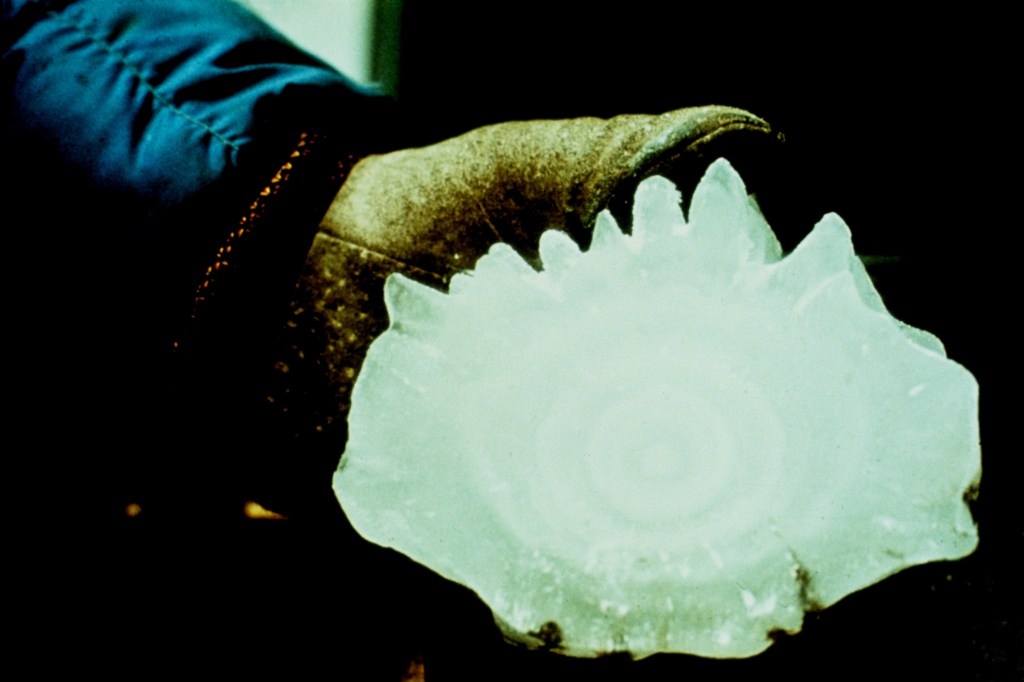
A very large hailstone cut in half revealing its “rings of growth.” This likely caused severe damage to the surrounding environment. Photo credit: NOAA Legacy Photo; OAR/ERL/Wave Propagation Laboratory (via Flickr).
To explore this, I am using the CM1 Model (Cloud Model 1) to simulate thunderstorms and study how cloud seeding might influence hail formation. CM1 is a numerical model that allows us to simulate weather like thunderstorms, squall lines, and other systems. The model allows the user to adjust different variables like temperature, moisture, and microphysics. This is an ideal tool to study the processes behind hail formation.
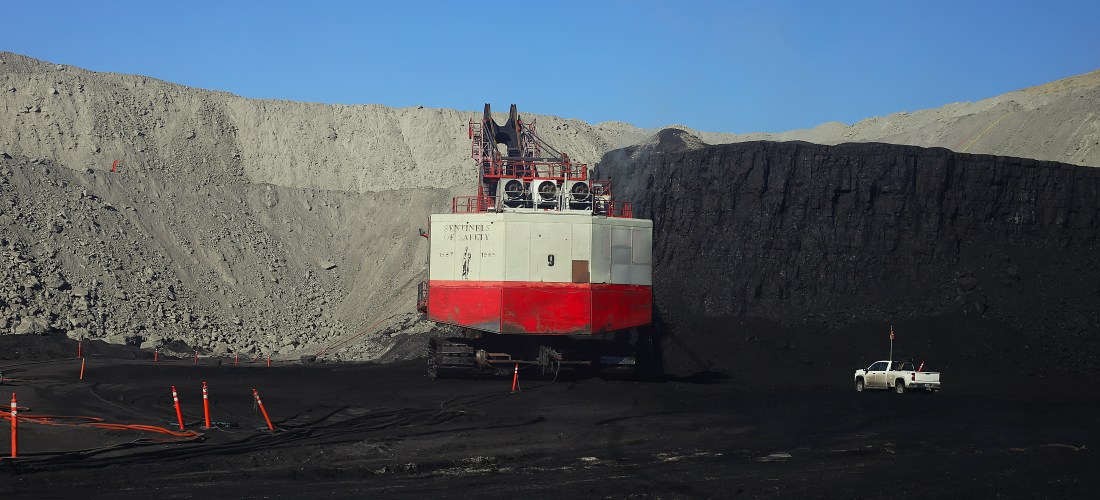
Land rights and mineral rights are a big issue in the mining industry. Mineral rights apply to most solids and liquids beneath the surface of the Earth, like coal, gold, and oil. The distinctions are more complex when you start to look at the laws. Materials like gravel and sand can be mined but are under a “materials” label. Other things are listed under “locatable minerals,” which includes metallic minerals (e.g., gold and silver) and non-metallic minerals (e.g., mica and asbestos).
Mining companies don’t usually own mineral rights to the land they mine. Depending on how the mineral rights are owned, a mining company has to go through different means to get them. If they’re privately owned, they have to discuss leasing or purchase with the owner. If the government owns them, they can request to mine them out.
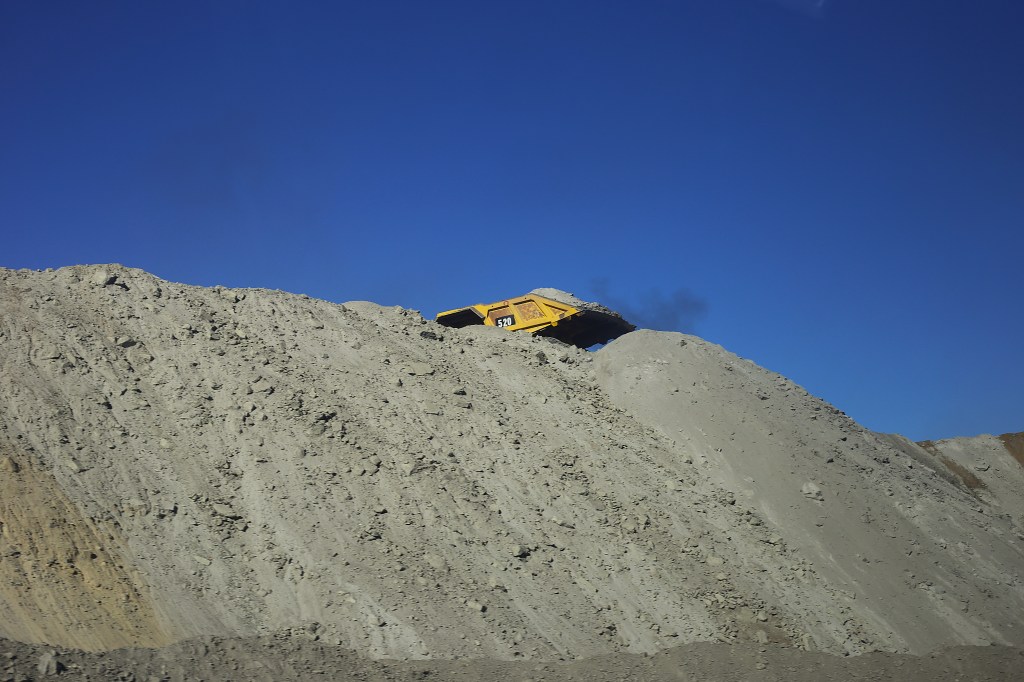
Haul truck dumping overburden. Photo by Parker Smith.
The General Mining Act of 1872 allowed the federal government to give private citizens and companies the “right to locate.” This right isn’t a transfer of mineral rights but instead gives private citizens and companies a right to mine out the materials and use, sell, or modify them. The only updates to this mining legislation have been for workplace safety and minor edits, nothing that would change the structure of mining or the system of claims.
Claims are sorted into two most common categories: lode claims and placer claims. Lode claims are characterized by their well-defined boundaries including one main mineral, whereas placer claims provide for all the minerals in the area affected by the claim. For example, gravel mines are usually placer claims because they aren’t characterized by one distinct vein. This system is also managed and overseen by two separate government organizations: the US Bureau of Land Management and the US Forest Service. If the leasable minerals are on National Forest Service land, then the two organizations work together to decide if and how to lease them.
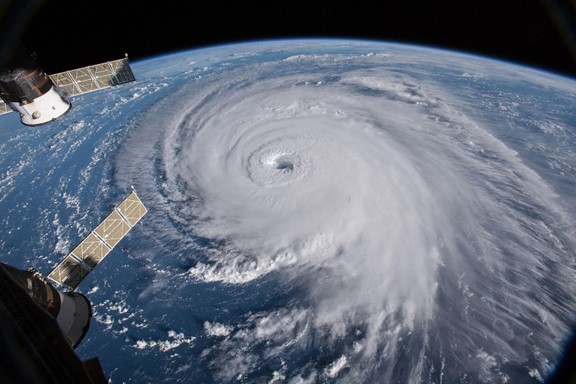
Since I was a kid, I have always had an interest in coastal weather. I saw the Pacific Ocean for the first time when I was four years old, and I was in awe of the immense size and natural harmony of the ocean. What sparked my interest in research in this field was the recent global change in tropical cyclone intensity. The warming of the oceans globally has led to an increase in the proportion of intense hurricanes (Holland, 2013). This struck me as immensely important because of the catastrophic impact that tropical storms can have on the lives and properties of anyone living in a coastal region. It is estimated that the average tropical storm in the US causes between seven and eleven thousand deaths per storm, and tropical storms have accounted for between 3.6 to 5.2 million deaths since 1930 in the U.S. (Garthwaite, 2024).
The United States is no stranger to tropical storms, and their unpredictability and aggression makes them a daunting task for coastal meteorologists to forecast. Hurricanes are formed as a result of a large amount of water vapor condensing and circulating over warm oceanic areas (Holland, 2014). When water vapor condenses into clouds, it releases large amounts of latent heat, which contributes to the available convective energy in the atmosphere. As the sea surface temperatures rise, the amount of evaporation over the ocean increases and subsequently the amount of available water vapor increases as well. This rise in available water vapor allows for more condensation and latent heat release, which creates a positive feedback relationship that is theorized to be the cause for the increased frequency, intensity, and location of intense hurricanes (Lackman, 2011).
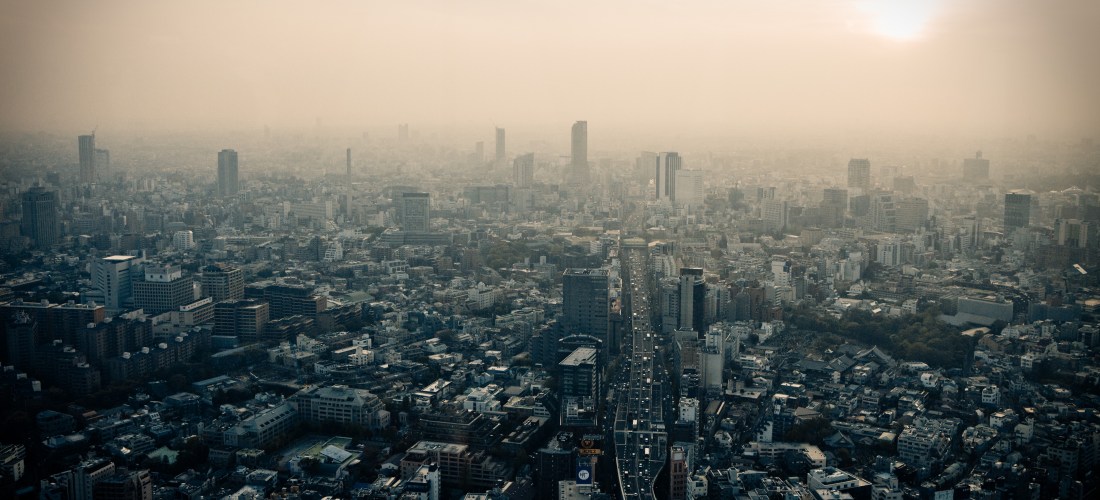
I have always been curious about the weather and climate, as my dad was a pilot and used to teach me little things about the atmosphere. When I entered college, I decided to follow that curiosity by majoring in atmospheric sciences and developed a new interest in air quality along the way. Air quality is an issue that has global effects with potential detrimental impacts, and I would like to find a job that uses scientific understanding of air pollution to make impactful actions and policies. Specifically, I would like to go into pollution modeling and management to help mitigate the effects of pollution on communities and ecosystems.
This interest was sparked during an internship I had last summer as part of NASA’s Student Airborne Research Program (SARP). This experience allowed me to use airborne data to validate the Environmental Protection Agency’s (EPA) Community Multiscale Air Quality Model (CMAQ), to see how accurately the model predicts the concentrations of different pollutants. The CMAQ model works by incorporating meteorological (wind, temperature, etc.), emission, and chemical models to simulate the concentrations of trace gases, particulate matter, and atmospheric pollutants both spatially and temporally (EPA, 2022).
Property of NASA SARP. Credit: Madison Landi.
For my senior capstone project, I will be expanding on my previous research to build a better understanding of the capabilities of the model, as it recently underwent an update in 2022 to improve the meteorological processes and emissions. I will focus on the South Coast Air Basin in California, an area with known, notable air quality issues (Chen, et al., 2020) and the levels of formaldehyde and methane there. Both methane and formaldehyde act as active gases in the atmosphere. With methane concentrations on the rise (Feng, et al., 2023) and formaldehyde as a health and environmental irritant (Lucken, et al., 2018), they are important gases to study and understand. I will be assessing how well the CMAQ model can simulate the concentrations of formaldehyde and methane in the atmosphere, as well as the accuracy of the meteorological inputs (i.e., wind) as they greatly affect the behavior and amounts of those gasses. (Barsanti, et al., 2019).
Most semesters, I teach at least one section of Introduction to Humanities (HUM 100). In order to anchor the class’s exploration of such a potentially broad topic, I choose one or two topics to guide our semester-long inquiry into the human experience. This semester, those two topics are place and sound. On the one hand, they are nearly universal categories of human experience, as we inhabit location and experience vibration every day. But on the other, they are infinitely variable. One person’s experience and understanding of a place, or of a particular set of sounds, may be entirely different than another person’s, even if that place and sound are outwardly identical.
One way that my students are exploring the possibilities of sound and space is by experimenting with an artform called “audio walks.” Popularized by artists Janet Cardiff and George Bures Miller, these mobile art installations ask the participant to go on a walk, retracing the artist’s footsteps as they listen to an audio recording of the artist’s walk. The artist will often comment on their surroundings, including exact navigation directions for the listener. Inevitable differences in the artist’s recording of their walk and the listener’s own environment (different people passing by, different vehicle sounds, even different times of the day or seasons) draw attention to the differences between the ways we represent experience and our actual experience. This, in turn, helps students appreciate the ways that media technologies affect how we experience, understand, and value the world around us.
Some audio walks are straightforward, presenting an ostensibly “authentic” recording of what the artist experienced on their walk. However, the artist may also choose to more actively compose their audio walk, either by preplanning events to be captured during the recording or by editing the recording after the fact. Such additions amplify the disjuncture between what listeners hear in the recording and what they experience as they retrace the walk.
Eden Otten, a freshman Civil Engineering major, captured the contrast well in a discussion board reply:
I think a sense of community in sound is more fleeting than one in place. We still shared the same trail to Boneyard, and I was in the same place that this audio tour gave meaning to. However, many aspects of sound that gave the walk uniqueness were gone in the days between capturing it and listening to it. We experienced the place the same, but the unique sound couldn’t be a shared experience, as I could hear your contributions to the soundscape, but you couldn’t hear mine.
Below are links to download some of the students’ audio walks. If you’re on campus, I encourage you to download one or more to your mobile device and go on the same walk that the artist did! Walks are best experienced with headphones.
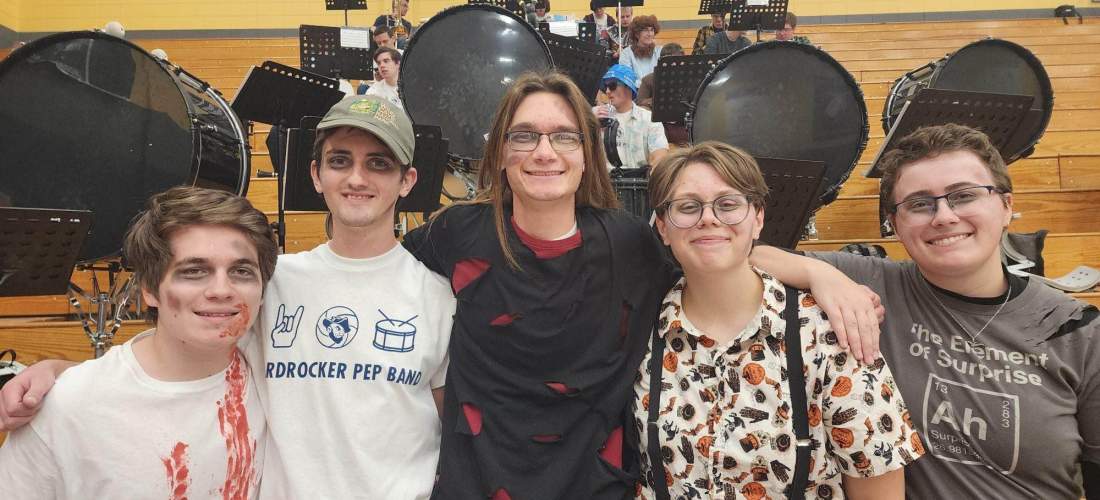
Halloween offers a great opportunity to be creative, and the STS program’s second annual Halloween costume contest received some fantastic entries! We saw characters from movies and TV, traditional horror movie types (like zombies!), animals, invented characters, and historical figures.
Although we loved all of the costumes, we did need to narrow this down to a few winners since it’s a contest. Here are the winners!
It’s nearly Halloween, so we wanted to share some information about this year’s Halloween costume contest and some spooky content from years past.
Last year, we got some great costume contest entries (see the winners here!), and we’re looking forward to more excellent costumes this year. Open to all SD Mines students, faculty, and staff, the costume contest is simple to enter and offers prizes for winners! If you love dressing up for Halloween, enter by sharing a picture and description of your costume on Instagram and tagging us (@sts_sdmines) or by emailing Dr. Christy Tidwell your entry (christy.tidwell@sdsmt.edu). We really hope to see some STS-related costumes, but all costumes are welcome!
We also wanted to highlight some past posts about scary movies to check out if you missed them the first time around: a series of posts called Spooky Science at the Movies (part 1, part 2, part 3, part 4, and part 5), as well as a post about the Science of Scare project, which measures the so-called scariest movie of the year each year. This year, the Science of Scare named Oddity the scariest movie – watch it for yourself and see what you think!
Since Science, Technology, and Society (STS) is fundamentally about the intersections between science/technology and people, communicating technical information to broader audiences is a crucial skill. It’s hard to understand the science/technology itself, much less its impact on our lives, when it is only available in specialized spaces or when it is not shared in ways that ordinary people can understand.
With this in mind, two STS students have taken on the position of Public Information Officer (PIO) this semester to work with groups of senior mining engineering students and communicate relevant information to the public. Paul Roques and Parker Smith are each meeting with the mining engineering students, traveling to locations where they’re working, and reporting on what they learn – both about the mining engineering students’ specific projects and about the larger issues that arise around them.
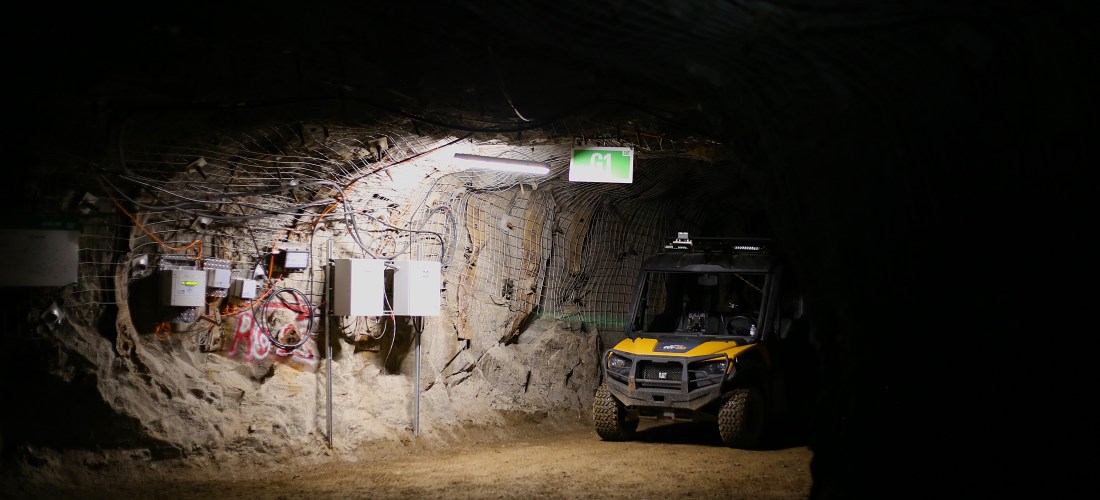
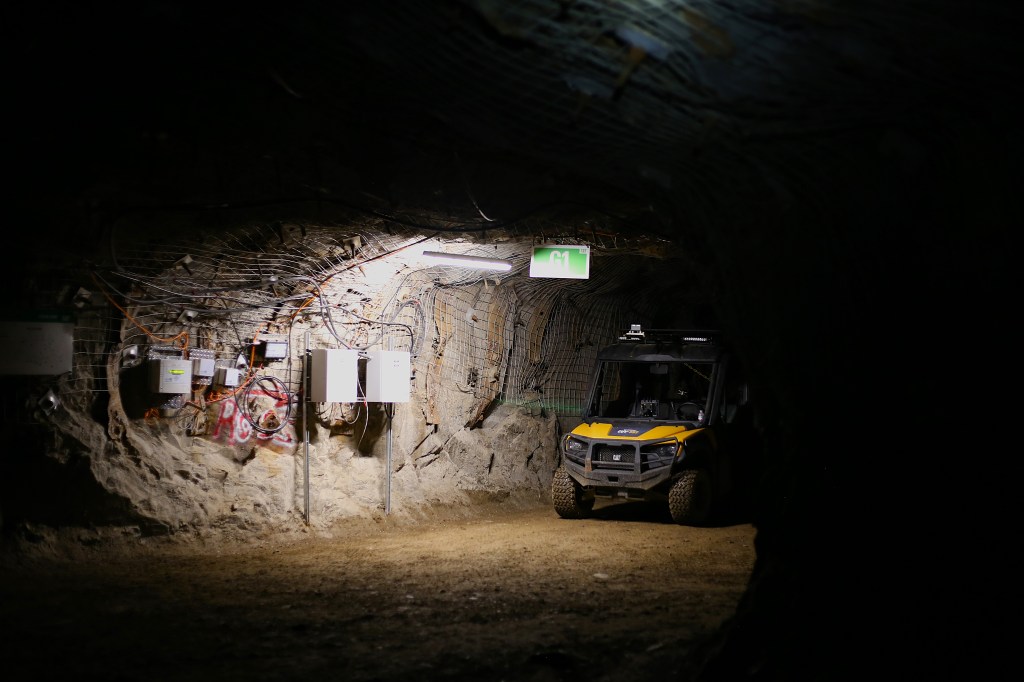
Image by Parker Smith.
Recently, for instance, both Parker and Paul wrote about the infrastructure at SURF (Sanford Underground Research Facility), where mining engineering seniors are working on a project. Parker explored what it felt like to go down into the underground facility and the older technologies – like elevators – involved in making that possible, while Paul described not only the project the mining engineering students are involved with (building an underground complex for CAT to test autonomous equipment) but also the questions of what mining costs – both financially and environmentally.
Parker and Paul are doing great work sharing information about these specialized projects with the rest of us through regular posts for STS social media, so you can check out their work on Instagram, Threads, or Facebook!