This semester, I am teaching a section of Connections: Humanities & Technology (HUM 200), which is one of our core STS courses as well as a general education course that students from across the university take to fulfill their humanities requirement. There are many ways to teach this course to get students to think more critically and more deeply about the relationships between the humanities and various technologies, and this particular semester’s class begins with a few weeks exploring printing technologies.
What better way to understand printing technologies than to try them out?
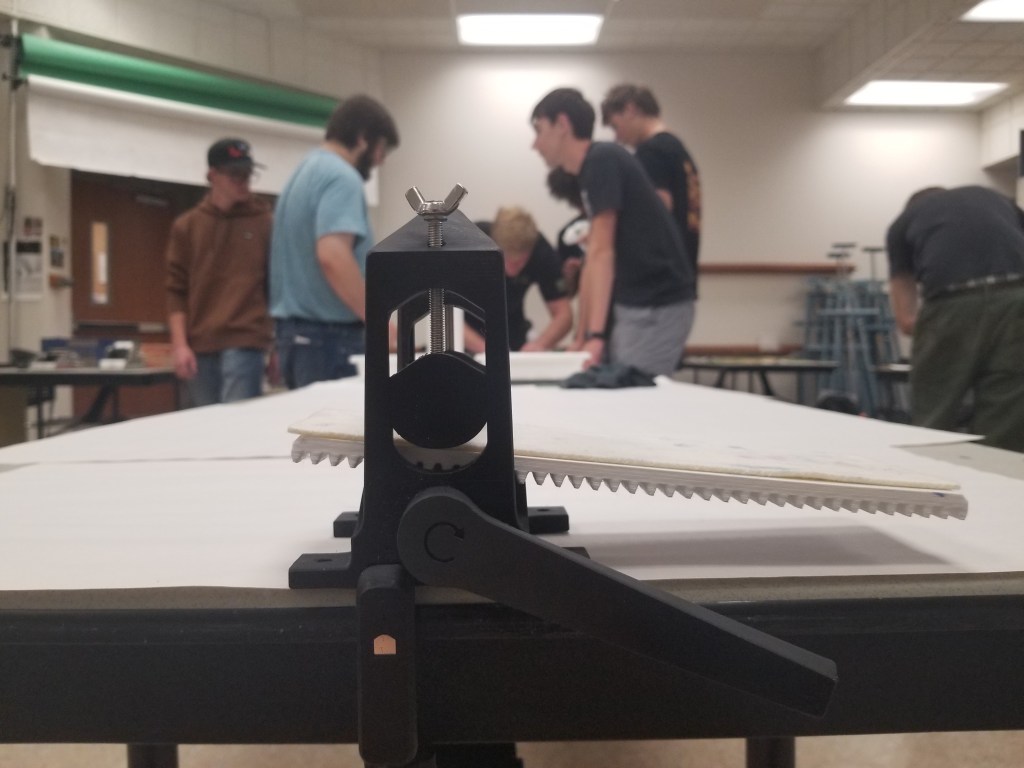
To incorporate a hands-on approach to printing in the class, I worked with our art professor, Matt Whitehead, to prepare an activity for students in the art room. We wanted to give students a chance to work with printing presses in a couple of different ways, to try using a typewriter and a Leroy lettering set, and to check out some old toy moveable type presses. These toy presses date from the 1940s and are no longer totally functional, so they were more on display than for use, but they still allowed students to get a better sense of what a moveable type printing press is like on a small scale.
A mini printing press from the Open Press Project, with students working in the background.
After a brief introduction to some basic printing techniques and explanation of what was available, students were given the freedom to explore these technologies in whatever order they wished. Some made an effort to try everything and even combined elements (the printing press with text from the typewriter or lettering set, for instance); some really focused in on one technology or technique and tried it multiple times or in multiple ways.
As we begin this academic year, the Science, Technology, & Society program has plenty of news to share and exciting events coming up. Check out some of what’s been going on with us and keep an eye out for events you can attend in the coming weeks and months!
Faculty News
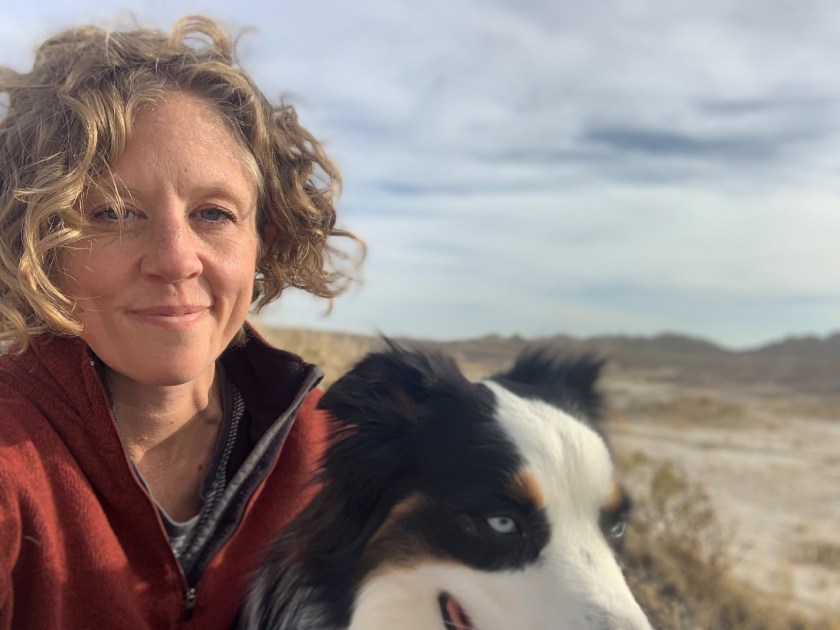
We are excited to welcome Carlie Herrick as a Lecturer in English. She has taught English classes here at South Dakota Mines for many years already and is a wonderful colleague, so we’re glad to have her take on this new position! We are also pleased to announce that Kayla Pritchard has been promoted from Associate Professor and is now Professor of Sociology.
Carlie Herrick (and dog)Kayla Pritchard
STS Program News
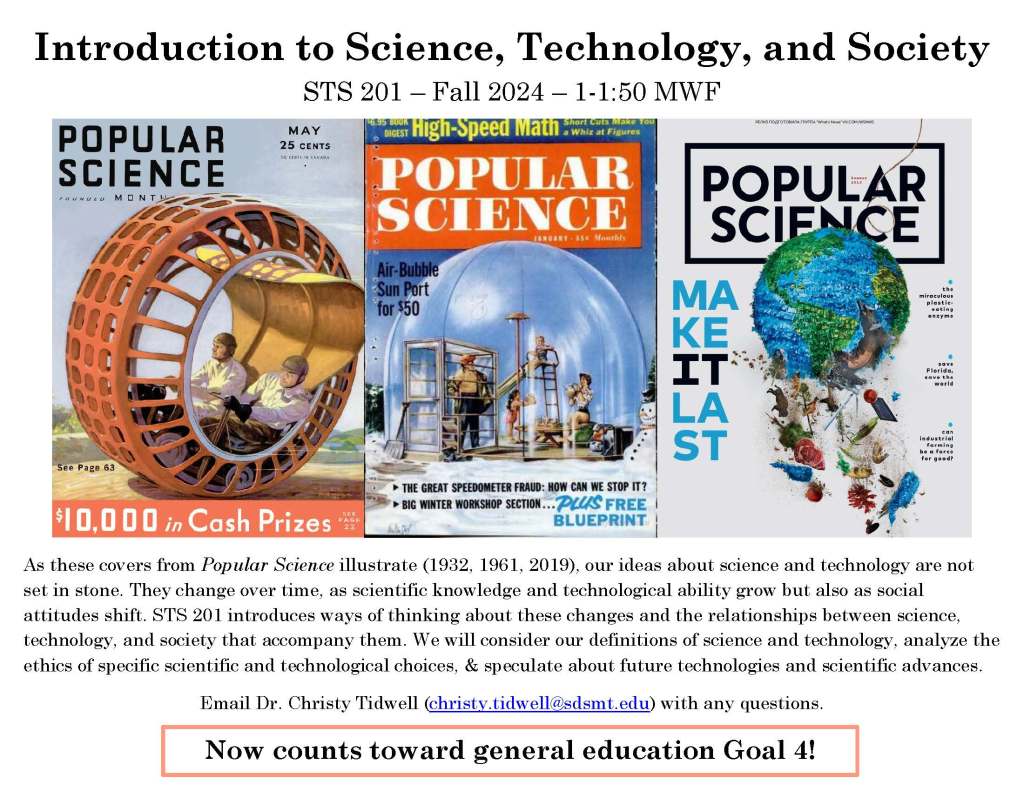
One of our core STS courses – STS 201: Introduction to Science, Technology, & Society – now counts as a Goal 4 general education course. This doesn’t change the course itself in any significant way, but it does mean that there’s now a good reason for students of all majors to take the course. The class gives students a chance to do the kind of work STS scholars do and to gain a different perspective on their own disciplines. In STS 201, students thoughtfully examine the relationships between science, technology, and society; explore the ways we define these terms and the effects of defining them in these ways; and learn about the history and ethical consequences of scientific research and technological innovations.
Upcoming Events
If you’re looking for cool things to do, STS has you covered this year! Here’s a list of upcoming events sponsored by the STS program and/or the Humanities, Arts, and Social Sciences (HASS) department. Add them to your calendar and come to as many as you can!
The Office of Student Engagement and Department of Humanities, Arts, and Social Sciences (the STS program’s home) are hosting a 2024 Local Election Forumthe evening of Thursday, September 12 (7-9 pm), in the Beck Ballroom in Surbeck Center. Come hear from local candidates, learn about ballot initiatives, and ask questions!
On Tuesday, September 17 at 6 pm, Erica Haugtvedt, Associate Professor of English, will present an introduction to George Eliot, the Victorian novel, and science as part of the university’s STEAM Cafe series. These presentations are free to the public and take place at Hay Camp Brewing Company (601 Kansas St., Rapid City).
The STS program is sponsoring a series of zinemaking events, culminating in a zinefest at the end of the fall semester. We will set up with materials, examples, instructions, and plenty of enthusiasm for a zinemaking event from 9:30-2:30 on Wednesday, September 18, on the second floor of the Classroom Building and then for another from 9:30-2:30 on Wednesday, November 13, on the first floor of the Devereaux Library. Zinefest will show off some of what has been created this semester as well as featuring some information about the history of zines, and will take place in the Apex Gallery (2nd floor of the Classroom Building) on Wednesday, December 4.
The STS program is also sponsoring an STS Book Club beginning this semester. It’s open to faculty, staff, students, and their friends and will provide a space to read and discuss books related to science, technology, and society. The first book will be Annalee Newitz’s Autonomous, a science fiction novel, but future books (to be determined by participants) may include science writing, biographies of scientists/inventors, histories of science and technology, memoirs, or other fiction addressing science. The group’s first meeting will be held in CB 334 (the Stoltz faculty and staff lounge) – Thursday, September 26 at 5 pm.
A grant-funded collaboration between South Dakota Public Broadcasting, Dick Termes, and South Dakota Mines presents an event exploring connections between art and science. The event is scheduled for Saturday, October 5, from 1-4:30 pm on the second floor of the Devereaux Library and will include a screening of parts of the new Ken Burns documentary about Leonardo Da Vinci, a talk by Dick Termes, a chance to use VR goggles to explore Termespheres, and screenprinting with Matt Whitehead (Director of the Apex Gallery and Lecturer in art) and SD Mines students. All are welcome to come check out the various parts of the event at their own pace.
Fundraising
Finally, we want to highlight a fundraising effort to support SD Mines music students. The South Dakota Mines Concert Choir has been invited to perform in the festival choir at the 2025 Salzburg International Choral Festival next summer. Choir members are raising money now to fund their trip, so if you’re able to donate, please consider doing so – it would help them immensely! This supports not only STS students and HASS faculty but students from across the university. You can find out more and donate to support their trip here.
Raising for Rockers (R4R) is a 24-hour giving event that supports students at South Dakota Mines. R4R 2024 begins at noon on April 3 and ends at noon on April 4. This year, each academic department is raising funds for a specific project they’ve identified as high need. The projects highlighted will enhance the educational experiences of students in that department.
The Department of Humanities, Arts, and Social Sciences (home of STS!) is raising money this year to revamp the student study area in the Classroom Building and provide a nicer space for students to work quietly or meet in small groups.
My capstone will explore the crossroads of alcohol and college athletics. College athletes are unique in that most people will not get the chance to play after high school. At the same time, these athletes consume alcohol, a substance with addictive properties and a deterrent to high performance, at the same levels as their non-athlete peers. With alcohol’s prevalence in the strength and conditioning world, the NSCA (National Strength and Conditioning Association, the leading organization for strength and conditioning) barely mentions alcohol use in their Essentials of Strength and Conditioning (the primary book for certification). Coaches write programs and decisions under the assumptions that athletes are not drinking, but this is a flawed premise. This capstone will address the issue with those assumptions and strive to better inform coaches and athletes on how alcohol impacts athletic performance. I aim to be interdisciplinary in looking at the physiological, psychological, sports performance and social factors that impact athletes and alcohol consumption.
Logo for the South Dakota Mines weight room, where I am currently an intern.
In the strength and conditioning community, coaches write programs with the understanding that athletes are recovering within 48–72-hour time frames. Athletes will often party on the weekends, and coaches can tell when athletes had too much come Monday morning. From a coaching perspective, it is hard to get max effort out of an athlete who is hungover. Because there is a lack of empirical research on the direct performance response to alcohol, there is no system in place to protect athletes from workouts and to guide coaches. At the same time, there has yet to be a longitudinal study that illustrates the impact of drinking and sports performance throughout an athlete’s career. There is no way to definitively tell a senior offensive lineman how much he could have bench pressed if he had not drunk regularly throughout his time in college.
The studies have mixed results about the impacts of drinking and collegiate sports performance. Alcohol and athletic performance can coexist (Steiner et al., 2015), and studies find that the negative consequences of drinking do not deter college students from drinking (Martinez et al., 2014). 72% of college athletes drink out of season (where most strength and conditioning training takes place), and 65% of athletes drink in-season (Mastroleo et al., 2019). Other studies exclusively tested men or were conducted on rodents and found that drinking impacts muscle fiber but no other measures of performance (Rodrigues et al., 2019). Some studies have found that athletes who drink in moderation are not significantly impacted (Murphy et al., 2013). Research thus far has also found that drinking in moderation preserves athletic performance in comparison to binge drinking (Parr et al., 2014). Preventing college athletes from drinking has had moderate success (Mastroleo, et al., 2019). Most college athletes consume alcohol between Thursday and Saturday, but in-season team restrictions are a viable deterrent for athletes. Coaching and team policy can dictate culture and attitudes toward alcohol.
Mitigating the impacts from drinking cannot be seen as the only solution to improve the lives of student athletes. Coaches should focus on improving their team culture and building healthy relationships with their student athletes and value the holistic health of the athlete. Coaches are in the profession because we see the impact that sports can make. There is an obligation to act in the best interest of the athlete and a moral standard that we as coaches fight to uphold. To best do our job, we need to acknowledge that college athletes consume alcohol and adjust our coaching to that reality.
References
Cui, Y., Huang, C., Momma, H., Sugiyama, S., Niu, K., & Nagatomi, R. (2019). The longitudinal association between alcohol consumption and muscle strength: A population-based prospective study. Journal of musculoskeletal & neuronal interactions, 19(3), 294.
Mastroleo, N. R., Barnett, N. P., & Bowers, K. M. (2019, July). Association between sex, race/ethnicity, season, day of week, and alcohol use and related risks in college student athletes and nonathletes. Journal of American College Health, 67(5), 422-432. Retrieved from https://doi.org/10.1080/07448481.2018.1484367
Murphy, A. P., Snape, A. E., Minett, G. M., Skein, M., & Duffield, R. (2013). The effect of post-match alcohol ingestion on recovery from competitive rugby league matches. The Journal of Strength & Conditioning Research, 27(5), 1304-1312.
Parr, E. B., Camera, D. M., Areta, J. L., Burke, L. M., Phillips, S. M., Hawley, J. A., & Coffey, V. G. (2014). Alcohol ingestion impairs maximal post-exercise rates of myofibrillar protein synthesis following a single bout of concurrent training. PLoS One, 9(2), e88384
Putukian, M. (2016). The psychological response to injury in student athletes: a narrative review with a focus on mental health. British Journal of Sports Medicine, 50(3), 145-148.
Steiner, J. L., Gordon, B. S., & Lang, C. H. (2015). Moderate alcohol consumption does not impair overload‐induced muscle hypertrophy and protein synthesis. Physiological reports, 3(3), e12333.
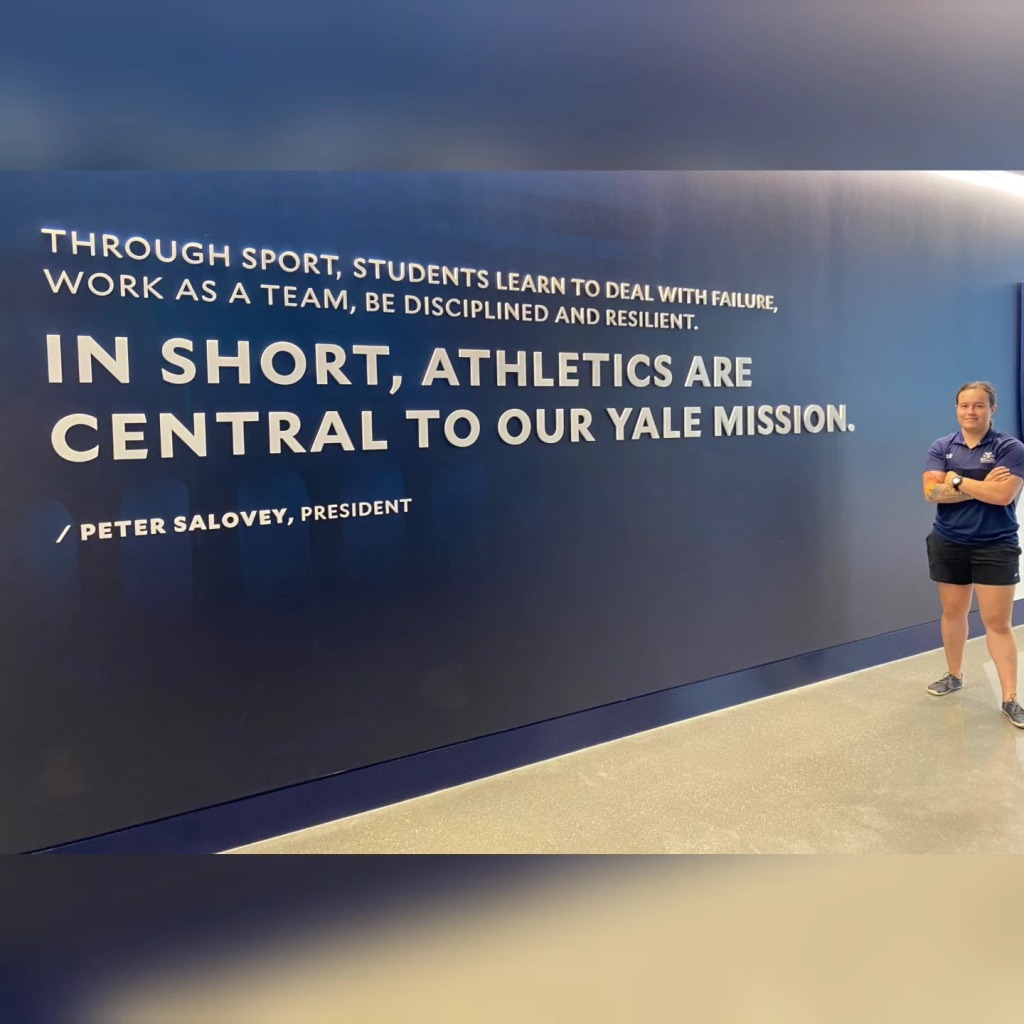
Sophia Grohs is a Science, Technology, and Society major. After I was medically retired from the Army, I came to Mines dead set on finishing a Civil Engineering Degree and working for the US Army Corps of Engineers. My first in-person class at Mines was Differential Equations. I passed but was miserable. Realizing I didn’t want to be an engineer, I found STS as the fastest path to graduation and a way to figure out what I wanted to do with my life. I am a gym-rat at heart. In Oct 2022, I reached out to Hardrocker Athletic Performance to intern to “test it as a career” and everything else has fallen into place. I passed the CSCS (test to be a college strength and conditioning coach), spent summer ‘23 interning at Yale (i.e.,, the 2023 Ivy League football champs), and will be coaching at Wagner College, a D1 institution in Staten Island, after graduation. Spending the summer at Yale taught me that coaching Strength and Conditioning is a people science and that majoring in STS has prepared me for the demands of the profession. Throughout the interview process I would tell coaches that I can “problem solve like an engineer” and communicate like I majored in social science.
My potential career interests include the criminal justice or law enforcement field, so I wanted my capstone to related to those particular fields. The topic of my capstone focuses on why the recidivism rates are so high in the United States, as well as what changes can be made in order to lower the recidivism rate. Recidivism is the tendency of a convicted individual to reengage in criminal behavior upon reentering society, resulting in their return to the criminal justice system after serving a previous sentence. Specifically, I will look at how punitive and rehabilitative approaches in the United States prison system can be balanced in a way that will be most effective for society and the prisoners themselves in terms of reintegration back into society.
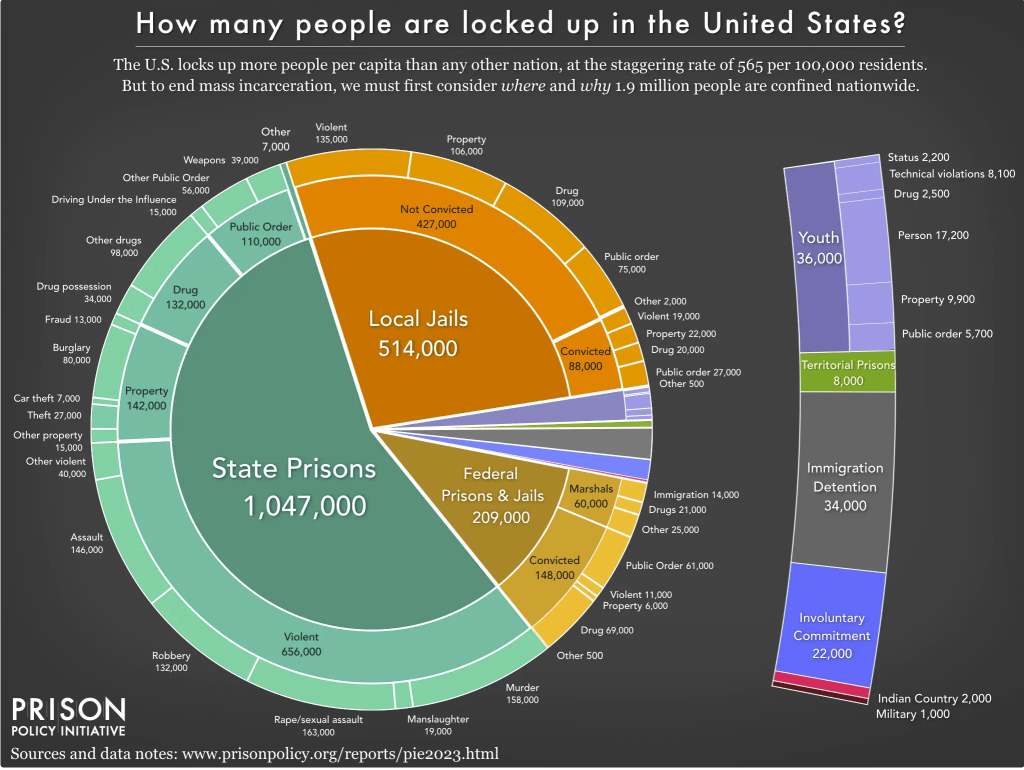
The punitive approach to punishment in prison systems is characterized by a focus on retribution and deterrence. Under this philosophy, the primary goal of incarceration is to punish offenders for their crimes. This approach often involves imposing strict sentences, harsh living conditions, and limited privileges to create an environment that is meant to be punitive and discouraging (Raymond, 1979). Politicians adopted a “tough on crime” approach starting in the 1970s that has resulted in around 2 million Americans that are currently incarcerated and another 3 to 4 million Americans on probation or parole (Sawyer & Wagner, 2023).
The rehabilitative approach to punishment, on the other hand, emphasizes the transformation and reformation of offenders through targeted interventions and programs. Unlike punitive models that focus solely on punishment and deterrence, the rehabilitative approach aims to address the root causes of criminal behavior and equip inmates with the skills and support needed to reintegrate into society successfully. This approach often involves educational programs, vocational training, counseling, and mental health services to help individuals develop the necessary tools to lead law-abiding lives upon release (Forsberg & Douglas 2020). Norway, one of the most prominent nations in the focus of rehabilitation in their prison systems, reported one of the lowest recidivism rates in the world with a rate of 20% (Denny, 2016).
There are many reasons why we should care about working to lower the recidivism rates in America. According to the U.S. Bureau of Justice Statistics report, the recidivism rate for inmates in state prisons was 68% in 2020 (Jackson, 2020). The high recidivism rates in America indicate that the current correctional system may not be adequately addressing the root causes of criminal behavior or providing effective ways of integrating incarcerated individuals back into society. If individuals leave prison without the necessary tools and support to reintegrate into society, they have a high chance of facing challenges that increase the likelihood of returning to criminal activities. High rates of recidivism also place a strain on both federal and state budgets. The average annual cost of incarceration fee for a Federal inmate in a Federal facility was $39,158 (Bureau of Prisons, 2021). The cost of incarcerating individuals is substantial, and when offenders reoffend, it perpetuates a cycle of incarceration, leading to increased financial burdens on the criminal justice system.
While South Dakota, with a recidivism rate of 40.3% over a three year span from 2019-2022 (SD Department of Corrections, 2022), does not have a high rate compared to the rest of the country, seeing these rates go down in our own community would have very positive effects. Ninety-five percent of individuals currently incarcerated in the state of South Dakota will eventually be released. This highlights why it is important that while they are incarcerated, these inmates are provided with the necessary tools needed to become contributing members of society as they are released. The benefits that would be seen from the successful reintegration into society from these inmates would be felt in both the economy and the community as a whole.
My exploration of punitive and rehabilitative approaches in the criminal justice system involves a reflection on the real-world consequences of these methods. I am hoping that my project serves as a call to action, highlighting the ripple effects of high recidivism rates on societal safety, economic resources, and community well-being. There is a need in America for a nuanced and balanced approach to punishment. One that not only holds individuals accountable but also equips them with the tools for successful reintegration into society.
Kyle Harris is a Science, Technology, & Society major. I am on the basketball team, and some of my hobbies include hanging out with friends and watching movies. The reason I chose STS as my major is due to the flexibility it has in career paths. Upon graduation, I plan on either going to graduate school for counselling or entering the criminal justice and/or law enforcement field.
I had a really hard time narrowing down a topic for my capstone. I wanted to research so many things, and as soon as I got into research on a topic I’d learn about a whole other aspect and want to switch my project. I decided to focus my capstone on reef restoration because of my obsession with their beauty, but also because they are under immediate threat due to anthropocentric (i.e., human-caused) problems like climate change and pollution. Additionally, I have seen the negative effects of coral bleaching firsthand on the reefs surrounding the Big Island of Hawaii, and seeing it just makes your heart hurt!
Restoration involves targeted efforts to repair or enhance damaged reef ecosystems. This process typically includes coral propagation and transplantation but also entails assisted evolution and assisted larvae dispersal (Boström-Einarsson et al 2020). My research focuses on two questions: 1) What are the most effective and sustainable methods for restoring coral reefs to promote reef resilience and 2) How can these strategies be applied in different coastal environments to maximize coastal protection and positively impact local communities?
For my senior capstone, I will be writing about 3D bioprinting, or the creation of human tissues and tissue structures using 3D printing technology. Specifically, my research will be focused on the current and possible future impacts of 3D bioprinting becoming the main source of organs for transplantation surgeries. I will study and speculate on possible social, ethical, and economic impacts. This topic is important because of the world’s massive organ shortage. If this technology replaces organ donation, there will be significant changes in the current medical culture.
What’s your area of expertise? What do you primarily research and/or teach? And what drew you to this field?
I like to study symbols and the way that symbols interact with machines. My specialization has to do with the strange combinations of images and texts that people made in the period after the invention of the printing press. In the terms of English PhDs, this makes me an “early modernist.” A more common term for my period of specialization is “the Renaissance.” I’m drawn to the Renaissance as a moment when individuals found a way to relate to the past and the future through their inner humanity. There’s a phrase used in the Renaissance, uomo universale, which points to the way that close critical attention to inner human life can be the basis for achieving historical connections. Renaissance humanists reached into the future by pulling technologies out of pure abstract thought, like linear perspective or the printing press; the humanists reached into the past by re-learning forgotten languages – in the process they re-animated ancient Greek philosophy. I try to practice some of this by keeping one foot in the classics and the other involved with current innovations in symbolic technology.
As for my personal background, I kind of like to think of myself as a transitional character in my corner of the academy. I want to break certain patterns that were part of my upper-level education. We’ve all seen some negative examples, so now let’s choose to do things in a better way. There are a lot of students at Mines who could use a fresh new approach to classes like Composition, and the best thing I can do here is to provide novel, intentional approaches.
Are the sins of the father the responsibility of the son? This is one of the many questions President Barack Obama was challenged with when creating the controversial policy DACA. DACA (Deferred Action for Childhood Arrivals) is a policy that has garnered a vast amount of criticism and controversy. Recently, the topic has been under increased scrutiny with a Texas judge declaring the policy to be unconstitutional. What I want to explore specifically in my capstone is how DACA has impacted the United States and other countries legally, socially, and culturally and whether this impact has been beneficial to the American people.
However, before examining the former president’s decision, a little bit of background on the border itself is necessary. Prior to the 1990s border security was relatively uncontrolled and immigrants from Mexico and South American countries could virtually just walk across the border without much fear of being stopped (Guerette, 2005). This lack of border security was simply not maintainable, which led to the increase in security during the 1990s (Guerette, 2005). This security included an increase in agents along the border, an increase in surveillance along the border, and the creation of physical barriers such as walls. While this made a more secure border, it also had some unintended consequences that have become critical factors in the current border situation. First, the increased security led to illegal immigrants heavily relying on smuggling to enter the U.S., which led to a shift in the mission of border security (Guerette, 2005). Currently, smuggling is considered a greater issue than immigration. Second, increased security has led to migrants choosing more dangerous methods in order to cross the border (smuggling included), which has unfortunately resulted in an increase in deaths along the border. This has led to the border patrol adopting an increasingly medical and humanitarian role, as they now are far more focused on the prevention of migrant death and application aid to injured and at-risk immigrants.
AI is technology that simulates human intelligence and possesses the ability to evolve based on its designated purpose. In the hospitality industry (including tourism, hotels, and restaurants), the use of AI is on the rise because of the greater efficiency compared to human employees. Artificial intelligence can’t steal from the cash register, doesn’t take sick days, and won’t leave a manager short-staffed. Business owners are interested in the switch to AI “employees” because they significantly save on labor costs, can communicate in every language, and perform menial tasks which allows for human employees to work larger tasks.