Giant Dinosaur Marionettes: Engineering Education, Art, and STS

Apex Gallery, art, Events, teaching

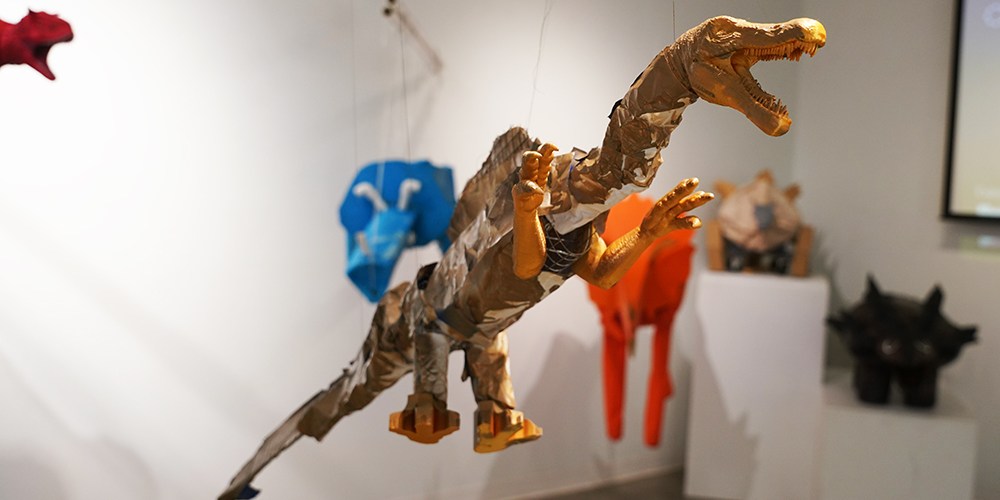
Sometimes people assume that engineers aren’t creative, but this is far from the truth, as the current Apex Gallery exhibit of dinosaur marionettes shows. In his introduction to mechanical engineering course, Dr. Cristian Vargas Ordóñez (in collaboration with Matt Whitehead, Senior Instructor of Art and Director of the Apex Gallery) asked students work in teams to use the engineering concepts they were learning to create and present large dinosaur marionettes.

This project shows what’s possible within engineering education and at the intersection of arts and engineering. It’s also a great illustration of a core principle of STS, which attends to how knowledge is created. Javier Lezaun, Noortje Marres, and Manuel Tironi write that “the larger aim of STS research and intervention . . . [is] to activate new collective imaginations of what an epistemically, technically, environmentally and materially engaged polity might be.” Working together as teams to create something new is a version of this aim at the scale of a college classroom, and it’s good practice for STS thinking and for working creatively with others in other areas! (Our Creativity and Collaboration in STEM minor further reinforces these connections.)

More details about the art exhibit are included in the press release below, and the marionettes will be on display in the Apex Gallery this week, with a reception this afternoon (Wednesday, 11/19) from 4-6 pm.


Art Exhibit Features Giant Dinosaur Marionettes Designed by Mines Mechanical Engineering Students

RAPID CITY, SD (Nov. 19, 2025) – South Dakota Mines mechanical engineering students brought engineering and imagination together to build large dinosaur marionettes, each one crafted with a variety of materials ranging from papier-mache and fabric to metal and 3D printed parts and designed with at least two movable parts.

The creatures are now on display in the Apex Gallery in the university’s Classroom Building. The project is part of the freshman introduction to mechanical engineering course taught by Cristian Vargas Ordóñez, Ph.D., assistant professor in the Leslie A. Rose Department of Mechanical Engineering.

Dr. Vargas Ordóñez in the Apex Gallery with the dinosaur marionettes.

Zinefest: World-Making, Creativity, & Technology

Apex Gallery, Arts, Classes, communication, Events, Humanities

By Christy Tidwell

“[Zines] are practices of ‘poetic world-making’—poetic not in the sense of a poem on the page (although they can be this too),
but in the sense of poesis: the process of creating something that did not exist before.” 
– Gwen Allen

The classes I teach create communities. Students get to know each other as they learn the course material, and they share ideas and work with each other. This is a form of world-making, even if temporary, and I love this about my classes. But I don’t want the connections and sharing to stop at the classroom door or to be forgotten when the semester ends. The goal is for my students to connect what they’re learning in class with the rest of the world, to share what they’ve learned with others, to hear what others have learned, and to join and build other communities.

Finding ways to do this can be challenging, but it’s not impossible.

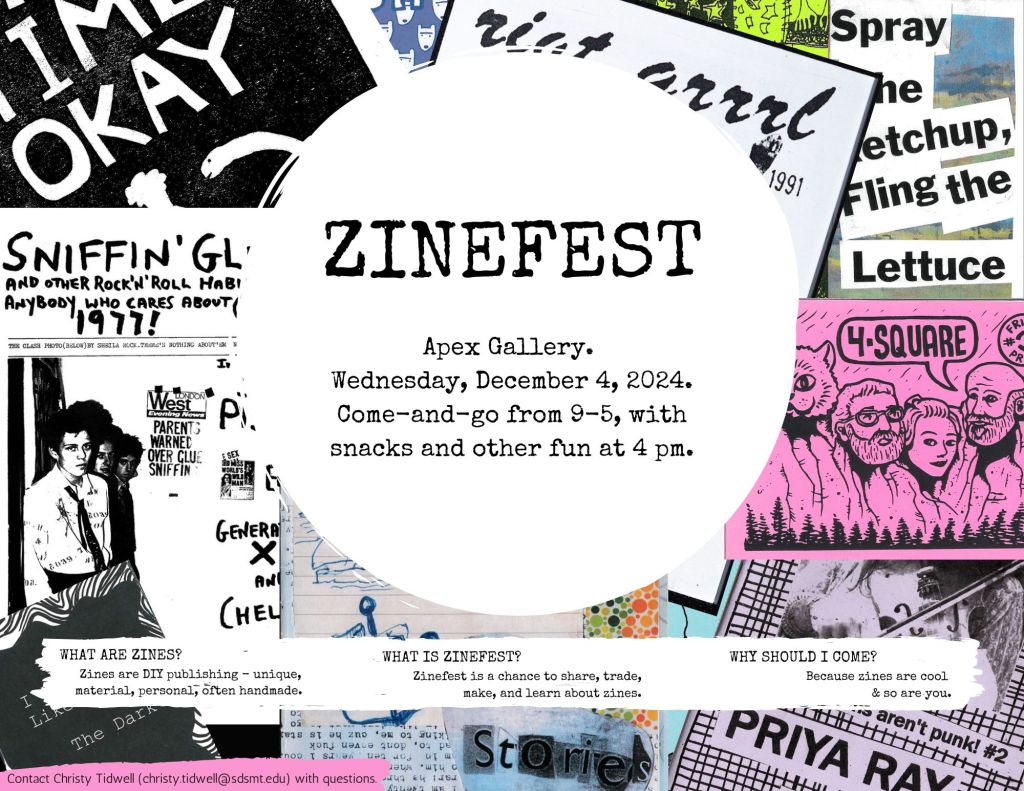
This semester, as a way for students to connect across classes and share work with broader audiences, a few of us in the Humanities, Arts, and Social Sciences department (myself, Matt Whitehead, Evan Thomas, Erica Haugtvedt, and Mary Witlacil) put on a series of zinemaking events that culminated in a Zinefest in the Apex Gallery on December 4th. Zinefest was an all-day come-and-go event that displayed the zines students made in classes (and, in a few cases, just for fun!), provided some examples of interesting zines made by others, and gave visitors a chance to make their own zines. (If you missed it this year, watch out for another event next year!)

This event let students share some of what they have learned this semester, giving them a broader audience, and it also connected them to students in other classes and to the audiences who came to Zinefest. While I did not count the number of visitors during Zinefest, the gallery filled several times and was rarely empty. Some people walked through relatively quickly and took in only a few zines; others stayed for quite a while, standing and reading multiple zines before finally deciding on some they wanted to keep. One student – who will remain nameless for obvious reasons – wrote in a reflection afterward, “I spent almost 2 hours there and accidentally missed class, so I would say I had a good time.” Although I would (of course) never encourage a student to miss class, this indicates that Zinefest offered this student something meaningful.

Because most students were asked to bring multiple copies of their zines, visitors could take a copy of one if they were particularly interested in its ideas or really loved it. Hopefully, they will re-read any zines they took, remember the event, and maybe even be inspired to make their own! Leaving with a material artifact helps the experience and community created through this event extend past Zinefest itself.

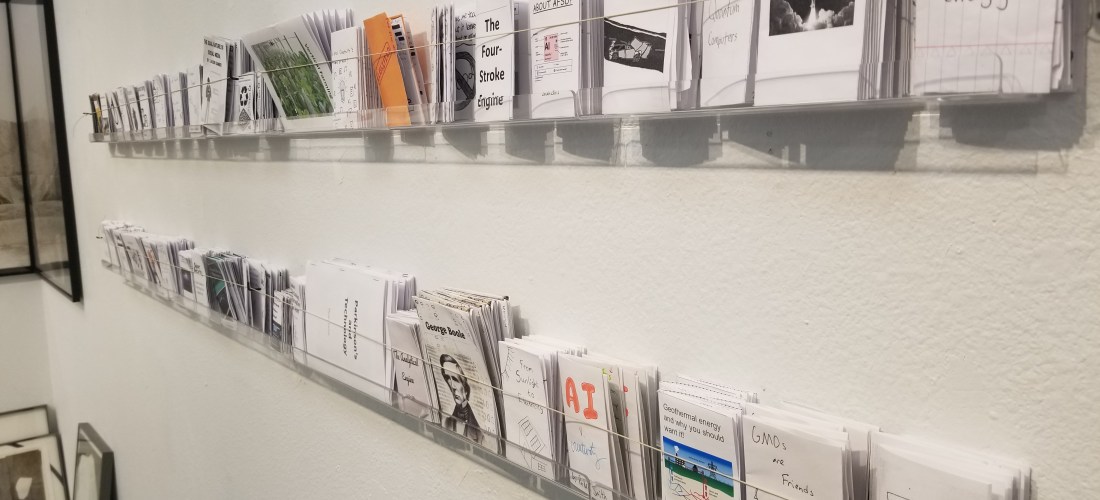
Two rows of zines displayed on the wall, with a handwritten sign above them: See a zine you like? Feel free to take it. Just don't take the last one! Thanks for stopping by.
Student zines on display with an invitation to take a zine.

As an event, Zinefest promoted connections and community; as a practice, making zines (even without an event like Zinefest) provides us all with an opportunity to create something new – to engage in world-making – and to share that something with others, without requiring elaborate technology or infrastructure, refined skills, or many resources. Anyone can make a zine, and that’s what’s so beautiful about them.

Laws Below the Surface

Environment, STS Students

By Parker Smith

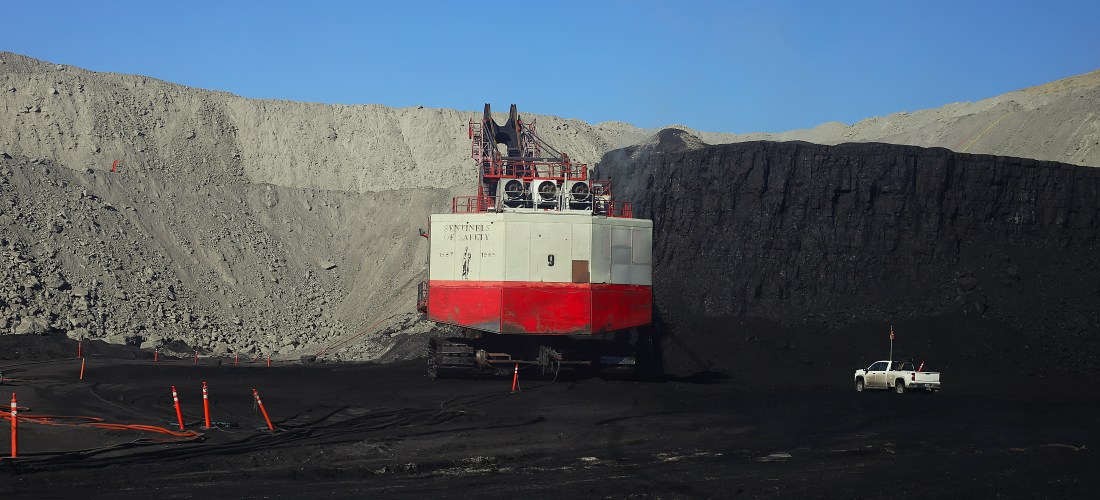
Land rights and mineral rights are a big issue in the mining industry. Mineral rights apply to most solids and liquids beneath the surface of the Earth, like coal, gold, and oil. The distinctions are more complex when you start to look at the laws. Materials like gravel and sand can be mined but are under a “materials” label. Other things are listed under “locatable minerals,” which includes metallic minerals (e.g., gold and silver) and non-metallic minerals (e.g., mica and asbestos). 

Mining companies don’t usually own mineral rights to the land they mine. Depending on how the mineral rights are owned, a mining company has to go through different means to get them. If they’re privately owned, they have to discuss leasing or purchase with the owner. If the government owns them, they can request to mine them out. 

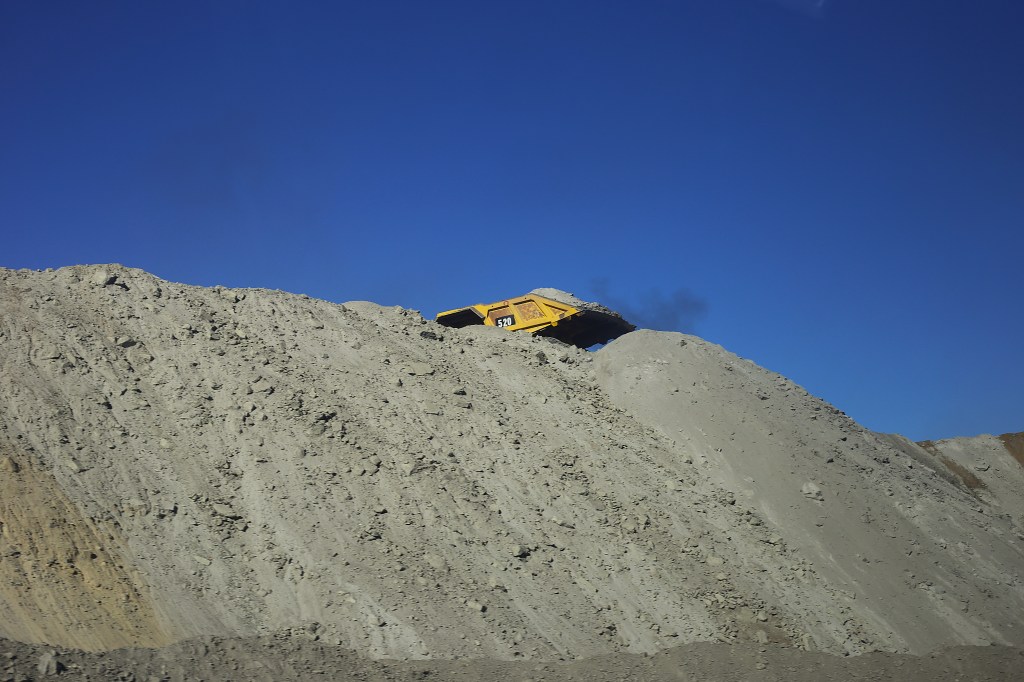
Haul truck dumping overburden. Photo by Parker Smith.

The General Mining Act of 1872 allowed the federal government to give private citizens and companies the “right to locate.” This right isn’t a transfer of mineral rights but instead gives private citizens and companies a right to mine out the materials and use, sell, or modify them. The only updates to this mining legislation have been for workplace safety and minor edits, nothing that would change the structure of mining or the system of claims. 

Claims are sorted into two most common categories: lode claims and placer claims. Lode claims are characterized by their well-defined boundaries including one main mineral, whereas placer claims provide for all the minerals in the area affected by the claim. For example, gravel mines are usually placer claims because they aren’t characterized by one distinct vein. This system is also managed and overseen by two separate government organizations: the US Bureau of Land Management and the US Forest Service. If the leasable minerals are on National Forest Service land, then the two organizations work together to decide if and how to lease them. 

STS Costume Contest 2024

Events

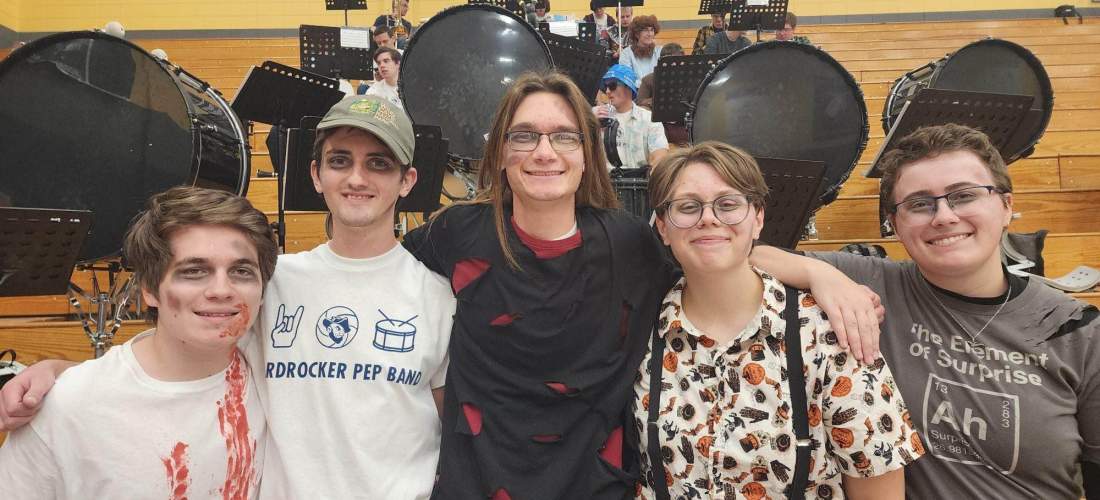
Halloween offers a great opportunity to be creative, and the STS program’s second annual Halloween costume contest received some fantastic entries! We saw characters from movies and TV, traditional horror movie types (like zombies!), animals, invented characters, and historical figures.

Although we loved all of the costumes, we did need to narrow this down to a few winners since it’s a contest. Here are the winners!

Accessibility to Non-Emergency Transportation Services for Senior Citizens & Veterans with Medical Health Disparities in Rural Areas

STS Students

By Anthony Wright

Anthony is a Cincinnati-born, Los Angeles-raised STS: Policy & Law senior. Some of his hobbies include reading financial literacy and personal development books, competing in CEO business plan competitions, and leading various student organizations. 

According to the Transportation Research Board, “Nearly 4 million Americans miss or delay medical care each year due to a lack of transportation.” This issue is pertinent to the community because every family, especially senior citizens and veterans, needs transportation access to life-sustaining services such as primary healthcare providers, pharmacies, nursing homes, grocery stores, and banks in order to stay alive. There is a lack of affordable, safe, and efficient transportation in America, and rural areas are impacted the hardest. My solution is to create a non-e­­mergency transportation network connecting Rapid City public transportation services with local primary health care providers, nursing homes, pharmacies, grocery stores, and various essential service vendors to make them more accessible for seniors and veterans. 

Research has proven that consistent transportation access to healthcare vastly increases the health outcomes of members and leads to dramatic cost savings. For example, there was an “experiment of transportation brokerage service administered in Kentucky and Georgia where access to healthcare improved and resulted in hospital admissions and medical expenditures decreasing for diabetic adults.” The Centers for Disease Control estimated that “8% of the adult population ages 55 and older have at least one chronic condition, resulting in these individuals in need of non-emergency medical transportation to access life sustaining treatments and services they need. More importantly, a large percent of the 20 million adults living with chronic kidney disease undergo dialysis three times a week. Approximately 66% of dialysis patients rely on others for transportation to and from their appointments.”

Balancing Expectations: Preserving the Nature and History in South Dakota

STS Students

By Louise Swanson

Louise is majoring in Science, Technology, and Society with a minor in Environmental Science. She plans on working with the parks system or in museum work.

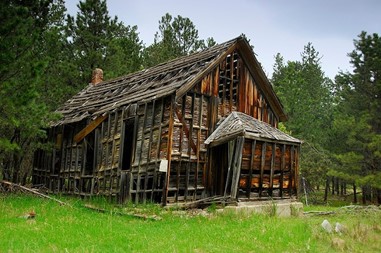
When I was growing up, I spent my weekends going to ghost town sites around the Black Hills with my father. Each time we went to Spokane we made guesses as to whether or not the old community center that Elizabeth Cady Stanton spoke at would have collapsed (a couple of years ago it did) or if the Two-Bit Mill would still be standing (about 10 years ago it was bulldozed into a nearby ravine to better allow for nature to return to the area). Meanwhile, I watched as the Gordon Stockade was refurbished and preserved for visitors to come and see where the Gordon Party lived while in the Black Hills.

A picture containing tree, grass, outdoor, building.
Spokane Community Center/Church, 2016. This photo and the following are taken by either me or my father, William Swanson. I asked him for his permission to use them.

In college I have taken both history and environmental science classes and worked for a year at The Journey Museum, and I have only become more curious about how the decision to preserve some things and not others is made and how agencies decide whether to prioritize the environment or the history of an area. The optimist in me also hopes that maybe sometimes we don’t have to choose. Maybe, sometimes there is a way that environmental conservation and historic preservation are linked.

Food in … SPACE!

history, Technology

By John Dreyer

When I was in my early teens I bought Mr. Scott’s Guide to the Enterprise. This book was just a technical manual for Star Trek and, as a young fan, I was pretty happy. One aspect the authors addressed was eating on board a future starship using a replicator. Essentially a 3D food printer, the replicator could make anything you desired. The author even included a menu of choice dishes. This book is only one place where food in science fiction is addressed. From the cornbread in Aliens to the generic-looking dinner in 2001: A Space Odyssey that David Bowmen grabs while it’s still too hot, food has had a place in storytelling.

But what about real space exploration? Do astronauts get Yankee Pot Roast? Space food has had a long developmental arc, often supplemented by industry, that seeks to put nutritious and tasty food at the fingertips of astronauts and, later, consumers.

Partial menu listing, including a list of Terran foods, Vulcan foods, and Andorian foods.
Food available from the Enterprise’s replicator. (Source: Mr. Scott’s Guide to the Enterprise)

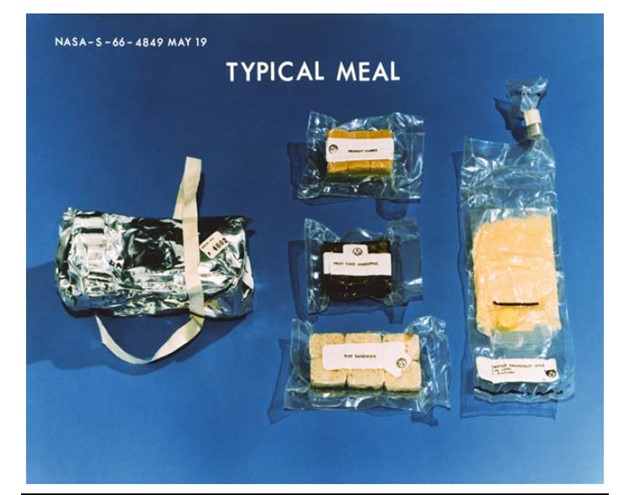
The first food in space was carried by Yuri Gagarin. His meal was two tubes of pureed meat and a tube of chocolate sauce. For the designers of the meal, there was a question if he could actually eat and digest in zero gravity. In his first American orbital flight, John Glenn consumed a tube of applesauce, which he claimed to have enjoyed. Tube foods are not exactly appetizing, and nutrition in space was still in its infancy. There were also questions of taste and texture. As NASA began to work towards Apollo and the moon landing, it was realized that better food was necessary.

Kissing Robots: Can Technology Help Us Love?

design, Technology

By Christy Tidwell

On Valentine’s Day, talk of love and romance is everywhere. Some people celebrate it and some avoid it. Still others would like to celebrate but are separated from their loved ones. Long-distance relationships are hard, after all, so what if technology could help diminish that distance? Sure, we have phone calls, FaceTime, even emails or letters (if you’re particularly old-fashioned). But these methods of connection don’t include touch.

Lovotics, a multidisciplinary research project proposed by Dr. Hooman Samani of the University of Plymouth (UK), proposes to change this. It includes several applications:

  • Kissenger, a pair of robots designed to transfer a kiss over distance. Here, “the system takes the form of an artificial mouth that provides the convincing properties of the real kiss.”
  • Mini-Surrogate, a project to use miniature robots “as small cute, believable and acceptable surrogates of humans for telecommunication.” They are meant to “foster the illusion of presence.”
  • XOXO, a system that builds on Kissenger but also includes a “wearable hug reproducing jacket.”

It sounds like a potentially nice idea to help with long-distance relationships. When I raised this with students in my Humanities & Technology class last semester, however, they found it more disturbing than promising. Check out the video for the Kissenger for more detail.

Video demonstrating the Kissenger application.

For me, these ideas come with more questions than answers. How important is physical proximity for a meaningful relationship? What elements of touch are most important? Can those elements be replicated by something other-than-human? Even – what new relationships between human and nonhuman might be possible in the future?

I don’t have answers to these questions; in fact, I don’t think there is one right answer to them. But we should probably be asking them before we start creating technological solutions to problems that we don’t fully understand. Will having kissing robots lead to serious harm? Probably not. Will they help? We won’t know unless we ask questions about human emotions and psychology, bringing humanities and social sciences knowledge to bear on technological possibility.

Kissenger application. Photo credit: Ars Electronica.

Spooky Science at the Movies!: Week 5

Film, horror

By Christy Tidwell

This weekend is Halloween! To celebrate, I have two final movie recommendations to share. One is an all-time favorite of mine and probably no surprise to those who know me. The other is one of the scarier recent movies I’ve seen. Their premises are quite different, but both have science and technology at their core.

Classic Movie #5: Jurassic Park

Of course it’s Jurassic Park! Jurassic Park (1993, directed by Steven Spielberg) is an adventure movie featuring dinosaurs, a horror movie with terrifying monster attacks, and a science fiction movie that asks, “What if we could bring a creature back from extinction?” Jurassic Park is such a well-known part of US popular culture that it is a common reference point in discussions of scientific overreach and a familiar critique of the role of money in scientific research. “Spared no expense,” John Hammond (Richard Attenborough) repeats throughout – but the project still fails.

Jurassic Park is a reworking of Frankenstein with dinosaurs, and it is one of the best movies out there for raising important questions about scientific ethics while also being extraordinarily entertaining. If you haven’t seen it, now is the time! If you have already seen it, well, it’s always a good time to watch Jurassic Park again.

Official trailer for Jurassic Park (1993)

Contemporary Movie #5: Host

As Laura Kremmel noted in her recent post “High-Tech Spirits and Ghost Tours,” Host (2020, dir. Rob Savage) has been named as the scariest horror movie. It’s short (only 57 minutes!) and fun, but it definitely gets your heart pounding in that short running time. Host spends less time raising big issues about science than Jurassic Park and focuses more on scaring the audience, but the way it achieves its scares is worth noting from an STS perspective. Those scares are only possible through the technology of Zoom, and the audience’s ability to be scared by spirits via technology is a) definitely not new (as Laura Kremmel points out) and b) perhaps an indication of how mysterious the inner workings of these technologies are to most of us.

Official trailer for Host (2020)

Collected Movie Lists

This is the final entry in the series of STS-related horror movies for this season, so I’ll end by combining all the movies recommended and linking to the earlier posts.

Classic movies:

  1. Frankenstein (1931)
  2. Godzilla (1954)
  3. Phase IV (1974)
  4. The Fly (1986)
  5. Jurassic Park (1993)

Contemporary movies:

  1. Saint Maud (2019)
  2. Crawl (2019)
  3. In the Earth (2020)
  4. Annihilation (2018)
  5. Host (2020)

Happy Halloween, and happy viewing!