Laws Below the Surface

Environment, STS Students

By Parker Smith

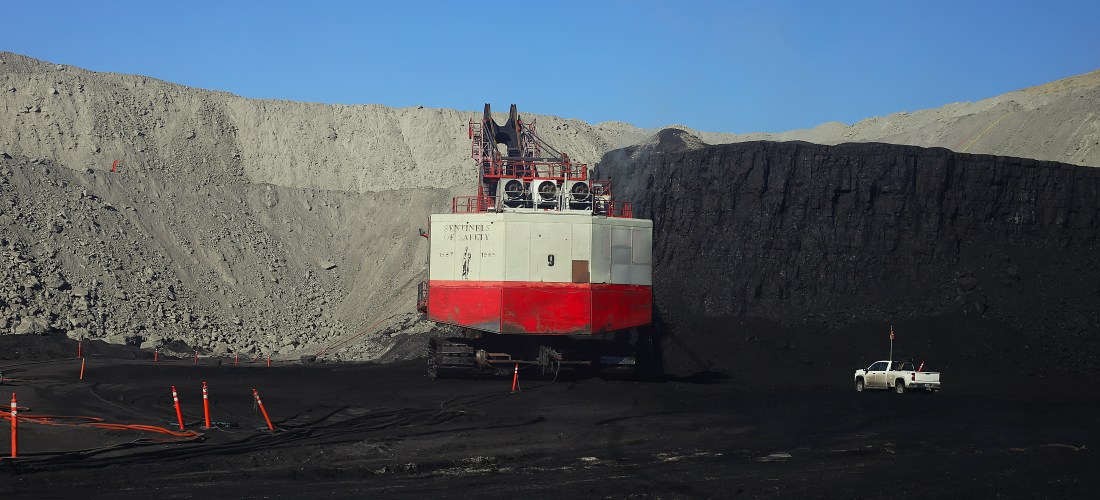
Land rights and mineral rights are a big issue in the mining industry. Mineral rights apply to most solids and liquids beneath the surface of the Earth, like coal, gold, and oil. The distinctions are more complex when you start to look at the laws. Materials like gravel and sand can be mined but are under a “materials” label. Other things are listed under “locatable minerals,” which includes metallic minerals (e.g., gold and silver) and non-metallic minerals (e.g., mica and asbestos). 

Mining companies don’t usually own mineral rights to the land they mine. Depending on how the mineral rights are owned, a mining company has to go through different means to get them. If they’re privately owned, they have to discuss leasing or purchase with the owner. If the government owns them, they can request to mine them out. 
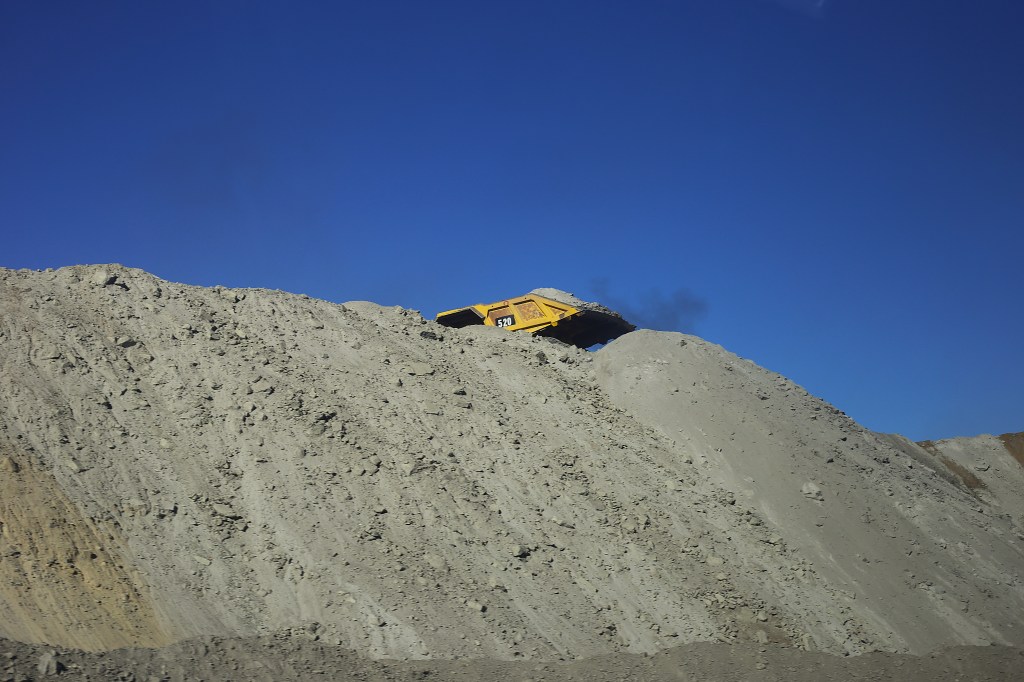
Haul truck dumping overburden. Photo by Parker Smith.

The General Mining Act of 1872 allowed the federal government to give private citizens and companies the “right to locate.” This right isn’t a transfer of mineral rights but instead gives private citizens and companies a right to mine out the materials and use, sell, or modify them. The only updates to this mining legislation have been for workplace safety and minor edits, nothing that would change the structure of mining or the system of claims. 

Claims are sorted into two most common categories: lode claims and placer claims. Lode claims are characterized by their well-defined boundaries including one main mineral, whereas placer claims provide for all the minerals in the area affected by the claim. For example, gravel mines are usually placer claims because they aren’t characterized by one distinct vein. This system is also managed and overseen by two separate government organizations: the US Bureau of Land Management and the US Forest Service. If the leasable minerals are on National Forest Service land, then the two organizations work together to decide if and how to lease them. 
In Hot Water: The Global Change in Hurricane Intensity

Atmospheric Science Students

By Joshua Rowe

Since I was a kid, I have always had an interest in coastal weather. I saw the Pacific Ocean for the first time when I was four years old, and I was in awe of the immense size and natural harmony of the ocean. What sparked my interest in research in this field was the recent global change in tropical cyclone intensity. The warming of the oceans globally has led to an increase in the proportion of intense hurricanes (Holland, 2013). This struck me as immensely important because of the catastrophic impact that tropical storms can have on the lives and properties of anyone living in a coastal region. It is estimated that the average tropical storm in the US causes between seven and eleven thousand deaths per storm, and tropical storms have accounted for between 3.6 to 5.2 million deaths since 1930 in the U.S. (Garthwaite, 2024).

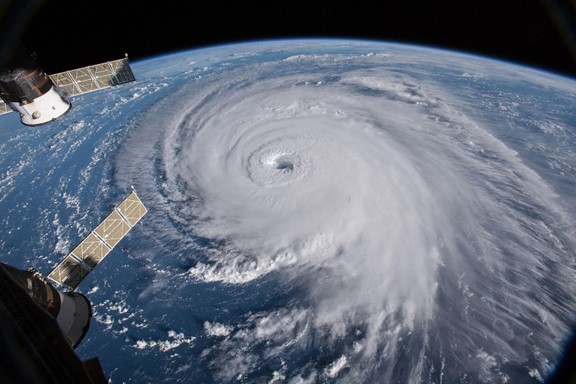
Dramatic View of Hurricane Florence from the International Space Station. Photo: NASA Goddard Space Flight Center, 2024 (CC by 2.0).

The United States is no stranger to tropical storms, and their unpredictability and aggression makes them a daunting task for coastal meteorologists to forecast. Hurricanes are formed as a result of a large amount of water vapor condensing and circulating over warm oceanic areas (Holland, 2014). When water vapor condenses into clouds, it releases large amounts of latent heat, which contributes to the available convective energy in the atmosphere. As the sea surface temperatures rise, the amount of evaporation over the ocean increases and subsequently the amount of available water vapor increases as well. This rise in available water vapor allows for more condensation and latent heat release, which creates a positive feedback relationship that is theorized to be the cause for the increased frequency, intensity, and location of intense hurricanes (Lackman, 2011).

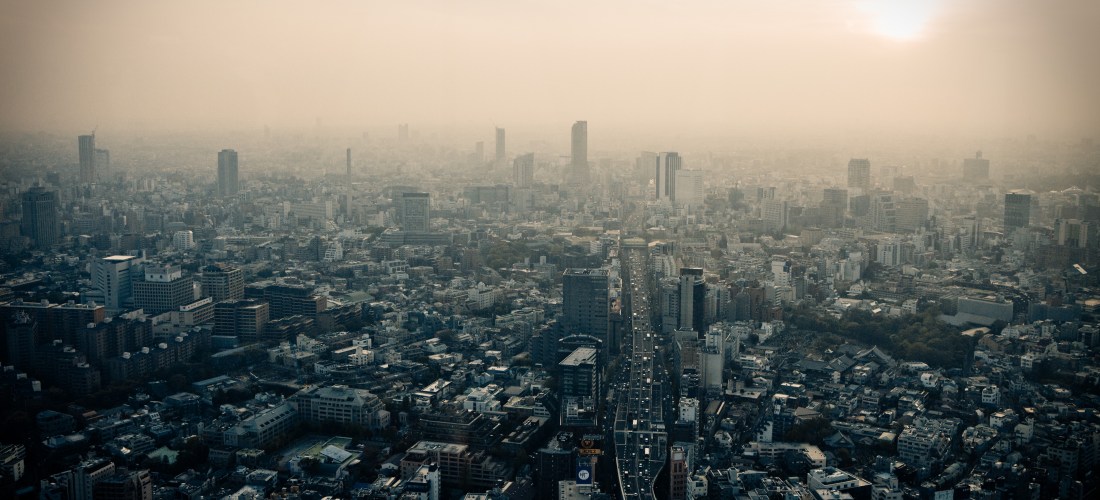
An aerial view of a city showing a smoggy sky above the buildings.

Models: How accurate are they?

Atmospheric Science Students

By Ryleigh Czajkowski

I have always been curious about the weather and climate, as my dad was a pilot and used to teach me little things about the atmosphere. When I entered college, I decided to follow that curiosity by majoring in atmospheric sciences and developed a new interest in air quality along the way. Air quality is an issue that has global effects with potential detrimental impacts, and I would like to find a job that uses scientific understanding of air pollution to make impactful actions and policies. Specifically, I would like to go into pollution modeling and management to help mitigate the effects of pollution on communities and ecosystems.

This interest was sparked during an internship I had last summer as part of NASA’s Student Airborne Research Program (SARP). This experience allowed me to use airborne data to validate the Environmental Protection Agency’s (EPA) Community Multiscale Air Quality Model (CMAQ), to see how accurately the model predicts the concentrations of different pollutants. The CMAQ model works by incorporating meteorological (wind, temperature, etc.), emission, and chemical models to simulate the concentrations of trace gases, particulate matter, and atmospheric pollutants both spatially and temporally (EPA, 2022). 

A group of people standing outside near the tail of a plane with NASA on the tail.
Property of NASA SARP. Credit: Madison Landi.

For my senior capstone project, I will be expanding on my previous research to build a better understanding of the capabilities of the model, as it recently underwent an update in 2022 to improve the meteorological processes and emissions. I will focus on the South Coast Air Basin in California, an area with known, notable air quality issues (Chen, et al., 2020) and the levels of formaldehyde and methane there. Both methane and formaldehyde act as active gases in the atmosphere. With methane concentrations on the rise (Feng, et al., 2023) and formaldehyde as a health and environmental irritant (Lucken, et al., 2018), they are important gases to study and understand. I will be assessing how well the CMAQ model can simulate the concentrations of formaldehyde and methane in the atmosphere, as well as the accuracy of  the meteorological inputs (i.e., wind) as they greatly affect the behavior and amounts of those gasses. (Barsanti, et al., 2019). 

Audio Walks: Exploring the Experience of Place

Humanities, STS Faculty, teaching

By Bryce Tellmann

Most semesters, I teach at least one section of Introduction to Humanities (HUM 100). In order to anchor the class’s exploration of such a potentially broad topic, I choose one or two topics to guide our semester-long inquiry into the human experience. This semester, those two topics are place and sound. On the one hand, they are nearly universal categories of human experience, as we inhabit location and experience vibration every day. But on the other, they are infinitely variable. One person’s experience and understanding of a place, or of a particular set of sounds, may be entirely different than another person’s, even if that place and sound are outwardly identical.

One way that my students are exploring the possibilities of sound and space is by experimenting with an artform called “audio walks.” Popularized by artists Janet Cardiff and George Bures Miller, these mobile art installations ask the participant to go on a walk, retracing the artist’s footsteps as they listen to an audio recording of the artist’s walk. The artist will often comment on their surroundings, including exact navigation directions for the listener. Inevitable differences in the artist’s recording of their walk and the listener’s own environment (different people passing by, different vehicle sounds, even different times of the day or seasons) draw attention to the differences between the ways we represent experience and our actual experience. This, in turn, helps students appreciate the ways that media technologies affect how we experience, understand, and value the world around us.

Some audio walks are straightforward, presenting an ostensibly “authentic” recording of what the artist experienced on their walk. However, the artist may also choose to more actively compose their audio walk, either by preplanning events to be captured during the recording or by editing the recording after the fact. Such additions amplify the disjuncture between what listeners hear in the recording and what they experience as they retrace the walk.

Eden Otten, a freshman Civil Engineering major, captured the contrast well in a discussion board reply:

I think a sense of community in sound is more fleeting than one in place. We still shared the same trail to Boneyard, and I was in the same place that this audio tour gave meaning to. However, many aspects of sound that gave the walk uniqueness were gone in the days between capturing it and listening to it. We experienced the place the same, but the unique sound couldn’t be a shared experience, as I could hear your contributions to the soundscape, but you couldn’t hear mine.

Below are links to download some of the students’ audio walks. If you’re on campus, I encourage you to download one or more to your mobile device and go on the same walk that the artist did! Walks are best experienced with headphones.