Jonathan Gibson is Associate Professor of Psychology.
What’s your area of expertise? What do you primarily research and/or teach? And what drew you to this field?
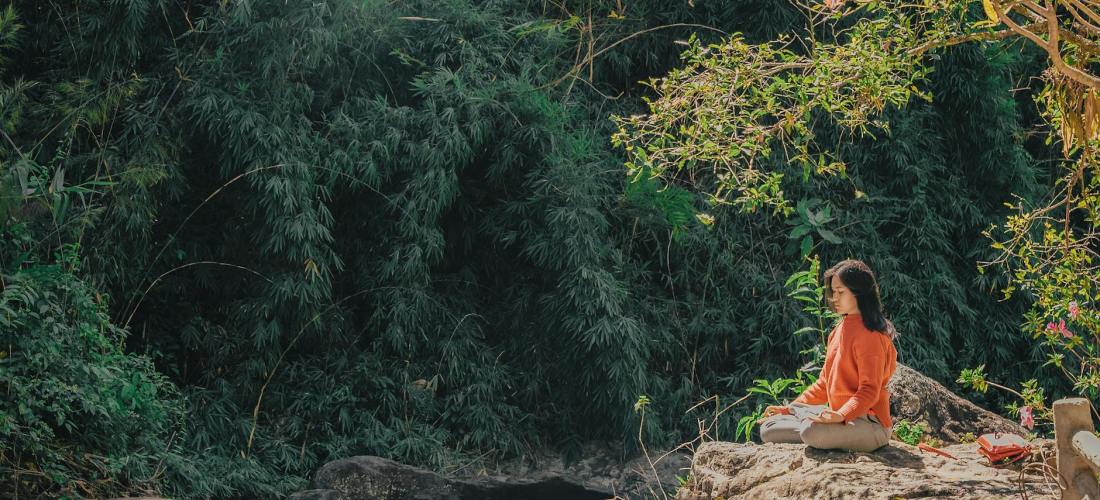
Meditation and interoception are my primary areas of research interest and expertise. Interoception is an awareness of what is going on inside your body. Current research is discovering that this sense is really important to health and well-being. All those physiological processes meant to maintain homeostasis turn out to shape and inform our emotional and psychological state. My specific research is aimed at using meditation to increase interoception.
What drew me to this field is a good question. A short answer is I felt “pulled” towards it. Neither interoception nor meditation were ever topics I intentionally set out to study; I just sort of discovered those as I was investigating psychophysiological research in my graduate programs.
Anthony is a Cincinnati-born, Los Angeles-raised STS: Policy & Law senior. Some of his hobbies include reading financial literacy and personal development books, competing in CEO business plan competitions, and leading various student organizations.
According to the Transportation Research Board, “Nearly 4 million Americans miss or delay medical care each year due to a lack of transportation.” This issue is pertinent to the community because every family, especially senior citizens and veterans, needs transportation access to life-sustaining services such as primary healthcare providers, pharmacies, nursing homes, grocery stores, and banks in order to stay alive. There is a lack of affordable, safe, and efficient transportation in America, and rural areas are impacted the hardest. My solution is to create a non-emergency transportation network connecting Rapid City public transportation services with local primary health care providers, nursing homes, pharmacies, grocery stores, and various essential service vendors to make them more accessible for seniors and veterans.
Research has proven that consistent transportation access to healthcare vastly increases the health outcomes of members and leads to dramatic cost savings. For example, there was an “experiment of transportation brokerage service administered in Kentucky and Georgia where access to healthcare improved and resulted in hospital admissions and medical expenditures decreasing for diabetic adults.” The Centers for Disease Control estimated that “8% of the adult population ages 55 and older have at least one chronic condition, resulting in these individuals in need of non-emergency medical transportation to access life sustaining treatments and services they need. More importantly, a large percent of the 20 million adults living with chronic kidney disease undergo dialysis three times a week. Approximately 66% of dialysis patients rely on others for transportation to and from their appointments.”
Jackson is majoring in Atmospheric and Environmental Sciences at South Dakota Mines. He plans on working with wildfires and the development of pyro-cumulus and pyro-cumulonimbus clouds.
When people ask me why I am going to school, I often tell them it’s to get a degree so I can hopefully get a job. After that answer we usually have a conversation like this:
Them: Cool, so what are you learning then? Me: Atmospheric and Environmental Sciences. They look at me in confusion as if I just spoke a foreign language. Me: It’s meteorology. Them: Oh, so you’re going to be a weather boy like the one on TV then. Me: No, you know there is a lot more you can do with a meteorology degree than just be on the nightly news. Them: Like what? Me: Well, right now I am researching pyro-cumulonimbus clouds.
Assuming you have a confused look on your face as they often do, let me explain.
Steven is majoring in Atmospheric and Environmental Sciences, and his primary interest is extreme weather.
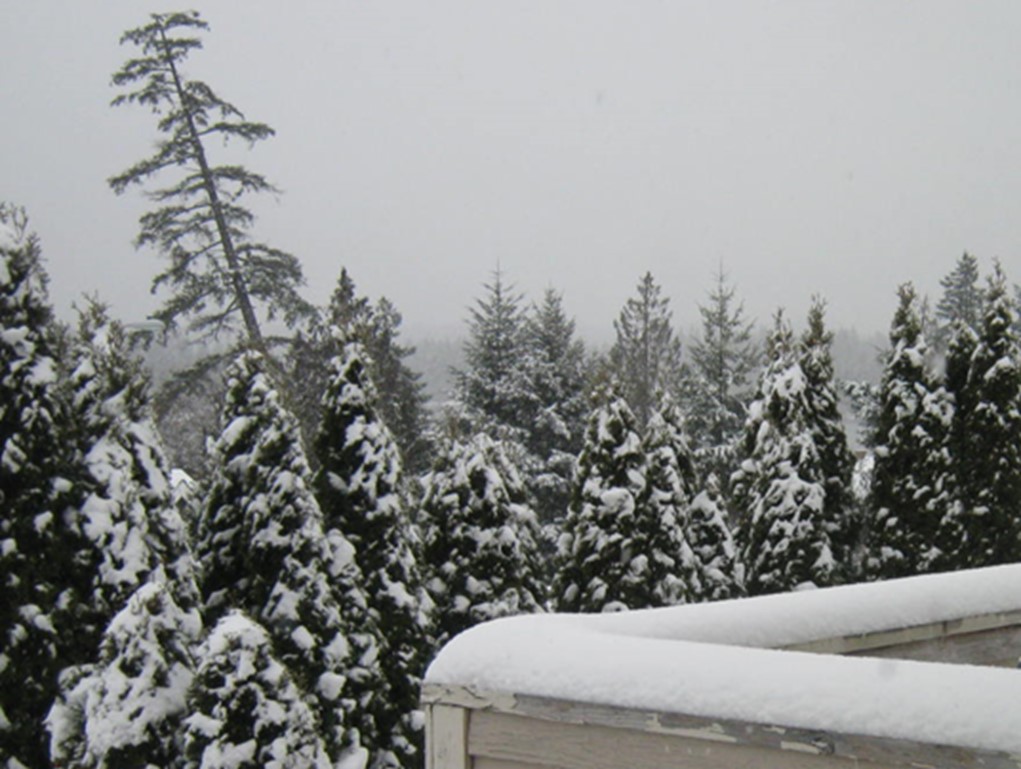
Ever since I can remember, I enjoyed watching the rare thunderstorms whenever they occurred in Western Washington. I often had to wait a year or more between seeing individual lightning bolts. I often watched The Weather Channel as my main source of weather-related content, whether it had to do with storms or snow. My mind was blown as I watched the reported snow totals rise close to 12 feet for the lake-effect vent in February 2007.
The lowlands of Western Washington don’t receive much snow, so I had to wait for that, too, though it happened more frequently than thunderstorms. I was an advocate for receiving as much snow as possible in the shortest time. The biggest event I experienced in Washington was in December 2008, where I remember playing in ~15 inches of snow at the peak of the event.
Louise is majoring in Science, Technology, and Society with a minor in Environmental Science. She plans on working with the parks system or in museum work.
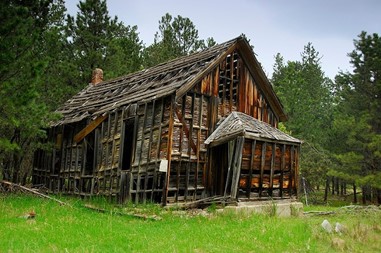
When I was growing up, I spent my weekends going to ghost town sites around the Black Hills with my father. Each time we went to Spokane we made guesses as to whether or not the old community center that Elizabeth Cady Stanton spoke at would have collapsed (a couple of years ago it did) or if the Two-Bit Mill would still be standing (about 10 years ago it was bulldozed into a nearby ravine to better allow for nature to return to the area). Meanwhile, I watched as the Gordon Stockade was refurbished and preserved for visitors to come and see where the Gordon Party lived while in the Black Hills.
Spokane Community Center/Church, 2016. This photo and the following are taken by either me or my father, William Swanson. I asked him for his permission to use them.
In college I have taken both history and environmental science classes and worked for a year at The Journey Museum, and I have only become more curious about how the decision to preserve some things and not others is made and how agencies decide whether to prioritize the environment or the history of an area. The optimist in me also hopes that maybe sometimes we don’t have to choose. Maybe, sometimes there is a way that environmental conservation and historic preservation are linked.
Frank Van Nuys, Professor of History and Interim Head, Department of Humanities and Social Sciences
The sudden passing of our colleague Dr. Michael Hudgens on Thanksgiving night last November caught us off-guard. For more than three decades, Michael had been a quiet but steady presence in the Humanities and Social Sciences department, teaching our philosophy courses as well as technical communications and various humanities offerings. While his many friends on the floor retired one after the other, Michael demonstrated no desire to leave a job he clearly loved, even at the age of 83.
What we all began to learn about Michael in the days leading up to his funeral left us amazed. He played jazz piano in nightclubs (C’mon!). He worked for the CIA in Algeria in the early 1960s (What? Really?). He directed TV shows in Houston (Huh?). As a newspaper reporter, he hung out with and interviewed Muhammad Ali during his trial for draft evasion (No way!). He was an avid HAM radio enthusiast (Cool!) The list goes on.
To honor Michael’s thirty-one years at South Dakota Mines, we offer this series of reminiscences by family, friends, colleagues, and students. For me, I recall fondly his reaching out to Janet and me not too long after our return to Rapid City and, later, his acceptance of invitations to have Thanksgiving with our family. He and Sue were early and avid encouragers of our daughter Maya’s academic and musical ambitions. Overall, Michael was synonymous with constancy in his teaching and devotion to lifelong learning. We will miss you on the third floor “cul-de-sac” and around campus. Be at peace, my friend.
Laura Kremmel is Assistant Professor of English & Humanities.
What’s your area of expertise? What do you primarily research and/or teach? And what drew you to this field?
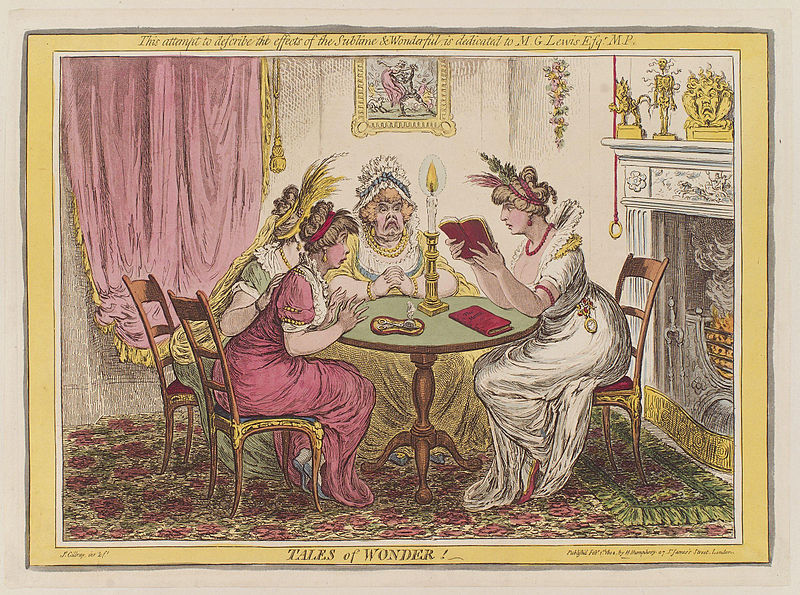
My training is in Gothic Studies and British Romanticism (British literature of the late eighteenth and early nineteenth centuries), so my expertise is in the early Gothic novels, poetry, and drama that started the Gothic tradition we still read today. I’ve always been particularly interested in two authors: Matthew Lewis, who wrote a scandalous novel called The Monk (1796), and Charlotte Dacre, who wrote an even more scandalous novel called Zofloya (1806). Both are about transgressing boundaries through shockingly graphic and gory scenes, leading me to become curious about the ways that they challenge conventional understandings of what bodies are, do, or could be.
In my teaching and recent research, I’ve expanded into the Health Humanities, history of medicine, other eras of Gothic literature, and horror film. The Gothic is so obsessed with empowering bodies of all kinds that there’s a lot of work in combining the Gothic with the Health Humanities, Disability Studies, and Death Studies. I started to see these fields coming together while visiting medical museums (like the Mütter Museum in Philadelphia), where I saw Gothic narratives being applied to the history of medicine and its impacts.
When I was in my early teens I bought Mr. Scott’s Guide to the Enterprise. This book was just a technical manual for Star Trek and, as a young fan, I was pretty happy. One aspect the authors addressed was eating on board a future starship using a replicator. Essentially a 3D food printer, the replicator could make anything you desired. The author even included a menu of choice dishes. This book is only one place where food in science fiction is addressed. From the cornbread in Aliens to the generic-looking dinner in 2001: A Space Odyssey that David Bowmen grabs while it’s still too hot, food has had a place in storytelling.
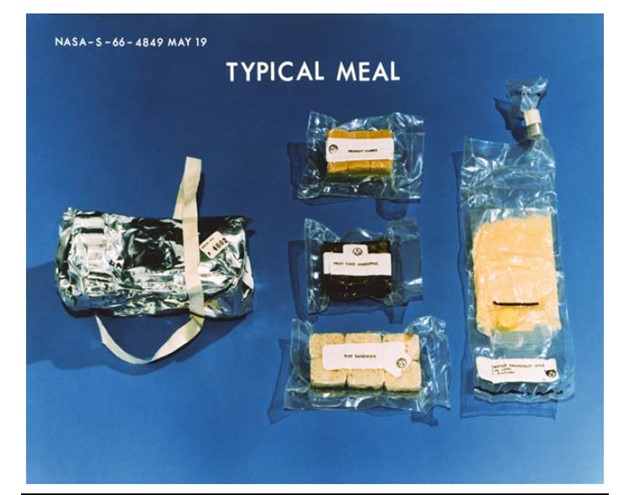
But what about real space exploration? Do astronauts get Yankee Pot Roast? Space food has had a long developmental arc, often supplemented by industry, that seeks to put nutritious and tasty food at the fingertips of astronauts and, later, consumers.
Food available from the Enterprise’s replicator. (Source: Mr. Scott’s Guide to the Enterprise)
The first food in space was carried by Yuri Gagarin. His meal was two tubes of pureed meat and a tube of chocolate sauce. For the designers of the meal, there was a question if he could actually eat and digest in zero gravity. In his first American orbital flight, John Glenn consumed a tube of applesauce, which he claimed to have enjoyed. Tube foods are not exactly appetizing, and nutrition in space was still in its infancy. There were also questions of taste and texture. As NASA began to work towards Apollo and the moon landing, it was realized that better food was necessary.
Christy Tidwell is Associate Professor of English & Humanities. You can learn more about her research and teaching at her website.
What’s your area of expertise? What do you primarily research and/or teach? And what drew you to this field?
I typically research and write about speculative fiction, environment, and gender. My dissertation was about feminist science fiction and feminist science, for instance, and since then I’ve co-edited and written for two books on speculative fiction and the environment: Gender and Environment in Science Fiction and Fear and Nature: Ecohorror Studies in the Anthropocene. I have an ongoing interest in dinosaurs in popular culture, especially as dinosaur stories relate to ideas about extinction, and I also sometimes write about Black film/media and disability.
In my work on science fiction – whether related to environmental issues, gender, race, or disability – I look at how we respond to the problems in the present and how we might imagine different possibilities in the future. In my work on horror – again, no matter which of these issues I’m addressing – I look at how our fears (for instance, fears of the natural world or fears for the natural world) shape our lives.
On Valentine’s Day, talk of love and romance is everywhere. Some people celebrate it and some avoid it. Still others would like to celebrate but are separated from their loved ones. Long-distance relationships are hard, after all, so what if technology could help diminish that distance? Sure, we have phone calls, FaceTime, even emails or letters (if you’re particularly old-fashioned). But these methods of connection don’t include touch.
Kissenger, a pair of robots designed to transfer a kiss over distance. Here, “the system takes the form of an artificial mouth that provides the convincing properties of the real kiss.”
Mini-Surrogate, a project to use miniature robots “as small cute, believable and acceptable surrogates of humans for telecommunication.” They are meant to “foster the illusion of presence.”
XOXO, a system that builds on Kissenger but also includes a “wearable hug reproducing jacket.”
It sounds like a potentially nice idea to help with long-distance relationships. When I raised this with students in my Humanities & Technology class last semester, however, they found it more disturbing than promising. Check out the video for the Kissenger for more detail.
Video demonstrating the Kissenger application.
For me, these ideas come with more questions than answers. How important is physical proximity for a meaningful relationship? What elements of touch are most important? Can those elements be replicated by something other-than-human? Even – what new relationships between human and nonhuman might be possible in the future?
I don’t have answers to these questions; in fact, I don’t think there is one right answer to them. But we should probably be asking them before we start creating technological solutions to problems that we don’t fully understand. Will having kissing robots lead to serious harm? Probably not. Will they help? We won’t know unless we ask questions about human emotions and psychology, bringing humanities and social sciences knowledge to bear on technological possibility.







 The Novum