Recidivism and Criminal Justice

STS Students

By Kyle Harris

My potential career interests include the criminal justice or law enforcement field, so I wanted my capstone to related to those particular fields. The topic of my capstone focuses on why the recidivism rates are so high in the United States, as well as what changes can be made in order to lower the recidivism rate. Recidivism is the tendency of a convicted individual to reengage in criminal behavior upon reentering society, resulting in their return to the criminal justice system after serving a previous sentence. Specifically, I will look at how punitive and rehabilitative approaches in the United States prison system can be balanced in a way that will be most effective for society and the prisoners themselves in terms of reintegration back into society.

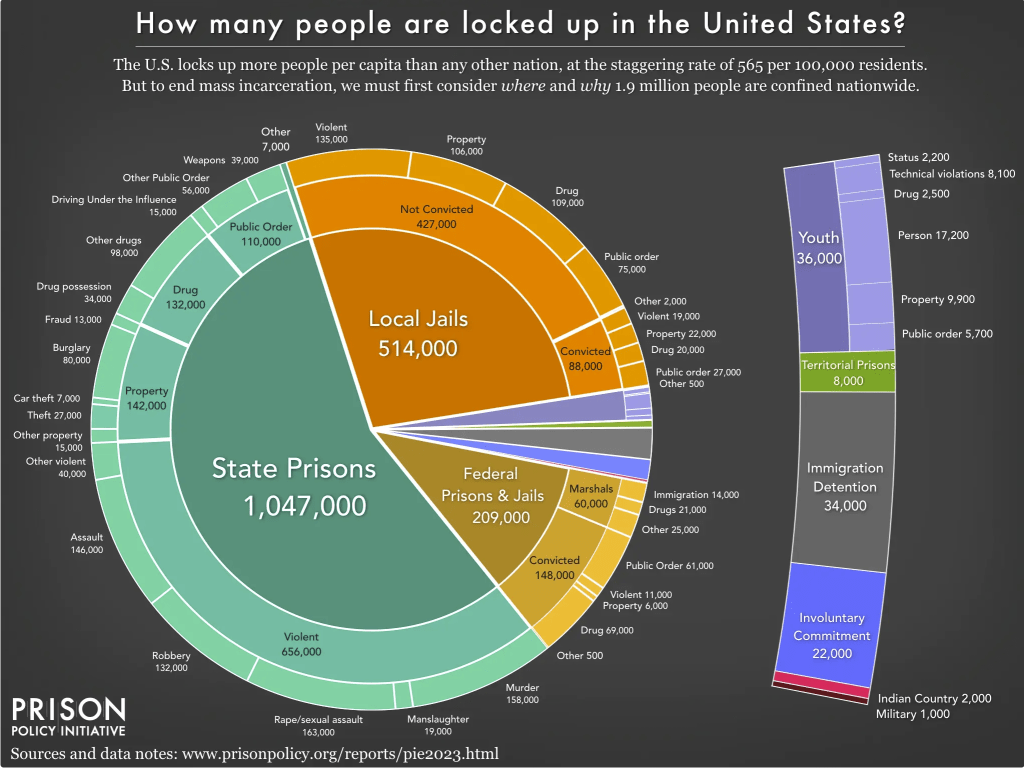
The punitive approach to punishment in prison systems is characterized by a focus on retribution and deterrence. Under this philosophy, the primary goal of incarceration is to punish offenders for their crimes. This approach often involves imposing strict sentences, harsh living conditions, and limited privileges to create an environment that is meant to be punitive and discouraging (Raymond, 1979). Politicians adopted a “tough on crime” approach starting in the 1970s that has resulted in around 2 million Americans that are currently incarcerated and another 3 to 4 million Americans on probation or parole (Sawyer & Wagner, 2023).
The rehabilitative approach to punishment, on the other hand, emphasizes the transformation and reformation of offenders through targeted interventions and programs. Unlike punitive models that focus solely on punishment and deterrence, the rehabilitative approach aims to address the root causes of criminal behavior and equip inmates with the skills and support needed to reintegrate into society successfully. This approach often involves educational programs, vocational training, counseling, and mental health services to help individuals develop the necessary tools to lead law-abiding lives upon release (Forsberg & Douglas 2020). Norway, one of the most prominent nations in the focus of rehabilitation in their prison systems, reported one of the lowest recidivism rates in the world with a rate of 20% (Denny, 2016).

There are many reasons why we should care about working to lower the recidivism rates in America. According to the U.S. Bureau of Justice Statistics report, the recidivism rate for inmates in state prisons was 68% in 2020 (Jackson, 2020). The high recidivism rates in America indicate that the current correctional system may not be adequately addressing the root causes of criminal behavior or providing effective ways of integrating incarcerated individuals back into society. If individuals leave prison without the necessary tools and support to reintegrate into society, they have a high chance of facing challenges that increase the likelihood of returning to criminal activities. High rates of recidivism also place a strain on both federal and state budgets. The average annual cost of incarceration fee for a Federal inmate in a Federal facility was $39,158 (Bureau of Prisons, 2021). The cost of incarcerating individuals is substantial, and when offenders reoffend, it perpetuates a cycle of incarceration, leading to increased financial burdens on the criminal justice system.

While South Dakota, with a recidivism rate of 40.3% over a three year span from 2019-2022 (SD Department of Corrections, 2022), does not have a high rate compared to the rest of the country, seeing these rates go down in our own community would have very positive effects. Ninety-five percent of individuals currently incarcerated in the state of South Dakota will eventually be released. This highlights why it is important that while they are incarcerated, these inmates are provided with the necessary tools needed to become contributing members of society as they are released. The benefits that would be seen from the successful reintegration into society from these inmates would be felt in both the economy and the community as a whole.

My exploration of punitive and rehabilitative approaches in the criminal justice system involves a reflection on the real-world consequences of these methods. I am hoping that my project serves as a call to action, highlighting the ripple effects of high recidivism rates on societal safety, economic resources, and community well-being. There is a need in America for a nuanced and balanced approach to punishment. One that not only holds individuals accountable but also equips them with the tools for successful reintegration into society.

References

Annual Determination of Average Cost of Incarceration Fee (COIF). (2021, September 1). Federal Register. https://www.federalregister.gov/documents/2021/09/01/2021-18800/annual-determination-of-average-cost-of-incarceration-fee-coif.

Denny, Meagan (2016) “Norway’s prison system: Investigating recidivism and reintegration,” Bridges: A Journal of Student Research, 10 (10).

External data brief: Adult recidivism. (2023, March). South Dakota Department of Corrections. https://doc.sd.gov/documents/Data%20Brief%202.E%20Adult%20Recidivism.pdf.

Forsberg, L., & Douglas, T. (2022). What is criminal rehabilitation?. Criminal law and philosophy, 16(1), 103–126. https://doi.org/10.1007/s11572-020-09547-4.

Jackson, L. (2020). Prison is not for punishment. Aba Journal, 106(1), 9–10.

Raymond, F. B. (1979). Reasons we punish. Journal of Humanics, 7(2), 65–78.

Sawyer, W., & Wagner, P. (2023). Mass incarceration: The whole pie 2023. Prison Policy Initiative. https://www.prisonpolicy.org/reports/pie2023.html


Kyle Harris is a Science, Technology, & Society major. I am on the basketball team, and some of my hobbies include hanging out with friends and watching movies. The reason I chose STS as my major is due to the flexibility it has in career paths. Upon graduation, I plan on either going to graduate school for counselling or entering the criminal justice and/or law enforcement field.


Reef Revival

STS Students

By Keaton Gray

I had a really hard time narrowing down a topic for my capstone. I wanted to research so many things, and as soon as I got into research on a topic I’d learn about a whole other aspect and want to switch my project. I decided to focus my capstone on reef restoration because of my obsession with their beauty, but also because they are under immediate threat due to anthropocentric (i.e., human-caused) problems like climate change and pollution. Additionally, I have seen the negative effects of coral bleaching firsthand on the reefs surrounding the Big Island of Hawaii, and seeing it just makes your heart hurt!   

Restoration involves targeted efforts to repair or enhance damaged reef ecosystems. This process typically includes coral propagation and transplantation but also entails assisted evolution and assisted larvae dispersal (Boström-Einarsson et al 2020). My research focuses on two questions: 1) What are the most effective and sustainable methods for restoring coral reefs to promote reef resilience and 2) How can these strategies be applied in different coastal environments to maximize coastal protection and positively impact local communities? 

Printing Human Organs?

STS Students

By Rayleigh Peterson

For my senior capstone, I will be writing about 3D bioprinting, or the creation of human tissues and tissue structures using 3D printing technology. Specifically, my research will be focused on the current and possible future impacts of 3D bioprinting becoming the main source of organs for transplantation surgeries. I will study and speculate on possible social, ethical, and economic impacts. This topic is important because of the world’s massive organ shortage. If this technology replaces organ donation, there will be significant changes in the current medical culture.

Philip Ezze, CC BY-SA 4.0 https://creativecommons.org/licenses/by-sa/4.0, via Wikimedia Commons.

STS Faculty Profile: Evan Thomas

STS Faculty Profile

Evan Thomas is Assistant Professor of English.

What’s your area of expertise? What do you primarily research and/or teach? And what drew you to this field?

I like to study symbols and the way that symbols interact with machines. My specialization has to do with the strange combinations of images and texts that people made in the period after the invention of the printing press. In the terms of English PhDs, this makes me an “early modernist.” A more common term for my period of specialization is “the Renaissance.” I’m drawn to the Renaissance as a moment when individuals found a way to relate to the past and the future through their inner humanity. There’s a phrase used in the Renaissance, uomo universale, which points to the way that close critical attention to inner human life can be the basis for achieving historical connections. Renaissance humanists reached into the future by pulling technologies out of pure abstract thought, like linear perspective or the printing press; the humanists reached into the past by re-learning forgotten languages – in the process they re-animated ancient Greek philosophy. I try to practice some of this by keeping one foot in the classics and the other involved with current innovations in symbolic technology.

As for my personal background, I kind of like to think of myself as a transitional character in my corner of the academy. I want to break certain patterns that were part of my upper-level education. We’ve all seen some negative examples, so now let’s choose to do things in a better way. There are a lot of students at Mines who could use a fresh new approach to classes like Composition, and the best thing I can do here is to provide novel, intentional approaches.

Sins of the Father: DACA and United States Immigration

STS Students

by Michael Moore

Are the sins of the father the responsibility of the son? This is one of the many questions President Barack Obama was challenged with when creating the controversial policy DACA. DACA (Deferred Action for Childhood Arrivals) is a policy that has garnered a vast amount of criticism and controversy. Recently, the topic has been under increased scrutiny with a Texas judge declaring the policy to be unconstitutional. What I want to explore specifically in my capstone is how DACA has impacted the United States and other countries legally, socially, and culturally and whether this impact has been beneficial to the American people.

However, before examining the former president’s decision, a little bit of background on the border itself is necessary. Prior to the 1990s border security was relatively uncontrolled and immigrants from Mexico and South American countries could virtually just walk across the border without much fear of being stopped (Guerette, 2005). This lack of border security was simply not maintainable, which led to the increase in security during the 1990s (Guerette, 2005). This security included an increase in agents along the border, an increase in surveillance along the border, and the creation of physical barriers such as walls. While this made a more secure border, it also had some unintended consequences that have become critical factors in the current border situation. First, the increased security led to illegal immigrants heavily relying on smuggling to enter the U.S., which led to a shift in the mission of border security (Guerette, 2005). Currently, smuggling is considered a greater issue than immigration. Second, increased security has led to migrants choosing more dangerous methods in order to cross the border (smuggling included), which has unfortunately resulted in an increase in deaths along the border. This has led to the border patrol adopting an increasingly medical and humanitarian role, as they now are far more focused on the prevention of migrant death and application aid to injured and at-risk immigrants.

Is AI Coming for Your Job?

STS Students

By Maggie O’Connor

AI is technology that simulates human intelligence and possesses the ability to evolve based on its designated purpose. In the hospitality industry (including tourism, hotels, and restaurants), the use of AI is on the rise because of the greater efficiency compared to human employees. Artificial intelligence can’t steal from the cash register, doesn’t take sick days, and won’t leave a manager short-staffed. Business owners are interested in the switch to AI “employees” because they significantly save on labor costs, can communicate in every language, and perform menial tasks which allows for human employees to work larger tasks.

Thunderstruck: Predicting Dry Thunderstorms

Atmospheric Science Students

By Markus Sonnenfeld

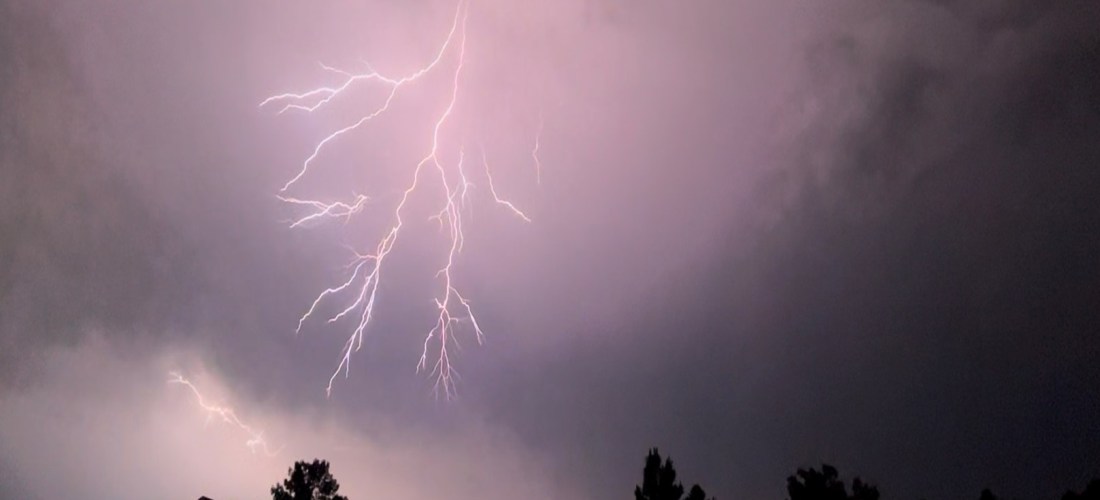
I became increasingly intrigued by wildfires in the western U.S given how crazy the 2020 season was. I have family in both Nevada and California, and the effects of that fire season still have impacts on them today. What I didn’t know at the time was that dry thunderstorms, which produce dry lightning, are a major cause for wildfires in the U.S. A recent example is the August Complex fire in 2020, which burnt about 470,000 acres alone in California, making it the state’s largest wildfire ever. It was created when dry lightning sparked multiple smaller fires that grew into a larger complex of fires. The average cost of fighting wildfires is $1 billion annually with millions of dollars in property loss as well (National Interagency Coordination Center (NICC),ND).

Sunday Gulch in Custer, SD. May 5, 2023. Photo by Markus Sonnenfeld.

Corn: The Carbon Cure?

Atmospheric Science Students, STS Students

By Isaac Kolousek

Growing up on a farm in rural South Dakota, I heard someone say once that no matter how much it rains, a farmer will always complain about it even though deep down they’re grateful for it. This is what helped guide me towards the Atmospheric and Environmental Sciences program at South Dakota Mines after figuring out that my initial degree in Computer Science was not where I wanted to go with my life. I wanted to understand why it did or didn’t rain on our farm, but it rained on our neighbor’s farm. I also wanted to understand why farmers, whose entire lives rest in the hands of the weather, don’t get the focus they deserve when it comes to forecasts.

Heavy dark clouds over green fields.
A supercell rolls over a crop field. This will likely cause damage to the crops through high winds and heavy rain showers. Courtesy: Creative Commons.

STS Costume Contest 2023

Events

This year, the STS program ran its first-ever Halloween costume contest. Dressing up for Halloween is a perfect chance for students to show off some creativity and possibly even highlight some connections between science/technology and society! Some of our faculty dressed up, too – we had a pirate, a fancy lumberjack, Introverty the 8th Dwarf, and Goth Judy Jetson.

We had a number of really excellent entries in the contest, and we’re happy to share the winners below (except for one person, Jace Williams, who received an honorable mention but who has not given permission to use his image – if that changes, the post will be updated accordingly).

We have plans for another costume contest next Halloween, so start thinking about costume ideas for 2024!

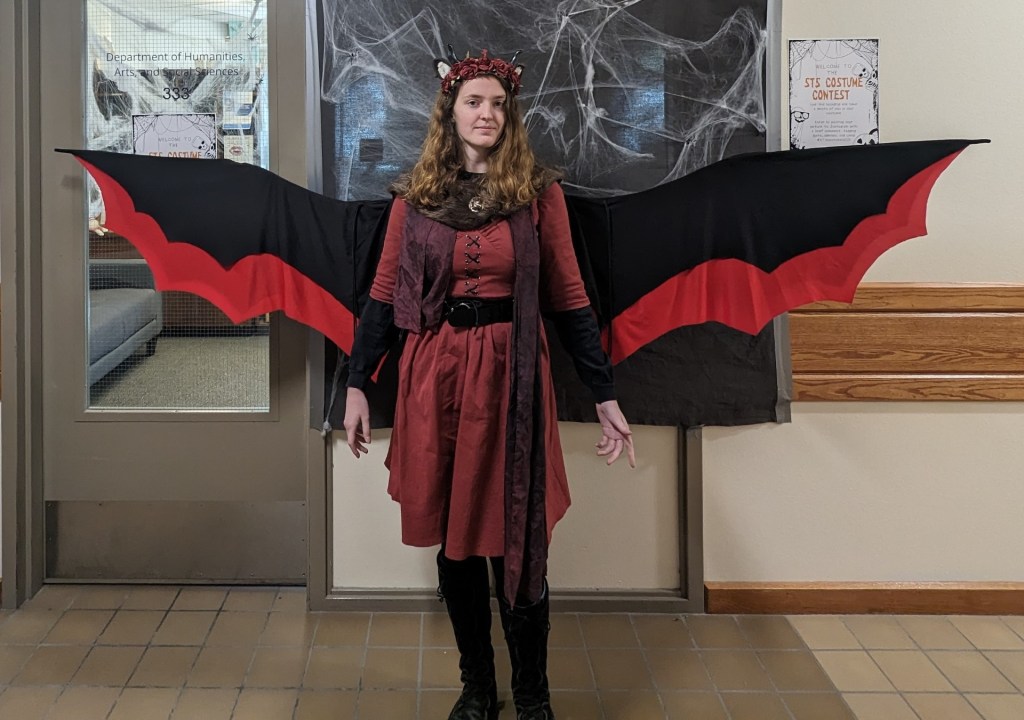
A young woman in a Renaissance-style lace-front dress with tall boots and a headpiece. Most notably, she is also wearing wide black-and-red wings.
First place: Pari Bailey, as a Renaissance fairy.
Person on stilts wearing long patched jeans, a ragged brown jacket and plaid shirt, and a bucket hat. They are also wearing a rope and hook belt and a chain hanging from their neck, with makeup as if their face is stitched together.
Second place: Gaven Williams, as a creepy scarecrow (on stilts!).
Headshot of a student wearing a Grubby mascot head but with the teeth modified to be very pointy and too many.
Third place: Jaxxen Cheney, as Nightmare Grubby.
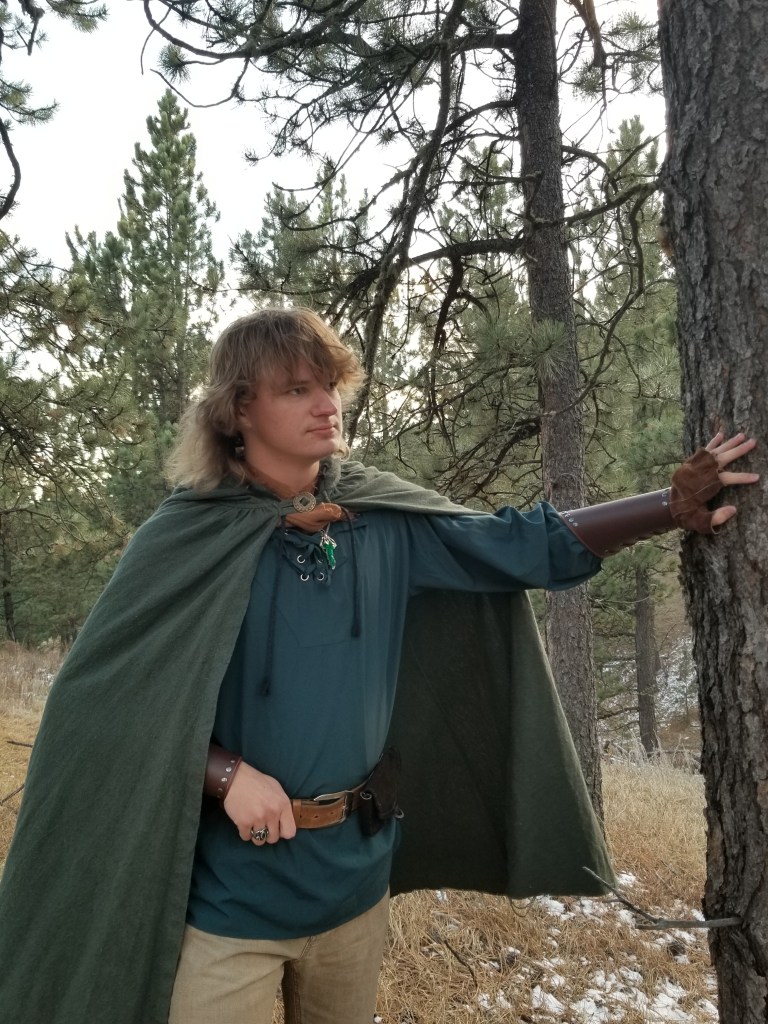
Young man posing in the forest with Renaissance-style clothing - a lace-up shirt, a cape, and leather wristbands.
Honorable Mention: Caleb Noe
Young man wearing a steampunk-style outfit featuring a black coat with tails, a chain wallet, and goggles around his neck.
Honorable Mention: Will Eby

STS Faculty Profile: Natalie Neumann

STS Faculty Profile, Uncategorized

Natalie Neumann is Instructor of English.

What’s your area of expertise? What do you primarily research and/or teach? And what drew you to this field?

My area of expertise and what I got my graduate degree in is creative writing, short stories and poetry. Many years ago I got the opportunity to team-teach a creative writing class modeled after a writing group that I’ve been leading since 2000, and it was wonderful. However, to be honest, I have always loved teaching English 101. Watching students find their voice makes me smile.

What’s one of your favorite courses, topics, or specific texts to teach? Why?

Over the years, I’ve used many texts, essays, poems, and short stories, but one of my favorite essays of all time to use in English 101 is “Why Write?” by Paul Auster. It is timeless.