Science communication in the community: Trinity Eco Prayer Park

Classes, communication, Environment

By Erica Haugtvedt

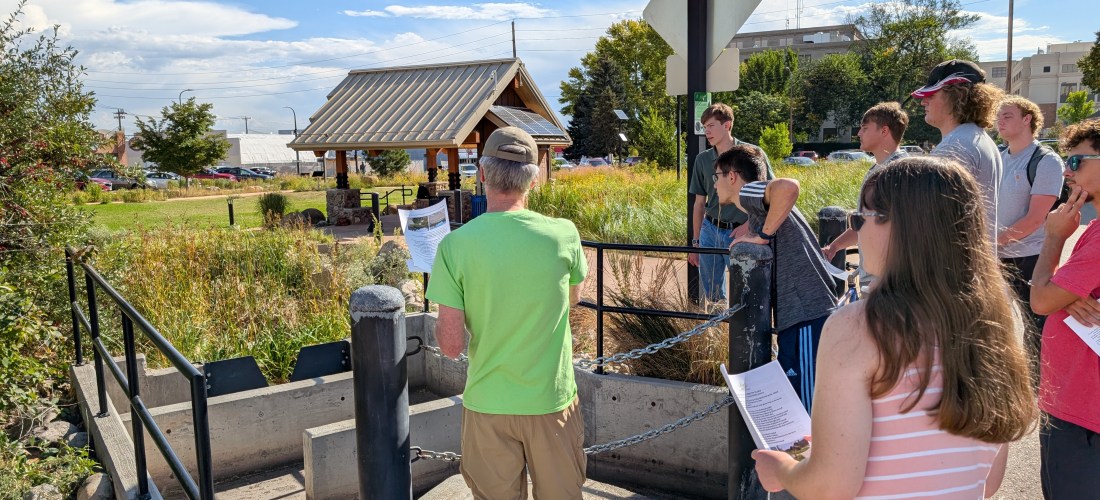
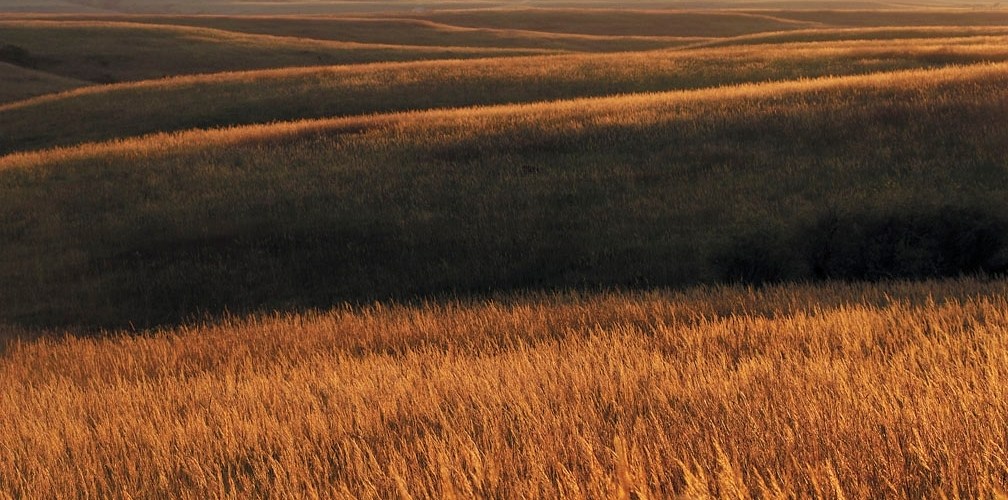
Students in ENGL 289: STEM Communication for Public and Technical Audiences are partnering with Trinity Eco Prayer Park to leverage their science expertise and science communication skills to help the park face real-world problems. Trinity Eco Prayer Park is a private park owned by the Trinity Lutheran Church Foundation that models sustainable stewardship of the environment. The park naturally filters stormwater for 2/3 of its concrete-heavy city block through native plant species that represent five local biomes from the Great Plains and Black Hills. 

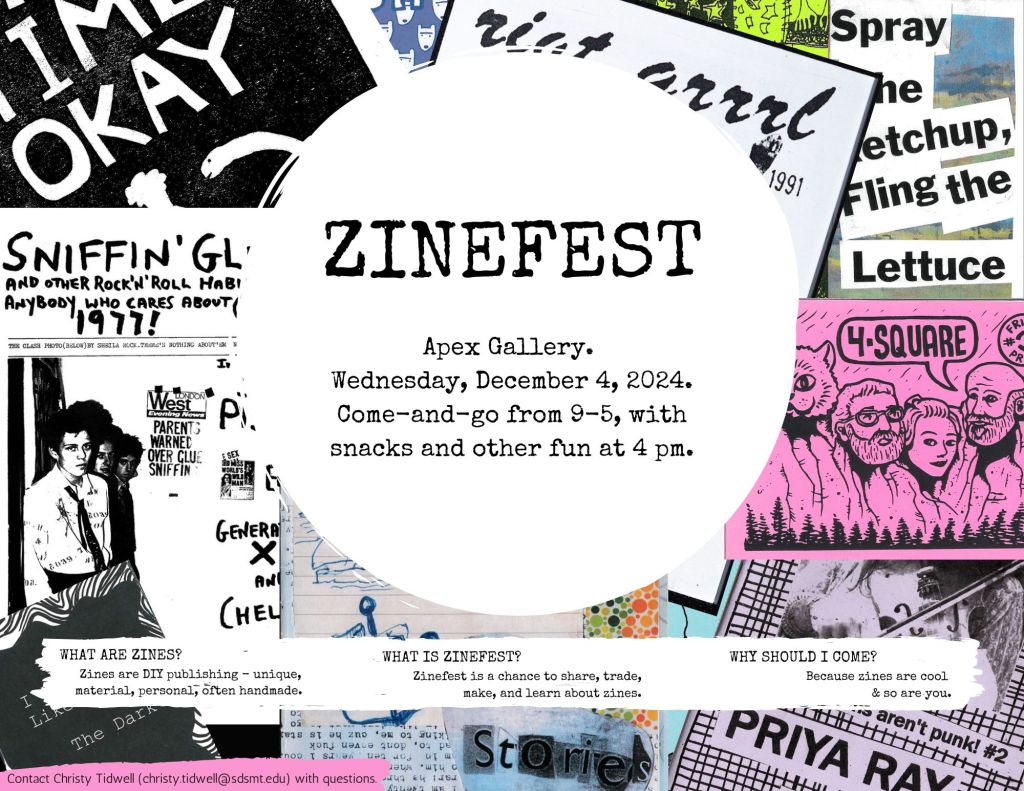
Zinefest: World-Making, Creativity, & Technology

Apex Gallery, Arts, Classes, communication, Events, Humanities

By Christy Tidwell

“[Zines] are practices of ‘poetic world-making’—poetic not in the sense of a poem on the page (although they can be this too),
but in the sense of poesis: the process of creating something that did not exist before.” 
– Gwen Allen

The classes I teach create communities. Students get to know each other as they learn the course material, and they share ideas and work with each other. This is a form of world-making, even if temporary, and I love this about my classes. But I don’t want the connections and sharing to stop at the classroom door or to be forgotten when the semester ends. The goal is for my students to connect what they’re learning in class with the rest of the world, to share what they’ve learned with others, to hear what others have learned, and to join and build other communities.

Finding ways to do this can be challenging, but it’s not impossible.

This semester, as a way for students to connect across classes and share work with broader audiences, a few of us in the Humanities, Arts, and Social Sciences department (myself, Matt Whitehead, Evan Thomas, Erica Haugtvedt, and Mary Witlacil) put on a series of zinemaking events that culminated in a Zinefest in the Apex Gallery on December 4th. Zinefest was an all-day come-and-go event that displayed the zines students made in classes (and, in a few cases, just for fun!), provided some examples of interesting zines made by others, and gave visitors a chance to make their own zines. (If you missed it this year, watch out for another event next year!)

This event let students share some of what they have learned this semester, giving them a broader audience, and it also connected them to students in other classes and to the audiences who came to Zinefest. While I did not count the number of visitors during Zinefest, the gallery filled several times and was rarely empty. Some people walked through relatively quickly and took in only a few zines; others stayed for quite a while, standing and reading multiple zines before finally deciding on some they wanted to keep. One student – who will remain nameless for obvious reasons – wrote in a reflection afterward, “I spent almost 2 hours there and accidentally missed class, so I would say I had a good time.” Although I would (of course) never encourage a student to miss class, this indicates that Zinefest offered this student something meaningful.

Because most students were asked to bring multiple copies of their zines, visitors could take a copy of one if they were particularly interested in its ideas or really loved it. Hopefully, they will re-read any zines they took, remember the event, and maybe even be inspired to make their own! Leaving with a material artifact helps the experience and community created through this event extend past Zinefest itself.

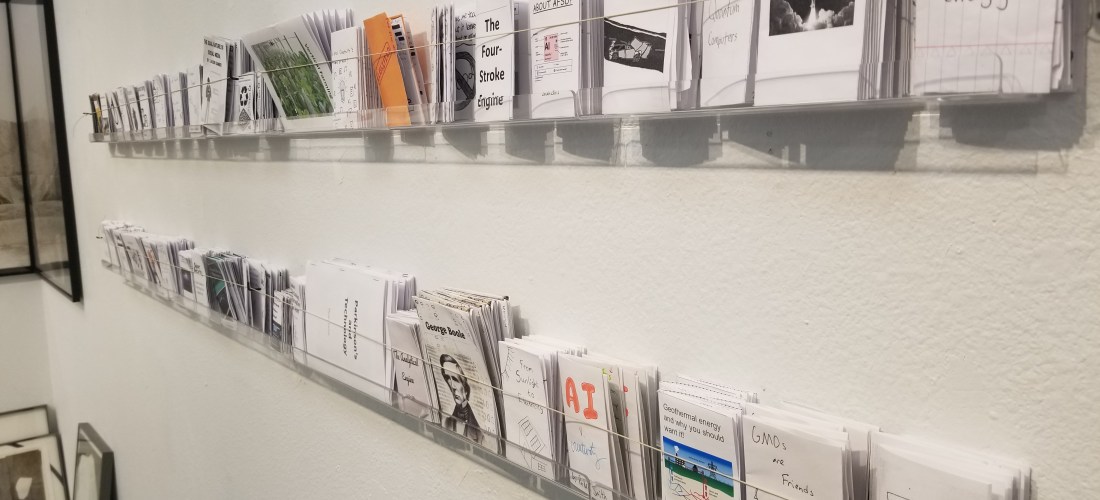
Two rows of zines displayed on the wall, with a handwritten sign above them: See a zine you like? Feel free to take it. Just don't take the last one! Thanks for stopping by.
Student zines on display with an invitation to take a zine.

As an event, Zinefest promoted connections and community; as a practice, making zines (even without an event like Zinefest) provides us all with an opportunity to create something new – to engage in world-making – and to share that something with others, without requiring elaborate technology or infrastructure, refined skills, or many resources. Anyone can make a zine, and that’s what’s so beautiful about them.

Printing in the Classroom: Hands-On Creation & History of Technology

art, Classes, Humanities, teaching, Technology

By Christy Tidwell

This semester, I am teaching a section of Connections: Humanities & Technology (HUM 200), which is one of our core STS courses as well as a general education course that students from across the university take to fulfill their humanities requirement. There are many ways to teach this course to get students to think more critically and more deeply about the relationships between the humanities and various technologies, and this particular semester’s class begins with a few weeks exploring printing technologies.

What better way to understand printing technologies than to try them out?

To incorporate a hands-on approach to printing in the class, I worked with our art professor, Matt Whitehead, to prepare an activity for students in the art room. We wanted to give students a chance to work with printing presses in a couple of different ways, to try using a typewriter and a Leroy lettering set, and to check out some old toy moveable type presses. These toy presses date from the 1940s and are no longer totally functional, so they were more on display than for use, but they still allowed students to get a better sense of what a moveable type printing press is like on a small scale.

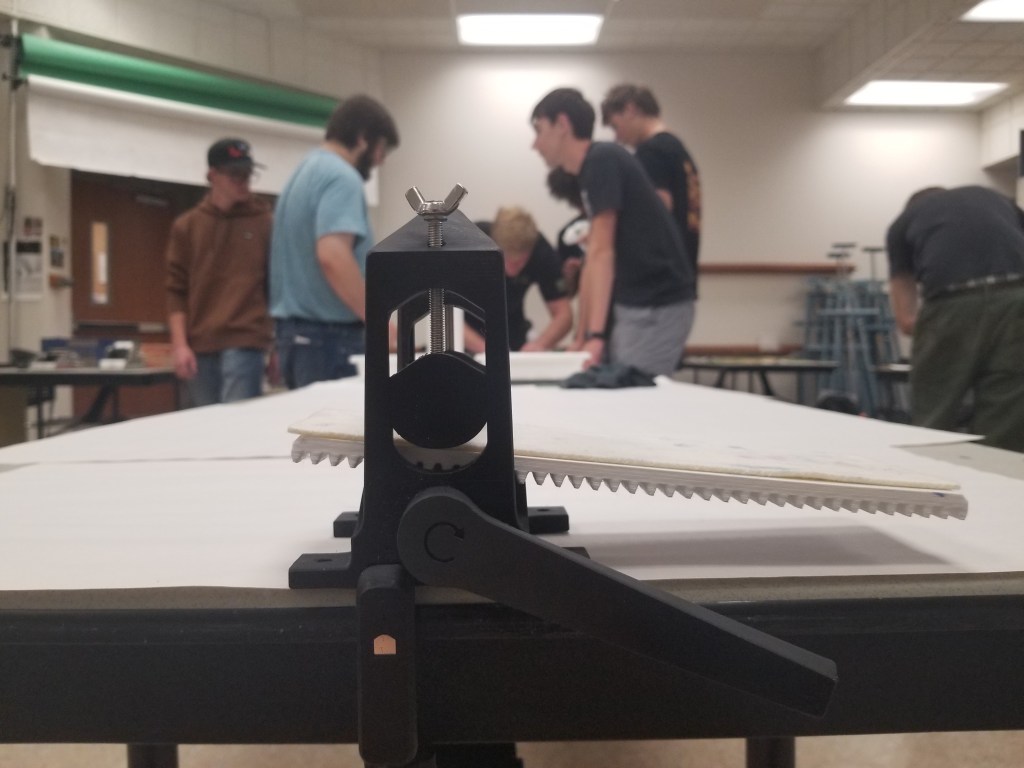
Photo of a mini printing press ready for use.
A mini printing press from the Open Press Project, with students working in the background.

After a brief introduction to some basic printing techniques and explanation of what was available, students were given the freedom to explore these technologies in whatever order they wished. Some made an effort to try everything and even combined elements (the printing press with text from the typewriter or lettering set, for instance); some really focused in on one technology or technique and tried it multiple times or in multiple ways.

Welcome Back! Fall 2024 STS News & Events

Apex Gallery, Arts, Classes, Events, Humanities, STS Faculty

As we begin this academic year, the Science, Technology, & Society program has plenty of news to share and exciting events coming up. Check out some of what’s been going on with us and keep an eye out for events you can attend in the coming weeks and months!

Faculty News

We are excited to welcome Carlie Herrick as a Lecturer in English. She has taught English classes here at South Dakota Mines for many years already and is a wonderful colleague, so we’re glad to have her take on this new position! We are also pleased to announce that Kayla Pritchard has been promoted from Associate Professor and is now Professor of Sociology.

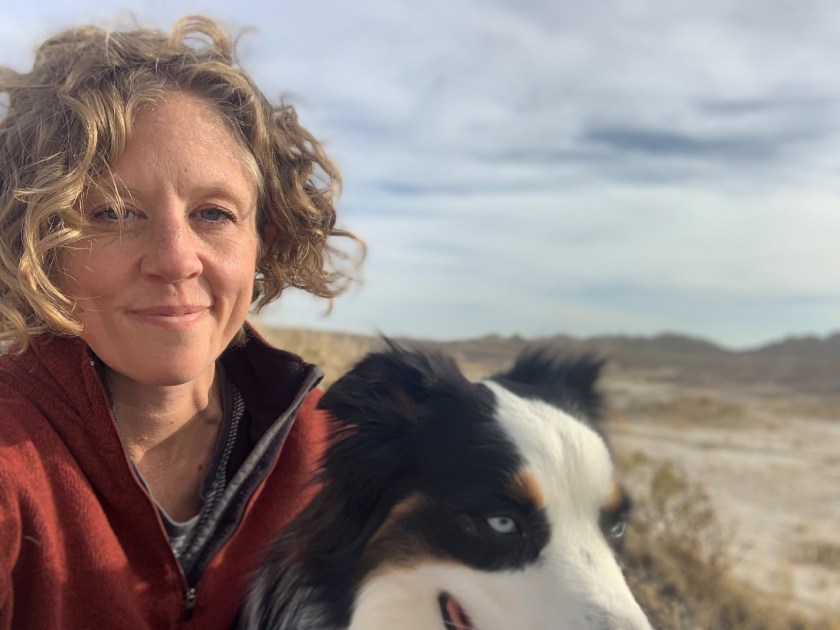
Photo of Carlie Herrick outdoors and smiling, with her dog.
Carlie Herrick (and dog)
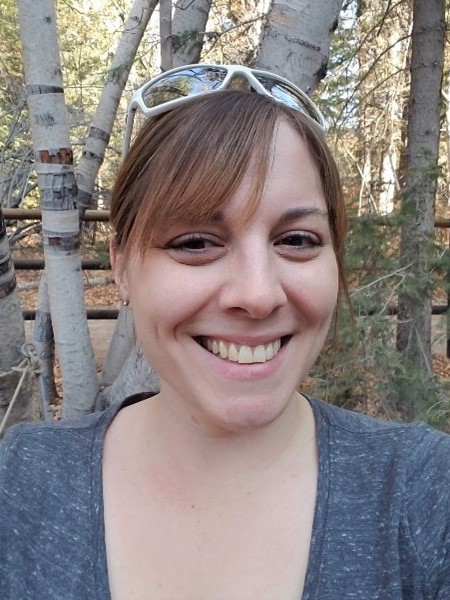
Photo of Kayla Pritchard, outdoors in the woods, smiling.
Kayla Pritchard

STS Program News

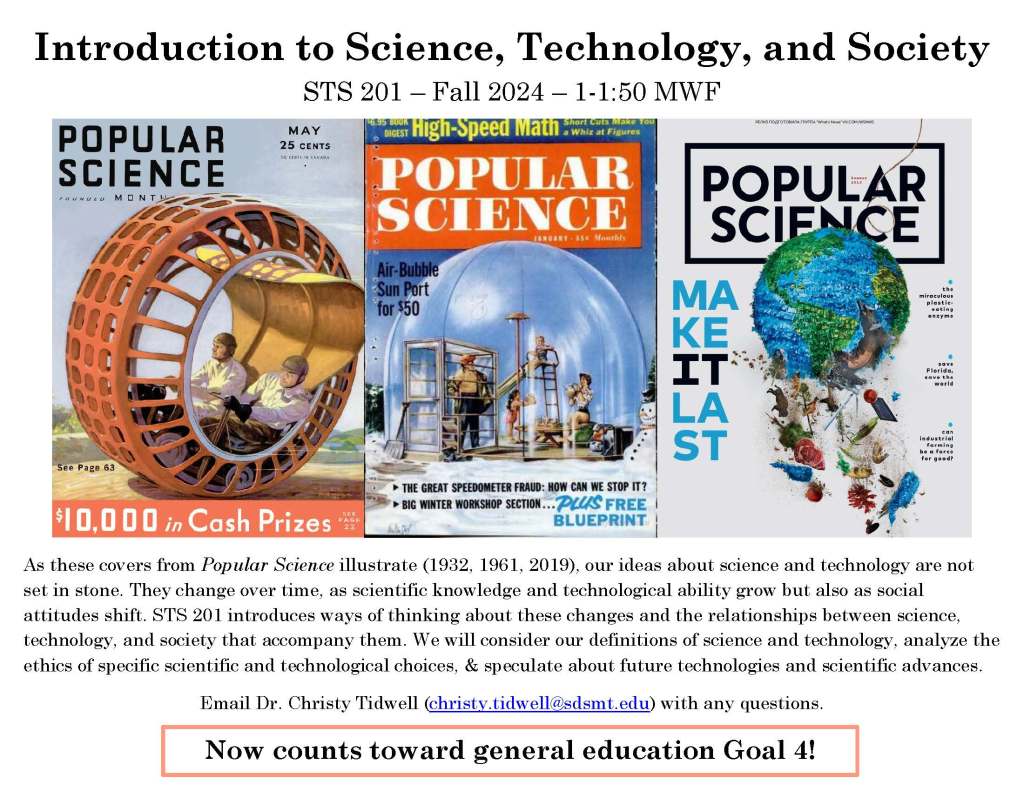
One of our core STS courses – STS 201: Introduction to Science, Technology, & Society – now counts as a Goal 4 general education course. This doesn’t change the course itself in any significant way, but it does mean that there’s now a good reason for students of all majors to take the course. The class gives students a chance to do the kind of work STS scholars do and to gain a different perspective on their own disciplines. In STS 201, students thoughtfully examine the relationships between science, technology, and society; explore the ways we define these terms and the effects of defining them in these ways; and learn about the history and ethical consequences of scientific research and technological innovations.

Poster for STS 201 in Fall 2024. It features some images from the covers of Popular Science magazine featuring past technological ideas and an image about trash on planet Earth. The description of the course reads: As these covers from Popular Science illustrate (1932, 1961, 2019), our ideas about science and technology are not set in stone. They change over time, as scientific knowledge and technological ability grow but also as social attitudes shift. STS 201 introduces ways of thinking about these changes and the relationships between science, technology, and society that accompany them. We will consider our definitions of science and technology, analyze the ethics of specific scientific and technological choices, and speculate about future technologies and scientific advances.

Upcoming Events

If you’re looking for cool things to do, STS has you covered this year! Here’s a list of upcoming events sponsored by the STS program and/or the Humanities, Arts, and Social Sciences (HASS) department. Add them to your calendar and come to as many as you can!

  • The Office of Student Engagement and Department of Humanities, Arts, and Social Sciences (the STS program’s home) are hosting a 2024 Local Election Forum the evening of Thursday, September 12 (7-9 pm), in the Beck Ballroom in Surbeck Center. Come hear from local candidates, learn about ballot initiatives, and ask questions!
  • On Tuesday, September 17 at 6 pm, Erica Haugtvedt, Associate Professor of English, will present an introduction to George Eliot, the Victorian novel, and science as part of the university’s STEAM Cafe series. These presentations are free to the public and take place at Hay Camp Brewing Company (601 Kansas St., Rapid City).
  • The STS program is sponsoring a series of zinemaking events, culminating in a zinefest at the end of the fall semester. We will set up with materials, examples, instructions, and plenty of enthusiasm for a zinemaking event from 9:30-2:30 on Wednesday, September 18, on the second floor of the Classroom Building and then for another from 9:30-2:30 on Wednesday, November 13, on the first floor of the Devereaux Library. Zinefest will show off some of what has been created this semester as well as featuring some information about the history of zines, and will take place in the Apex Gallery (2nd floor of the Classroom Building) on Wednesday, December 4.
  • The STS program is also sponsoring an STS Book Club beginning this semester. It’s open to faculty, staff, students, and their friends and will provide a space to read and discuss books related to science, technology, and society. The first book will be Annalee Newitz’s Autonomous, a science fiction novel, but future books (to be determined by participants) may include science writing, biographies of scientists/inventors, histories of science and technology, memoirs, or other fiction addressing science. The group’s first meeting will be held in CB 334 (the Stoltz faculty and staff lounge) – Thursday, September 26 at 5 pm.
  • A grant-funded collaboration between South Dakota Public Broadcasting, Dick Termes, and South Dakota Mines presents an event exploring connections between art and science. The event is scheduled for Saturday, October 5, from 1-4:30 pm on the second floor of the Devereaux Library and will include a screening of parts of the new Ken Burns documentary about Leonardo Da Vinci, a talk by Dick Termes, a chance to use VR goggles to explore Termespheres, and screenprinting with Matt Whitehead (Director of the Apex Gallery and Lecturer in art) and SD Mines students. All are welcome to come check out the various parts of the event at their own pace.
Poster for the STS Book Club with date, time, and location, plus a description of the group and the first book.

Fundraising

Finally, we want to highlight a fundraising effort to support SD Mines music students. The South Dakota Mines Concert Choir has been invited to perform in the festival choir at the 2025 Salzburg International Choral Festival next summer. Choir members are raising money now to fund their trip, so if you’re able to donate, please consider doing so – it would help them immensely! This supports not only STS students and HASS faculty but students from across the university. You can find out more and donate to support their trip here.

Planting Seeds: Anchoring Ethics in the Dirt

Classes, Environment, teaching

By Christy Tidwell

My Environmental Ethics & STEM class asks big questions about knowledge, values, justice, and responsibility – both individual and systemic – related to environmental issues. Although I try to situate these conversations in specific, real-world examples, they can still sometimes seem abstract or beyond the scale of my students’ reach. They may wonder what they can do to address climate change, for instance, or to change corporate policy.

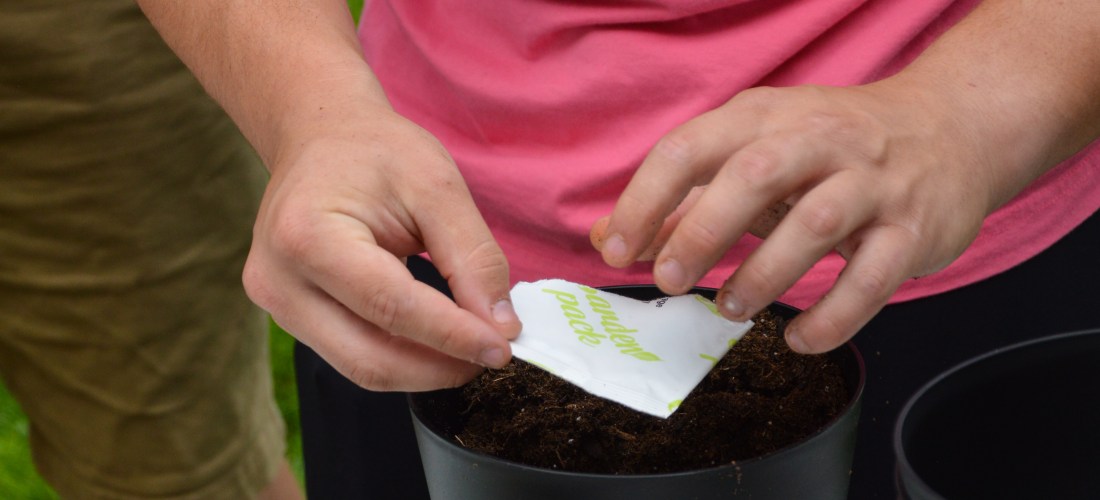
But they can, of course, make a difference, and we look for ways to identify the actions they can take (again, not just individually but within larger contexts). In the meantime, to help connect us more fully to the environment, this semester I asked my students to plant seeds and to do their best to grow them and keep them alive. It’s my hope that working to protect and nurture one small plant will give the class a personal connection that issues of pollution, plastics, or water rights may not always have.

Agrarian Protest: Spring 2022 Course

Classes

by Bryce Tellmann

“Agrarian” is a loaded term. Literature scholar M. Thomas Inge notes that it is most commonly associated with independence and self-sufficiency, as well as long-running tensions between tradition and industry, community, and agriculture as a “positive spiritual good” (xiv). Americans are likely to associate it with Thomas Jefferson’s oft-quoted line from Notes on the State of Virginia: “Those who labor in the earth are the chosen people of God, if ever he had a chosen people, whose breasts he has made his peculiar deposit for substantial and genuine virtue.”

But the history of agrarianism isn’t all community and virtue. From the Whiskey Rebellion of the 1790s to the Tractorcades of the 1970s, farmers in the United States have drawn on agrarian rhetoric to protest commodity prices, foreclosures, corporate control, and more. This line of protest is seen around the world as well, from multiple movements for migrant worker rights to the ongoing farmer protests in India.

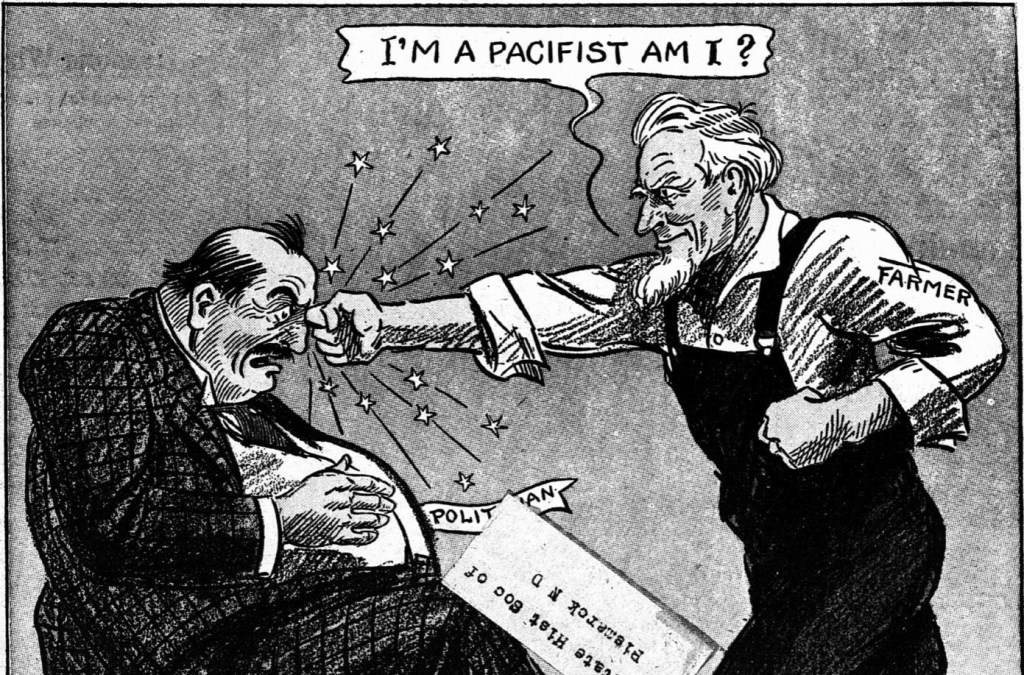
Black and white cartoon drawing of a man labeled farmer punching a man labeled politician while saying, "I'm a pacifist am I?"
Image courtesy of the North Dakota Historical Society

In Spring 2022, I am teaching a topics class on Agrarian Protest (ENGL 392) that will examine a broad swath of these protests. Since I’m a rhetorician, we’ll pay particular attention to the communicative and persuasive discourse of these movements, through examination of both primary and secondary sources. Ultimately, I expect that students will be surprised by the sheer diversity of voices in the last century-and-a-half of agrarian protest. It is easy to assume that farmers’ political interests are simple, unified, and consistent across time. The truth is far more complex and – dare I say – radical.

So in the (apocryphal) words of 1880s reformer Mary Elizabeth Lease, “it’s time to raise less corn, and more hell!”

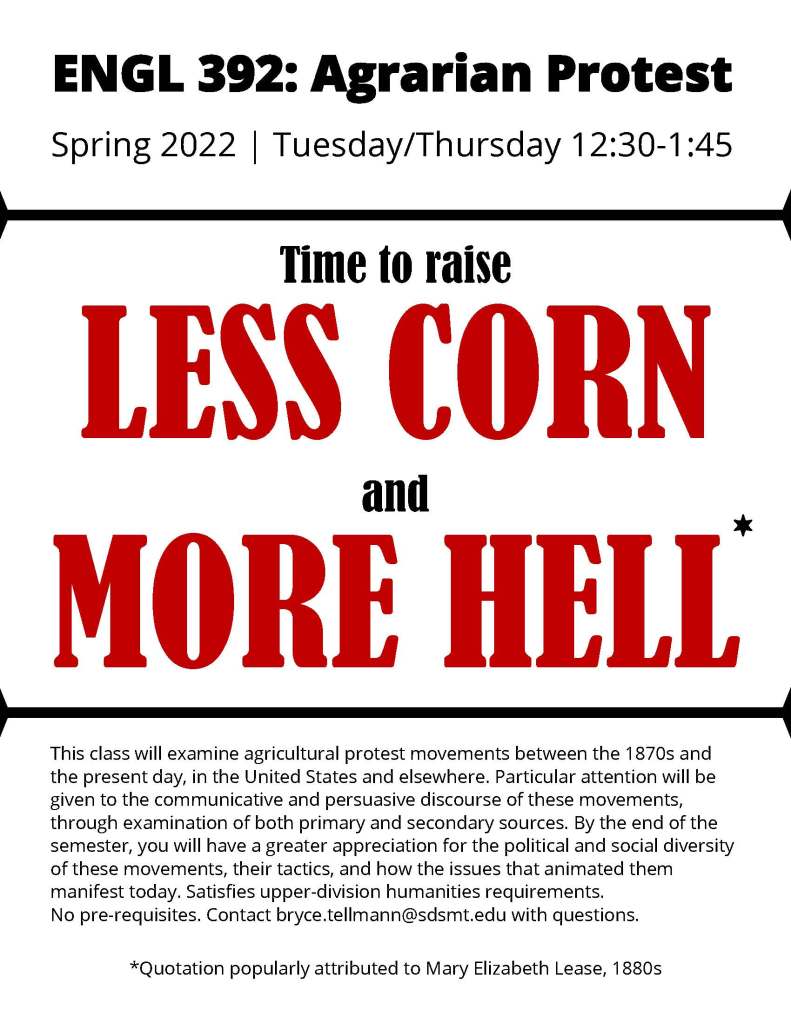
Poster advertising the course. 

ENGL 392: Agrarian Protest, Spring 2022, Tuesday/Thursday 12:30-1:45.

Features the text: Time to raise less corn and more hell.

Environmental Literature & Culture: Spring 2022 Course

Classes

By Christy Tidwell

What is nature? What do you imagine when you think of nature? What are the qualities of nature (better yet, of Nature with a capital N)? 

Pause now and think about that for a minute. 

Seriously. 

What is the image of Nature you hold in your mind? Picture it.

Photo by James Wheeler on Pexels.com

Did you imagine something like that? Maybe not that exact image, but something similar? If so, consider this response more fully. What are the qualities of this representation of nature? It’s beautiful. It has lots of elements of the natural world (I know, that seems circular, but stick with me), like trees, mountains, a lake. It’s pure and untouched. It’s wild. Notably, there are no humans in this image. 

Humanities & Technology: Defining Terms and the Complexity of STS

Classes, Humanities, Technology

By Christy Tidwell

Today marks the end of the first week back to class for South Dakota Mines, and the STS faculty are hard at work in their classes and enjoying meeting students! We are teaching classes on Environmental Ethics & STEM (HUM 250 with me), Computers in Society (HUM 375 with Dr. Erica Haugtvedt), E-sports (HUM 376 with Dr. John Dreyer), History and Philosophy of Science (PHIL 335 with Dr. Michael Hudgens), Terror & Horror (ENGL 392 with Dr. Laura Kremmel), and Licit and Illicit Drugs (SOC 411 with Dr. Kayla Pritchard) – plus many others! As this list of courses indicates, STS covers a lot of ground. It needs to, given its promise to study science, technology, and society, and there are countless ways to approach the field and the topics it includes.

In addition to Environmental Ethics & STEM (mentioned above), I am also teaching Connections: Humanities & Technology (HUM 200) this semester, which is a great illustration of what the STS major is all about. Since the course description and title are pretty broad, I’ve narrowed things down to focus on the following big questions:

1. How do we communicate with each other?
2. How do we design and build the places we live?

In response to these questions we will explore communication technologies from paper and books to social media, film, and robots, and we will consider urban design issues like curb cuts and plumbing, historical and contemporary ideas about what a home looks like, and what the city of the future could look like.