By Jack Knighton
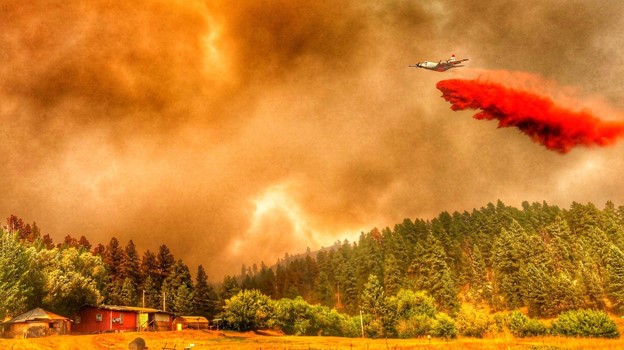
Globally, wildfires are becoming more common. Research indicates that peak wildfire season has lengthened for over 25% of the Earth’s vegetated surface, causing an 18% increase in global mean fire season length (Jolly, et. al, 2013). In an October 2024 report, the Montana Legislative Fiscal Division found that 70% of the acres burned in Montana history have occurred after the year 2000. The report also found that Montana spent over $500 million dollars suppressing fires between 2002 and 2023, with a further $1.8 billion having been spent by federal agencies. With wildfires becoming more common, it is increasingly important that we understand local wildfire behavior to aid with suppression efforts.
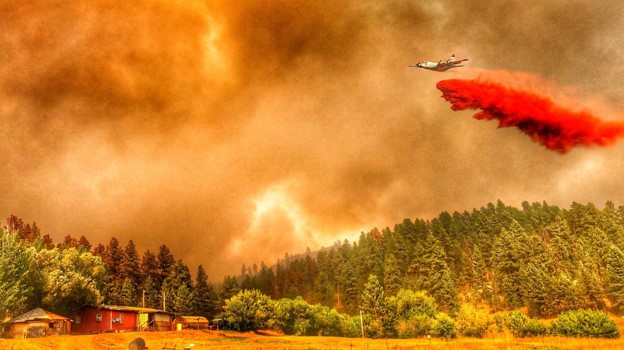
Wildfire behavior is driven primarily by weather, topography, and the availability of fuel. Fuel availability varies throughout the year, and is primarily a function of moisture, vegetation type, and vegetation density. Vegetation type and density are driven by the amount of annual precipitation and average temperature. Drought impacts fuel moisture, allowing for more easily combustible fuel and increased rate of fire spread. Previous research (Clabo, 2018, Westerling et. al, 2003) has indicated that there may be correlations between local climate variables and increased wildfire activity, however no dedicated study has been conducted for Montana.
For my capstone project, I will be analyzing relationships between climate variables, such as drought, precipitation, and temperature, and wildfire activity within Montana from 1992 to 2024. Using Spearman’s rank order method, monthly correlation values will be calculated for each of the 7 climate divisions within Montana. Wildfire activity will be analyzed using monthly totals of acres burned and wildfire ignitions. Additionally, large-scale climate variability, such as El Nino, will be analyzed to determine the effects it has on fire season severity.
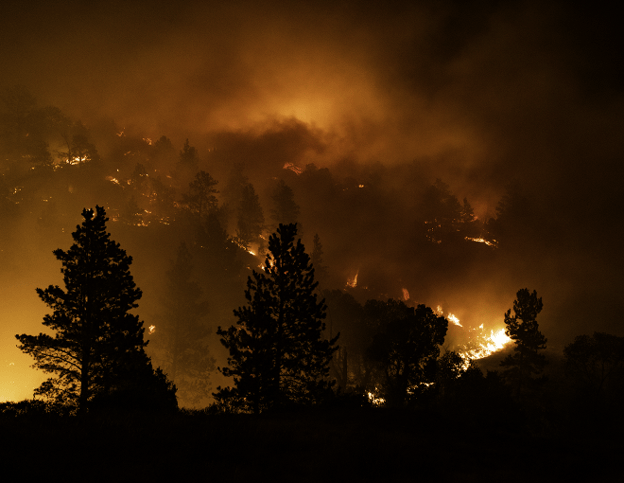
Montana exhibits strong variability in local climate as you move from the western mountains to the eastern prairie. It is hypothesized that due to these variations in local climate, there will be statistically significant correlations between climate variables and wildfire activity across Montana. It is also hypothesized that these correlations will vary both spatially and temporally based on local climate. The goal of this project is to provide fire managers with actionable information about wildfire potential based on current and future climate conditions, with the hope that this information will allow for better decision making and resource allocation.
Sources:
Clabo, D.R., 2018: Contemporary Pyrogeography and Wildfire-Climate Relationships of South Dakota, USA. Atmosphere, 9, 207, https://doi.org/10.3390/atmos9060207
Jolly, W.M., Cochrane, M.A., Freeborn, P.H., Holden, Z.A., Brown, T.J., Williamson, G.J., Bowman, D.M.J.S., 2015: Climate-induced variations in global wildfire danger from 1979 to 2013. Nature Communications, 6, 7537, https://doi.org/10.1038/ncomms8537
Montana Legislative Fiscal Division, 2024: Wildfire Risk & Financing in Montana: Risks and Costs to the State and Its Partners. https://archive.legmt.gov/content/Publications/fiscal/2025-Biennium/MARA/Wildfire-MARA-Module-Oct2024.pdf
Westerling, A.L., Gershunov, A., Brown, T.J., Cayan, D.R., Dettinger, M.D., 2003: Climate and Wildfire in the Western United States. Bull. Amer. Meteor. Soc., 84, 595–604, https://doi.org/10.1175/BAMS-84-5-595
Bio:
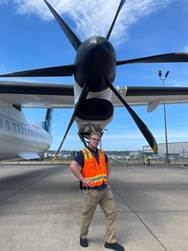
My name is Jack Knighton, and I am an atmospheric and environmental science major specializing in meteorology. I got my start with meteorology through my experiences in aviation. The weather has a significant impact on aviation operations, and therefore understanding it is very important to maintain safety. Fire meteorology is something I was introduced to at the School of Mines, and it has become a topic I’m very passionate about. In the fire world, meteorology is very important to understand current and future wildfire behavior. I am hoping to find a job in the aviation or wildfire world, helping decision makers make informed decisions that produce positive outcomes.

