By Hannah Gehlsen
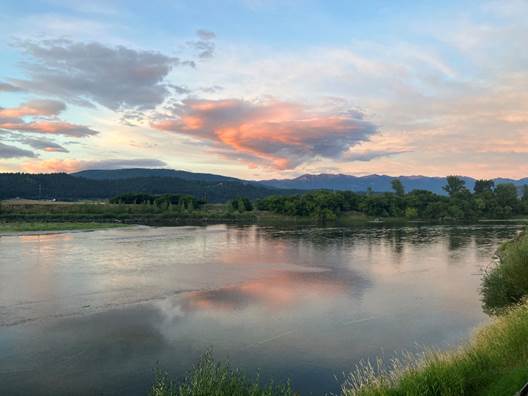
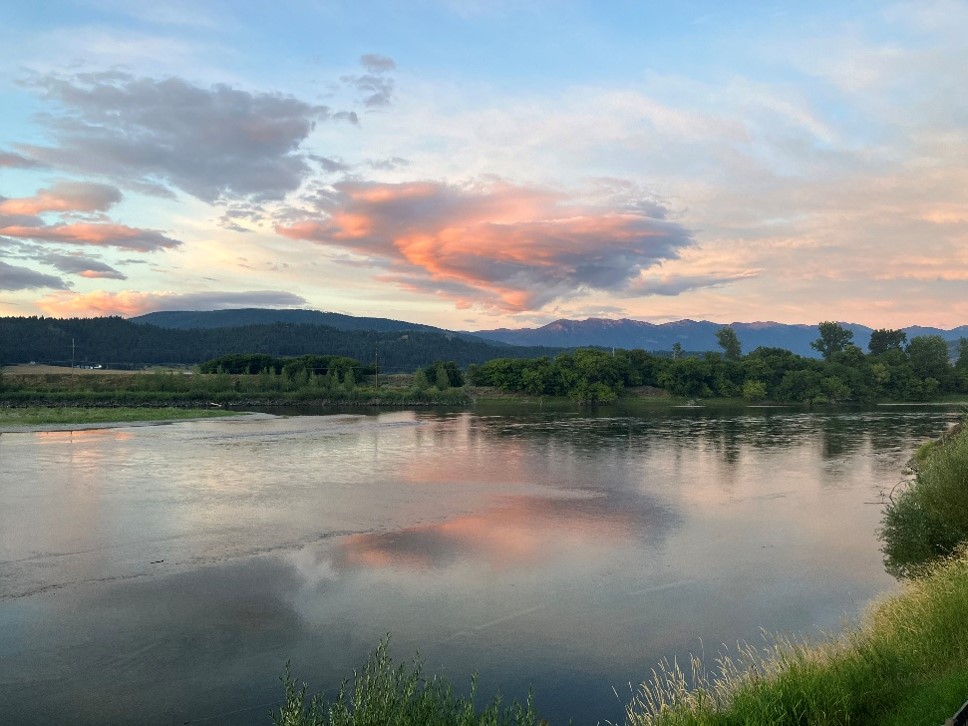
Over the course of my college career, I have come to realize, like many others, that there is a gap that exists between not only scientists and the public, but within varying scientific disciplines as well. As a result, many ecologically valuable elements are continually in need of research to support their existence. This issue is currently being faced in regard to the riparian vegetation/macrophytes of the Kootenai River, with some finding them problematic to stream flow and others simply seeing them as a nuisance while fishing. To clarify, riparian vegetation is known to grow along the edges of water bodies, whereas macrophytes are aquatic plants that are typically rooted underwater, and they can be fully or only partially submerged.
Historically speaking, the Kootenai River is considered to be low in nutrients such as phosphorous. This is primarily a result of the installation of the Libby Dam in 1972, which originates in Southeastern British Columbia, Canada, and flows through northwestern Montana and northern Idaho (Hardy et al., 2022). These low nutrient levels are what put aquatic species, such as the white sturgeon, under threat due to a shift in the ecosystem balance. Nutrients such as phosphorous, nitrogen, and even carbon are critical to maintaining the balance within both aquatic and terrestrial ecosystems. They also work to uphold a proper functioning food-web.
In my capstone project, I would like to explore the carbon, nitrogen, and phosphorous uptake of varying macrophytes, such as Canadian Pondweed, to assess not only ecosystem health but to determine whether nutrient levels in plants impact low-level species consumption (i.e., macroinvertebrates). These lower-level interactions impact larger aquatic species such as fish, which are ecologically, economically, and culturally significant. To break this up, ecologically speaking a healthy biodiverse (many species of either plants or animals) ecosystem is more resilient and can tolerate greater adversity. Proper vegetation health can add to species diversity and stream health in balancing nutrient levels and providing a food source as well as critical habitat. This in turn leads to economic benefits. For instance, the Kootenai River is used as a natural fishery whose success relies on the overall quality of the river ecosystem. Lastly, as mentioned earlier, the white sturgeon that occupies the Kootenai river is endangered. This species also has strong cultural ties to the Kootenai Tribe, as it is central to the Ktunaxa (larger Indigenous nation) identity. In fact, historically speaking, many people belonging to the Kootenai tribe would model their canoes after the body of the sturgeon (UCUT, 2026).
In completing this project my hope is to further close the gap between the public, fishers, scientists (of all backgrounds), policymakers, and more through the exploration of the role played by macrophytes within the larger system that is the Kootenai River. I also hope for my work to encourage continued future maintenance efforts and potentially improved management practices to increase the overall longevity and health of the Kootenai River for the betterment of both aquatic and terrestrial species (that includes us humans).
References
Hardy, R., Ross, T., McDonnell, K., Quist, M., & Holderman, C. (2022, November 14). Nutrient Restoration of a Large, Impounded, Ultra-Oligotrophic Western River to Recover Declining Native Fishes. Digital Commons. https://digitalcommons.unl.edu/cgi/viewcontent.cgi?article=2241&context=usgsstaffpub.
Upper Columbia United Tribes. (2025, November 4). Kootenai Tribe of Idaho. Upper Columbia United Tribes (UCUT). https://ucut.org/member-tribes/kootenai-tribe-of-idaho/.
Bio

I am a senior Atmospheric and Environmental Science Major with an Environmental specialization minoring in Biology. I started off at Mines studying meteorology but felt unfulfilled, with a desire for something more hands-on. With some encouragement from my older sister, I took the leap, switched specializations, and haven’t looked back since. The world of environmental science is broad, and I have gained experience ranging from macroinvertebrate sampling to conservation /outdoor education. I currently work for Game, Fish and Parks. In the future, I hope to work as an environmental educator in Vermont, but truthfully if I end up anywhere along the east or west coast, I will be grateful. When I am not working, or at school, you’ll typically find me out on the trails, lost in a craft, or in the kitchen experimenting with new recipes.

