By Dorothy Snowden
Imagine babysitting children when the police bang on the door, guns drawn, to arrest you for allegedly robbing several banks four states away. That is exactly what happened to a Tennessee grandmother, Angela Lipps, in July 2025. Based on a match using facial recognition technology and bank surveillance cameras, police charged Lipps with eight felony counts and extradited her to Fargo, North Dakota, where she was held on a $100,000 bond for months. She was released and the charges were dropped after she produced records proving she had never been to North Dakota. She was in Tennessee at the time the bank thefts occurred. Lipps is suing the Fargo Police Department (Thompson, 2026).
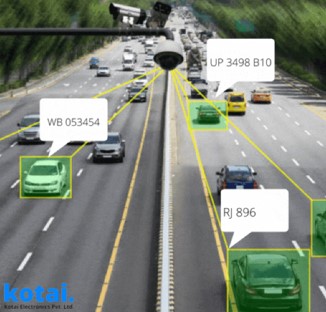
This is just one instance of misidentification and mishandling of facial recognition technology when applied to law enforcement investigations. Similar problems exist with the use of Automatic License Plate Readers (ALPRs), which provide artificial intelligence (AI)-enhanced analysis of vehicles, location, date, time, make, model, and color in real-time databases. For law enforcement agencies, ALPRs can scan thousands of license plates daily, comparing them to “hotlists” of vehicles tied to criminal activity, assisting in recovery of stolen vehicles, and locating criminals or missing persons. Software errors and human misinterpretation of data has led to innocent motorists being pulled over or arrested based on mistaken identity when there is a system “hit” (Alibasic, 2026).
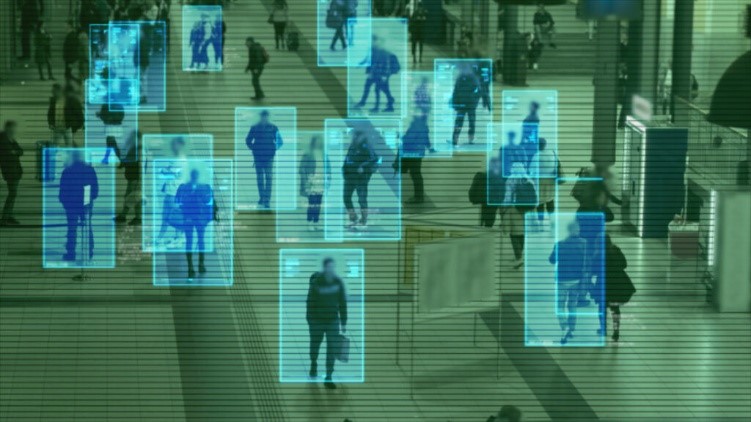
As these kinds of technological tools are incorporated into the growing surveillance network, driven by the enhanced capabilities of AI, policing will change. No longer will policing models be based on the former methods of finding the “bad guys,” as computer programs will allow for the examination of all of us. Agencies will now be able to sift through massive data sets, comparing faces and vehicles, and pluck out offenders, whether they are persons of interest or not (Eneman et al., 2025).
The “dragnet effect” of new surveillance capabilities means nobody is immune to being captured on camera, putting our daily lives under the microscope of law enforcement and government scrutiny. At risk are privacy and human rights afforded by the U.S. Constitution. As the U.S. Supreme Court begins to address violations of our rights, on other levels of government a push is being made to institute oversights and increase human intervention in the use of emerging technology applied to policing.
My capstone project will examine how facial recognition, license plate readers, and artificial intelligence are interrelated as components of the greater surveillance system emerging in America. My work will provide insights from both public and law enforcement perspectives to arrive at policy recommendations that will address the needed balance between safety and privacy.
References
Alibasic, H. (2026). Automated license plate readers and data centers as networked mass surveillance infrastructure: the systemic erosion of privacy and free expression. Systems, 14(8), 1019. https://doi.org/10.3390/systems14081019.
Eneman, M., Miranda, D., Webster, W., Ljunberg, J., Urquhart, L. (2025). The ontological shift in surveillance: revisiting the surveillant assemblage in the age of facial recognition. Surveillance & Society: Kinston, Vol. 23, Iss. 4, (2025): 498-504. e-ISSN 14777487 https://creativecommons.org.
Thompson, H., (2026). Tennessee grandmother sues Fargo after being held in jail for 6 months over AI mistake. Fox 9, KMSP, North Dakota, published September 16, 2026. https://www.fox9.com/news/tennessee-grandmother-sues-fargo-after-being-held-jail-6-months-over-ai-mistake.
U.S. Supreme Court, (2026) Chatrie v. United States, Official Reports of the Supreme Court, Womeldorf, R., reporter. https://www.scotusblog.com/cases/chatrie-v-united-states/.
Bio
I am a senior working on a bachelor’s degree in Science, Technology, and Society, with a minor in Mining Engineering. This project was inspired by an internship with a local Sheriff’s Department, where I interacted with deputies and the public. I am considering graduate studies in Criminal Justice or Science Communication. My other endeavors include training retired racehorses on my ranch in Butte County, SD, and creating landscape paintings as a professional artist.

