By Hannah Gehlsen
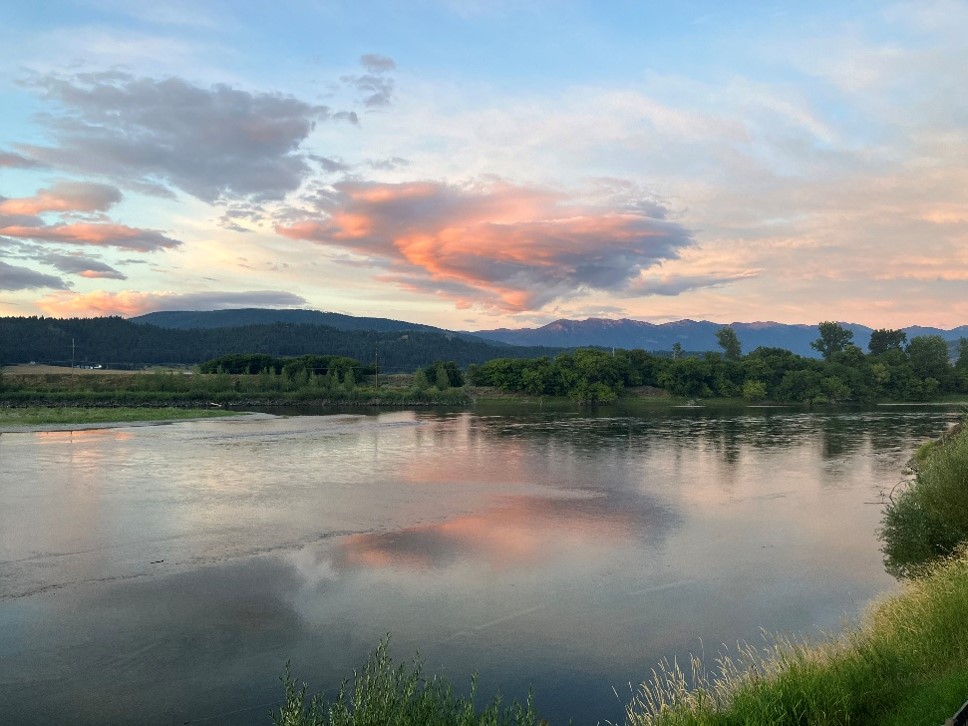
Over the course of my college career, I have come to realize, like many others, that there is a gap that exists between not only scientists and the public, but within varying scientific disciplines as well. As a result, many ecologically valuable elements are continually in need of research to support their existence. This issue is currently being faced in regard to the riparian vegetation/macrophytes of the Kootenai River, with some finding them problematic to stream flow and others simply seeing them as a nuisance while fishing. To clarify, riparian vegetation is known to grow along the edges of water bodies, whereas macrophytes are aquatic plants that are typically rooted underwater, and they can be fully or only partially submerged.
Historically speaking, the Kootenai River is considered to be low in nutrients such as phosphorous. This is primarily a result of the installation of the Libby Dam in 1972, which originates in Southeastern British Columbia, Canada, and flows through northwestern Montana and northern Idaho (Hardy et al., 2022). These low nutrient levels are what put aquatic species, such as the white sturgeon, under threat due to a shift in the ecosystem balance. Nutrients such as phosphorous, nitrogen, and even carbon are critical to maintaining the balance within both aquatic and terrestrial ecosystems. They also work to uphold a proper functioning food-web.