Climber on top of a peak, with snowy mountains extending into the background.

Historical Ascent: Mines Professor Part of First All-Women Team to Summit Alaska’s Devil’s Thumb

STS Faculty

Our STS professors do cool things both inside and outside the classroom! This press release features one of Dr. Mary Witlacil’s recent climbing accomplishments.


RAPID CITY, SD (Sept. 30, 2025) – Rising nearly 9,000 feet above the Pacific Ocean, Alaska’s Devil’s Thumb is as infamous as it is remote—a jagged peak known for brutal weather, frequent avalanches, sheer ice walls and a history of turning climbers back. Few have ever stood on its summit. None had done so as an all-women team.

Until this summer.

Mary Witlacil, Ph. D., a South Dakota Mines assistant professor of political science, and her climbing partner, Sarah Malone, etched their names into mountaineering history when they conquered the mountain’s eastern ridge.

How to Look at the World: Poetry, Science, and Creativity

art, Events, Humanities, Poetry, STS Faculty

By Christy Tidwell

Last week, Matt Whitehead and I gave a presentation about the relationship between poetry and science for National Poetry Month as part of the STEAM Cafe series at Hay Camp Brewing. If you were not able to attend, this is a brief version of what we presented.

As members of the Humanities, Arts, and Social Sciences department, Matt and I (as Art and English faculty, respectively) spend a lot of time thinking about how to get students thinking creatively and engaging in creative projects. Given our work with the Science, Technology, & Society degree, we also work with connections between humanities/arts and science/technology, and we encourage our students to see creativity as something that they don’t do only in our classes but that is a part of their scientific and engineering work, too.

Our core question grows out of this work: What does poetry have to do with science?

The two might seem fundamentally dissimilar, belonging to different realms, but both offer opportunities to look carefully, communicate observations, make connections, and understand the world more fully – piece by piece, experience by experience.

Audio Walks: Exploring the Experience of Place

Humanities, STS Faculty, teaching

By Bryce Tellmann

Most semesters, I teach at least one section of Introduction to Humanities (HUM 100). In order to anchor the class’s exploration of such a potentially broad topic, I choose one or two topics to guide our semester-long inquiry into the human experience. This semester, those two topics are place and sound. On the one hand, they are nearly universal categories of human experience, as we inhabit location and experience vibration every day. But on the other, they are infinitely variable. One person’s experience and understanding of a place, or of a particular set of sounds, may be entirely different than another person’s, even if that place and sound are outwardly identical.

One way that my students are exploring the possibilities of sound and space is by experimenting with an artform called “audio walks.” Popularized by artists Janet Cardiff and George Bures Miller, these mobile art installations ask the participant to go on a walk, retracing the artist’s footsteps as they listen to an audio recording of the artist’s walk. The artist will often comment on their surroundings, including exact navigation directions for the listener. Inevitable differences in the artist’s recording of their walk and the listener’s own environment (different people passing by, different vehicle sounds, even different times of the day or seasons) draw attention to the differences between the ways we represent experience and our actual experience. This, in turn, helps students appreciate the ways that media technologies affect how we experience, understand, and value the world around us.

Some audio walks are straightforward, presenting an ostensibly “authentic” recording of what the artist experienced on their walk. However, the artist may also choose to more actively compose their audio walk, either by preplanning events to be captured during the recording or by editing the recording after the fact. Such additions amplify the disjuncture between what listeners hear in the recording and what they experience as they retrace the walk.

Eden Otten, a freshman Civil Engineering major, captured the contrast well in a discussion board reply:

I think a sense of community in sound is more fleeting than one in place. We still shared the same trail to Boneyard, and I was in the same place that this audio tour gave meaning to. However, many aspects of sound that gave the walk uniqueness were gone in the days between capturing it and listening to it. We experienced the place the same, but the unique sound couldn’t be a shared experience, as I could hear your contributions to the soundscape, but you couldn’t hear mine.

Below are links to download some of the students’ audio walks. If you’re on campus, I encourage you to download one or more to your mobile device and go on the same walk that the artist did! Walks are best experienced with headphones.


Welcome Back! Fall 2024 STS News & Events

Apex Gallery, Arts, Classes, Events, Humanities, STS Faculty

As we begin this academic year, the Science, Technology, & Society program has plenty of news to share and exciting events coming up. Check out some of what’s been going on with us and keep an eye out for events you can attend in the coming weeks and months!

Faculty News

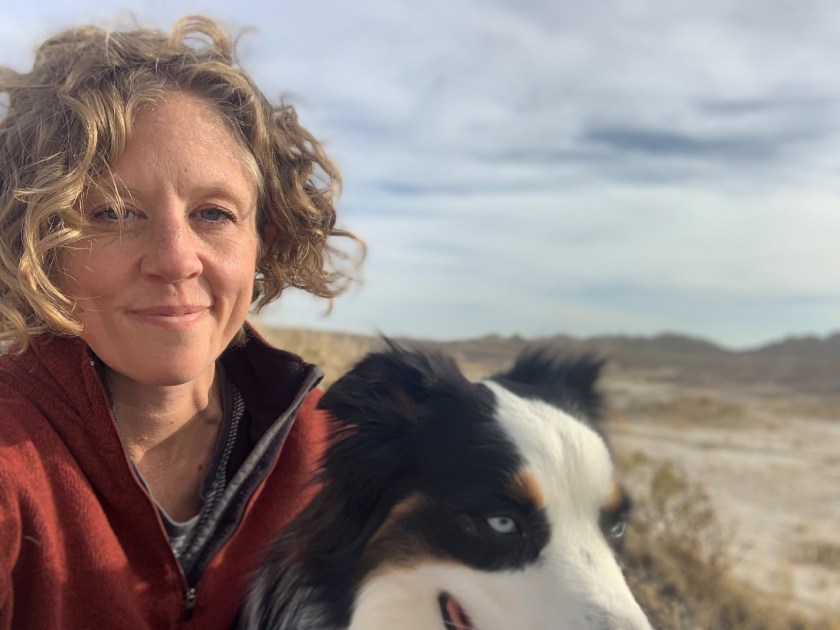
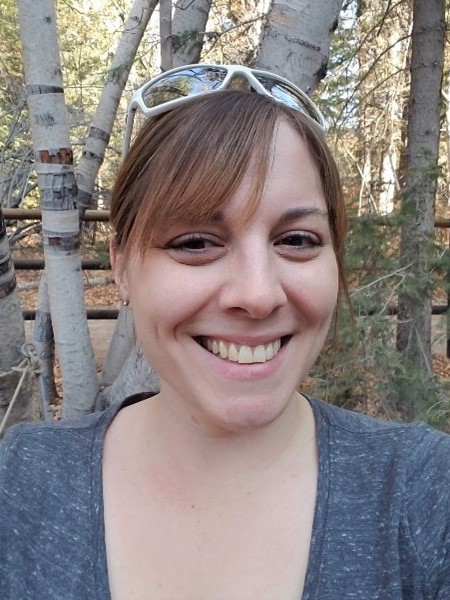
We are excited to welcome Carlie Herrick as a Lecturer in English. She has taught English classes here at South Dakota Mines for many years already and is a wonderful colleague, so we’re glad to have her take on this new position! We are also pleased to announce that Kayla Pritchard has been promoted from Associate Professor and is now Professor of Sociology.

Photo of Carlie Herrick outdoors and smiling, with her dog.
Carlie Herrick (and dog)
Photo of Kayla Pritchard, outdoors in the woods, smiling.
Kayla Pritchard

STS Program News

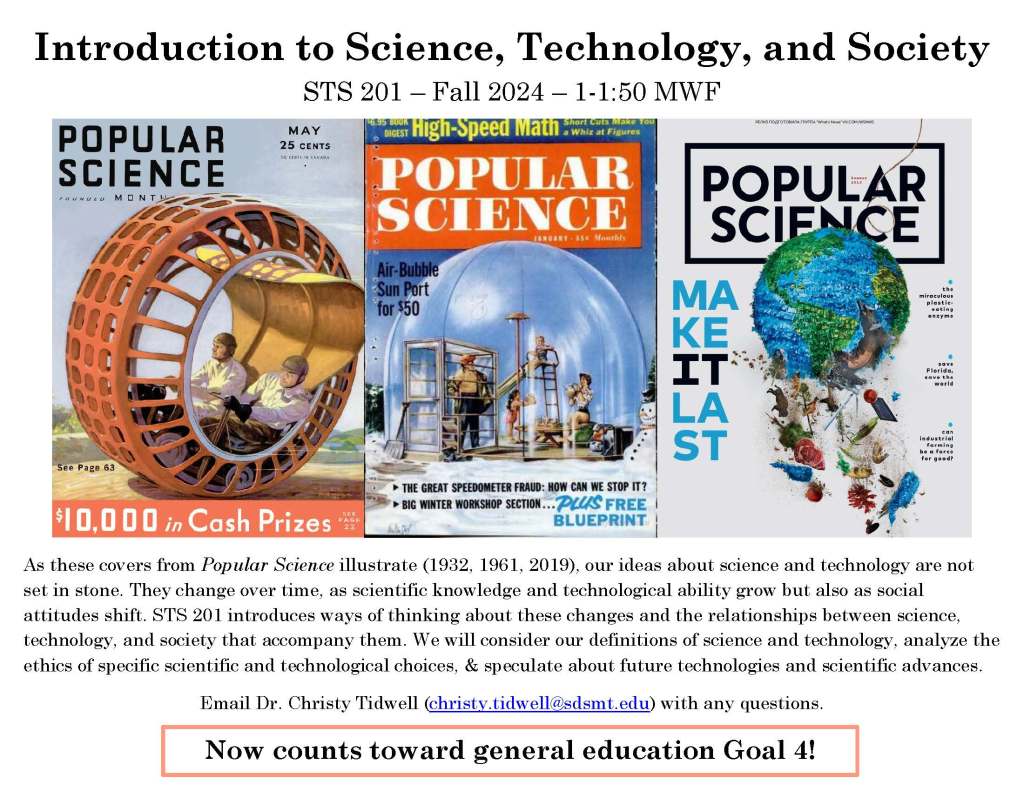
One of our core STS courses – STS 201: Introduction to Science, Technology, & Society – now counts as a Goal 4 general education course. This doesn’t change the course itself in any significant way, but it does mean that there’s now a good reason for students of all majors to take the course. The class gives students a chance to do the kind of work STS scholars do and to gain a different perspective on their own disciplines. In STS 201, students thoughtfully examine the relationships between science, technology, and society; explore the ways we define these terms and the effects of defining them in these ways; and learn about the history and ethical consequences of scientific research and technological innovations.

Poster for STS 201 in Fall 2024. It features some images from the covers of Popular Science magazine featuring past technological ideas and an image about trash on planet Earth. The description of the course reads: As these covers from Popular Science illustrate (1932, 1961, 2019), our ideas about science and technology are not set in stone. They change over time, as scientific knowledge and technological ability grow but also as social attitudes shift. STS 201 introduces ways of thinking about these changes and the relationships between science, technology, and society that accompany them. We will consider our definitions of science and technology, analyze the ethics of specific scientific and technological choices, and speculate about future technologies and scientific advances.

Upcoming Events

If you’re looking for cool things to do, STS has you covered this year! Here’s a list of upcoming events sponsored by the STS program and/or the Humanities, Arts, and Social Sciences (HASS) department. Add them to your calendar and come to as many as you can!

  • The Office of Student Engagement and Department of Humanities, Arts, and Social Sciences (the STS program’s home) are hosting a 2024 Local Election Forum the evening of Thursday, September 12 (7-9 pm), in the Beck Ballroom in Surbeck Center. Come hear from local candidates, learn about ballot initiatives, and ask questions!
  • On Tuesday, September 17 at 6 pm, Erica Haugtvedt, Associate Professor of English, will present an introduction to George Eliot, the Victorian novel, and science as part of the university’s STEAM Cafe series. These presentations are free to the public and take place at Hay Camp Brewing Company (601 Kansas St., Rapid City).
  • The STS program is sponsoring a series of zinemaking events, culminating in a zinefest at the end of the fall semester. We will set up with materials, examples, instructions, and plenty of enthusiasm for a zinemaking event from 9:30-2:30 on Wednesday, September 18, on the second floor of the Classroom Building and then for another from 9:30-2:30 on Wednesday, November 13, on the first floor of the Devereaux Library. Zinefest will show off some of what has been created this semester as well as featuring some information about the history of zines, and will take place in the Apex Gallery (2nd floor of the Classroom Building) on Wednesday, December 4.
  • The STS program is also sponsoring an STS Book Club beginning this semester. It’s open to faculty, staff, students, and their friends and will provide a space to read and discuss books related to science, technology, and society. The first book will be Annalee Newitz’s Autonomous, a science fiction novel, but future books (to be determined by participants) may include science writing, biographies of scientists/inventors, histories of science and technology, memoirs, or other fiction addressing science. The group’s first meeting will be held in CB 334 (the Stoltz faculty and staff lounge) – Thursday, September 26 at 5 pm.
  • A grant-funded collaboration between South Dakota Public Broadcasting, Dick Termes, and South Dakota Mines presents an event exploring connections between art and science. The event is scheduled for Saturday, October 5, from 1-4:30 pm on the second floor of the Devereaux Library and will include a screening of parts of the new Ken Burns documentary about Leonardo Da Vinci, a talk by Dick Termes, a chance to use VR goggles to explore Termespheres, and screenprinting with Matt Whitehead (Director of the Apex Gallery and Lecturer in art) and SD Mines students. All are welcome to come check out the various parts of the event at their own pace.
Poster for the STS Book Club with date, time, and location, plus a description of the group and the first book.

Fundraising

Finally, we want to highlight a fundraising effort to support SD Mines music students. The South Dakota Mines Concert Choir has been invited to perform in the festival choir at the 2025 Salzburg International Choral Festival next summer. Choir members are raising money now to fund their trip, so if you’re able to donate, please consider doing so – it would help them immensely! This supports not only STS students and HASS faculty but students from across the university. You can find out more and donate to support their trip here.

Other Interesting Technologies: STS Faculty Reflect

STS Faculty, Technology

This final entry in the series on interesting moments in science and technology features reflections from Paul Showler, Gerrit Scheepers, and Christy Tidwell on a wide range of topics: emotion detection technology, a method to provide easier access to clean water, and a scheme to farm hippos in the US. (For more thoughts on interesting science and technology from STS faculty, see previous posts on technologies of communication and technologies of destruction.)

Technologies of Destruction: STS Faculty Reflect

STS Faculty, Technology

In this second entry in our series asking STS faculty to reflect on moments in science and technology that they find particularly interesting or meaningful (read the first entry here), Lilias Jones Jarding, Joshua Houy, and Frank Van Nuys address technologies of destruction and violence. Some – like nuclear weapons – are directed at humans; others – like coyote-getters – at nonhumans. All, however, have their limits.

Changes in the STS Program: Saying Hello and Saying Goodbye

STS Faculty

As the 2021-2022 academic year ends, we are looking forward to welcoming new members to the STS program in the fall, but we are also saying goodbye to a faculty member who will be greatly missed.

Happy Welcomes

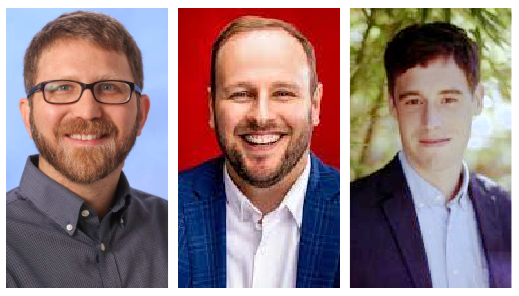
After the retirement last year of our previous department head, Allison Gilmore, and the capable leadership of Frank Van Nuys this spring, we will begin the 2022-2023 year with a new department head: Kyle Knight. He comes to us from the University of Alabama in Huntsville, where he was Associate Professor of Sociology and Chair of the Department of Sociology. He has an emphasis in environmental sociology, which will add new expertise to the STS program’s environment & sustainability track.

We also welcome two new assistant professors: Gerrit Scheepers as Assistant Professor of Music and Paul Showler as Assistant Professor of Philosophy!

We are excited to get to know and work with all of them. Look for more about and/or from each of them in the future!

Kyle Knight (left), Gerrit Scheepers (center), and Paul Showler (right)

And a Sad Goodbye

Even as we look forward to new people joining us, we are very sad to say goodbye to Laura Kremmel (Assistant Professor of English & Humanities), who has accepted a position at Brandeis University. She has been a wonderful colleague and friend for the years she has been here, and little we could write in this short space would adequately express our sadness that she is leaving. Nonetheless, we all wish her well and hope that her colleagues at Brandeis appreciate her!

Woman smiling at the camera on the left, skull and crossbones carving on the right.
Laura Kremmel and a friendly skull.