Sins of the Father: DACA and United States Immigration

STS Students

by Michael Moore

Are the sins of the father the responsibility of the son? This is one of the many questions President Barack Obama was challenged with when creating the controversial policy DACA. DACA (Deferred Action for Childhood Arrivals) is a policy that has garnered a vast amount of criticism and controversy. Recently, the topic has been under increased scrutiny with a Texas judge declaring the policy to be unconstitutional. What I want to explore specifically in my capstone is how DACA has impacted the United States and other countries legally, socially, and culturally and whether this impact has been beneficial to the American people.

However, before examining the former president’s decision, a little bit of background on the border itself is necessary. Prior to the 1990s border security was relatively uncontrolled and immigrants from Mexico and South American countries could virtually just walk across the border without much fear of being stopped (Guerette, 2005). This lack of border security was simply not maintainable, which led to the increase in security during the 1990s (Guerette, 2005). This security included an increase in agents along the border, an increase in surveillance along the border, and the creation of physical barriers such as walls. While this made a more secure border, it also had some unintended consequences that have become critical factors in the current border situation. First, the increased security led to illegal immigrants heavily relying on smuggling to enter the U.S., which led to a shift in the mission of border security (Guerette, 2005). Currently, smuggling is considered a greater issue than immigration. Second, increased security has led to migrants choosing more dangerous methods in order to cross the border (smuggling included), which has unfortunately resulted in an increase in deaths along the border. This has led to the border patrol adopting an increasingly medical and humanitarian role, as they now are far more focused on the prevention of migrant death and application aid to injured and at-risk immigrants.

Is AI Coming for Your Job?

STS Students

By Maggie O’Connor

AI is technology that simulates human intelligence and possesses the ability to evolve based on its designated purpose. In the hospitality industry (including tourism, hotels, and restaurants), the use of AI is on the rise because of the greater efficiency compared to human employees. Artificial intelligence can’t steal from the cash register, doesn’t take sick days, and won’t leave a manager short-staffed. Business owners are interested in the switch to AI “employees” because they significantly save on labor costs, can communicate in every language, and perform menial tasks which allows for human employees to work larger tasks.

Thunderstruck: Predicting Dry Thunderstorms

Atmospheric Science Students

By Markus Sonnenfeld

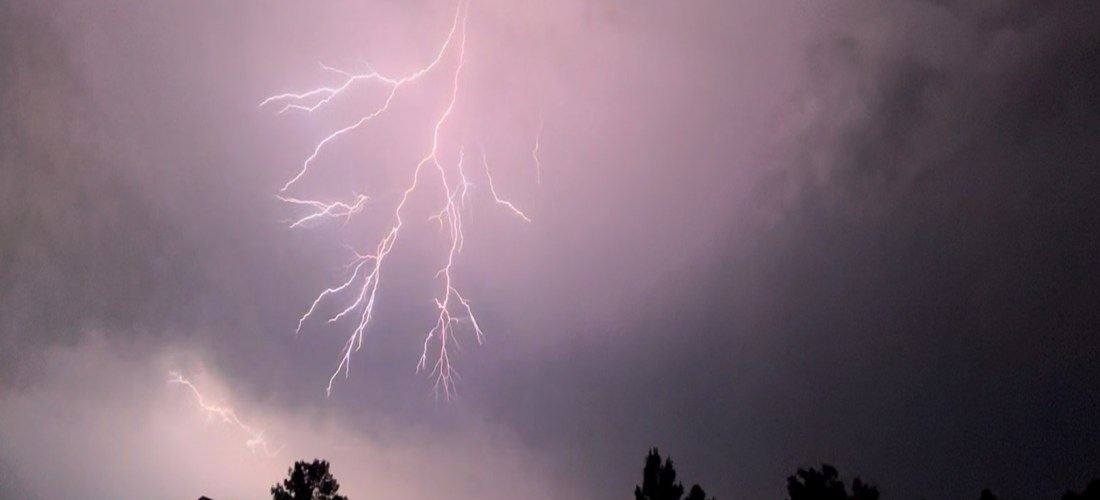
I became increasingly intrigued by wildfires in the western U.S given how crazy the 2020 season was. I have family in both Nevada and California, and the effects of that fire season still have impacts on them today. What I didn’t know at the time was that dry thunderstorms, which produce dry lightning, are a major cause for wildfires in the U.S. A recent example is the August Complex fire in 2020, which burnt about 470,000 acres alone in California, making it the state’s largest wildfire ever. It was created when dry lightning sparked multiple smaller fires that grew into a larger complex of fires. The average cost of fighting wildfires is $1 billion annually with millions of dollars in property loss as well (National Interagency Coordination Center (NICC),ND).

Sunday Gulch in Custer, SD. May 5, 2023. Photo by Markus Sonnenfeld.

Corn: The Carbon Cure?

Atmospheric Science Students, STS Students

By Isaac Kolousek

Growing up on a farm in rural South Dakota, I heard someone say once that no matter how much it rains, a farmer will always complain about it even though deep down they’re grateful for it. This is what helped guide me towards the Atmospheric and Environmental Sciences program at South Dakota Mines after figuring out that my initial degree in Computer Science was not where I wanted to go with my life. I wanted to understand why it did or didn’t rain on our farm, but it rained on our neighbor’s farm. I also wanted to understand why farmers, whose entire lives rest in the hands of the weather, don’t get the focus they deserve when it comes to forecasts.

Heavy dark clouds over green fields.
A supercell rolls over a crop field. This will likely cause damage to the crops through high winds and heavy rain showers. Courtesy: Creative Commons.

STS Costume Contest 2023

Events

This year, the STS program ran its first-ever Halloween costume contest. Dressing up for Halloween is a perfect chance for students to show off some creativity and possibly even highlight some connections between science/technology and society! Some of our faculty dressed up, too – we had a pirate, a fancy lumberjack, Introverty the 8th Dwarf, and Goth Judy Jetson.

We had a number of really excellent entries in the contest, and we’re happy to share the winners below (except for one person, Jace Williams, who received an honorable mention but who has not given permission to use his image – if that changes, the post will be updated accordingly).

We have plans for another costume contest next Halloween, so start thinking about costume ideas for 2024!

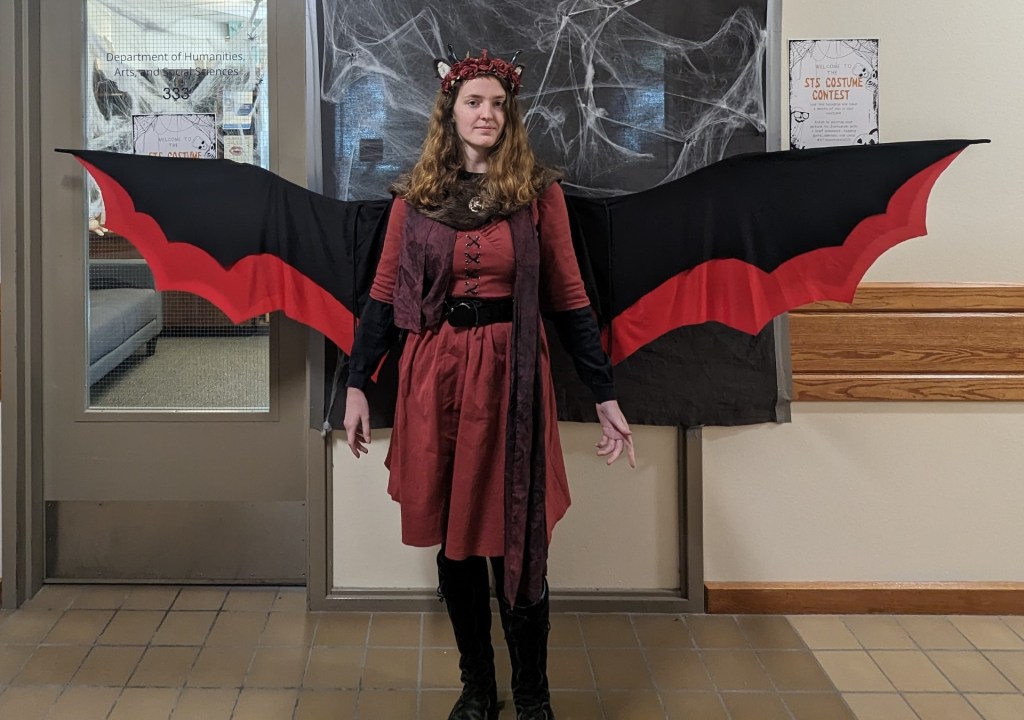
A young woman in a Renaissance-style lace-front dress with tall boots and a headpiece. Most notably, she is also wearing wide black-and-red wings.
First place: Pari Bailey, as a Renaissance fairy.
Person on stilts wearing long patched jeans, a ragged brown jacket and plaid shirt, and a bucket hat. They are also wearing a rope and hook belt and a chain hanging from their neck, with makeup as if their face is stitched together.
Second place: Gaven Williams, as a creepy scarecrow (on stilts!).
Headshot of a student wearing a Grubby mascot head but with the teeth modified to be very pointy and too many.
Third place: Jaxxen Cheney, as Nightmare Grubby.
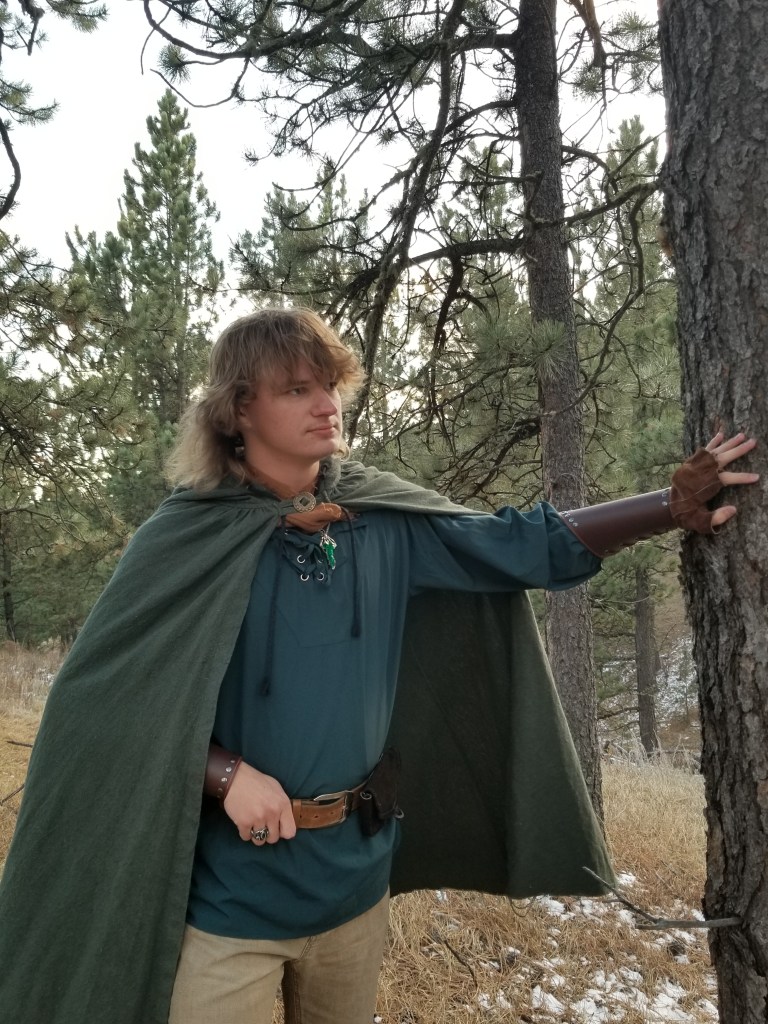
Young man posing in the forest with Renaissance-style clothing - a lace-up shirt, a cape, and leather wristbands.
Honorable Mention: Caleb Noe
Young man wearing a steampunk-style outfit featuring a black coat with tails, a chain wallet, and goggles around his neck.
Honorable Mention: Will Eby

STS Faculty Profile: Natalie Neumann

STS Faculty Profile, Uncategorized

Natalie Neumann is Instructor of English.

What’s your area of expertise? What do you primarily research and/or teach? And what drew you to this field?

My area of expertise and what I got my graduate degree in is creative writing, short stories and poetry. Many years ago I got the opportunity to team-teach a creative writing class modeled after a writing group that I’ve been leading since 2000, and it was wonderful. However, to be honest, I have always loved teaching English 101. Watching students find their voice makes me smile.

What’s one of your favorite courses, topics, or specific texts to teach? Why?

Over the years, I’ve used many texts, essays, poems, and short stories, but one of my favorite essays of all time to use in English 101 is “Why Write?” by Paul Auster. It is timeless.

Measuring Fear: What the Science of Scare Can – and Cannot – Tell Us

Film, horror, Humanities, science

By Christy Tidwell

The Exorcist. Hereditary. The Ring. Texas Chain Saw Massacre. These are often named some of the scariest movies out there. They’re also among the most popular horror movies, ones that are watched and re-watched, considered classics. Horror movie fans want to be scared, after all.

But what makes these movies – and others like them – so scary? And which is really the scariest?

Since 2020, the Science of Scare Project has run an experiment to try to answer the second of these questions. The project asks a panel of 250 people to watch horror movies while measuring their physiological responses to them and then ranks the scariest movies based on those responses. In past years, they have relied simply on heart rates, but – after some criticisms from horror fans that this emphasizes only one sudden type of fear – they have updated this for 2023. Now their study includes not only heart rate as way to measure excitement and fear but also heart rate variance, arguing that “the lower the heart rate variance the more stressed our audience members became, a good indicator of slow burn fear and dread.”

Grids & Creation: Visiting Artist Jonathan Frey Works with Students

Apex Gallery, art

By Christy Tidwell and Matt Whitehead

This month, the Apex Gallery featured the work of visiting artist Jonathan Frey, Assistant Professor of Art and Art History at Bucknell University, who explores games, languages, and grids in his work, considering concepts of order and identity as well as myths/stereotypes about American culture.

Jonathan Frey (a white man) stands beside and gestures toward a work of art, a world map in the style of the game Minesweeper.
Frey speaking about his piece “Minesweeper World Map” (2018).

While here, Frey also visited Matt Whitehead’s Drawing class and worked with students on a poster creation project. In preparation for his visit, the class toured his show in the Apex Gallery and discussed the work and how it fit within the class’s idea of “the grid.” For the workshop, Frey started by discussing his take on the grid, which he sees as being all around us. He shared images that he took in his hotel that morning to help illustrate this. In his artwork he examines various ideas but is often looking for ways to challenge our understanding of the grid, while still working within it.

Asked to design posters for invented events and issues (using Nathaniel Russell’s fake flyer assignment described here), students invented lost animal posters with a twist, public service announcements about wearing sunscreen, warnings about birds, and much more. Many posters used similar design techniques even when their content was wildly different, illustrating how specific kinds of media (like informational posters) come with formal expectations that shape their content and presentation and connecting to Frey’s work in its focus on the idea of disrupting the social grid.

Check out some of the students’ work below!

STS Faculty Profile: Mary Witlacil

STS Faculty Profile
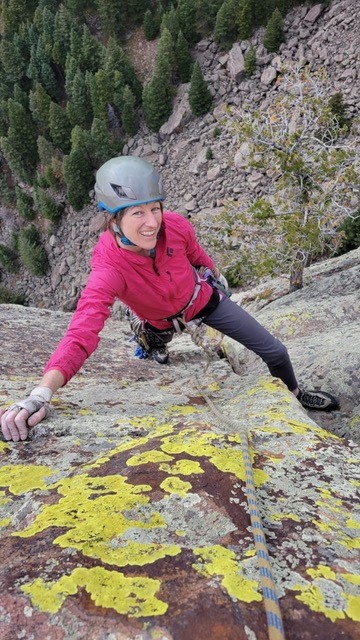
Photograph of Mary on the side of a mountain, taken from above.

Mary Witlacil is Assistant Professor of Political Science.

What’s your area of expertise? What do you primarily research and/or teach? And what drew you to this field?

As a Fine Arts Major during my undergraduate studies, I would find myself getting into impassioned political discussions with my art professor. At some point, he mentioned his love of political science. The next semester, I registered for my first American Politics class, and I was hooked. By the following Fall, I changed majors to Political Science. Then, after working outside of academia, I decided to return to graduate school to study the politics of climate change.

By training, I am an environmental political theorist, and I have broad expertise and interest in environmental politics and policy, critical theory, the politics of climate change, contemporary political theory, and international relations. It might sound peculiar to some, but I am fascinated by the study of politics.

My research draws on contemporary political thought and critical theory to consider how we cope with climate change and environmental injustice. I am curious about what it means for politics and what it means to be human during a moment of massive and catastrophic environmental change.

As a professor at SD Mines, I cover all the political science courses including American Political Issues, Political Ideologies, American Government, and Introduction to International Relations. Next semester I am excited to teach Environmental Law and Policy, and in the Fall of 2024, I look forward to teaching the Politics of Nature and Technology.

What’s one of your favorite courses, topics, or specific texts to teach? Why?

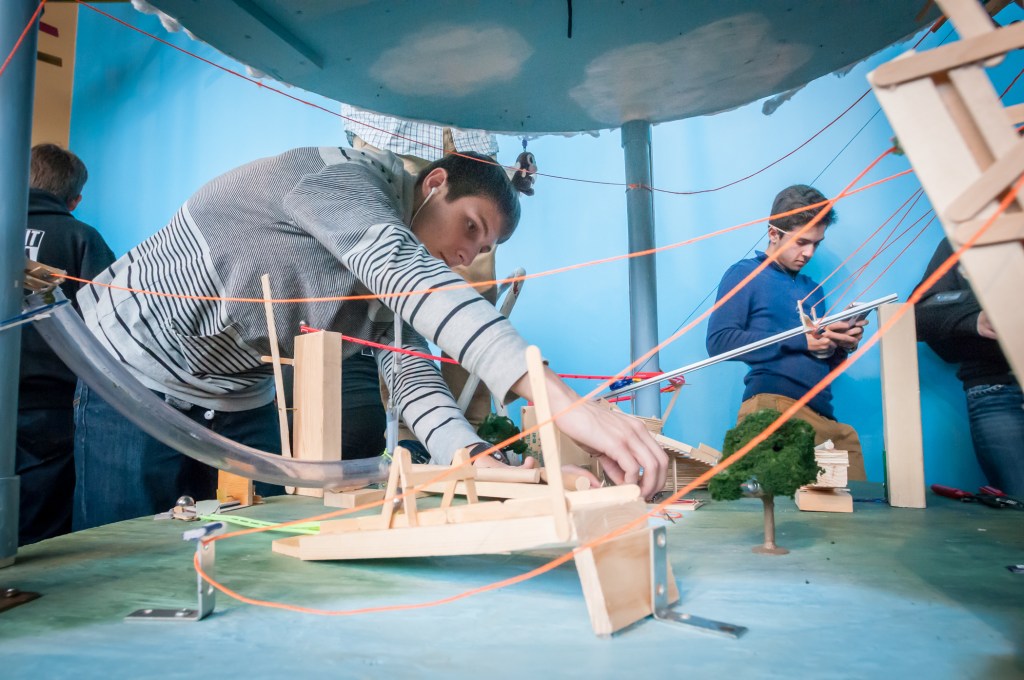
While I do not have a favorite course yet, I love teaching about political ideologies as well as the intersection between politics and the environment. This semester I have enjoyed watching students make connections between the functions (or dysfunctions) of American politics and more local or personal political issues. American politics is like a Rube Goldberg machine—or a chain-reaction machine designed to perform simple tasks in an absurdly indirect manner—where political institutions affect the functioning of the whole in bizarre and surprising ways. Whenever someone proposes or enacts a solution to a political problem, it alters and affects all the intermediary chain reactions, in a way that can be difficult to understand for years or decades. It has been fun to explore this conundrum with students.

A young man adjusts a part on a Rube Goldberg machine. String and pieces of wood are in the foreground, as part of the machine.
31441D, Rube Goldberg contest 2016. Photograph by Mark Lopez (Flickr).

STS Faculty Profile: Carlie Herrick

STS Faculty Profile

Carlie Herrick is Instructor of English.

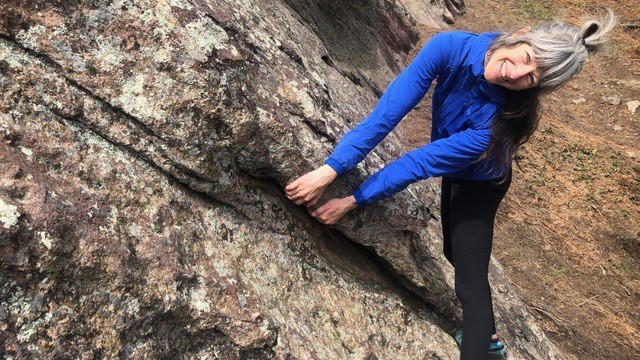
Woman wearing backpack and hiking with grass, mountains, and blue sky behind her.

What’s your area of expertise? What do you primarily research and/or teach? And what drew you to this field?

My area of expertise is TESL and linguistics. I am a word nerd. I teach the general education writing/communication classes. I started college as a music major and realized that though I enjoy music, I was not that enthused about teaching it. In my junior year, I changed schools and switched from music to English. I love studying how language changes and how meaning flows with the cultural river and all its tributaries. 

What’s one of your favorite courses, topics, or specific texts to teach? Why?

I don’t know that I necessarily have a favorite class that I teach or a favorite text; however, my favorite aspect of teaching is watching what happens in students from Composition 101 to junior or senior year. I like seeing the growth that can occur.