By Emily Hubmer
Before coming to school at South Dakota Mines, I was interested in environmental science from a different lens than I am now. I used to love learning about and watching documentaries focused on sustainability, mostly related to agriculture and other practices in the production of goods. As a college student, my courses have focused on other topics related to environmental science. I’ve studied chemical and biological processes, community science and communication, water and wastewater treatment, among other fields. The courses I’ve taken and the fields I’ve studied have inspired my capstone project. Like most, I want to help as many people as I can and leave a positive impact on my surroundings. One way that I can help our planet, and what I will be doing my capstone project on, is composting.
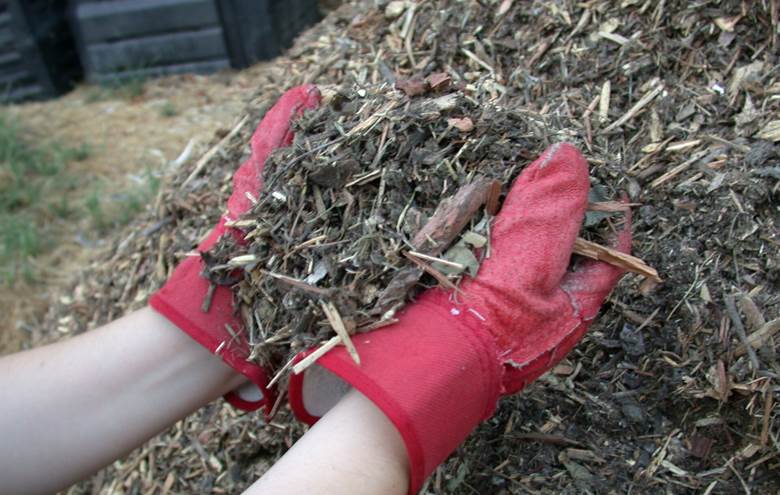
Composting is the process of breaking down materials into compost, which is a nutritionally dense substance. Typically, in landfills, when food breaks down, it is in a low-oxygen environment. The resulting byproduct of that decomposition is methane. When composted properly, the waste is exposed to oxygen, resulting in the emission of carbon dioxide. I know, an environmental science student promoting the release of carbon dioxide? While carbon dioxide is a harmful greenhouse gas, methane is also a greenhouse gas, and it is much stronger than carbon dioxide and can have a greater impact with the same amount of gas produced (Howarth, 2014). The breakdown of material into compost can benefit communities. The product can be used to help crops grow better in gardens, among other uses. Essentially, composting food waste reduces the amount of trash going into landfills, prevents methane emissions, and makes a useful end product.
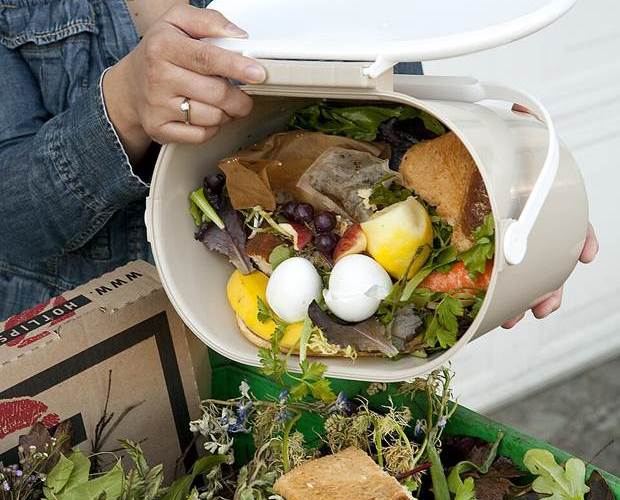
Some households have set up their own composting process to reduce the amount of garbage they produce, or to help feed their gardens. Have you ever had a small compost container at your home? I have, and it has produced soil and reduced the amount of food waste my family throws away, but it can’t do it all. Often, at-home composting cannot hold a large volume of waste products, and it requires monitoring. Sending food waste products to a facility could alleviate the personal burden on individuals and lead to less waste in landfills. Some communities do have food waste composting and have seen it decrease the volume of solid waste going into landfills.
For my project, I want to focus on Rapid City specifically and how it could start to utilize food waste composting. In Rapid City, there is already some composting going on, but it is limited to yard waste products. Rapid City alone produces 27,200 tons of food waste every year (Burns & McDonnell, 2026). I know that number was hard for me to visualize, so I did the math, and it’s about 114,619,535 Big Macs’ worth of food. But that’s also a hard number to visualize. Per person, that’s 913.4 burgers a year, or 2.5 burgers a day. That’s a lot of food to just be going into a landfill. Since there is already some established composting infrastructure in the city, I would like to figure out what will need to be done to make food waste composting a reality in Rapid City.
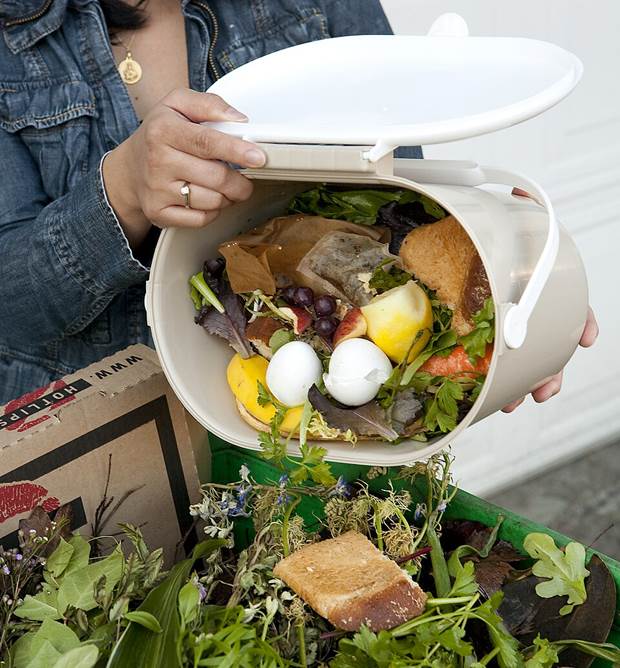
Most of the current research is focused on remote drop-off sites and potential pickup routes for food waste for the average consumer. I don’t know about you, but I certainly don’t throw away 2.5 burgers’ worth of food every day. That is why I want to focus my work on local businesses, specifically grocery stores and restaurants. I want to understand just how much food waste local businesses are throwing away that could be going into compost. Through meetings with my advisor, we are leaning towards focusing my project on the food waste produced by the SDM dining hall and potentially a couple of larger businesses within Rapid City. By understanding the volume of food waste produced by larger entities, rather than households alone, I will be able to estimate the benefits of composting larger waste streams. The establishment of food waste composting from these larger streams could have a large impact. Just one or two of these sources could produce the same amount of food waste as many households. Setting up food waste composting for these few large sources would be simpler than setting up a system for many smaller sources. This introduction to food waste composting could eventually ease the transition into larger-scale municipal composting efforts. Overall, major waste producers could serve as an entry point to municipal food waste composting in Rapid City and set the stage to expand and serve the households of Rapid City.
References:
Burns & McDonnell. (2026). South Dakota: Food Waste Composting Feasibility Study (No. 186537).
Howarth, R. W. (2014). A bridge to nowhere: methane emissions and the greenhouse gas footprint of natural gas. Energy Science & Engineering, 2(2), 47–60. https://doi.org/10.1002/ese3.35
Bio:
Hi! My name is Emily Hubmer, and I am a senior atmospheric and environmental science major with a specialization in environmental science and a minor in environmental engineering. I chose to go to SDM because I wanted smaller class sizes, my major felt like a community when I visited, and my major seemed interdisciplinary and flexible to what I wanted out of it. At Mines, I am a member of the track and field team, and I am a heptathlete, so I run, jump, and throw. In my free time, I like to do little crafts, hang out with my friends and roommates, and bake. After I graduate this spring, I am hoping to get a job back in Minnesota in an environmental science role related to water resources.

