By Gavin Bird
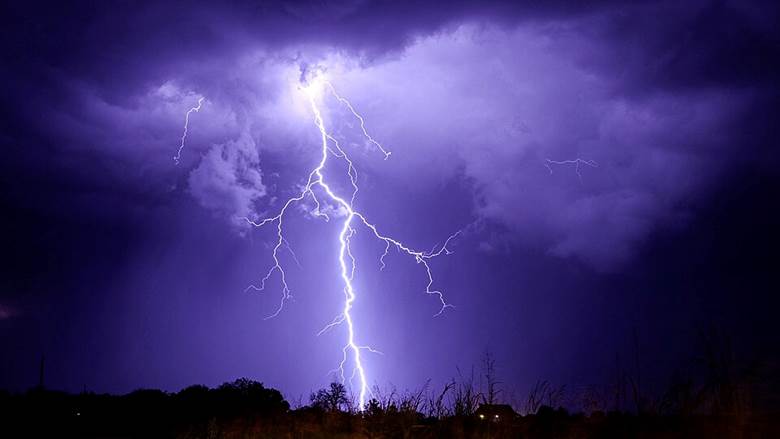
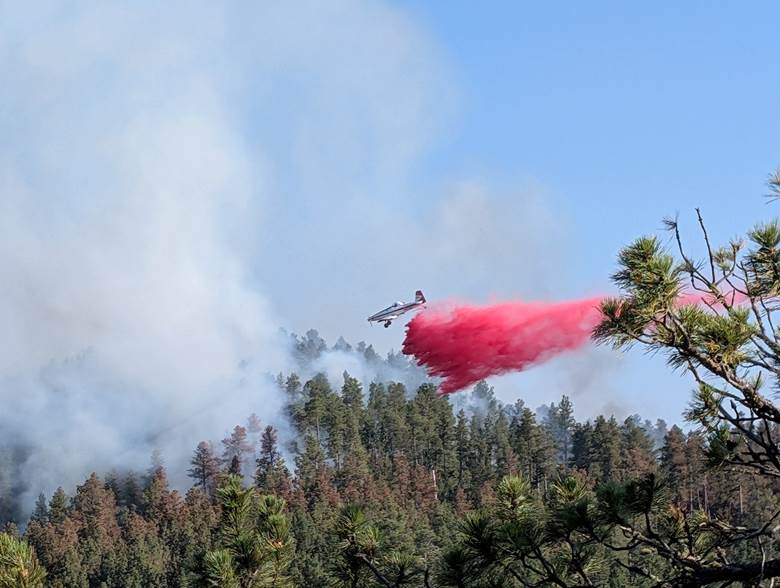
Wildfires are a common and dangerous threat throughout the western United States, including in the Black Hills of South Dakota. Many of these wildfires are ignited by lightning during the summer months, which make up the primary fire season across much of the western United States. Between 1987 and 2016, more than 2,500 fires occurred in the Black Hills during June, July, and August, with over half attributed to lightning (Clabo 2018). These wildfires threaten lives, property, and natural resources while requiring significant and costly emergency responses and resources.
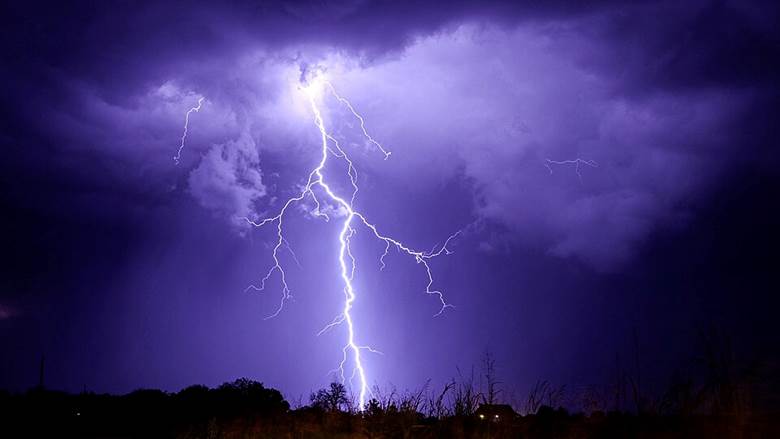
Although many lightning-ignited wildfires are discovered and reported within 24 hours of the initial lightning strike, others may go undetected for several days. These delayed-reporting fires are known as holdover fires and present considerable challenges for fire managers. Holdover fires can smolder for days before becoming active on days when conditions become more favorable for fire growth. When multiple holdover fires become active on these days, they can place considerable demands on firefighting resources, spreading them thin and creating additional challenges for emergency responders.
Previous research has examined how environmental conditions differ between quickly reported and holdover lightning-ignited wildfires. Quickly reported fires are associated with less rainfall, drier fuels, and lower humidity than holdover fires (Kalashnikov et al. 2023). These conditions allow the fire to grow quickly, increasing the likelihood that the fire will be discovered and reported shortly after ignition. However, much of this research has focused on the western United States outside of the Black Hills. Differences in climate, topography, and vegetation types may influence the environmental conditions associated with fire ignition and development, potentially limiting the applicability of findings to the Black Hills. This limitation requires additional research to better understand the environmental conditions associated with lightning-ignited wildfires in this unique region.
For my capstone project, I plan to investigate the environmental conditions associated with lightning-ignited wildfires in the Black Hills. To do so, I will use lightning-ignited fire reports during the summer of 2026 and compare fire locations with lightning strike locations and times to estimate when the fire was started and the time from ignition to discovery. From there, I will use automated weather stations in the Black Hills near the fire locations to examine the nearby environmental conditions at the time of ignition, including temperature, humidity, fuel moisture, and precipitation. By comparing the conditions between quickly reported fires, holdover fires, and lightning strikes that did not result in reported fires, I aim to find ranges of values and patterns associated with each outcome. In doing so, I hope to provide fire managers with information about the conditions that are most conducive to lightning-ignited wildfires, particularly holdover fires. A better understanding of these conditions could help managers anticipate lightning-ignited wildfires, improve resource allocation and preparedness, and ultimately protect lives, property, and natural resources in the beautiful Black Hills.
References
Clabo, D.R., 2018: Contemporary Pyrogeography and Wildfire-Climate Relationships of South Dakota, USA. Atmosphere, 9, 207-220, https://doi.org/10.3390/atmos9060207.
Kalashnikov, D.A., J.T. Abatzoglou, P.C. Loikith, N.J. Nauslar, Y. Bekris, and D. Singh, 2023: Lightning-Ignited Wildfires in the Western United States: Ignition Precipitation and Associated Environmental Conditions. Geophysical Research Letters, 50, e2023GL103785, https://doi.org/10.1029/2023GL103785.
Bio
I am a senior Atmospheric and Environmental Science major specializing in meteorology with a minor in Geospatial Technology. My interest in meteorology began as a kid, when I stumbled upon The Weather Channel while flipping through TV channels one summer. I don’t remember exactly what caught my eye, but from that moment on I was hooked. I began standing outside to watch every storm that went by and teaching myself everything I could about weather. This passion brought me to South Dakota Mines to pursue Atmospheric Science, where I could continue learning about the atmosphere and use my passion to serve others. After graduation, I hope to pursue a career in operational meteorology, with particular interests in aviation meteorology and fire weather. Outside of school, I enjoy golfing, hiking, photography, storm chasing, and all things aviation.


