I have always been curious about the weather and climate, as my dad was a pilot and used to teach me little things about the atmosphere. When I entered college, I decided to follow that curiosity by majoring in atmospheric sciences and developed a new interest in air quality along the way. Air quality is an issue that has global effects with potential detrimental impacts, and I would like to find a job that uses scientific understanding of air pollution to make impactful actions and policies. Specifically, I would like to go into pollution modeling and management to help mitigate the effects of pollution on communities and ecosystems.
This interest was sparked during an internship I had last summer as part of NASA’s Student Airborne Research Program (SARP). This experience allowed me to use airborne data to validate the Environmental Protection Agency’s (EPA) Community Multiscale Air Quality Model (CMAQ), to see how accurately the model predicts the concentrations of different pollutants. The CMAQ model works by incorporating meteorological (wind, temperature, etc.), emission, and chemical models to simulate the concentrations of trace gases, particulate matter, and atmospheric pollutants both spatially and temporally (EPA, 2022).
Property of NASA SARP. Credit: Madison Landi.
For my senior capstone project, I will be expanding on my previous research to build a better understanding of the capabilities of the model, as it recently underwent an update in 2022 to improve the meteorological processes and emissions. I will focus on the South Coast Air Basin in California, an area with known, notable air quality issues (Chen, et al., 2020) and the levels of formaldehyde and methane there. Both methane and formaldehyde act as active gases in the atmosphere. With methane concentrations on the rise (Feng, et al., 2023) and formaldehyde as a health and environmental irritant (Lucken, et al., 2018), they are important gases to study and understand. I will be assessing how well the CMAQ model can simulate the concentrations of formaldehyde and methane in the atmosphere, as well as the accuracy of the meteorological inputs (i.e., wind) as they greatly affect the behavior and amounts of those gasses. (Barsanti, et al., 2019).
My capstone will explore the crossroads of alcohol and college athletics. College athletes are unique in that most people will not get the chance to play after high school. At the same time, these athletes consume alcohol, a substance with addictive properties and a deterrent to high performance, at the same levels as their non-athlete peers. With alcohol’s prevalence in the strength and conditioning world, the NSCA (National Strength and Conditioning Association, the leading organization for strength and conditioning) barely mentions alcohol use in their Essentials of Strength and Conditioning (the primary book for certification). Coaches write programs and decisions under the assumptions that athletes are not drinking, but this is a flawed premise. This capstone will address the issue with those assumptions and strive to better inform coaches and athletes on how alcohol impacts athletic performance. I aim to be interdisciplinary in looking at the physiological, psychological, sports performance and social factors that impact athletes and alcohol consumption.
Logo for the South Dakota Mines weight room, where I am currently an intern.
In the strength and conditioning community, coaches write programs with the understanding that athletes are recovering within 48–72-hour time frames. Athletes will often party on the weekends, and coaches can tell when athletes had too much come Monday morning. From a coaching perspective, it is hard to get max effort out of an athlete who is hungover. Because there is a lack of empirical research on the direct performance response to alcohol, there is no system in place to protect athletes from workouts and to guide coaches. At the same time, there has yet to be a longitudinal study that illustrates the impact of drinking and sports performance throughout an athlete’s career. There is no way to definitively tell a senior offensive lineman how much he could have bench pressed if he had not drunk regularly throughout his time in college.
The studies have mixed results about the impacts of drinking and collegiate sports performance. Alcohol and athletic performance can coexist (Steiner et al., 2015), and studies find that the negative consequences of drinking do not deter college students from drinking (Martinez et al., 2014). 72% of college athletes drink out of season (where most strength and conditioning training takes place), and 65% of athletes drink in-season (Mastroleo et al., 2019). Other studies exclusively tested men or were conducted on rodents and found that drinking impacts muscle fiber but no other measures of performance (Rodrigues et al., 2019). Some studies have found that athletes who drink in moderation are not significantly impacted (Murphy et al., 2013). Research thus far has also found that drinking in moderation preserves athletic performance in comparison to binge drinking (Parr et al., 2014). Preventing college athletes from drinking has had moderate success (Mastroleo, et al., 2019). Most college athletes consume alcohol between Thursday and Saturday, but in-season team restrictions are a viable deterrent for athletes. Coaching and team policy can dictate culture and attitudes toward alcohol.
Mitigating the impacts from drinking cannot be seen as the only solution to improve the lives of student athletes. Coaches should focus on improving their team culture and building healthy relationships with their student athletes and value the holistic health of the athlete. Coaches are in the profession because we see the impact that sports can make. There is an obligation to act in the best interest of the athlete and a moral standard that we as coaches fight to uphold. To best do our job, we need to acknowledge that college athletes consume alcohol and adjust our coaching to that reality.
References
Cui, Y., Huang, C., Momma, H., Sugiyama, S., Niu, K., & Nagatomi, R. (2019). The longitudinal association between alcohol consumption and muscle strength: A population-based prospective study. Journal of musculoskeletal & neuronal interactions, 19(3), 294.
Mastroleo, N. R., Barnett, N. P., & Bowers, K. M. (2019, July). Association between sex, race/ethnicity, season, day of week, and alcohol use and related risks in college student athletes and nonathletes. Journal of American College Health, 67(5), 422-432. Retrieved from https://doi.org/10.1080/07448481.2018.1484367
Murphy, A. P., Snape, A. E., Minett, G. M., Skein, M., & Duffield, R. (2013). The effect of post-match alcohol ingestion on recovery from competitive rugby league matches. The Journal of Strength & Conditioning Research, 27(5), 1304-1312.
Parr, E. B., Camera, D. M., Areta, J. L., Burke, L. M., Phillips, S. M., Hawley, J. A., & Coffey, V. G. (2014). Alcohol ingestion impairs maximal post-exercise rates of myofibrillar protein synthesis following a single bout of concurrent training. PLoS One, 9(2), e88384
Putukian, M. (2016). The psychological response to injury in student athletes: a narrative review with a focus on mental health. British Journal of Sports Medicine, 50(3), 145-148.
Steiner, J. L., Gordon, B. S., & Lang, C. H. (2015). Moderate alcohol consumption does not impair overload‐induced muscle hypertrophy and protein synthesis. Physiological reports, 3(3), e12333.
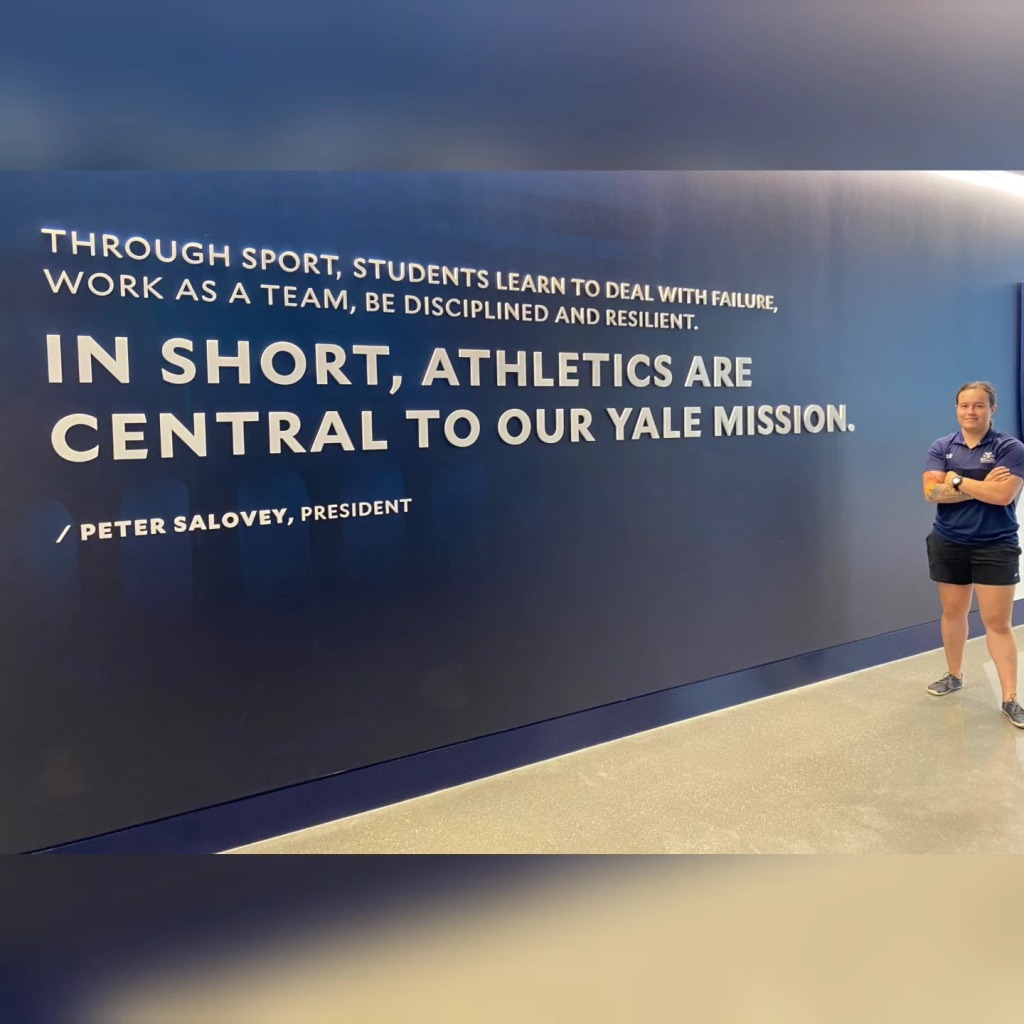
Sophia Grohs is a Science, Technology, and Society major. After I was medically retired from the Army, I came to Mines dead set on finishing a Civil Engineering Degree and working for the US Army Corps of Engineers. My first in-person class at Mines was Differential Equations. I passed but was miserable. Realizing I didn’t want to be an engineer, I found STS as the fastest path to graduation and a way to figure out what I wanted to do with my life. I am a gym-rat at heart. In Oct 2022, I reached out to Hardrocker Athletic Performance to intern to “test it as a career” and everything else has fallen into place. I passed the CSCS (test to be a college strength and conditioning coach), spent summer ‘23 interning at Yale (i.e.,, the 2023 Ivy League football champs), and will be coaching at Wagner College, a D1 institution in Staten Island, after graduation. Spending the summer at Yale taught me that coaching Strength and Conditioning is a people science and that majoring in STS has prepared me for the demands of the profession. Throughout the interview process I would tell coaches that I can “problem solve like an engineer” and communicate like I majored in social science.
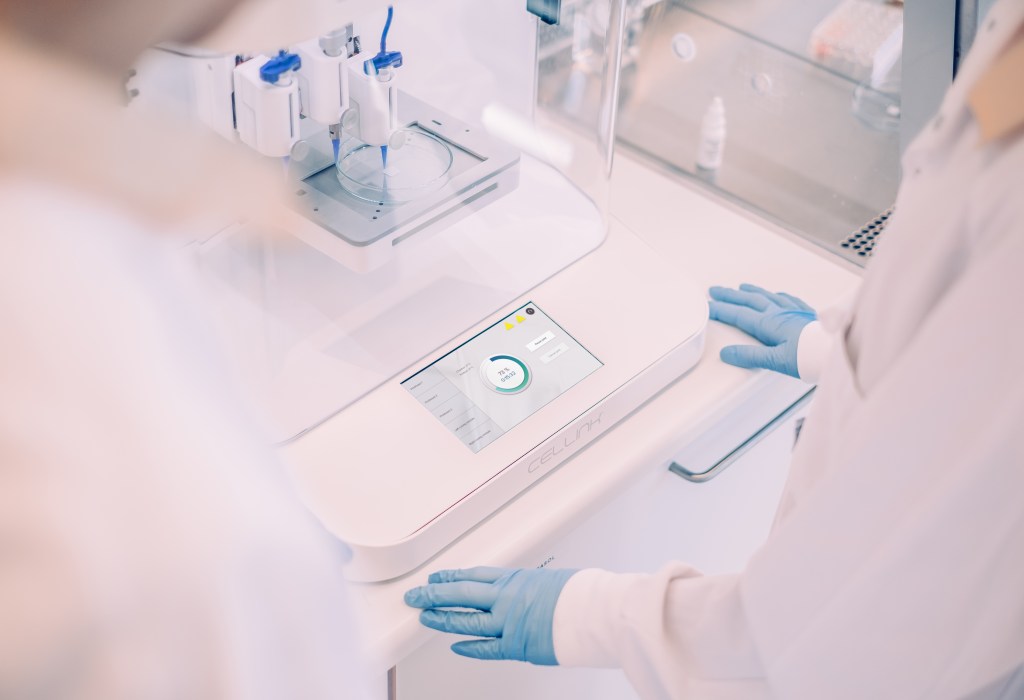
For my senior capstone, I will be writing about 3D bioprinting, or the creation of human tissues and tissue structures using 3D printing technology. Specifically, my research will be focused on the current and possible future impacts of 3D bioprinting becoming the main source of organs for transplantation surgeries. I will study and speculate on possible social, ethical, and economic impacts. This topic is important because of the world’s massive organ shortage. If this technology replaces organ donation, there will be significant changes in the current medical culture.
Anthony is a Cincinnati-born, Los Angeles-raised STS: Policy & Law senior. Some of his hobbies include reading financial literacy and personal development books, competing in CEO business plan competitions, and leading various student organizations.
According to the Transportation Research Board, “Nearly 4 million Americans miss or delay medical care each year due to a lack of transportation.” This issue is pertinent to the community because every family, especially senior citizens and veterans, needs transportation access to life-sustaining services such as primary healthcare providers, pharmacies, nursing homes, grocery stores, and banks in order to stay alive. There is a lack of affordable, safe, and efficient transportation in America, and rural areas are impacted the hardest. My solution is to create a non-emergency transportation network connecting Rapid City public transportation services with local primary health care providers, nursing homes, pharmacies, grocery stores, and various essential service vendors to make them more accessible for seniors and veterans.
Research has proven that consistent transportation access to healthcare vastly increases the health outcomes of members and leads to dramatic cost savings. For example, there was an “experiment of transportation brokerage service administered in Kentucky and Georgia where access to healthcare improved and resulted in hospital admissions and medical expenditures decreasing for diabetic adults.” The Centers for Disease Control estimated that “8% of the adult population ages 55 and older have at least one chronic condition, resulting in these individuals in need of non-emergency medical transportation to access life sustaining treatments and services they need. More importantly, a large percent of the 20 million adults living with chronic kidney disease undergo dialysis three times a week. Approximately 66% of dialysis patients rely on others for transportation to and from their appointments.”
For the second entry in our series on women in science and technology, we turn to women working on medicine and health. These women have forged new ground in medical education, done important work alongside men, and helped fill gaps in medical research by paying attention to women’s bodies.
The Edinburgh Seven – selected by Laura Kremmel
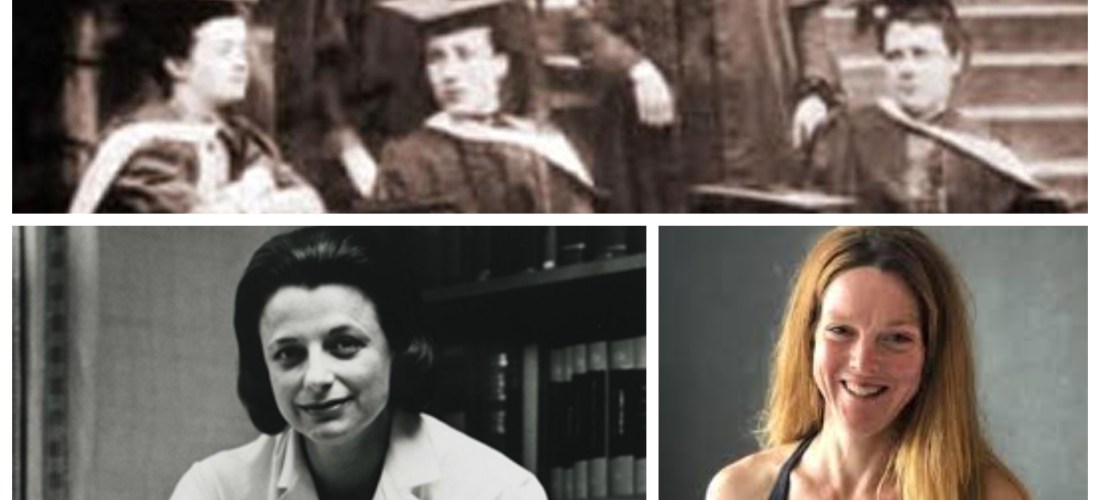
The Edinburgh Seven were not only the first women medical students in Britain, they were also the first British women to be undergraduates of any field. They included Sophia Jex-Blake, Mary Anderson, Emily Bovell, Matilda Chaplin, Helen Evans, Edith Pechey, and Isabel Thorne. After being admitted to the University of Edinburgh in 1869, they had to fight for every advancement, including assessments and clinicals, sometimes against the system and its policies and sometimes against their own professors and the men in their classes. The following year, building anger against the women culminated in the Surgeon’s Hall Riots, in which a hostile crowd of hundreds (and one sheep) attempted to prevent them from entering the building to take an exam. Despite their perseverance, they were ultimately denied their degrees. In response, they started the London School of Medicine for Women. Sophia Jex-Blake became the first woman doctor in Edinburgh, and the others continued to work in medicine in various ways.
The story of the Edinburgh Seven resurfaced in the public eye in 2019, when seven women medical students received posthumous degrees on their behalf, finally giving them the recognition for which they worked so hard. Learn more in this short video about the 2019 event.
Virginia E. Johnson – selected by Kayla Pritchard
When she was hired by gynecologist William Masters in 1970 to be his assistant in his sexology lab, their work dramatically shaped our understanding of human sexual response. As half of the “Masters and Johnson” duo, they studied the physiology and biomechanics of human sexual response, identifying what they called the “sexual response cycle,” a predictable pattern of Excitement, Plateau, Orgasm, and Resolution. Despite not having a college degree, Johnson was integral to the success of Masters’ lab. Because they were observing and measuring people actually have sex, it was Johnson’s soothing and comforting mannerisms that put people at ease and allowed the work to take place, and she also collaborated on the development of the instruments they were using. While their work is not without controversy, they fundamentally changed how researchers, doctors, and psychiatrists talked about and approached sex with their patients.
Stacy Sims – selected by Olivia Burgess
As someone with an interest in endurance sports, I’m always on the lookout for information related to nutrition, training, and health. However, most research takes a “shrink it and pink it” approach to women: take what you do for a man and then extrapolate it for a woman. Exercise physiologist and nutrition scientist Dr. Stacy Sims challenged that paradigm by researching how women’s training and nutrition needs are unique from men’s. As she says, “women are not small men.” She launched her own educational website and sports performance nutrition brand after serving as a research scientist at Stanford University from 2007-2012. In 2017, she was recognized as “one of the top 4 visionaries” in the outdoor sports industry by Outside Magazine.
I consider her a scientist worthy of note for two main reasons: 1) she saw a gap in research related to women’s health and responded by researching women to understand women, and 2) she successfully balances her academic and scientific research with effective mainstream communication to educate women around the world. In 2016, she published Roar: How to Match Your Food and Fitness to Your Unique Female Physiology for Optimum Performance, Great Health, and a Strong, Lean Body for Life. She is currently a Senior Research Associate at Auckland University of Technology in New Zealand.






 The Novum