Most semesters, I teach at least one section of Introduction to Humanities (HUM 100). In order to anchor the class’s exploration of such a potentially broad topic, I choose one or two topics to guide our semester-long inquiry into the human experience. This semester, those two topics are place and sound. On the one hand, they are nearly universal categories of human experience, as we inhabit location and experience vibration every day. But on the other, they are infinitely variable. One person’s experience and understanding of a place, or of a particular set of sounds, may be entirely different than another person’s, even if that place and sound are outwardly identical.
One way that my students are exploring the possibilities of sound and space is by experimenting with an artform called “audio walks.” Popularized by artists Janet Cardiff and George Bures Miller, these mobile art installations ask the participant to go on a walk, retracing the artist’s footsteps as they listen to an audio recording of the artist’s walk. The artist will often comment on their surroundings, including exact navigation directions for the listener. Inevitable differences in the artist’s recording of their walk and the listener’s own environment (different people passing by, different vehicle sounds, even different times of the day or seasons) draw attention to the differences between the ways we represent experience and our actual experience. This, in turn, helps students appreciate the ways that media technologies affect how we experience, understand, and value the world around us.
Some audio walks are straightforward, presenting an ostensibly “authentic” recording of what the artist experienced on their walk. However, the artist may also choose to more actively compose their audio walk, either by preplanning events to be captured during the recording or by editing the recording after the fact. Such additions amplify the disjuncture between what listeners hear in the recording and what they experience as they retrace the walk.
Eden Otten, a freshman Civil Engineering major, captured the contrast well in a discussion board reply:
I think a sense of community in sound is more fleeting than one in place. We still shared the same trail to Boneyard, and I was in the same place that this audio tour gave meaning to. However, many aspects of sound that gave the walk uniqueness were gone in the days between capturing it and listening to it. We experienced the place the same, but the unique sound couldn’t be a shared experience, as I could hear your contributions to the soundscape, but you couldn’t hear mine.
Below are links to download some of the students’ audio walks. If you’re on campus, I encourage you to download one or more to your mobile device and go on the same walk that the artist did! Walks are best experienced with headphones.
What’s your area of expertise? What do you primarily research and/or teach? And what drew you to this field?
My field is rhetoric, by which I mean the study of how we use discourse (usually words, but not always) to make stuff happen. I’m mainly interested in rhetoric and space/place, especially at the regional level. A lot of my research comes back again and again to the Great Plains, maybe because it’s my home, but also because it perennially faces difficult questions about what it means to consider a place a region and how that regional identity is leveraged in civic life. These themes of place and community almost always worm their way into every course I teach.
Like a lot of communication scholars, I think I wound up in the field by accident. The nice thing about rhetoric is that you can use it as an excuse to study just about anything. My initial dissertation proposal was on ancient Irish rhetoric, but some of those same themes led me yet again to studying the Great Plains.
What’s one of your favorite courses, topics, or specific texts to teach? Why?
Over the past couple of semesters I’ve realized that I cherish teaching Introduction to Humanities. Part of it is the flexibility of the course—“Introduction to Humanities” is a broad mandate, so it gives both my students and me the opportunity to play with ideas and explore possibilities. I use the idea of “place” as a central theme of the course. We read historians, geographers, communication scholars, poets, and more, but we use the place as a locus to see how different approaches ask different questions and yield different results. All of my students have something to say about place, so it’s a great tool to make connections between fields, including STEM fields. And, of course, because it’s so broad, if I read something interesting and want to talk about it in class, it’s pretty easy to find an opportunity to make it relevant!
What’s something you’ve done that you’re really proud of?
An article I published a couple years ago was cited in a book that was just published this month. The author, a geographer, called my a piece “a thoughtful analysis,” which is about as high a compliment as I can ask for.
What is a book, movie, or another work of art or media you’ve enjoyed recently that you would like to recommend?
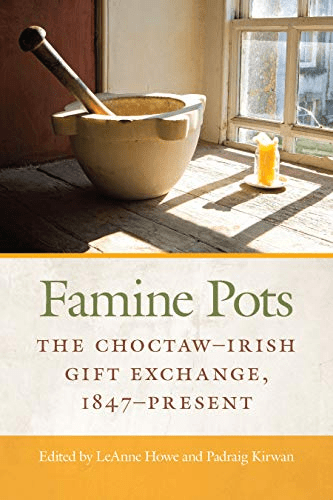
I’m just finishing a book titled Famine Pots: The Choctaw-Irish gift exchange, 1847-present. It is a series of essays, poems, and meditations on one of the most profound gifts in history: in 1847, members of the Choctaw Nation took up a collection to send to Ireland to provide relief during the Irish Famine. They ultimately sent $172 (some sources say $721), or about $5,000 today. This happened just a few years after the Choctaw were forcibly relocated to Oklahoma from their homelands in the south-eastern US, an act of ethnic cleansing commonly called “The Trail of Tears.” It’s a haunting read and raises a host of interesting questions about what connects people and places.
Tell us something about yourself outside of work. What do you enjoy doing? What’s a detail about you that your students might not already know?
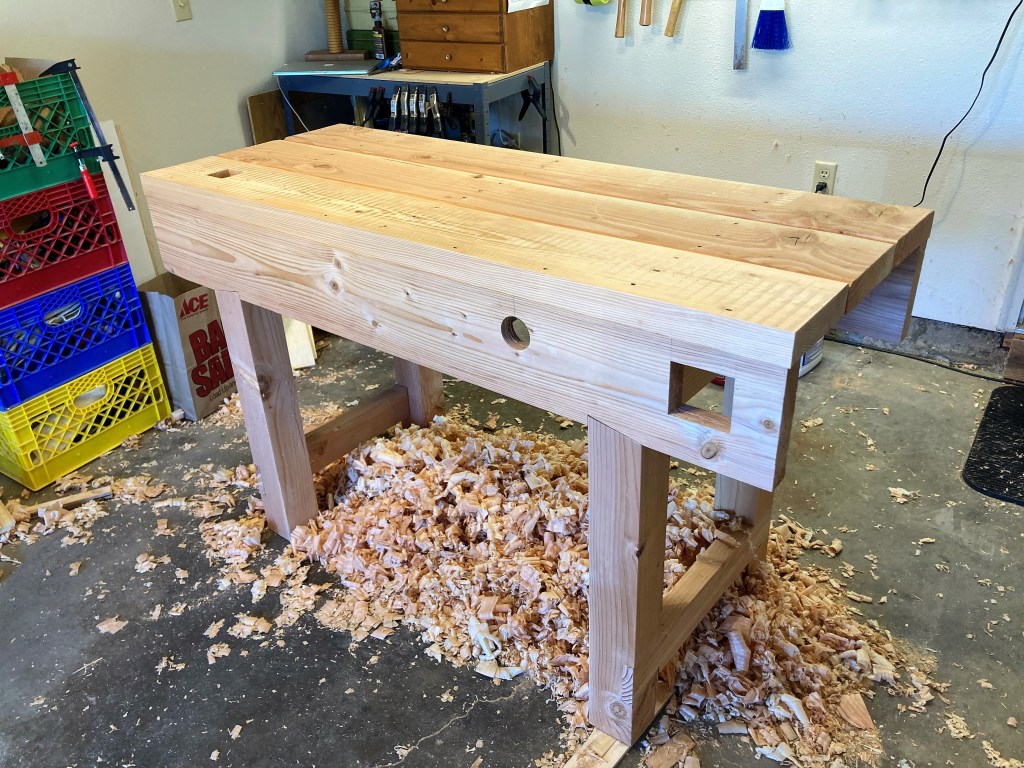
Over the past year or so, I’ve taken up woodworking, using almost exclusively hand tools. Since January I’ve been working on a traditional English-style woodworking bench, which I’ll hopefully complete by the end of this semester. It has been a good reminder that the first step to being good at something is to be quite bad at it for some time.
“Agrarian” is a loaded term. Literature scholar M. Thomas Inge notes that it is most commonly associated with independence and self-sufficiency, as well as long-running tensions between tradition and industry, community, and agriculture as a “positive spiritual good” (xiv). Americans are likely to associate it with Thomas Jefferson’s oft-quoted line from Notes on the State of Virginia: “Those who labor in the earth are the chosen people of God, if ever he had a chosen people, whose breasts he has made his peculiar deposit for substantial and genuine virtue.”
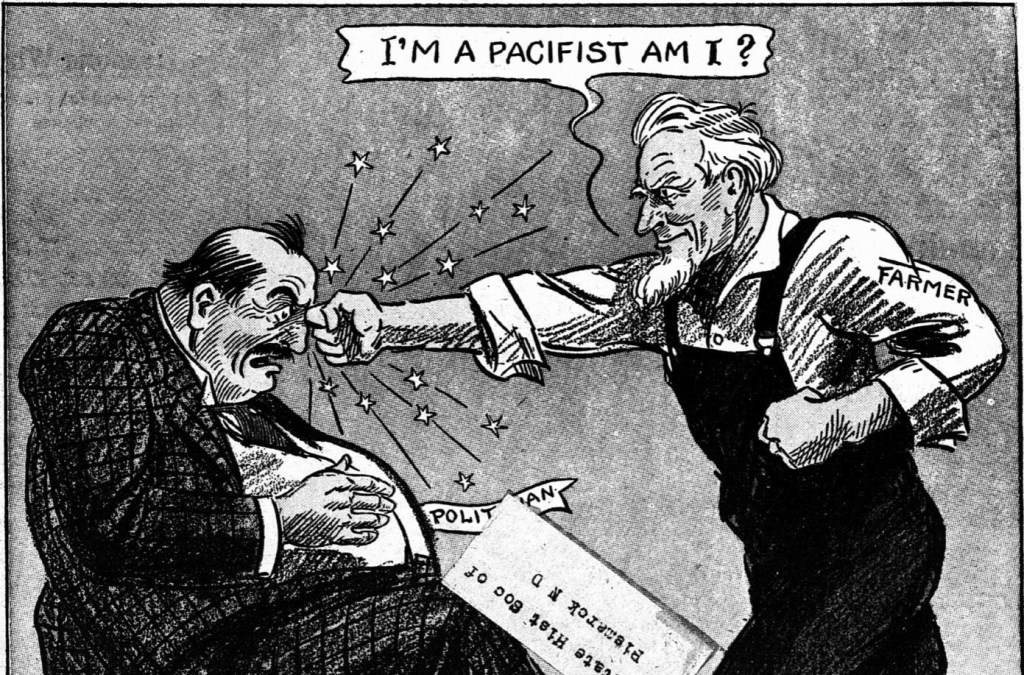
But the history of agrarianism isn’t all community and virtue. From the Whiskey Rebellion of the 1790s to the Tractorcades of the 1970s, farmers in the United States have drawn on agrarian rhetoric to protest commodity prices, foreclosures, corporate control, and more. This line of protest is seen around the world as well, from multiple movements for migrant worker rights to the ongoing farmer protests in India.
Image courtesy of the North Dakota Historical Society
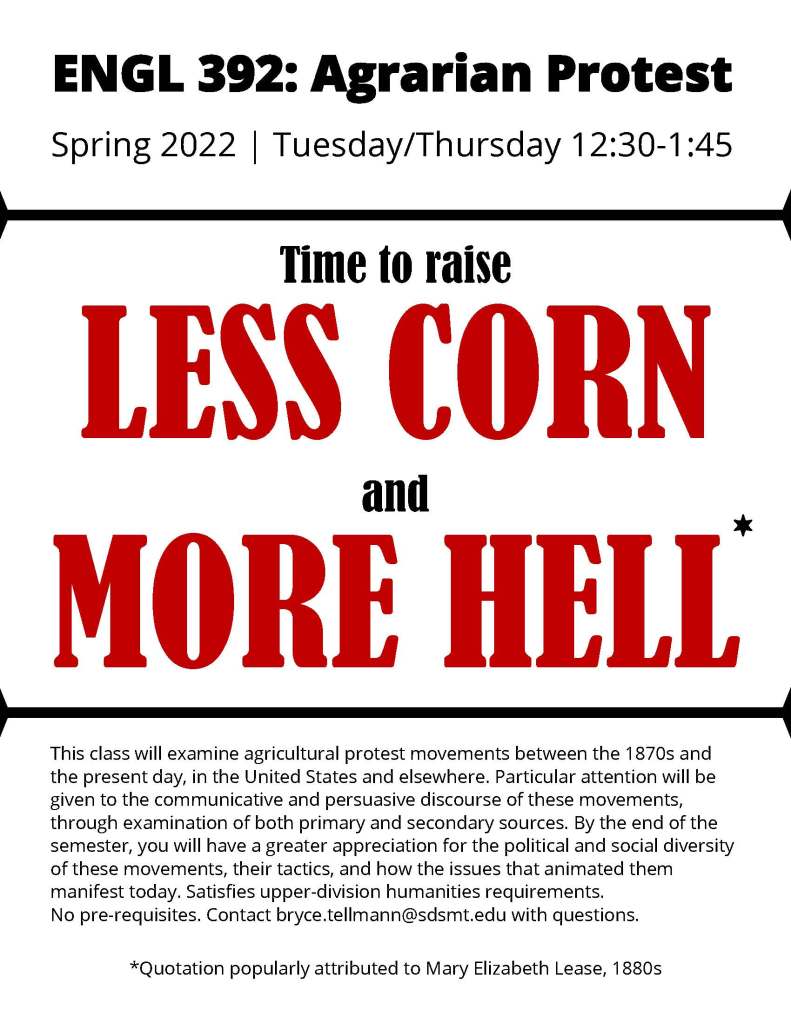
In Spring 2022, I am teaching a topics class on Agrarian Protest (ENGL 392) that will examine a broad swath of these protests. Since I’m a rhetorician, we’ll pay particular attention to the communicative and persuasive discourse of these movements, through examination of both primary and secondary sources. Ultimately, I expect that students will be surprised by the sheer diversity of voices in the last century-and-a-half of agrarian protest. It is easy to assume that farmers’ political interests are simple, unified, and consistent across time. The truth is far more complex and – dare I say – radical.
So in the (apocryphal) words of 1880s reformer Mary Elizabeth Lease, “it’s time to raise less corn, and more hell!”
Many, perhaps most, of the students I teach are from the Dakotas, Nebraska, and Kansas, all states that are frequently referred to as “Plains States.” (We can spend a lot of time debating the inclusion criteria for a state to qualify as a “Plains State,” but that’s a different post.) At some point in the semester, I usually ask them, as a group, to complete this sentence: “The landscape of my state is ______.” Almost invariably, I am met with a unison chorus of “flat!” or “boring!” This response is more than mere topographical observation.
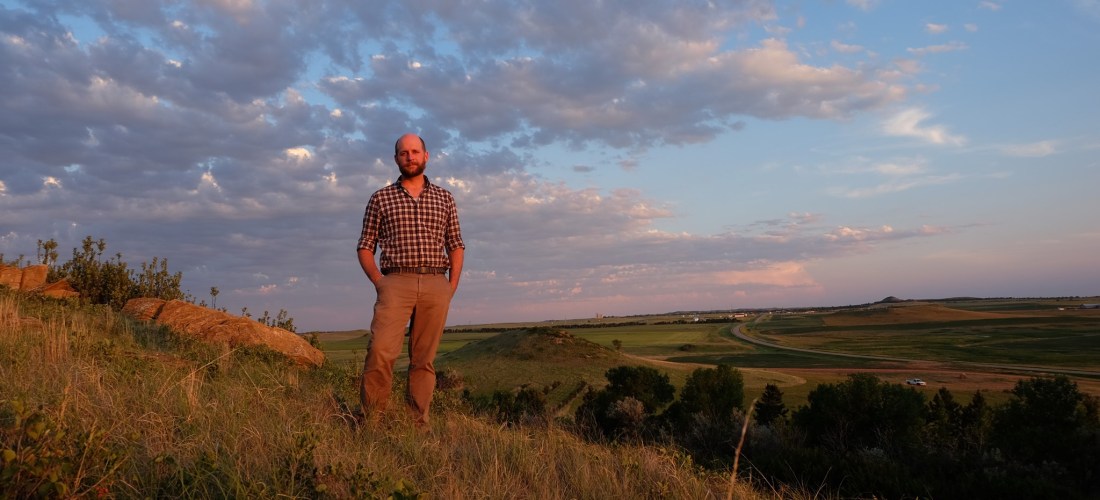
I grew up in western North Dakota, seeing the landscape much as my students do: essentially flat and nondescript. Not until years later did I realize that I lived in a very dramatic landscape: knuckles of stone push their way out of ancient hills, the last evidence of resistance to glacial domination thousands of years ago. Stretches that appear flat are actually cascading downward, racing toward whatever rare stream or coulee will collect the sparse rainfall. The grass itself frustrates efforts to touch the ground, as one must dig through several inches of dense, matted undergrowth to find soil. This immense complexity is most evident at dawn and dusk, when the extreme angle of sunlight throws easily elided variation into sharp relief.
Women have made many important and fascinating contributions to science and technology. When asked to name a woman scientist, however, too often the only woman people can think of is Marie Curie. She is of course a very important part of women’s history in science, but she’s only one of many women influencing science and engineering!
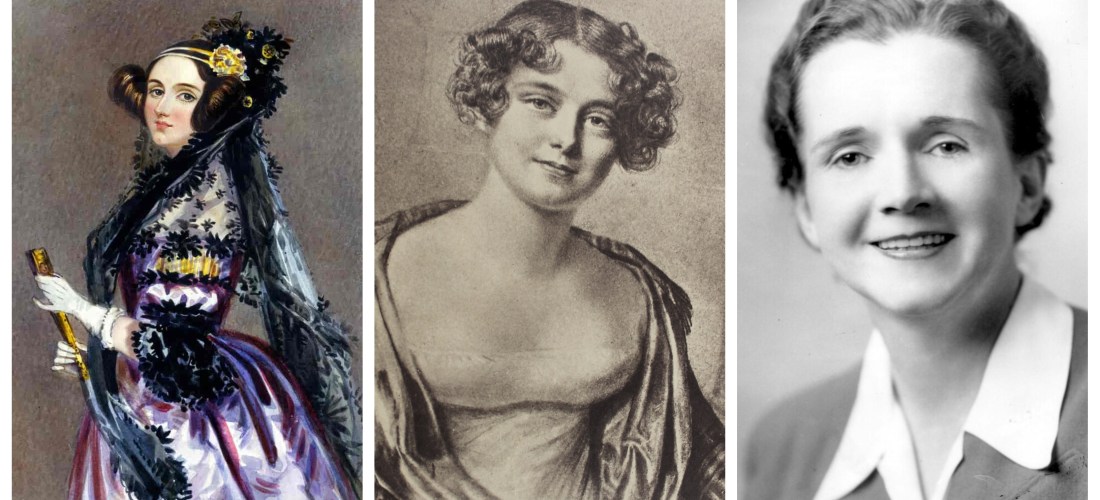
To celebrate Women’s History Month and help kick off the STS blog, this is the first of three posts about women in science & technology who are not Marie Curie. For this series, members of our STS faculty have chosen women in science and technology – both historical and contemporary – who they think are worth our attention. In this post, we share three women in science and technology who helped make history.
Ada Lovelace – selected by Erica Haugtvedt
Ada Lovelace wrote arguably the first computer program for Charles Babbage’s hypothetical mechanical computer, the “analytical engine.” She was the only legitimate daughter of George Gordon, Lord Byron, the famous Romantic poet, peer, and politician. Lovelace’s parents separated when she was an infant; the estrangement was bitter. Lovelace’s mother, herself considered a youthful prodigy in mathematics, committed herself to educating Lovelace in mathematics and science as an antidote against Byron’s poetic influence. Lovelace, however, remained attached to the legacy of her father and would not only name her two sons Byron and Gordon, but would request that she be buried next to her father upon her death. Lovelace rejected her mother’s opposition between mathematics and poetry. In her thirties, Lovelace wrote to her mother that if she couldn’t have poetry, could not she at least have a “poetical science.” That poetical science would be computer science. Lovelace’s experience of mathematics was laden with metaphor and intuition. She valued metaphysics equally to mathematics, seeing both as ways of exploring the “the unseen worlds around us.” Lovelace’s insight into the potentialities of mathematics beyond strict utility allowed her to translate Babbage’s invention into a vision of programming that anticipated what computing would become for the world. Lovelace died of uterine cancer at 36 years old.
Lady Jane Franklin – selected by John Dreyer
Born in 1791 to a British businessman, Lady Jane married her husband Sir John Franklin in 1828. With her husband as Governor in Tasmania she sponsored lectures on botany, science, and ethnography, often replacing the grand balls in the colony. She also was the driving force behind Tasmania’s first State College in 1840. Upon his return from Tasmania, Sir John was appointed to lead the final expedition to find the Northwest passage in the high Canadian Arctic in 1845. When the expedition failed to return, Lady Jane proved to be the force behind no less than seven expeditions to find her husband. Through sponsorship, influence and reward, she also backed numerous other searches, many by the Royal Navy. Through these backings, Lady Jane proved to be the force behind the geographical exploration of the Arctic regions. For this she was awarded the Founder’s Gold medal of the Royal Geographical Society in 1859. It was said about her “What the nation would not do, a woman did.”
Julia R. Pearce – selected by Bryce Tellmann
Julia R. Pearce was the first woman appointed to a United States Department of Agriculture Soil Survey team, in 1901. She reportedly created this opportunity for herself shortly after graduating from UC Berkeley by contacting the Secretary of Agriculture and telling him that she was willing to help fill the department’s shortage of skilled technicians. However, because her supervisor was uncomfortable with the idea of a woman doing fieldwork, she mainly worked as a map copyist. Shortly thereafter she transferred to Washington where she did laboratory work. Prior to this time, and for decades thereafter, women’s contributions to soil science in the United States often occurred in vital but unrecognized settings, assisting their husbands or maintaining maps and records.
Rachel Carson – selected by Christy Tidwell
“What is silencing the voices of spring in countless towns in America?” This question from the opening “Fable for Tomorrow” in Rachel Carson’s Silent Spring (1962) drew attention to DDT, other pesticides, and the poisoning of the US landscape. Carson’s Silent Spring is widely acknowledged as one inspiration for the 20th century environmental movement, contributing to the creation of the Environmental Protection Agency (1970) and the passage of the Clean Air Act (1970) and the Federal Water Pollution Control Act (1972). When the book was published, however, she was met with harsh criticism, despite her years of experience as a biologist and her academic training (a master’s in zoology and much work toward a PhD). Reviewers and readers reacted with obviously gendered dismissals, calling her “hysterically emphatic” and “emotional and one-sided,” for instance. One letter to The New Yorker (which published the original articles that became the book) wrote, “As for insects, isn’t it just like a woman to be scared to death of a few little bugs!” The dismissal of her as a scientist, naturalist, and writer continued until her early death from cancer in 1964.
Silent Spring is the most memorable part of Carson’s career, but her other writing is worth remembering, too: Under the Sea-Wind (1941), The Sea Around Us (1951), and TheEdge of the Sea (1955). She loved the natural world and shared her love for it in her books and public appearances throughout her life. Her final book, The Sense of Wonder (published posthumously in 1965), emphasizes this. Based on a brief article published in Woman’s Home Companion, the book argues for the importance of sharing this kind of love with children.







 The Novum