For our third annual STS Halloween costume contest, we got some great entries! It’s always fun to see how creative South Dakota Mines students can be, and this year was no exception. We were also very pleased to get some entries from faculty and staff this year, too!
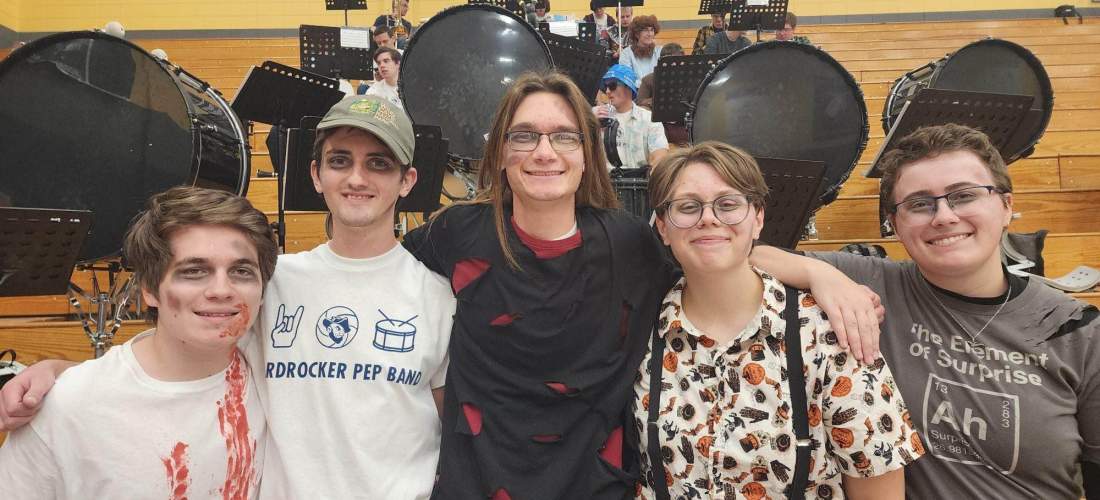
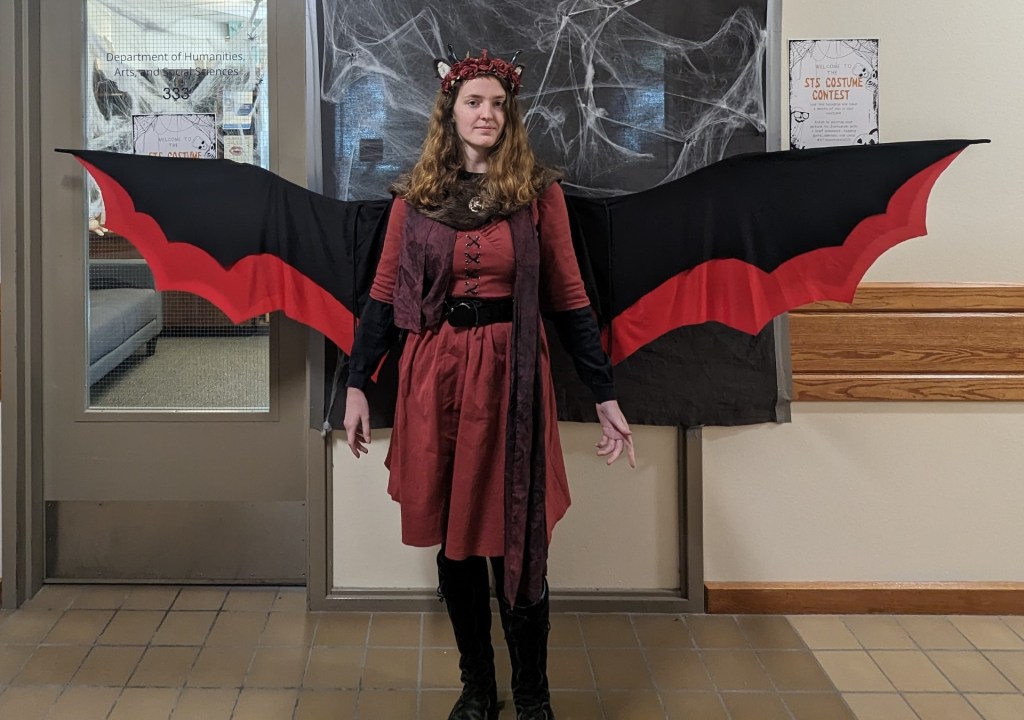
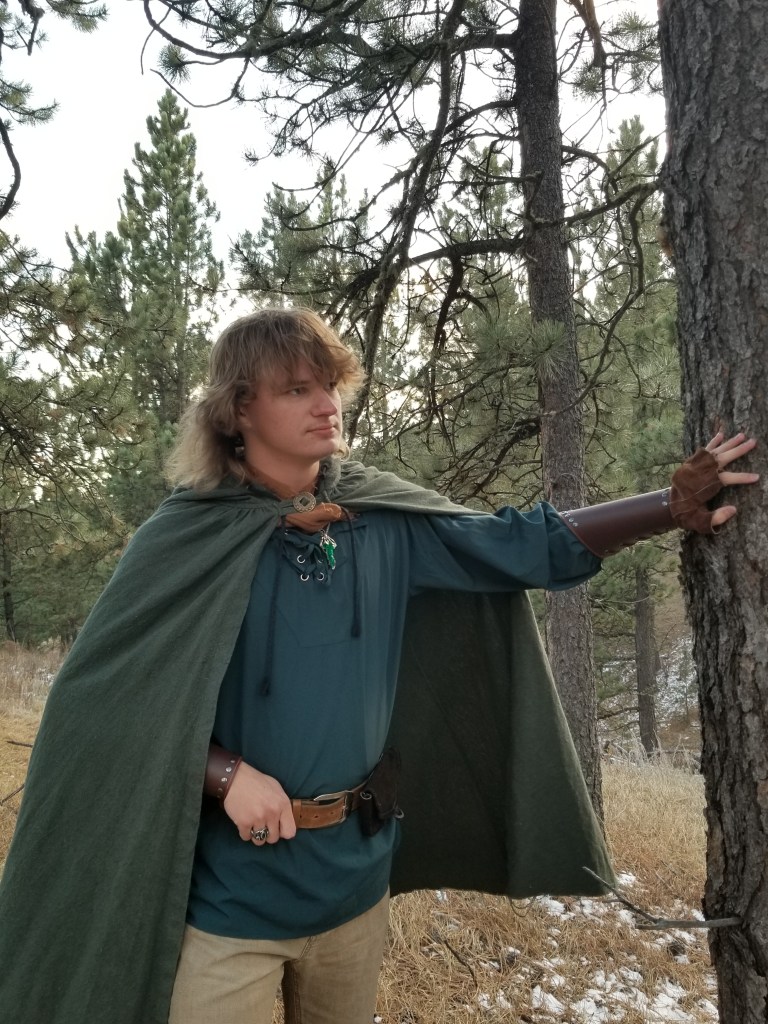
Our team of judges loved all of the entries and – based on the prizes we had available to give – selected winners in a variety of categories: Best Original Costume, Best Media Character Costume, Best Simple-But-Effective Costume, Best Group Costume, Best School Spirit, and Best Faculty/Staff Costume.
We’re looking forward to seeing more creative, fun, and spooky costumes next Halloween!
Halloween offers a great opportunity to be creative, and the STS program’s second annual Halloween costume contest received some fantastic entries! We saw characters from movies and TV, traditional horror movie types (like zombies!), animals, invented characters, and historical figures.
Although we loved all of the costumes, we did need to narrow this down to a few winners since it’s a contest. Here are the winners!
It’s nearly Halloween, so we wanted to share some information about this year’s Halloween costume contest and some spooky content from years past.
Last year, we got some great costume contest entries (see the winners here!), and we’re looking forward to more excellent costumes this year. Open to all SD Mines students, faculty, and staff, the costume contest is simple to enter and offers prizes for winners! If you love dressing up for Halloween, enter by sharing a picture and description of your costume on Instagram and tagging us (@sts_sdmines) or by emailing Dr. Christy Tidwell your entry (christy.tidwell@sdsmt.edu). We really hope to see some STS-related costumes, but all costumes are welcome!
We also wanted to highlight some past posts about scary movies to check out if you missed them the first time around: a series of posts called Spooky Science at the Movies (part 1, part 2, part 3, part 4, and part 5), as well as a post about the Science of Scare project, which measures the so-called scariest movie of the year each year. This year, the Science of Scare named Oddity the scariest movie – watch it for yourself and see what you think!
This year, the STS program ran its first-ever Halloween costume contest. Dressing up for Halloween is a perfect chance for students to show off some creativity and possibly even highlight some connections between science/technology and society! Some of our faculty dressed up, too – we had a pirate, a fancy lumberjack, Introverty the 8th Dwarf, and Goth Judy Jetson.
We had a number of really excellent entries in the contest, and we’re happy to share the winners below (except for one person, Jace Williams, who received an honorable mention but who has not given permission to use his image – if that changes, the post will be updated accordingly).
We have plans for another costume contest next Halloween, so start thinking about costume ideas for 2024!
First place: Pari Bailey, as a Renaissance fairy.
Second place: Gaven Williams, as a creepy scarecrow (on stilts!).
The Exorcist. Hereditary. The Ring. Texas Chain Saw Massacre. These are often named some of the scariest movies out there. They’re also among the most popular horror movies, ones that are watched and re-watched, considered classics. Horror movie fans want to be scared, after all.
But what makes these movies – and others like them – so scary? And which is really the scariest?
Since 2020, the Science of Scare Project has run an experiment to try to answer the second of these questions. The project asks a panel of 250 people to watch horror movies while measuring their physiological responses to them and then ranks the scariest movies based on those responses. In past years, they have relied simply on heart rates, but – after some criticisms from horror fans that this emphasizes only one sudden type of fear – they have updated this for 2023. Now their study includes not only heart rate as way to measure excitement and fear but also heart rate variance, arguing that “the lower the heart rate variance the more stressed our audience members became, a good indicator of slow burn fear and dread.”
This weekend is Halloween! To celebrate, I have two final movie recommendations to share. One is an all-time favorite of mine and probably no surprise to those who know me. The other is one of the scarier recent movies I’ve seen. Their premises are quite different, but both have science and technology at their core.
Classic Movie #5: Jurassic Park
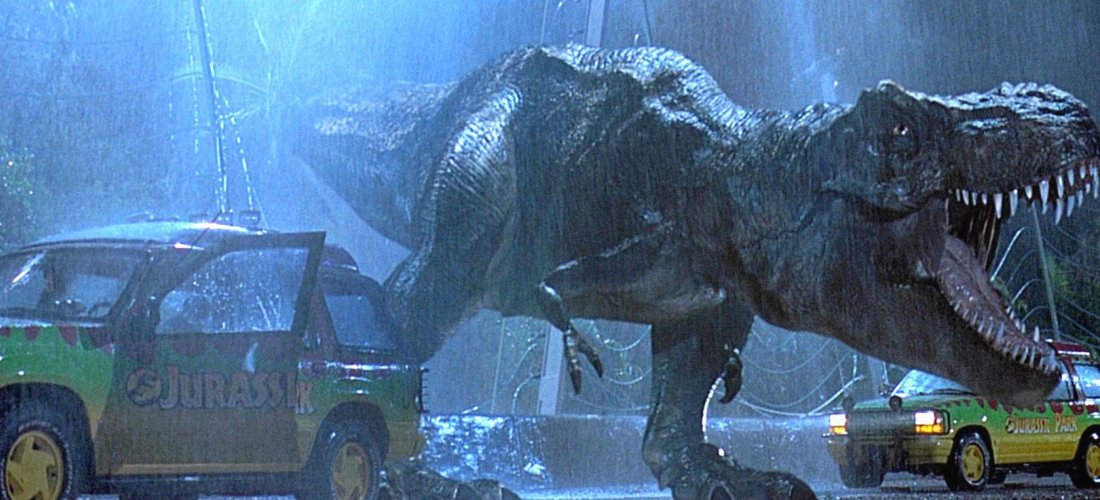
Of course it’s Jurassic Park! Jurassic Park (1993, directed by Steven Spielberg) is an adventure movie featuring dinosaurs, a horror movie with terrifying monster attacks, and a science fiction movie that asks, “What if we could bring a creature back from extinction?” Jurassic Park is such a well-known part of US popular culture that it is a common reference point in discussions of scientific overreach and a familiar critique of the role of money in scientific research. “Spared no expense,” John Hammond (Richard Attenborough) repeats throughout – but the project still fails.
Jurassic Park is a reworking of Frankenstein with dinosaurs, and it is one of the best movies out there for raising important questions about scientific ethics while also being extraordinarily entertaining. If you haven’t seen it, now is the time! If you have already seen it, well, it’s always a good time to watch Jurassic Park again.
Official trailer for Jurassic Park (1993)
Contemporary Movie #5: Host
As Laura Kremmel noted in her recent post “High-Tech Spirits and Ghost Tours,”Host (2020, dir. Rob Savage) has been named as the scariest horror movie. It’s short (only 57 minutes!) and fun, but it definitely gets your heart pounding in that short running time. Host spends less time raising big issues about science than Jurassic Park and focuses more on scaring the audience, but the way it achieves its scares is worth noting from an STS perspective. Those scares are only possible through the technology of Zoom, and the audience’s ability to be scared by spirits via technology is a) definitely not new (as Laura Kremmel points out) and b) perhaps an indication of how mysterious the inner workings of these technologies are to most of us.
Official trailer for Host (2020)
Collected Movie Lists
This is the final entry in the series of STS-related horror movies for this season, so I’ll end by combining all the movies recommended and linking to the earlier posts.
There’s just a week and a half left before Halloween, but there’s still time for more spooky movies! This week’s classic and contemporary movie recommendations prominently feature scientists and scientific research, highlighting the risks of scientific experimentation and exploration (especially when done outside the bounds of formal research contexts) as well as the limits of scientific knowledge.
Classic Movie #4: The Fly
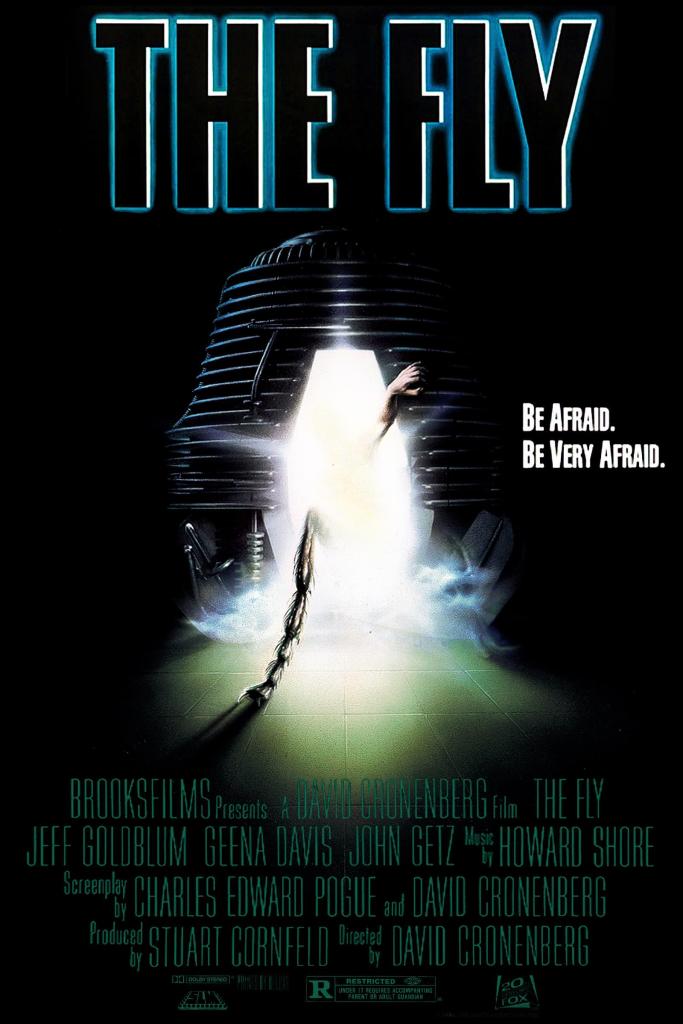
David Cronenberg’s 1986 remake of The Fly is a classic of body horror. Its central premise is that a human (Seth Brundle, played by Jeff Goldblum) merges with a fly and becomes a horrifying human-fly mutant: Brundlefly. This transformation emphasizes bodily mutation through both the intimate horror of things like losing fingernails (as gruesomely shown in the bathroom scene) and the ultimate form of Brundlefly, so dramatically changed that it no longer has a recognizably human face.
The Fly is also another horror film about mad science (following in the footsteps of Frankenstein, recommended during Week 1). It’s not just that a human merges with a fly, after all, but that a scientist conducts experiments on himself that go very wrong. The film dramatizes what can happen when scientists abandon the norms and regulations of scientific practice. If you can’t get funding through traditional means, how far are you willing to go for your research? Are you willing to experiment on yourself? Although historically there have been quite a few scientists willing to do this, The Fly serves as a cautionary tale indicating that this will not always work out. Some renegade scientists might get to be Humphry Davy (who experimented with nitrous oxide and discovered its use as an anesthetic – without killing himself!), but others are Seth Brundle/Brundlefly.
Poster for The Fly (1986)
Contemporary Movie #4: Annihilation
Alex Garland’s Annihilation (2018, an adaptation of Jeff VanderMeer’s 2014 novel of the same name) also follows a scientist, a biologist (Natalie Portman). She is on an expedition with an anthropologist, a psychologist, a surveyor, and a linguist (all women) into a mysterious environmental disaster zone known as the Shimmer. The Shimmer doesn’t follow the familiar rules of nature and ever stranger things happen to and around the group of explorers. Without giving too much away (since the movie is still relatively recent), I can say that Annihilation centers both scientific exploration and environmental issues, which connects it nicely to the STS degree.
Where The Fly endorses traditional science by showing the awful consequences of going outside its boundaries, Annihilation takes a different approach, illustrating the limits of scientific knowledge. The team of women in Annihilation are overwhelmed by the world within the Shimmer, ultimately unable to study it objectively and changed by it instead. In both films, scientists are unable to remain completely separate from what they study.
Trailer for Annihilation (2018)
For more recommendations, check out earlier entries in this series: Week 1, Week 2, and Week 3!
This week’s recommendations stick with the emphasis on ecohorror introduced last week. Instead of presenting monsters like Godzilla or crocodiles, though, these two films find both wonder and horror in exploring the agency of the nonhuman world. How do other species communicate? How do they act upon us and shape our actions?








 The Novum