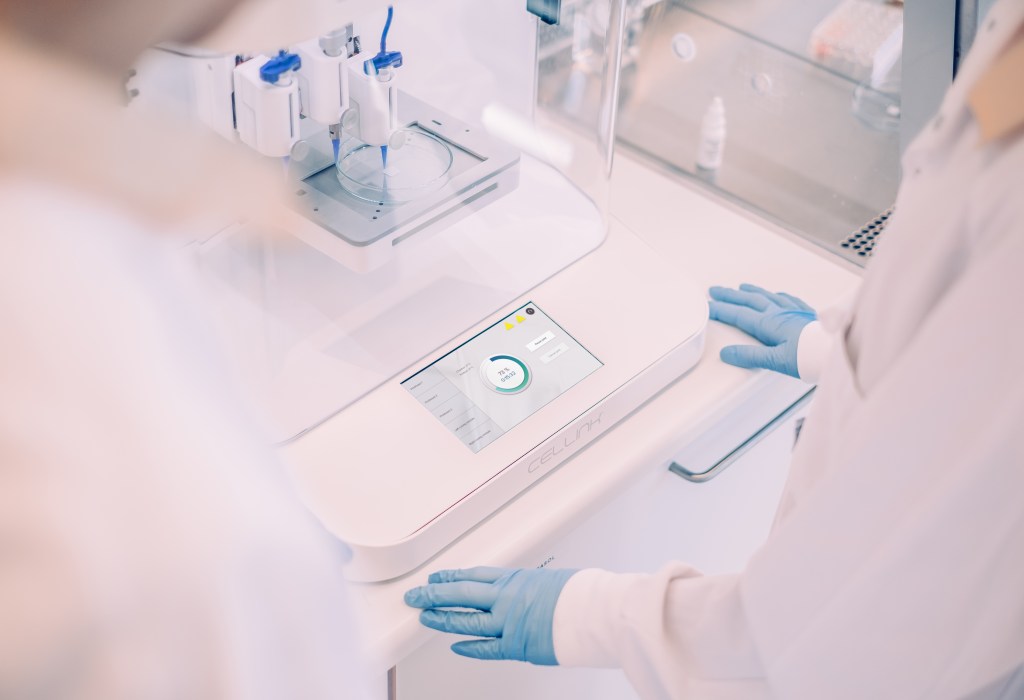
For my senior capstone, I will be writing about 3D bioprinting, or the creation of human tissues and tissue structures using 3D printing technology. Specifically, my research will be focused on the current and possible future impacts of 3D bioprinting becoming the main source of organs for transplantation surgeries. I will study and speculate on possible social, ethical, and economic impacts. This topic is important because of the world’s massive organ shortage. If this technology replaces organ donation, there will be significant changes in the current medical culture.
Are the sins of the father the responsibility of the son? This is one of the many questions President Barack Obama was challenged with when creating the controversial policy DACA. DACA (Deferred Action for Childhood Arrivals) is a policy that has garnered a vast amount of criticism and controversy. Recently, the topic has been under increased scrutiny with a Texas judge declaring the policy to be unconstitutional. What I want to explore specifically in my capstone is how DACA has impacted the United States and other countries legally, socially, and culturally and whether this impact has been beneficial to the American people.
However, before examining the former president’s decision, a little bit of background on the border itself is necessary. Prior to the 1990s border security was relatively uncontrolled and immigrants from Mexico and South American countries could virtually just walk across the border without much fear of being stopped (Guerette, 2005). This lack of border security was simply not maintainable, which led to the increase in security during the 1990s (Guerette, 2005). This security included an increase in agents along the border, an increase in surveillance along the border, and the creation of physical barriers such as walls. While this made a more secure border, it also had some unintended consequences that have become critical factors in the current border situation. First, the increased security led to illegal immigrants heavily relying on smuggling to enter the U.S., which led to a shift in the mission of border security (Guerette, 2005). Currently, smuggling is considered a greater issue than immigration. Second, increased security has led to migrants choosing more dangerous methods in order to cross the border (smuggling included), which has unfortunately resulted in an increase in deaths along the border. This has led to the border patrol adopting an increasingly medical and humanitarian role, as they now are far more focused on the prevention of migrant death and application aid to injured and at-risk immigrants.
AI is technology that simulates human intelligence and possesses the ability to evolve based on its designated purpose. In the hospitality industry (including tourism, hotels, and restaurants), the use of AI is on the rise because of the greater efficiency compared to human employees. Artificial intelligence can’t steal from the cash register, doesn’t take sick days, and won’t leave a manager short-staffed. Business owners are interested in the switch to AI “employees” because they significantly save on labor costs, can communicate in every language, and perform menial tasks which allows for human employees to work larger tasks.
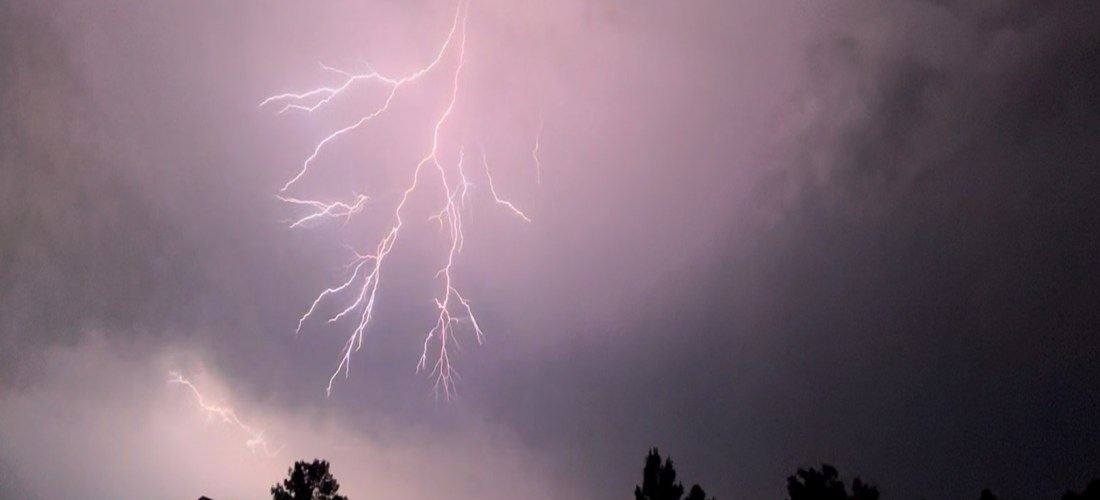
I became increasingly intrigued by wildfires in the western U.S given how crazy the 2020 season was. I have family in both Nevada and California, and the effects of that fire season still have impacts on them today. What I didn’t know at the time was that dry thunderstorms, which produce dry lightning, are a major cause for wildfires in the U.S. A recent example is the August Complex fire in 2020, which burnt about 470,000 acres alone in California, making it the state’s largest wildfire ever. It was created when dry lightning sparked multiple smaller fires that grew into a larger complex of fires. The average cost of fighting wildfires is $1 billion annually with millions of dollars in property loss as well (National Interagency Coordination Center (NICC),ND).
Sunday Gulch in Custer, SD. May 5, 2023. Photo by Markus Sonnenfeld.
Growing up on a farm in rural South Dakota, I heard someone say once that no matter how much it rains, a farmer will always complain about it even though deep down they’re grateful for it. This is what helped guide me towards the Atmospheric and Environmental Sciences program at South Dakota Mines after figuring out that my initial degree in Computer Science was not where I wanted to go with my life. I wanted to understand why it did or didn’t rain on our farm, but it rained on our neighbor’s farm. I also wanted to understand why farmers, whose entire lives rest in the hands of the weather, don’t get the focus they deserve when it comes to forecasts.
A supercell rolls over a crop field. This will likely cause damage to the crops through high winds and heavy rain showers. Courtesy: Creative Commons.
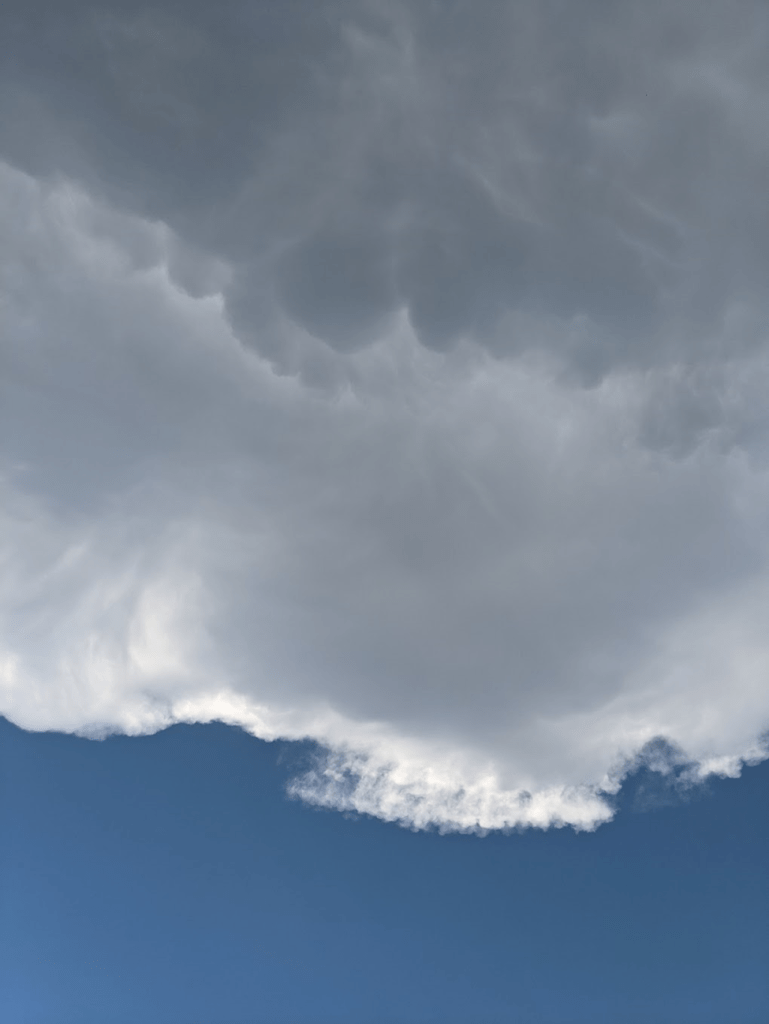
As a weather lover, I always fangirl when a big storm rolls through. I love going outside or chasing it (safely) and seeing all aspects of the storm. Sometimes before a thunderstorm that will produce hail, mammatus clouds form. Mammatus clouds are bubbly in appearance, and are considered unique, but we often see them in the Black Hills. These are my favorite clouds due to how unique they are and how telling of the storm components they are.
This image was taken last summer from Rushmore Crossing. Up at the top of the image are the dark, bubbly mammatus clouds. Mammatus clouds typically foreshadow hail, and are rare in most areas, but are somewhat common during the summer in South Dakota.
I especially love the aftereffects of a thunderstorm. The stillness in the air, the rainbows, the smell of freshly fallen rain, and the glow of the atmosphere are all amazing to me. It also amazes me how much energy storms produce and use as they race across the plains of South Dakota, dropping rain, wind, hail, and lightning as they go. One storm that particularly amazes me is one that occurred on July 23rd, 2010, in Vivian, SD. This storm produced the largest hailstone ever recorded in the United States (3D printed model pictured above). This hailstone is 8 inches in diameter, 18.6 inches in circumference and weighs nearly 2 pounds! Imagine that hitting your house!
Because I have always loved severe weather, I knew my senior research topic needed to be in that category. I especially find hail fascinating, so I decided to use hail as my main topic. South Dakota summer thunderstorms are known for the hail they bring. From car damage, broken windows, roof damage, livestock casualties, plant damage, and human casualties, hail causes many problems. As a lifelong South Dakotan, there have been many times I have been out and about when suddenly I get a National Weather Service emergency warning about hail, but by that point it is too late to move my car into a safe area. Over the years, it has seemed like hail has increased in frequency and size on a regular basis. For example, last summer it seemed like the majority of storms brought at least pea-sized hail, where just a decade ago I remember hail being a more special occurrence. This struck me as an important hypothesis to address because as climate change becomes worse hail will, too, so I figured it would make for an interesting capstone project.
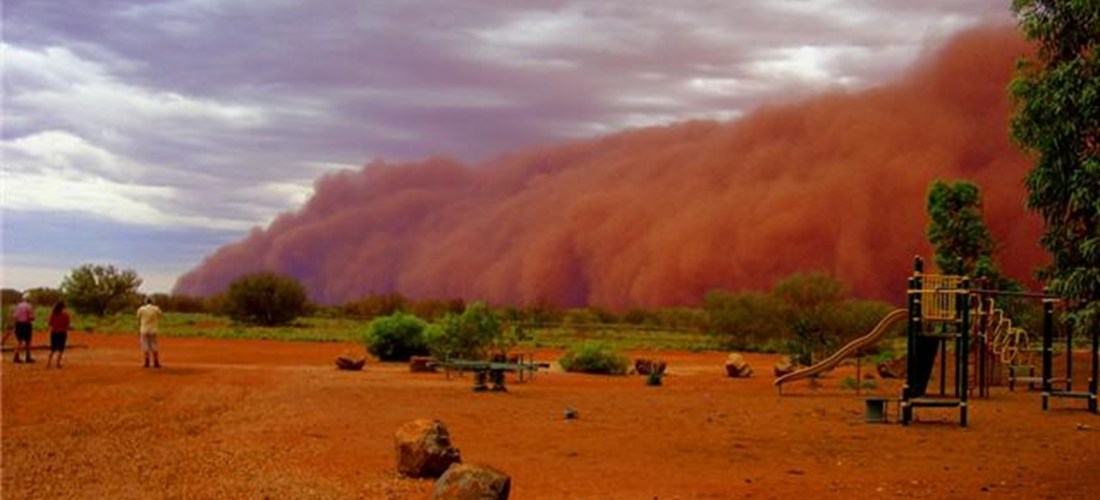
Weather affects all people, and it is important for meteorologists to understand a wide range of events to communicate effectively to the public. My capstone is a project designed to dissect a particularly interesting phenomenon, especially to South Dakota. I have chosen to do a case study of a particular dust storm known as a haboob. The storm I am focusing on occurred May 12th, 2022, and it impacted the eastern part of South Dakota. A widespread, long-lived thunderstorm called a derecho created the haboob beginning in the south central portion of Nebraska and traveled north and east towards Sioux Falls. It sustained winds of 80 miles per hour, and the highest recorded winds of the event were 107 miles per hour. This storm is a good example of what is possible and can become a sample case for the future.
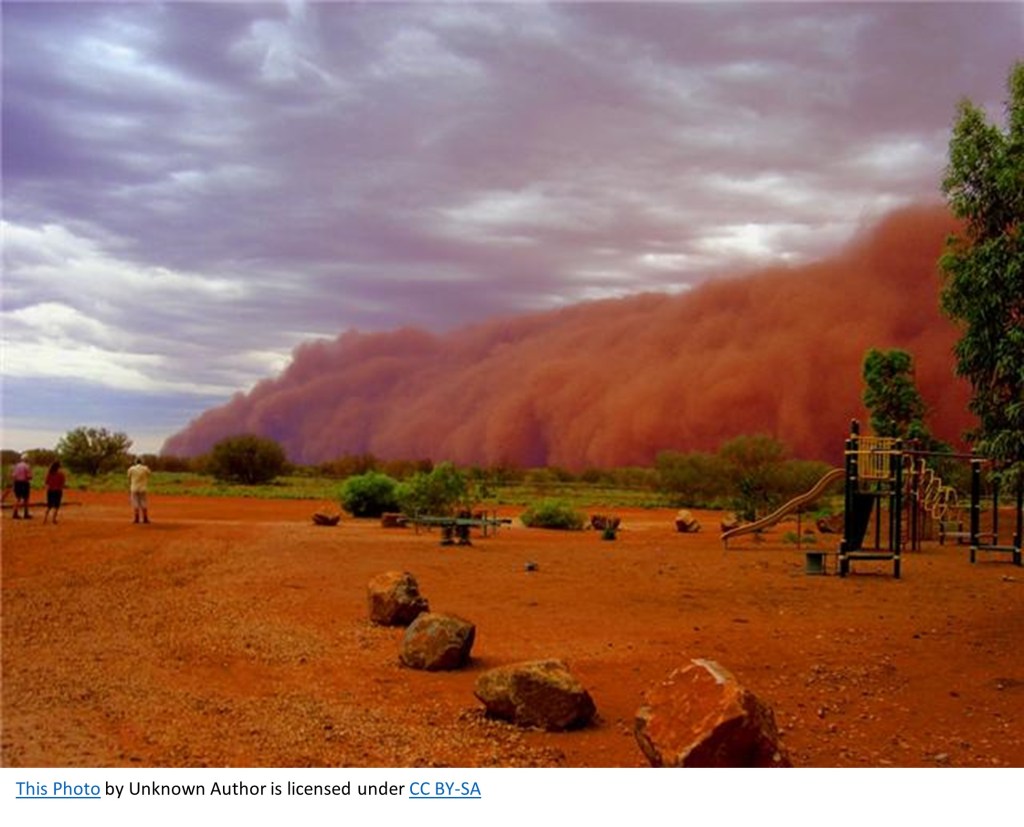
A haboob is a giant dust storm. It is named after the Arabic word habb, meaning “blown.” This type of storm is most common in the Middle East and Northern Africa, where is it historically arid. But haboobs are also well known in the Southwestern United States and are becoming an occurrence in previously unlikely places as well. Haboobs are created from loose particles that are picked up by strong winds caused by storms like monsoons or derechos sweeping across the surface of the earth. The massive amount of precipitation associated with these events evaporate, which is a cooling process, so cool air called a gust front accelerates out in front of the storm at a fast rate, picking up particles and building a wall of air and dirt. The particles are mostly less than 10 micrometer pieces of dirt, dust, and sand, but they can be as large as a pea, and the wind can pick up other debris along with it. These walls of air and dirt can reach grow to 5000 feet tall and 100 miles wide, and they can move at 60 miles an hour (Eagar, Herckes, Hartnett, 2016). Overall it is a phenomenon that is quite terrifying.
If you look at the annual average number of tornadoes per country, the United States reigns supreme, whether we like it or not. And if we look at South Dakota, the state is not without its share of tornadic activity. For instance, as Dennis Todey, Jay Trobec, and H. Michael Mogil write, “A massive outbreak of tornadoes placed the state in the severe weather record book on the evening of June 24, 2003” (19). On that day, sixty-seven tornadoes touched down over a 6-hour period, a single-state record tornado occurrence.
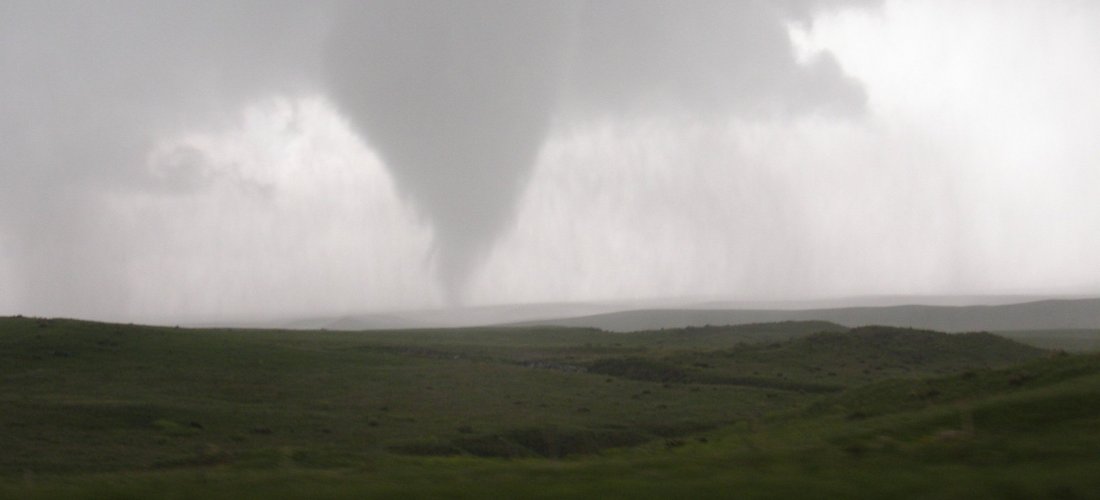
So, you may be thinking to yourself right now, “I live in the Black Hills region of South Dakota. We don’t have a problem with tornadoes.” Well, what if I told you that tornado activity has increased in the Northern Black Hills of South Dakota in the last decade? This increase in activity is not typical for the Northern Black Hills, since only nine tornadoes have been reported in this region since NOAA started gathering tornado data in 1950. What makes this even more alarming is that, of these nine cases, four have occurred in the last decade. This increase is the focus of my capstone with my two-part research question: Do the Northern Black Hills tornadoes that occurred in 2015, 2018, and 2020 have any similar characteristics to each other? Will this help determine when new tornadoes will form over the same region?
Map of Northern Black Hills tornado tracks and strengths on the EF scale. Red circles indicate tornadoes being researched for this capstone. Source: National Oceanic and Atmospheric Administration
Elizabeth Benzmiller is a senior in the Science, Technology, and Society: Policy & Law Major. Throughout her time as a student at South Dakota Mines, she studied abroad in Limerick, Ireland, participated and held leadership roles in student organizations, and interned at the South Dakota Legislature and Raven Industries/Viaflex, Inc.
I was raised by two polar opposite parents. One chose a STEM career, worked in healthcare and laboratories, and was a very analytical and logical thinker. The other was a professional artist, singer, ballroom dance instructor, writer, and more. Growing up, I was able to see first hand how a STEM professional and an artist communicate and view the world very differently! One parent was a logical, straight to the point teacher who learned from a textbook and lectures, while the other was a creative, adventurous, empath who learned through experiences in their life.
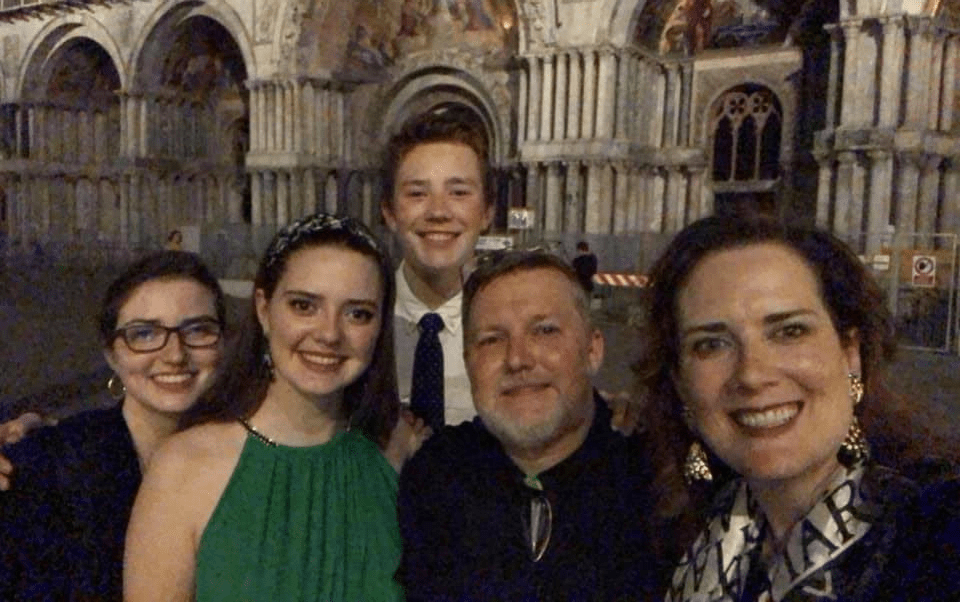
This is my family in Italy, while we were visiting my sister while she performed in an opera. She did this before she graduated college with a degree in Computer Science and Data Analytics. From left to right, Sonya (older sister), Elizabeth (myself), Vincent (younger brother), James (father), and TracieLea (mother).
I was taught the importance of the arts and STEM from a young age and told I didn’t need to choose between the fields. From a young age, I was playing instruments, singing in proper form, reading like a true bookworm, and looking for any opportunity to get crafty and creative. We would have Craft Thursdays and Field Trip Fridays, exploring museums and historical centers, trying new things, and seeing the world from a new perspective each week. At the same time, I was encouraged to ask questions, research the world around me, explore nature and get my hands dirty. I could build rockets, play with Legos, and learn how to use a microscope. I could travel the world and see new sights, cultures, and experience new things.
Every day, I was encouraged to explore my passions and be a lifelong learner. I didn’t have to choose between the Arts and STEM, and I was a more well-rounded individual because I could do both. I eventually decided to study in a STEM-field, but I never wanted to lose my grasp on influences that the arts had on me and I wanted to explore their interactions with the scientific community. This led me to my senior capstone project researching the influence and impact that arts-based instruction has on engineering and STEM undergraduate students.
Otutoa Afu is majoring in Science, Technology, and Society. He plans to pursue a career in the fire service once done with school.
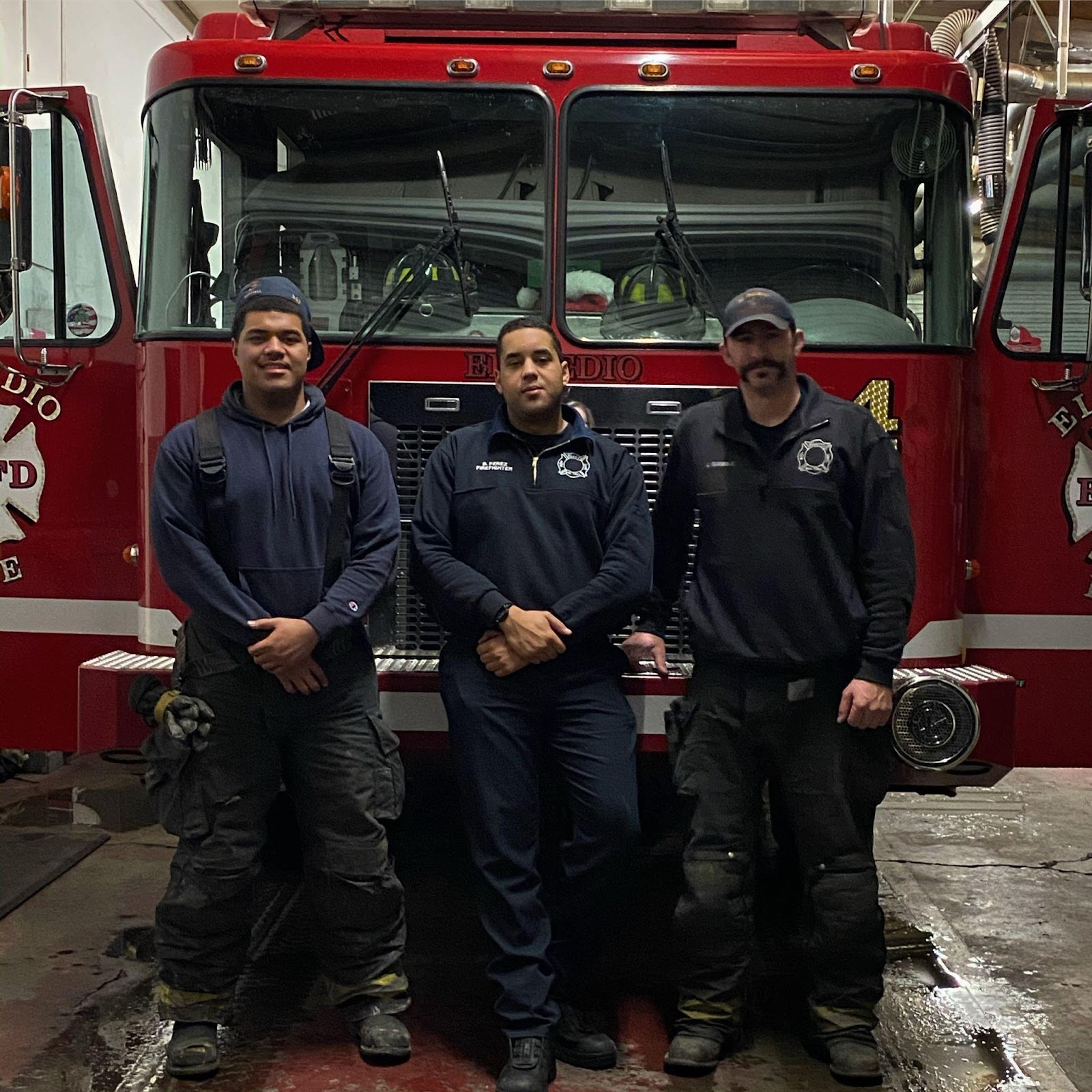
After completing the fire academy in 2018, I was fortunate enough to get hired as a full time firefighter at the El Medio Fire Department out of South Oroville, California. At that time I was just a 19-year-old growing boy who never knew his life was going to change due to the fire service. Working as a firefighter, people have always thought about the cool things you get to do, from playing with the “jaws of life” to going to elementary school and playing hero for the young ones. But nobody ever told us about the bad things that came with being a firefighter.
After accepting my football scholarship here at South Dakota Mines, I left my job in California and joined the Rapid Valley Fire Department student resident program here in South Dakota. The student resident program is where you get to live at the fire station and run calls. You also need to be enrolled as a full time student and maintain a certain GPA.
Because of my strong interest in firefighting, it was a good fit to explore firefighter mental health for my capstone project. The stress faced by firefighters throughout the course of their careers can be hard on mental health and well-being. This stress can be caused by incidents involving children, violence, inherent dangers of firefighting, and other traumatic events. For instance, you might roll up on a head-to-head traffic collision involving two vehicles, a family of five vs. drunk driver that leaves the parents dead. Later in the same shift, you can get called out for a suicidal patient to walk in on the patient hanging themselves. Some may say firefighters know what they are getting into, but that does not make them immune to developing mental health issues.
For my capstone project, I want to explore how firefighters are affected by their job and how fire departments address mental health. I will approach these topics by analyzing journals, scientific papers on mental health, and other reliable sources from those that are in the field or have been in the field. Hopefully this can help me summarize what the best coping tools or even shift schedules can be best for firefighters and their well-being and share with fire departments around the nation, maybe even internationally. All in all, firefighters are always there when called, and we should be there to help them, too.








 The Novum