By Parker Smith
Over 200,000 years ago, warm water seeped through the Southern Black Hills and was pushed up through the layers of earth. Eroding caves and creating aquifers and sinkholes, this water shaped Hot Springs. From the in situ (in the ground), bone deposit of the Mammoth Site to Wind Cave National Park and the mineral water baths which the town was founded upon, Hot Springs has been reliant on environment-based tourism, which was developed by their unique hydrology. This is not the whole story, however; the Black Hills also contains many spiritually significant locations for the Lakota, the Indigenous people who were forcibly removed from their sacred homelands.
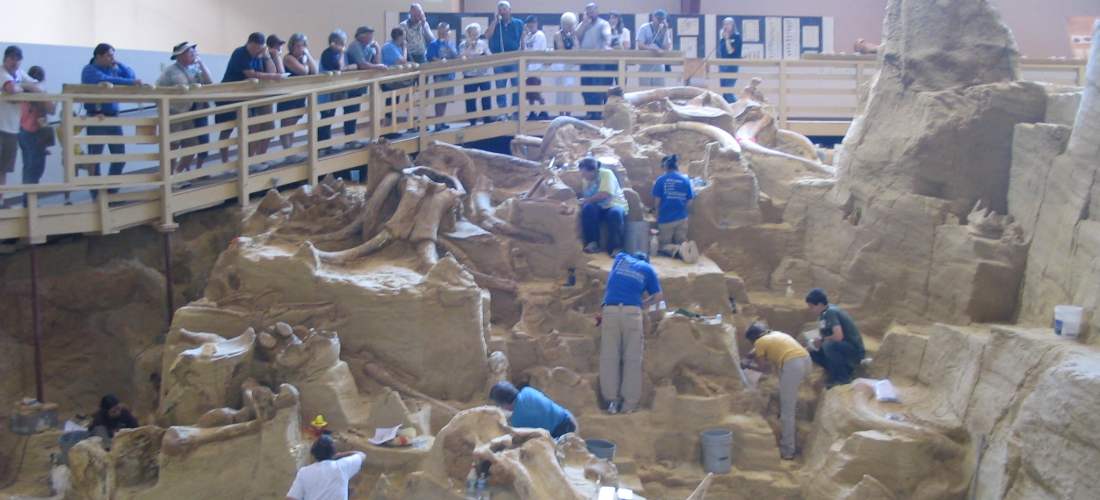
The Mammoth Site developed slowly, evolving from a wooden shack to a bustling tourist hub. The bone bed is unique, not only because the bones are kept in situ, but also because of the nature of the sinkhole formation.
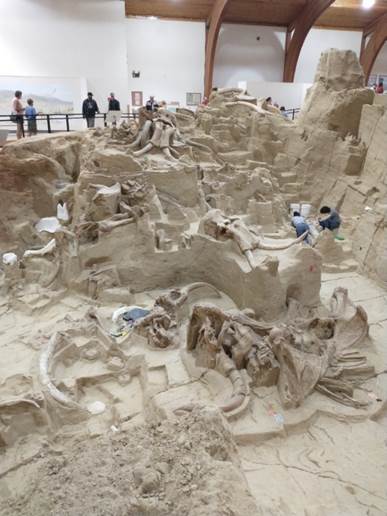
The Mammoth Site is a bone deposit caused by young male mammoths wandering off from their groups to seek food and water. They stumbled upon a warm lake, where a sinkhole filled, creating a shallow rim and deep middle. The lake was also warm, meaning it was surrounded by vegetation and did not freeze over. Once mammoths entered the water, they were doomed to a fate of drowning, starvation, or exhaustion. The sides of the sinkhole were lined with shale, which is very slippery when wet. Not only was it slippery, but the mammoths were too heavy to back up once they began sliding into the deep middle of the lake. They likely swam around the middle, trying to find different exit points, but failing to exit because the water was too low to swim over the edge and they were too heavy to pull themselves up and out of the deep water (Interview with Jim I. Mead, November 1, 2026).
This kind of mass death would not normally occur, but the mammoths attracted to the sinkhole were young males, meaning they were not a part of the herd anymore and had no guidance from their matriarchs. The mammoths suffered immensely during their deaths, and while their bones provide us with wonderful scientific information, we have capitalized on their death to fund the science in order to learn about the past.
The warm waters of Hot Springs were not just desirable for mammoths, but for sick tourists as well. Following the discovery of the warm aquifers in 1879, they were turned into mineral baths (Twomey & Magee 1983). The mineral water bath craze had heightened in the United States following periods of war. The increase in popularity of mineral baths and health tourism in the late 1800s directly caused the Hot Springs population to grow.
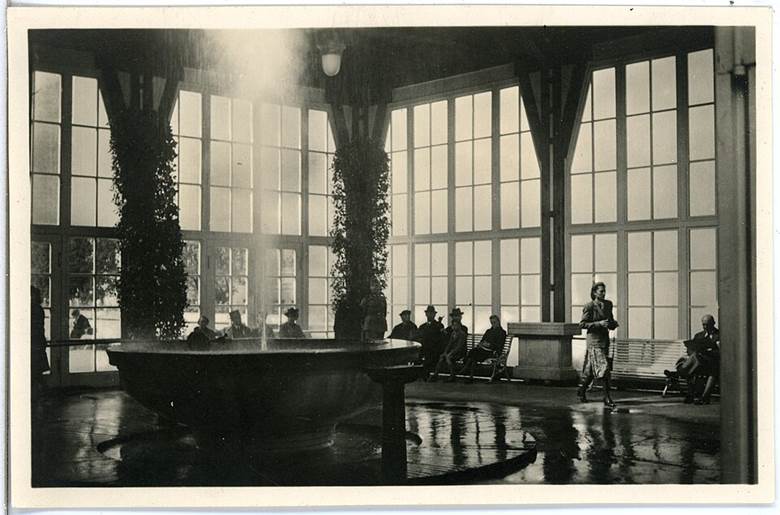
Hot Springs was founded on tourism, and tourism is a wonderful thing for the community. The mineral waters also had an indirectly dark impact on Hot Springs. Mineral water baths were very popular in the late 1800s and early 1900s (Sigerist, 1942). Tourists sought water treatments for their ailments, recommended by their doctors. Hot Springs, with its warm aquifers, temperate climate, and fresh air, was the perfect location for a health resort. The boom in tourism brought businesses and, with them, settlers.
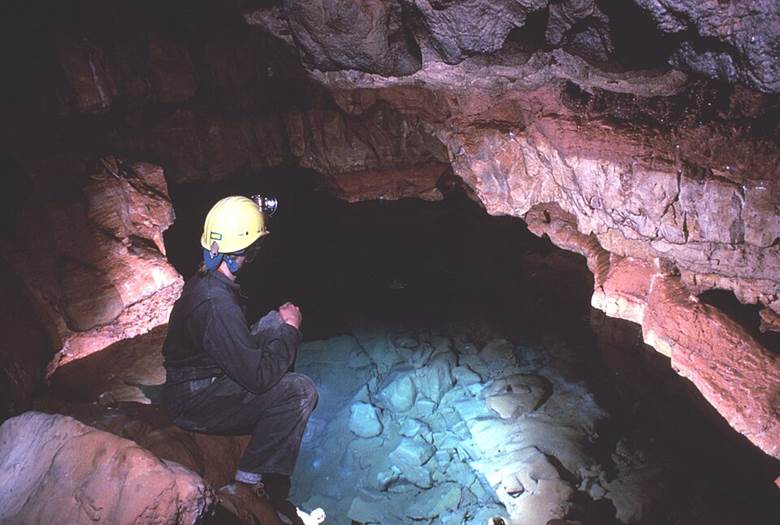
The mass settling of Hot Springs meant that Indigenous people – specifically, Lakota people – were pushed off the land they were rightfully allocated in a treaty. Claiming the land as scientifically meaningful erased the Lakota’s spiritual significance of the land. The Lakota origin story states that they lived underground in a sacred place (United States National Park Service). Over time, they emerged onto Earth through the opening at Wind Cave. After being “discovered” in 1881, visitors arrived and in the 1890s Wind Cave quickly became a tourist trap (Springs 2023). A hotel was built and when homestead claims were not valid, The Department of the Interior created Wind Cave National Park in 1903. The birthplace of the Lakota people quickly became a place where tourists from the east came crawling through on candlelight tours.
In addition, near Hot Springs there also used to be a performing “Indian Pageant.” This pageant was supposed to show that Native people were living well. Claiming the land that was sacred and healing to Indigenous people, imitating them by using white actors to portray Indigenous people, and profiting off those pieces of mockery is what makes dark tourism.
Tourism in Hot Springs has provided for the people through jobs and economic benefit, but let us not forget that dark lens in which it can be viewed. In the future, I hope that the tourist locations of Hot Springs properly acknowledge the dark past of the locations their tourism is reliant upon. For tourists, reminders that these places are sacred for the Lakota and proof of reparations will ensure this history does not get lost to “family-friendly” marketing once again.
Bio:
My name is Parker Smith, and I am a Science, Technology, and Society major. I chose the STS degree program because I love STEM as well as humanities, and it provides me opportunities to learn about many different subject matters. When I’m not doing homework or at a club meeting, I enjoy reading, playing music, and crochet!
References:
Sigerist, H. (1942). American Spas in Historical Perspective. Bulletin of the History of Medicine, 11(2), 133–147.
Smith, Parker (2026, November 1) Interview with Amy Spears and Nancy Anderson-Smith.
Smith, Parker (2026, November 1) Interview with Jim Mead.
Springs, M. A. U. H. H., & Us, S. P. C. (2023, May 21). Birth of a National Park – a national park is created – wind Cave National Park (U.S. National Park Service). Www.Nps.Gov. https://www.nps.gov/wica/learn/historyculture/birth-of-a-national-park-a-national-park-is-created.htm
Twomey, K., & Magee, H. (1983). Early Hot Springs. A Star Publication.
United States National Park Service. (2020, October 14). The lakota emergence story. United States National Park Service. Wind Cave National Park. https://www.nps.gov/wica/learn/historyculture/the-lakota-emergence-story.htm


