
By Christy Tidwell
This semester, I am teaching a section of Connections: Humanities & Technology (HUM 200), which is one of our core STS courses as well as a general education course that students from across the university take to fulfill their humanities requirement. There are many ways to teach this course to get students to think more critically and more deeply about the relationships between the humanities and various technologies, and this particular semester’s class begins with a few weeks exploring printing technologies.
What better way to understand printing technologies than to try them out?
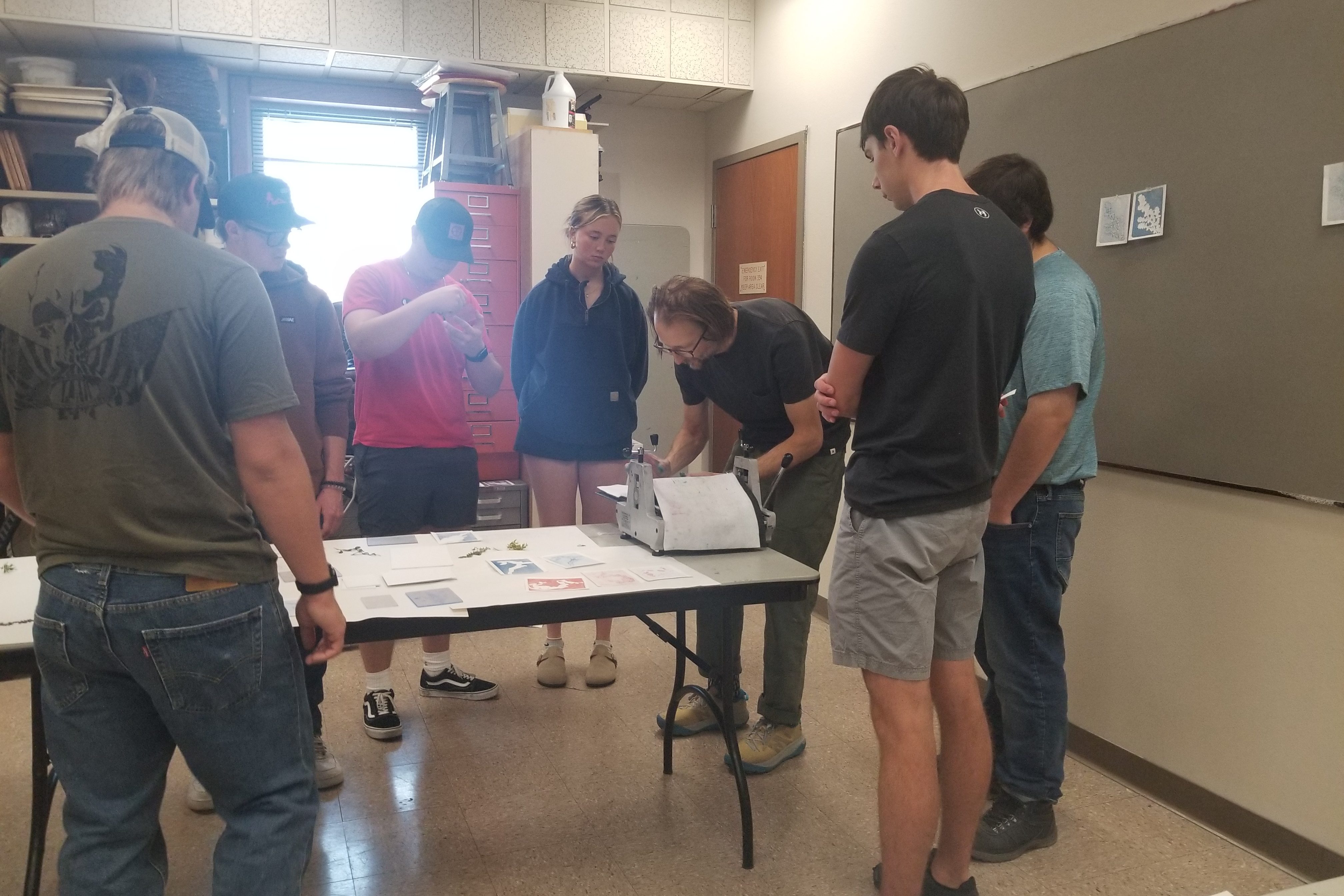
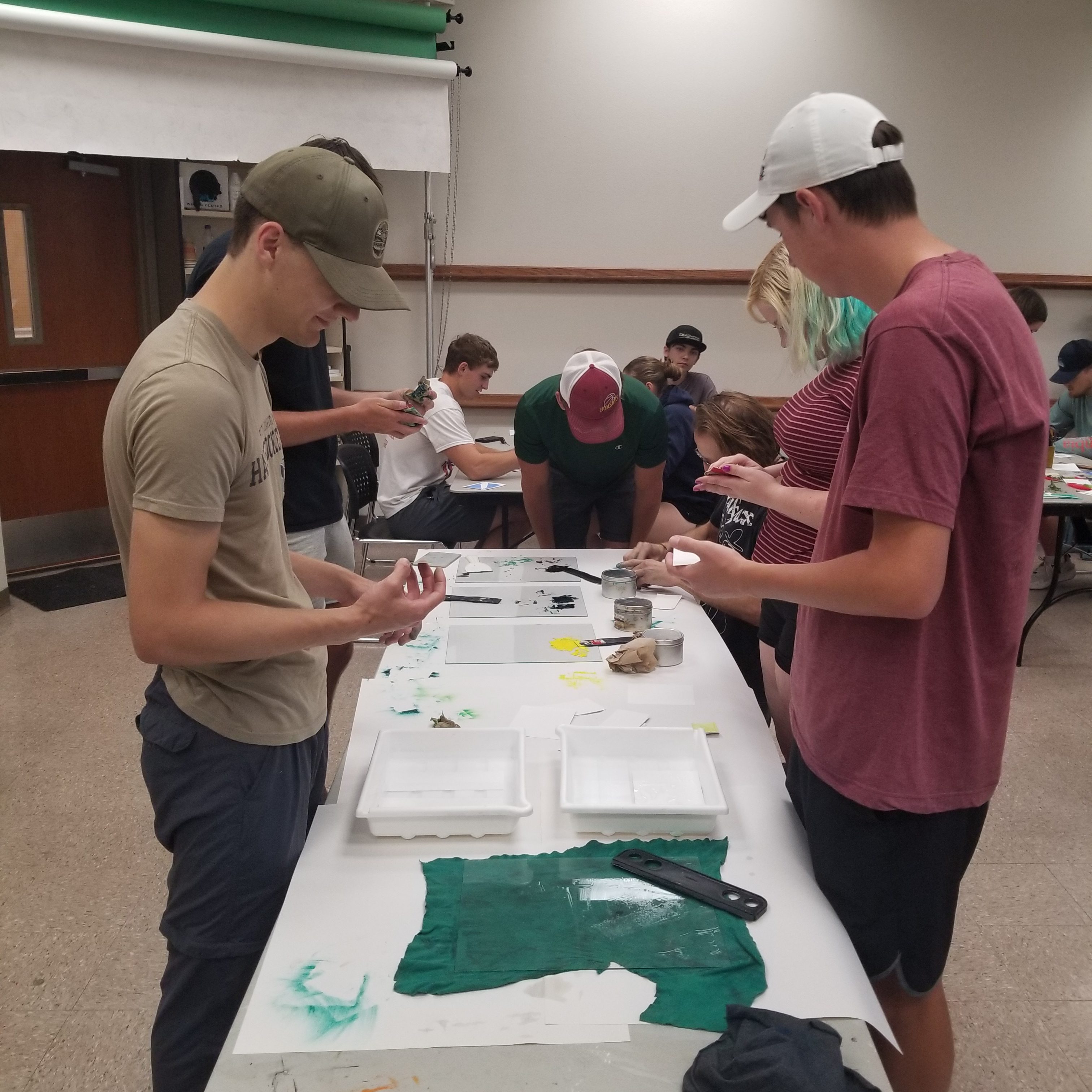
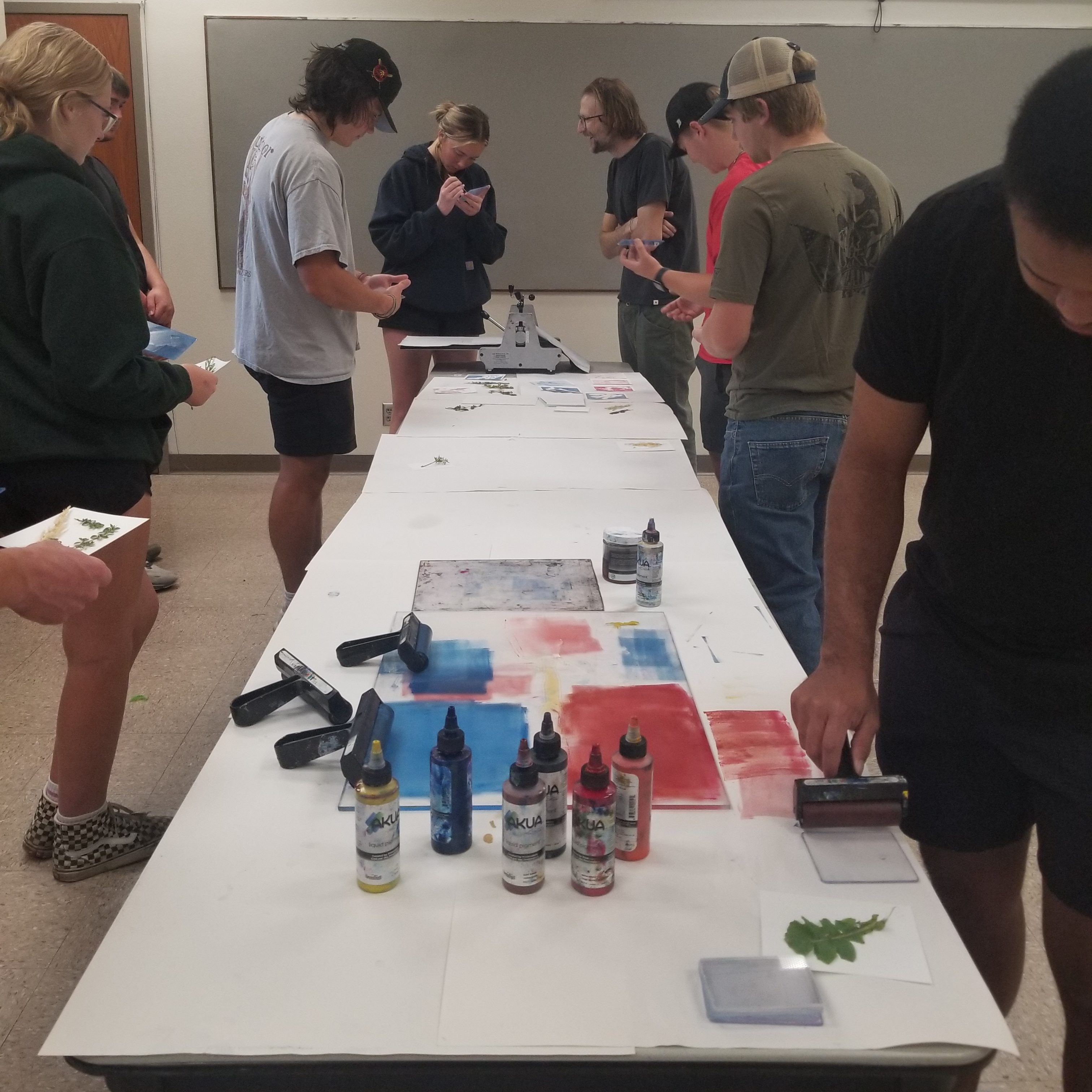
To incorporate a hands-on approach to printing in the class, I worked with our art professor, Matt Whitehead, to prepare an activity for students in the art room. We wanted to give students a chance to work with printing presses in a couple of different ways, to try using a typewriter and a Leroy lettering set, and to check out some old toy moveable type presses. These toy presses date from the 1940s and are no longer totally functional, so they were more on display than for use, but they still allowed students to get a better sense of what a moveable type printing press is like on a small scale.
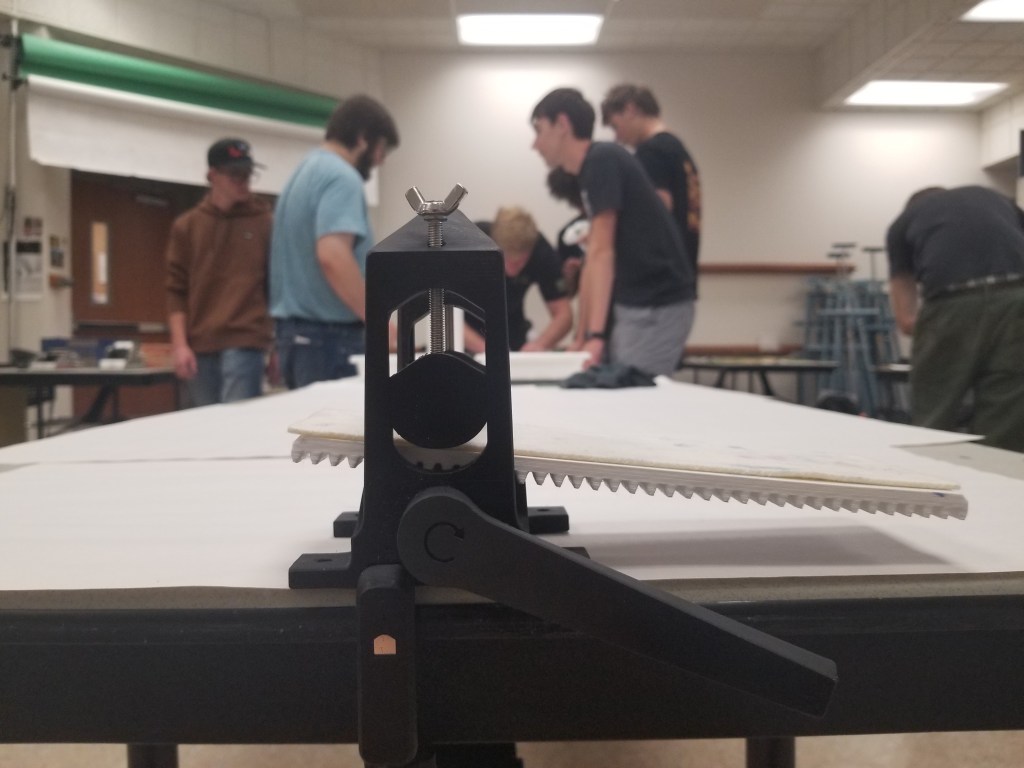
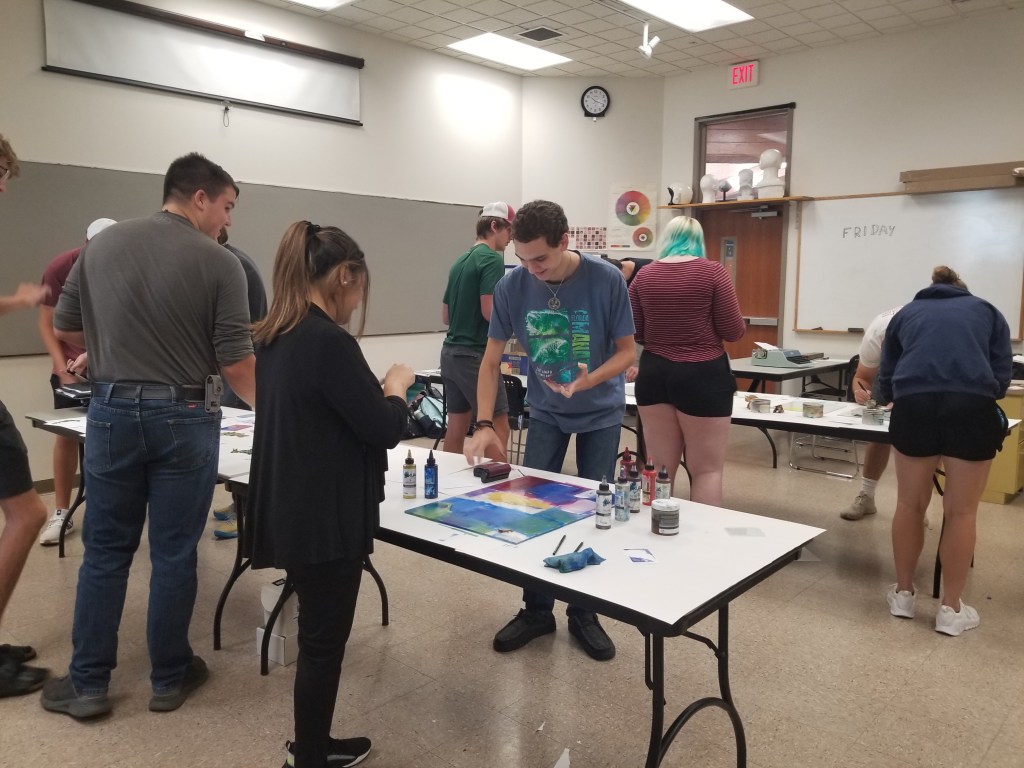
After a brief introduction to some basic printing techniques and explanation of what was available, students were given the freedom to explore these technologies in whatever order they wished. Some made an effort to try everything and even combined elements (the printing press with text from the typewriter or lettering set, for instance); some really focused in on one technology or technique and tried it multiple times or in multiple ways.

The printing technologies they experimented with aren’t ones they would normally use, so it gave them an opportunity to step back from the practices they take for granted and asked them to think about how to create and reproduce text and images in different ways. The differences between the technologies they used in this exercise and what they are accustomed to can highlight how easy it is to take the technology we rely on now for granted.
This exercise can also make it easier to see the constraints and possibilities of specific technologies. The printing presses we used during class may not, for instance, reproduce infinite copies of the same thing at the press of a button, but they re-introduce elements of materiality to the printing process. Many students commented afterward on the difficulty of using these technologies, in part because simply because they’ve never done so before but also – more importantly, perhaps – because using one of these technologies requires the user to get to know the machine and what it feels like to use it, in addition to thinking about the specific materials they’re using in the machine in ways that are much more intimate than digital manipulation or even photocopying.

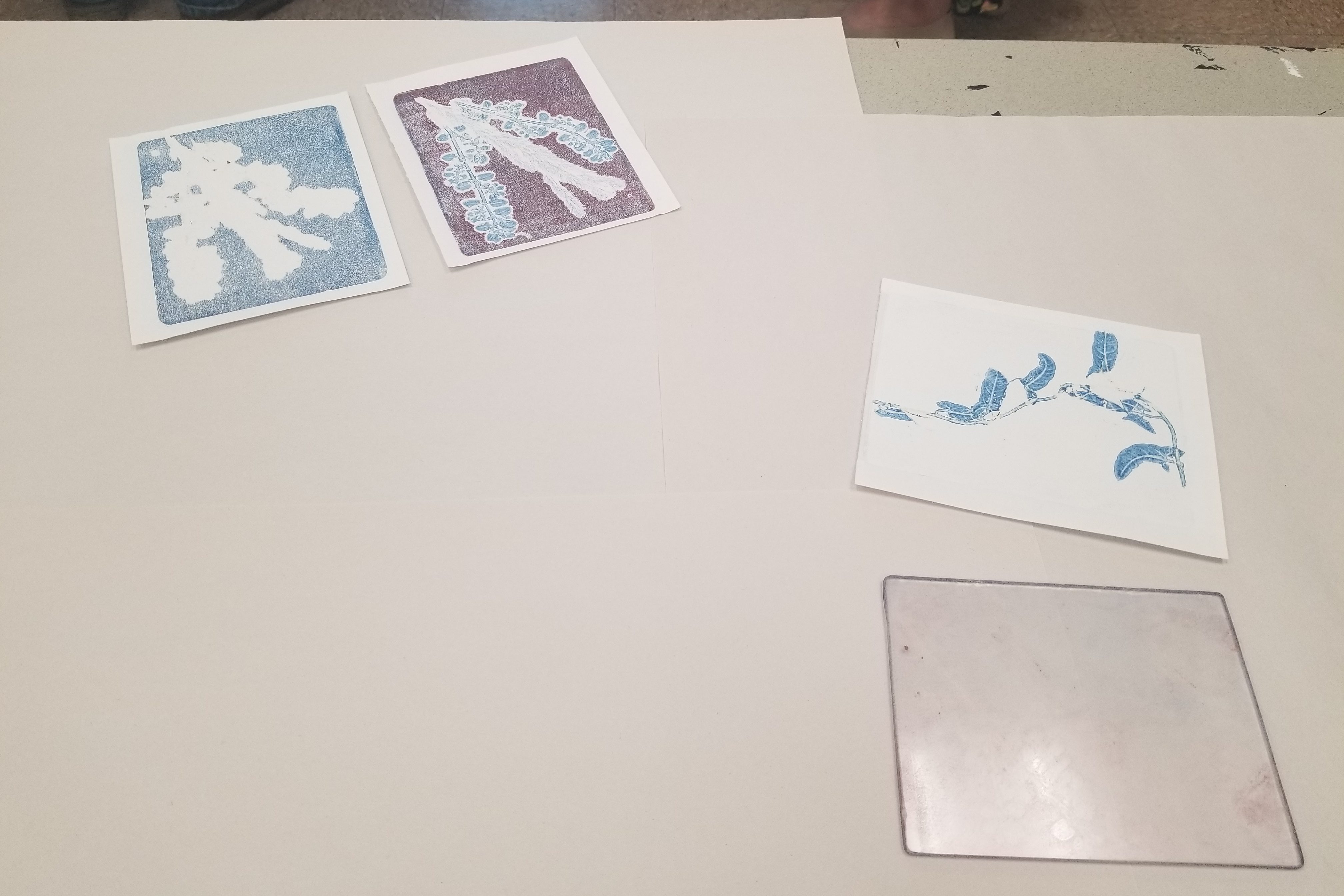
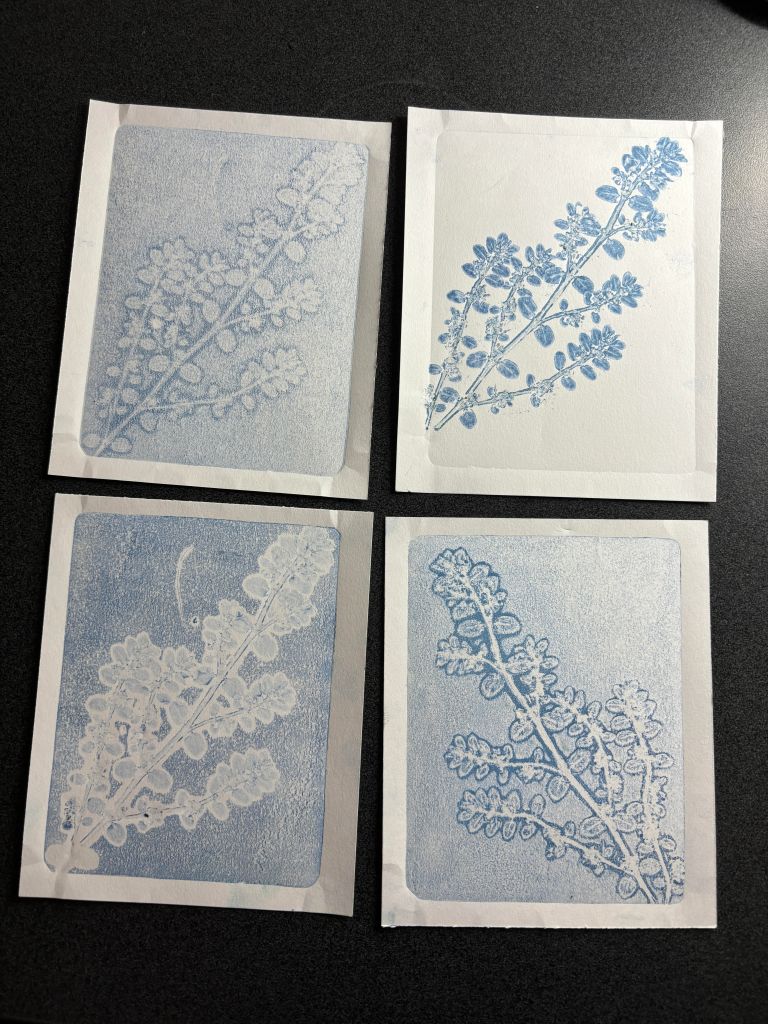
Ultimately, students seem to have enjoyed the experience of creating art using these technologies. Several came away with pieces they value that they are sharing with friends or planning to keep. It was a fun and sometimes meaningful exercise in expanding their sense of what they can do with both art and technology.
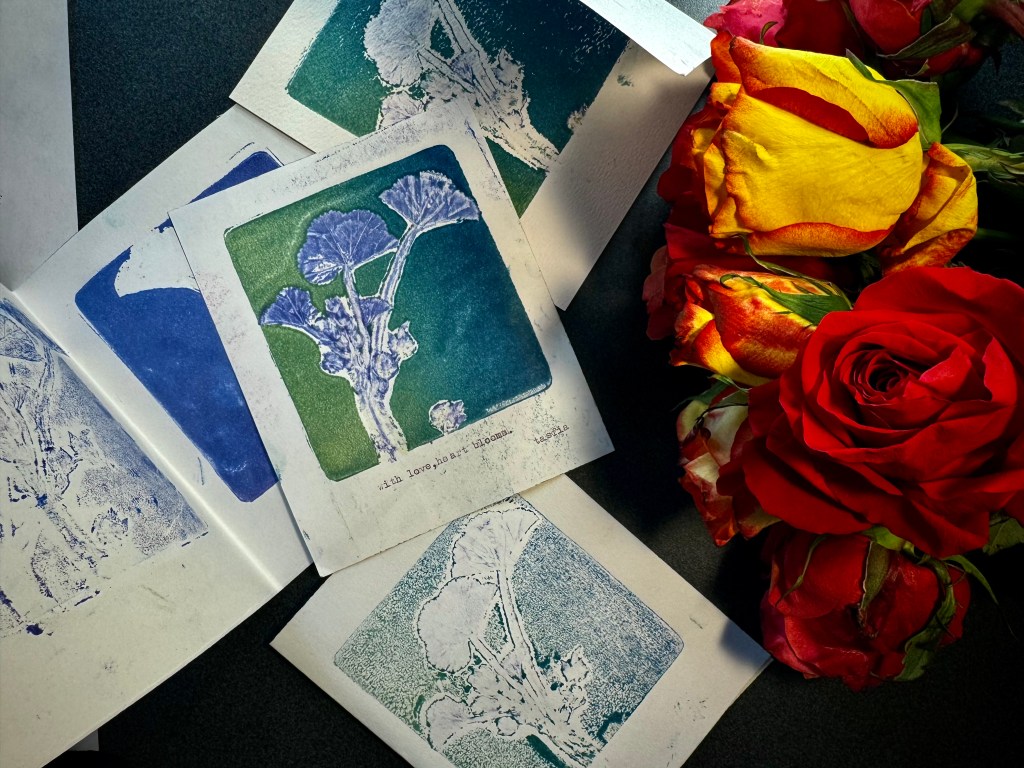
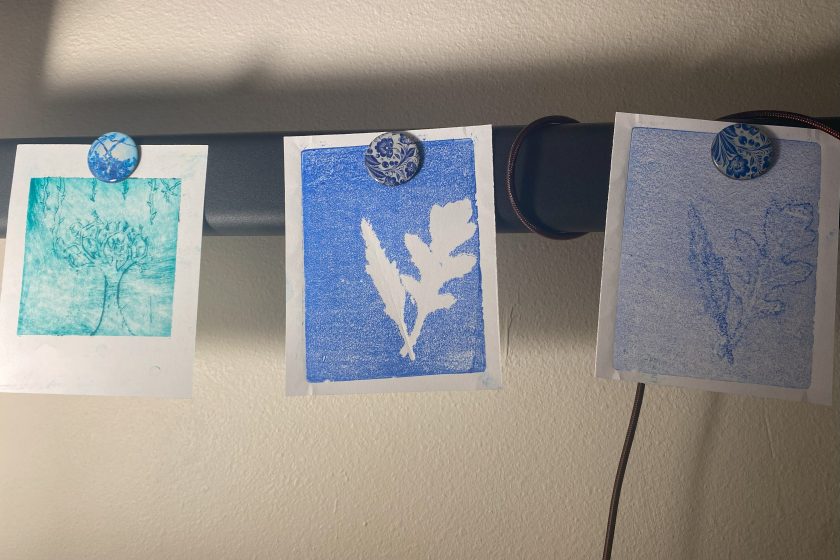
When we stop and think about it, of course it’s obvious to note that art is always made using technology (even pencil drawings require the technologies of the pencil itself and of papermaking), but there’s a tendency to separate art from tech, to see one as all about feeling and the other as devoid of feeling. This exercise challenges that division and hopefully provides students with a new perspective on not just these unfamiliar technologies but on the technologies they use every day.
Thanks to all of the students for experimenting and sharing their work and to Matt Whitehead for help with both planning these days in the art room and guiding students through the activities.
Below are even more pictures of the students at work and some of their creations.



 The Novum
Students experimented with typewriters, lettering sets, and mini presses in this hands-on printing activity bridging art and technology.Definitely a memorable and creative learning experience!A very good job.
LikeLike