2025 SURF Artist in Residence Showcases Interactive Sculptures at Mines APEX Gallery

Apex Gallery, art, Events, Guest Speakers

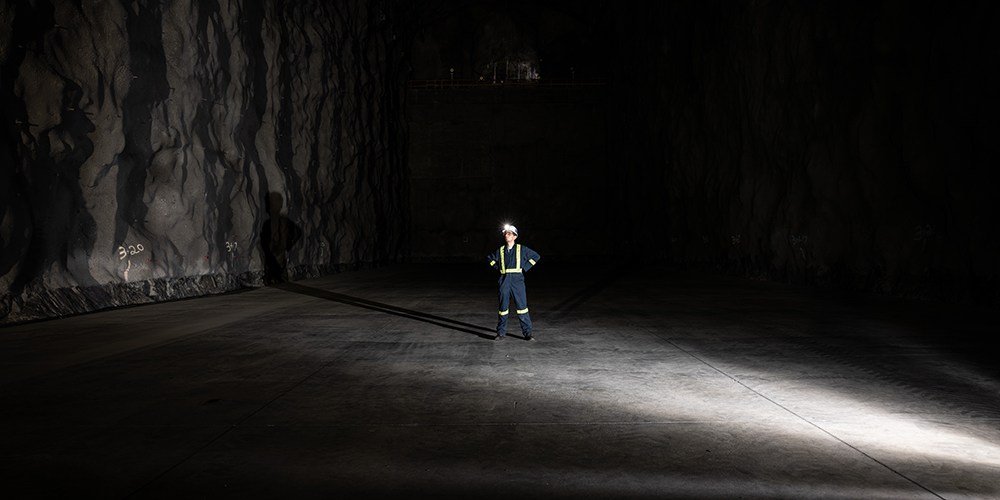
Last summer, Washington, D.C.-based artist Chris Combs swapped his urban studio at the Otis Street Arts Project for one that required a 10-minute open-cage elevator ride, personal protective equipment, and a brass tag etched with his name, indicating his presence nearly a mile underground.

As the 2025 Artist in Residence (AiR) at the Sanford Underground Research Facility (SURF), Combs brings his unique experience to life through an interactive exhibition at the South Dakota Mines APEX gallery. The exhibition opens with a reception from 4:30 – 6:30 p.m. on Friday, Jan. 23.
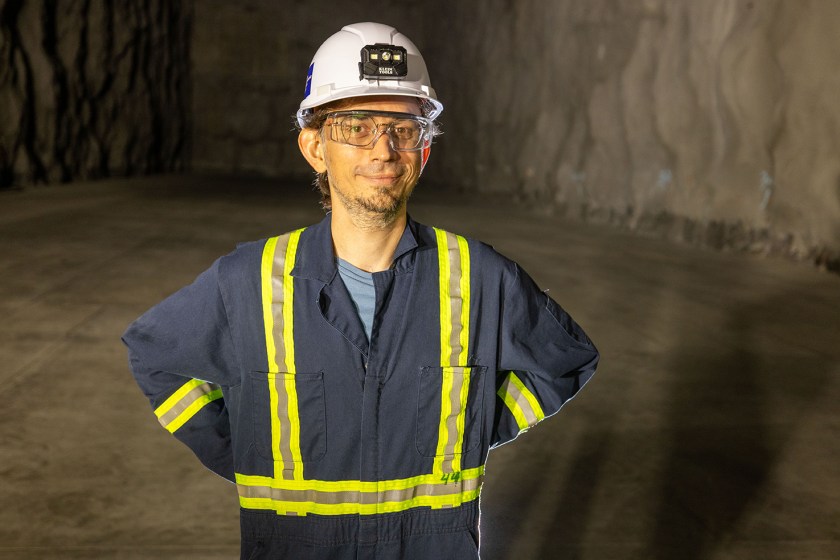
Photo credit: Matt Kapust, SURF

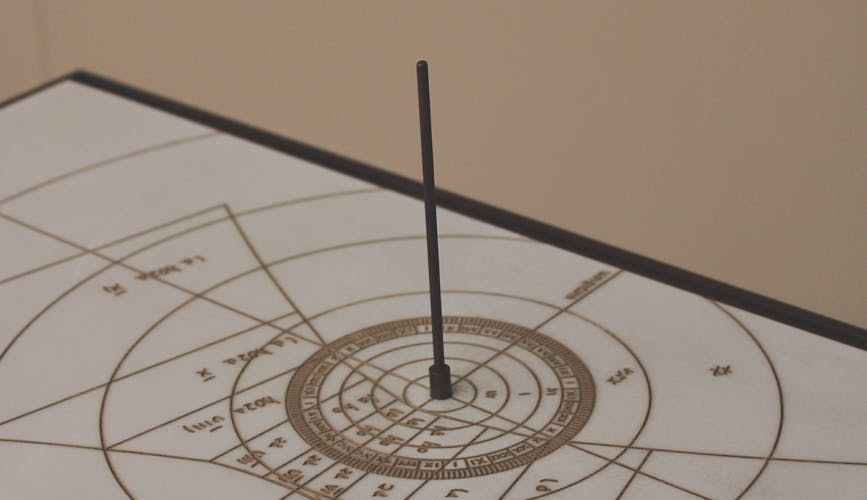
The show will feature interactive, time-based sculptures crafted from found objects, metal, wood and other industrial materials—many of them salvaged during Combs’ time at the Sanford Underground Research Facility (SURF) in Lead. By weaving discarded materials into his work, he aims to echo the layered history of the Homestake Mine and its evolution into a world-class underground laboratory, a dual legacy that drew him to apply for the SURF AiR program.

“I wanted to see firsthand the machinery of particle physics, and the human ‘machinery’ that constructs and maintains it nearly a mile underground in a dusty former gold mine with flood-marked walls,” Comb said. “In my art, I think a lot about how technologies have changed our world, and Homestake/SURF is two rounds of that: first, the transformation of a mountain into 370 miles of tunnels and drifts, and then the transformation of that mine into a container for globe-spanning experiments. The idea of astrophysics occurring a mile underground was very intriguing.”
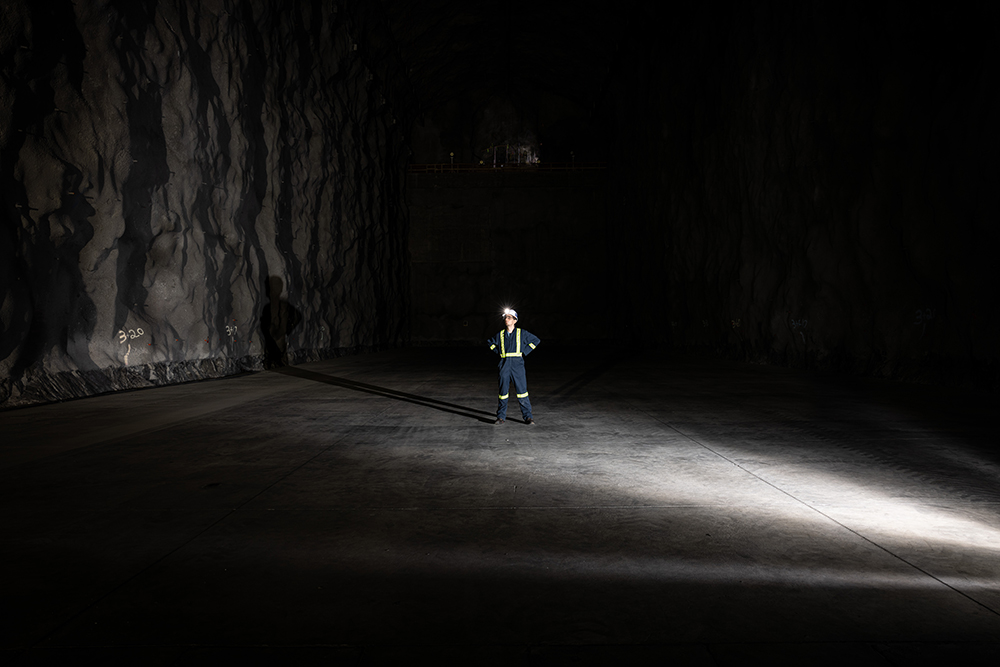
Photo credit: Stephen Kenny, SURF

Combs creates his pieces with the goal of having audience interaction. “I am lucky to get to make interactive artworks, where pushing a button or inserting a metal ball makes something happen,” he said. “At least for me, actively participating helps me remember it later. This extra little conversation between an artwork and its viewer also offers a challenge and a reward: do you dare to touch the thing? If so, here is an unexpected result. I hope that my artworks reward your curiosity.”
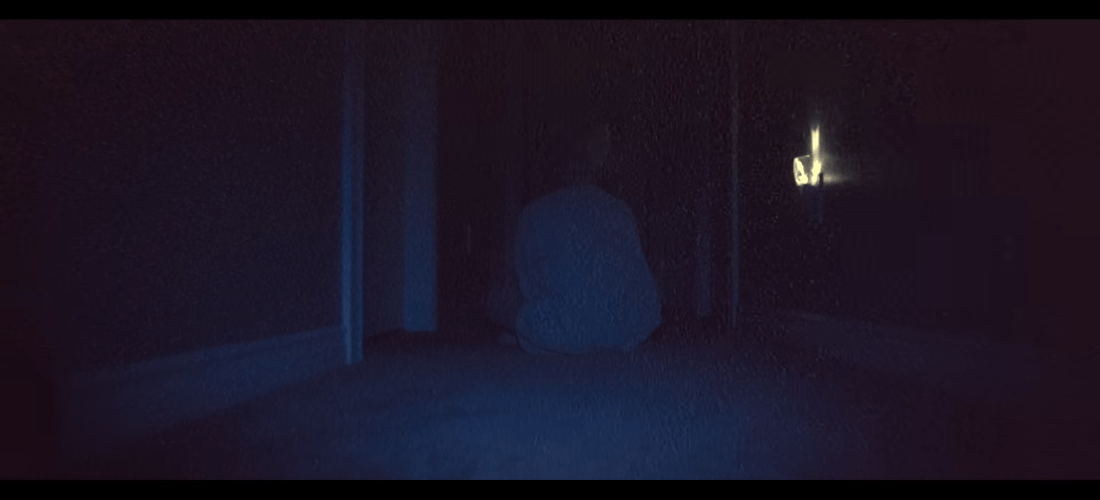
Measuring Fear: What the Science of Scare Can – and Cannot – Tell Us

Film, horror, Humanities, science

By Christy Tidwell

The Exorcist. Hereditary. The Ring. Texas Chain Saw Massacre. These are often named some of the scariest movies out there. They’re also among the most popular horror movies, ones that are watched and re-watched, considered classics. Horror movie fans want to be scared, after all.

But what makes these movies – and others like them – so scary? And which is really the scariest?

Since 2020, the Science of Scare Project has run an experiment to try to answer the second of these questions. The project asks a panel of 250 people to watch horror movies while measuring their physiological responses to them and then ranks the scariest movies based on those responses. In past years, they have relied simply on heart rates, but – after some criticisms from horror fans that this emphasizes only one sudden type of fear – they have updated this for 2023. Now their study includes not only heart rate as way to measure excitement and fear but also heart rate variance, arguing that “the lower the heart rate variance the more stressed our audience members became, a good indicator of slow burn fear and dread.”

Native Science: Interconnection, Local Knowledge, & Memory

Native American, science

By Christy Tidwell

November is National Native American Heritage Month, a chance to acknowledge the history and living culture of Native American peoples. As a science, technology, and society program, this seems a good opportunity to discuss Native science, also called Indigenous science or Traditional Ecological Knowledge (TEK). As the varied names for this indicate, it’s not one monolithic entity but incorporates ideas from many perspectives. It is both traditional, building on Native peoples’ long histories of learning about and sharing knowledge, and contemporary, an ongoing part of living in and with the world.

Photo by Ponciana via Pixabay

What is Native Science?

Gregory Cajete (Santa Clara Pueblo) coined the term, and he describes Native science as “a metaphor for a wide range of tribal processes of perceiving, thinking, acting, and coming to know that have evolved through human experiences with the natural world.” Cajete says, “Native science is born of a lived and storied participation with the natural landscape. It is the collective heritage of human experience with the natural world” (2). In other words, Native science combines human and nonhuman and describes what humans know by relating to, communicating with, and experiencing the world. It is not a science based on laboratory experiments or anonymous review.

This contrasts with Western ideas of science by emphasizing connection rather than separation, relationships rather than objective distance. Native science sees people as part of the world they’re learning about, not outside it, and therefore people cannot be removed from scientific work. If you’ve been trained to think of science as necessarily objective and tainted by any hint of subjectivity or bias, this may sound unscientific. However, as Leila McNeill points out in a Lady Science interview, “It really just means that it’s grounded in this specific experience of this specific group of people in this specific place, which can actually give us better results than if we were looking at something that is looking at large, broad questions that they’re trying to apply to everything that just kind of obscures the particular.”

Understanding as Comfort: “The Sciences Sing a Lullabye”

Poetry

By Christy Tidwell

As I noted in my earlier discussion of Robert Kelly’s “Science,” poetry and science are not as separate as we might often think: they are both creative, and they both challenge us to see the world in new ways. In “The Sciences Sing a Lullabye” (2007), Albert Goldbarth illustrates another similarity between science and poetry by personifying the sciences (specifically physics, geology, astronomy, zoology, psychology, biology, and history) and imagining them as comforting figures.

Geology says: It will be all right.

Albert Goldbarth, “The Sciences Sing a Lullabye”

It is comforting to think, as Physics tells us, that our atoms will “dance / inside themselves themselves without you,” or, as Geology says, that “All of the continents used to be / one body. You aren’t alone.” Meanwhile, Astronomy comforts the reader with a reassurance that “the sun will rise tomorrow” while History hands us “the blankets, layer on / layer, down and down.” In other words, the processes of our bodies and of the world will continue, even without our attention. And science is what provides the evidence of this continuation.