2025 SURF Artist in Residence Showcases Interactive Sculptures at Mines APEX Gallery

Apex Gallery, art, Events, Guest Speakers

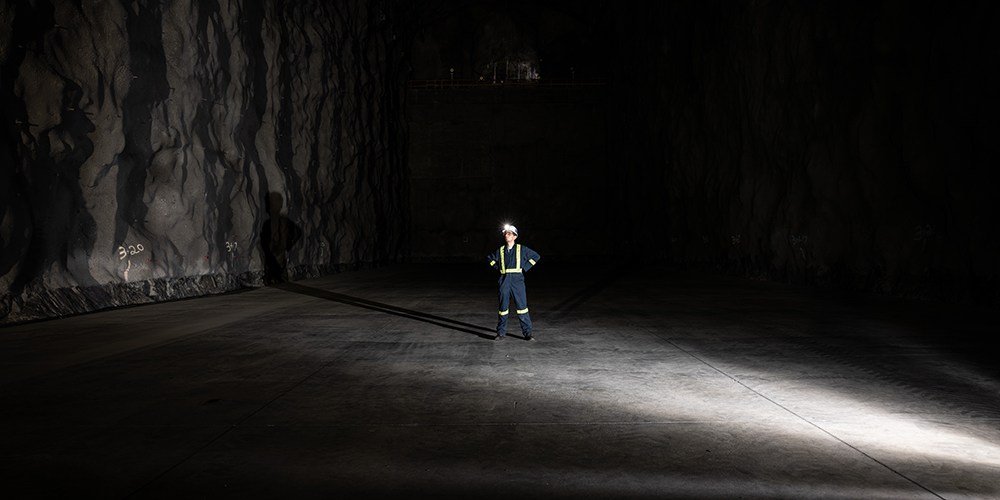
Last summer, Washington, D.C.-based artist Chris Combs swapped his urban studio at the Otis Street Arts Project for one that required a 10-minute open-cage elevator ride, personal protective equipment, and a brass tag etched with his name, indicating his presence nearly a mile underground.

As the 2025 Artist in Residence (AiR) at the Sanford Underground Research Facility (SURF), Combs brings his unique experience to life through an interactive exhibition at the South Dakota Mines APEX gallery. The exhibition opens with a reception from 4:30 – 6:30 p.m. on Friday, Jan. 23.

Photo credit: Matt Kapust, SURF

The show will feature interactive, time-based sculptures crafted from found objects, metal, wood and other industrial materials—many of them salvaged during Combs’ time at the Sanford Underground Research Facility (SURF) in Lead. By weaving discarded materials into his work, he aims to echo the layered history of the Homestake Mine and its evolution into a world-class underground laboratory, a dual legacy that drew him to apply for the SURF AiR program.

“I wanted to see firsthand the machinery of particle physics, and the human ‘machinery’ that constructs and maintains it nearly a mile underground in a dusty former gold mine with flood-marked walls,” Comb said. “In my art, I think a lot about how technologies have changed our world, and Homestake/SURF is two rounds of that: first, the transformation of a mountain into 370 miles of tunnels and drifts, and then the transformation of that mine into a container for globe-spanning experiments. The idea of astrophysics occurring a mile underground was very intriguing.”
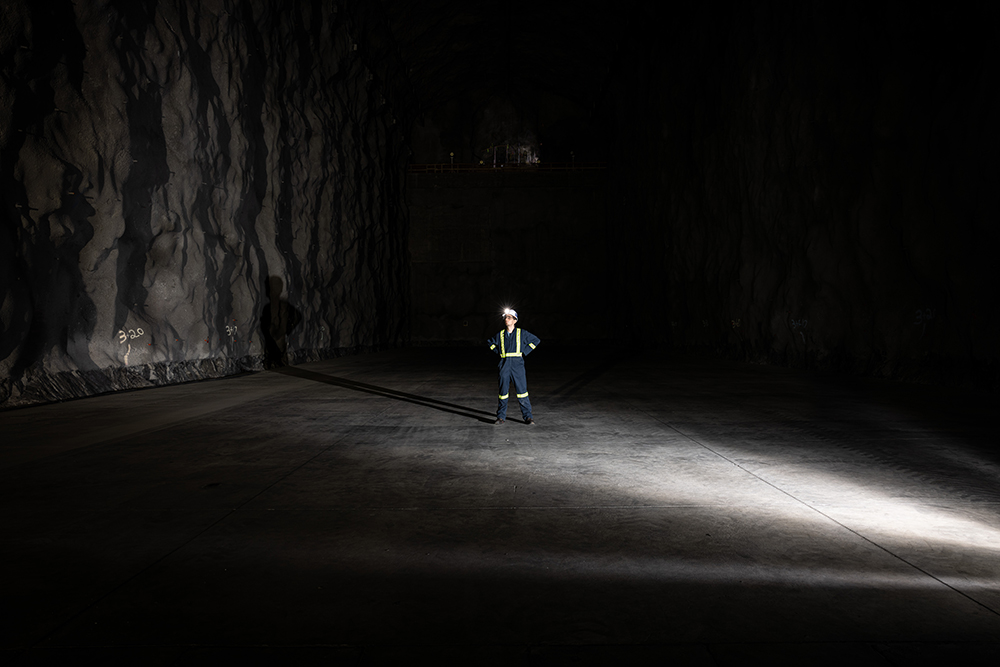
Photo credit: Stephen Kenny, SURF

Combs creates his pieces with the goal of having audience interaction. “I am lucky to get to make interactive artworks, where pushing a button or inserting a metal ball makes something happen,” he said. “At least for me, actively participating helps me remember it later. This extra little conversation between an artwork and its viewer also offers a challenge and a reward: do you dare to touch the thing? If so, here is an unexpected result. I hope that my artworks reward your curiosity.”
Where Science Happens: Dr. Kathleen Shepherd on Science & Sociability in Egyptology

Guest Speakers

By Olivia Burgess

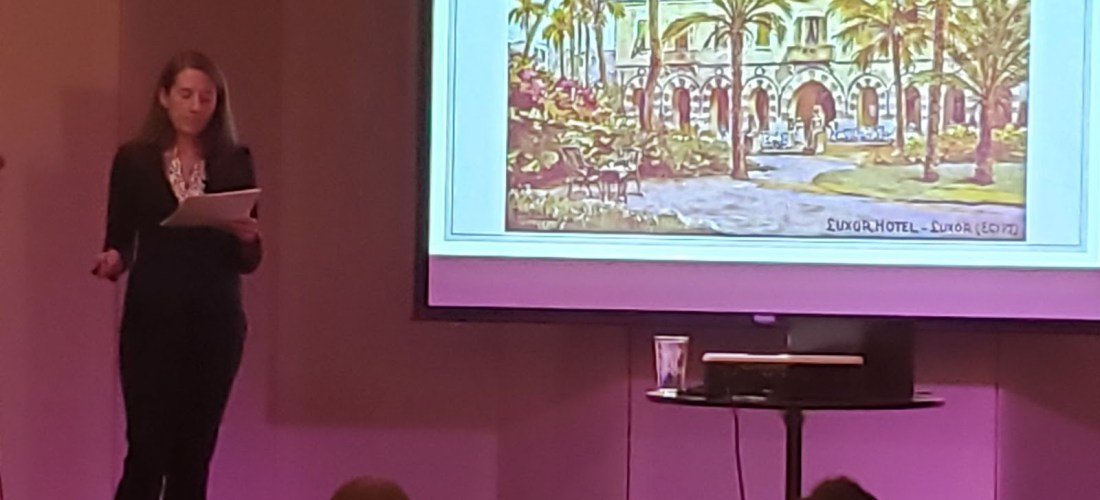
When you think about the development of science, you might envision a laboratory, but you probably don’t think of a bar, a hotel lobby, or a boat. However, our recent guest speaker, Dr. Kathleen Sheppard, argues that the informal spaces where scientists meet to discuss their work, network, and simply relax are just as important if not more important than formal sites like labs, museums, and universities. 

Dr. Sheppard is an Egyptologist and historian of science who specializes in late 19th-century and early 20th-century British and American Egyptology. During her visit from Nov 15th-16th, 2021, she met with the students in STS 201: Introduction to Science, Society, & Society, gave a Brown Bag presentation, and topped off her visit with a STEAM Café talk.  

Ritualizing Robots: Dr. Qin Zhu on Ethics & Human-Robot Interaction

Guest Speakers

By Olivia Burgess

If children are trained to treat robots with respect, saying “Excuse me, Alexa” instead of “Hey, Alexa?”, would they in turn treat other humans more respectfully? This is one of the many intriguing questions that interests Dr. Qin Zhu, who was the first speaker in our STS Speaker Series. 

On March 30th, Dr. Zhu gave a virtual campus talk on his research titled “Ritualizing Robots: A Confucian Approach to the Design of Ethical Human-Robot Interactions.” Dr. Zhu introduced a fundamental concept in STS: technologies reflect human values. For instance, a speed bump in a quiet neighborhood slows you down because people want to create a safe environment. If you do not slow down, your car may be damaged, which is both a physical and social punishment for disregarding the value of safety.

The same applies to robots: they are designed for a purpose, they embody human values, and how we interact with them says a lot about ourselves as moral beings. For instance, if you hit a robot, you may be more likely to hit another human.

Guest Presentation: Ritualizing Robots by Dr. Qin Zhu

Events, Guest Speakers

We are happy to welcome Dr. Qin Zhu of the Colorado School of Mines as a guest speaker this week! On Tuesday, March 30th, from 7-8 pm (Mountain time), he will address ethical issues that arise from humans interacting with robots. He will draw on both Confucian ethics and research from human-robot interaction studies. For more, see the poster below! (Zoom link)