Reflections on Service Learning Lessons with Trinity Eco Prayer Park in Dr. Haugtvedt’s Fall 2025 STEM Communication for Public and Technical Audiences Course
Mario Dominguez: Restoring a Prairie, One Volunteer Step at a Time
When our class partnered with Trinity Eco Prayer Park this semester, I expected a simple clean-up project. What I discovered instead was a living example of how small ecological changes can ripple through an entire landscape. One of the most striking lessons came from learning how invasive species, especially Canada thistle, can spread quickly and choke out native grasses. These native plants aren’t just background scenery; they anchor soil, trap moisture, and support insects, birds, and even the microorganisms underground. Removing an invasive patch doesn’t just make the park look nicer, it helps restore the natural cycles that keep the prairie healthy.
Our time in the park also revealed how restoration is as much about people as plants. Every volunteer who pulled weeds or cleared debris added visible progress, but they also became connected to the ecosystem they were helping. Science communication often talks about “ecosystem services,” but seeing the concept firsthand–cleaner soil, healthier growth, and a space that brings peace to visitors–made the science feel personal. Trinity Eco Prayer Park isn’t just a project site; it’s a reminder that anyone can make a meaningful impact when they understand the science behind their actions.
By the end of the semester, our team didn’t just complete a service project, we contributed to a small but powerful example of community-driven ecological restoration. And that’s what I hope others see when they visit the park: a place where science, stewardship, and community come together to revive a prairie one season at a time.
Lucas Geiger
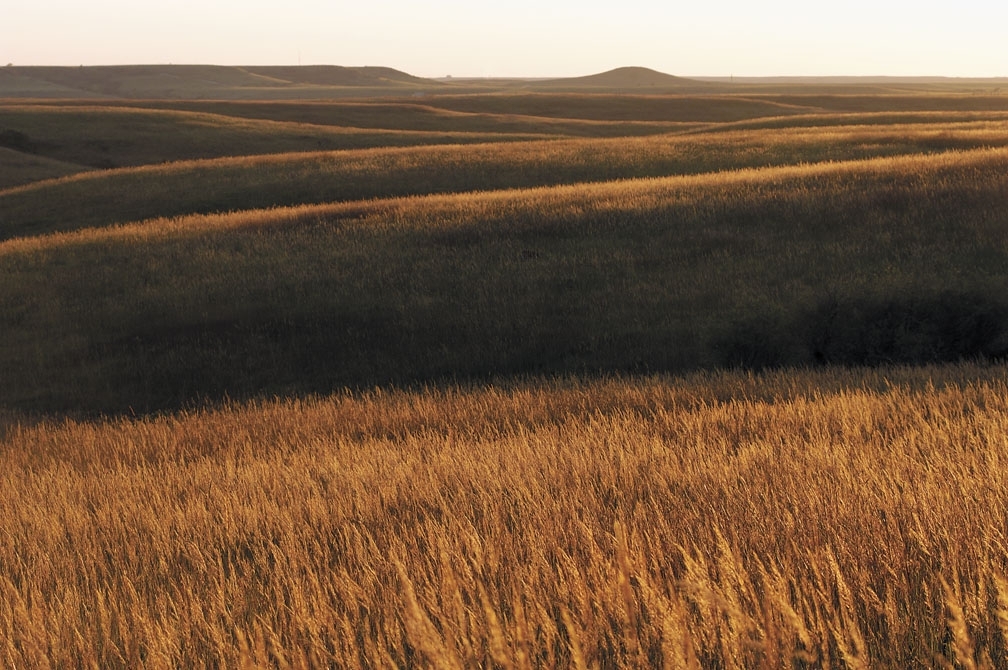
While our team was researching possible alternatives for the Kentucky Bluegrass lawn at Trinity Eco Prayer Park it became clear that the simplest and most sustainable solution could be found right outside of town. We thought that native South Dakota grasses like prairie dropseed, western wheatgrass and buffalo grass are naturally built for the local climate and would be great options for the park’s ideology. In their own ways, they can all handle droughts, bounce back after foot traffic and survive through large temperature swings. Creating a mix of the three seemed like the best option to maximize each species’ strengths and weaknesses. This is contrary to the existing Kentucky Bluegrass which is unable to take care of itself without significant work.
Choosing native grasses for the park isn’t just a design choice, it fits in with the park’s ecological values. These grass species will help improve the existing soil’s health, support the local insect diversity and create a landscape that changes more naturally throughout the year. Our goal for the lawn conversion was to give the park a stronger connection to South Dakota’s natural landscaping by replacing one of the last non-native areas in the park.
Jameson Mallon-Echols
During our service learning project with Trinity Eco Prayer Park, our team explored how native South Dakota grasses could better support the park’s long term sustainability goals. The park has a strong commitment to protecting local ecosystems and one of the most meaningful parts of our work was seeing how even a small change like switching to native grass species can make a real environmental impact. Native grasses require less watering, less mowing, and no commercial fertilizer, which reduces maintenance costs while improving soil health and biodiversity.
Much of my role focused on science communication and research of native plant species. This means translating research into clear, accessible information for the community and using resources like our Devereaux Library online database to find research that better supports our native grass goals. Instead of just listing scientific facts, I worked on explaining why native plants matter in ways that connect with everyday experiences. For example, making the park more resilient to flooding or keeping the lawn greener without chemicals. Helping bridge the gap between scientific research and public understanding showed me how important communication is when trying to relay scientific information to the public.
What stood out to me most was the park’s dedication to long term environmental responsibility. Their willingness to learn about native species, rethink traditional landscaping, and make decisions based on ecological research made this project feel purposeful. It showed that sustainability isn’t just a concept. It is a series of choices that communities make to care for the land they rely on.
Jerry Sittler
I’m a junior majoring in Computer Science. Most of the time, my work is spent writing, workshopping, and debugging code. So doing a project for Trinity Eco Prayer Park, something completely outside my usual scope, was not something I expected. With so many Mines students majoring in Mechanical Engineering, the odds were pretty high that I’d end up on a hands-on project. Instead of feeling out of place, this project gave me the chance to develop a new skillset: learning how to adapt and apply technical thinking to situations far beyond a computer screen.
There were a handful of interesting challenges during our project, from collaborating with teammates who had entirely different majors and strengths, to dealing with how broad the considerations really are for something as “simple” as planting new grass. I learned the value of trusting teammates with their parts of the work while still bringing everything together into one cohesive plan. Most of my major classes only use groups of two, so coordinating a larger team was a new experience. I also realized that understanding a client’s values can completely shift the direction of a technical recommendation. Instead of searching for the “best” grass species in a traditional sense, we focused on how to implement grasses the client preferred without harming the long-term health of the landscape.
Through this project, I realized that technical skills translate beyond computers and equations; they can help solve real problems for real people. Working with Trinity Eco Prayer Park taught me how to listen to a community’s goals and adapt our research to support them. Whether that meant rethinking what “best” actually means or letting go of a single correct answer, this experience showed me that you can make a meaningful impact in unexpected places.
Bios:
Mario Dominguez is a Junior studying Industrial engineering at South Dakota School of Mines. As president of his campus SHPE chapter, he is passionate about community engagement and sharing STEM knowledge in accessible ways. His work with Trinity Eco Prayer Park strengthened his interest in environmental stewardship.
Lucas Geiger is a Mechanical Engineering Junior at South Dakota Mines. He plays football for the school and enjoys lifting. Most of his free time is taken up by football and school so there’s not much else he can do while he’s playing.
Jameson Mallon-Echols is a Sophomore Mechanical Engineering major at South Dakota School of Mines and Technology. He plays football for Mines and he is originally from Houston, Texas.
Jerry Sittler is Junior majoring in Computer Science at South Dakota School of Mines. He has grown up in an agricultural working family, which has given him a basic understanding of plants and soil.
 The Novum