What does it sound like to sound educated yet know nothing? In a 17th-century comedy by Molière, Le Bourgeois Gentilhomme (“The Middle-Class Aristocrat”), a rich cloth merchant tries to imitate aristocratic education and speech. He takes philosophy classes and learns that his normal expressions “require a little lengthening” – he must learn how to stretch heartfelt statements (“your lovely eyes make me die of love”) into aristocratic contortions (“Of love to die make me, beautiful marchioness, your beautiful eyes”; “Your lovely eyes, of love make me, beautiful marchioness, die”; “Die, your lovely eyes, beautiful marchioness, of love make me”; “Me make your lovely eyes die, beautiful marchioness, of love”). The joke is on him, as his rhetoric tutor cruelly exploits his easy admiration for excessive, voluminous, amplitudinous, prolix, verbose, copious speech.
The example of the Bourgeois Gentilhomme is echoed in a new development in AI. Recently, OpenAI released ChatGPT, a large-language model (“LLM”) AI that appears to have tremendous facility at composing passable long-form texts. As an educator in higher ed, I don’t think that writing pedagogies are remotely ready yet for the instructional challenges posed by this technology. The main concerns that academics have had about AI and collegiate writing have to do with academic integrity. These are important concerns and addressing them will probably have massive relevance in the years to come.
However, not all academics are especially concerned by the threat posed by AI language models. First, some academics express confidence that their domain-specific knowledge is too inscrutable for a machine to understand. Second, others suggest that the strength of their bonds with their students would make it impossible for their students to make an unnoticed switch to a different voice. Whether the first or second case is true, whether some content or character is indelible, there are finer, more constructive applications of LLMs to writing in higher ed.
Primarily, I focus on interpersonal communication: listening, nonverbal, verbal, and written. I’ve taught communication and presentation skills in business, STEM fields, and performance. I also enjoy working with other people’s writing and helping them refine their skills and ability to communicate efficiently.
What do you primarily research and/or teach?
Although I have taught business writing, advanced writing, composition, and literature classes, I have found my niche in the STEM/technical communications courses. Teaching especially STEM Comm II (ENGL 289) has allowed me to work with students to hone their writing and speaking skills in their areas of expertise and passion. Their excitement in their work is contagious.
And what drew you to this field?
Literally, a mentor and professor at USD lured me in, suggesting I pursue graduate studies and apply for a TA position. Initially, this was far from my plan; I had never planned to pursue a teaching career. However, as I finished my undergraduate degrees in English and Speech Communications, my husband was entering his second year of law school at USD, so we would be in Vermillion, SD, for two more years. Although I was skeptical, I decided to give grad school with a TA position a try. It worked out. I’ve been teaching for 36 years; 2023 marks my 25th year at SD Mines. Making and maintaining connections with students over the years is my favorite part of teaching.
What’s one of your favorite courses, topics, or specific texts to teach? Why?
I do enjoy working with students in written communication, but I love to work with them in all areas of interpersonal communication, focusing on verbal and nonverbal skills in presenting. Listening and thinking critically are also vital for success. Seeing students strengthen their skills and confidence in presenting in classes is rewarding, but hearing of their successes in applying communication strategies in their careers is the best.
What’s something you’ve done that you’re really proud of?
Raising our six kids with my husband and watching them grow into the adults they are makes me feel accomplished; however, I am so much prouder of the people they have become than I am of anything I have ever done. It’s pretty gratifying seeing them do the things I did or say the things I said to them as they were growing up now in their own relationships and raising their own children. I am also immensely proud of my three granddaughters and two grandsons and the people they are becoming. As parents, we may sometimes not realize the daily impact we have on our children. Seeing it coming through in their everyday lives brings me great joy. I do tease them that they have become me. Occasionally, I feel I may need to add an apology for that! Regardless, they were raised to meet high standards in both personal and professional relationships, and they have.
Tell us about a book you’ve read recently, a movie you’ve seen recently, or another work of art or media you’ve engaged with recently that you really enjoyed and would like to recommend.
My reading typically centers on light-hearted books that take me away from my surroundings. However, a recent book that sticks with me is The Nightingale by Kristin Hannah. It is an historical fiction novel focused on the lives of two sisters in France during World War II and their struggle to survive and resist the German occupation of France. The story of each sister’s struggle to survive and of their contributions to France’s war efforts as well as their difficulties in maintaining their relationship in the midst of war is inspiring yet unsettling.
Tell us something about yourself outside of work. What do you enjoy doing? What’s a detail about you that your students might not already know?
The best thing that ever happened to me was getting pushed down the steps at school in kindergarten. This was my first encounter with my future husband. He had made the big move from country school to town school as a second grader, and my sister had a crush on him. Naturally, therefore, he had to pick on her, but he mistook me for her on the school steps. So, I took the fall for her. Rookie mistake, but it worked out for him. Apparently, I got past that; we started dating when I was just out of 8th grade and were married eight years later. We grew up together in rural southeastern South Dakota, sharing our families, our farms, and our lives. Through our years together, people would ask him if he had always wanted six kids. His reply every time was, “No; I wanted two, but my wife wanted six, so we compromised at six.” He eventually conceded that it was the best compromise he ever made. Growing up on a farm and working the land and livestock with family taught me a profound love of and respect for both family and the outdoors. That love transferred easily to my own family and the Black Hills. We spend our time together camping, hiking the hills, and relaxing at the lake. It’s amazing the impact, literally, that a rough push in kindergarten can have on a person’s future.
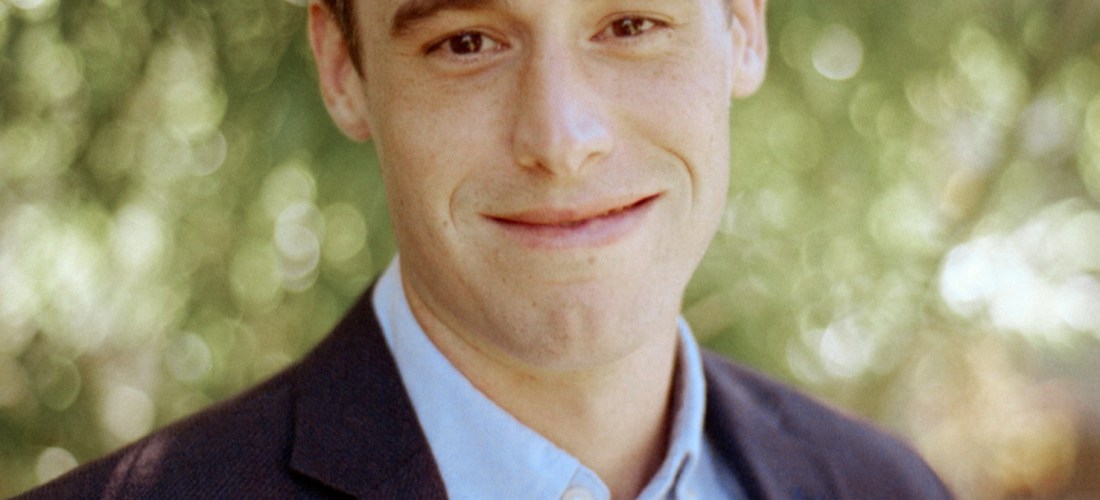
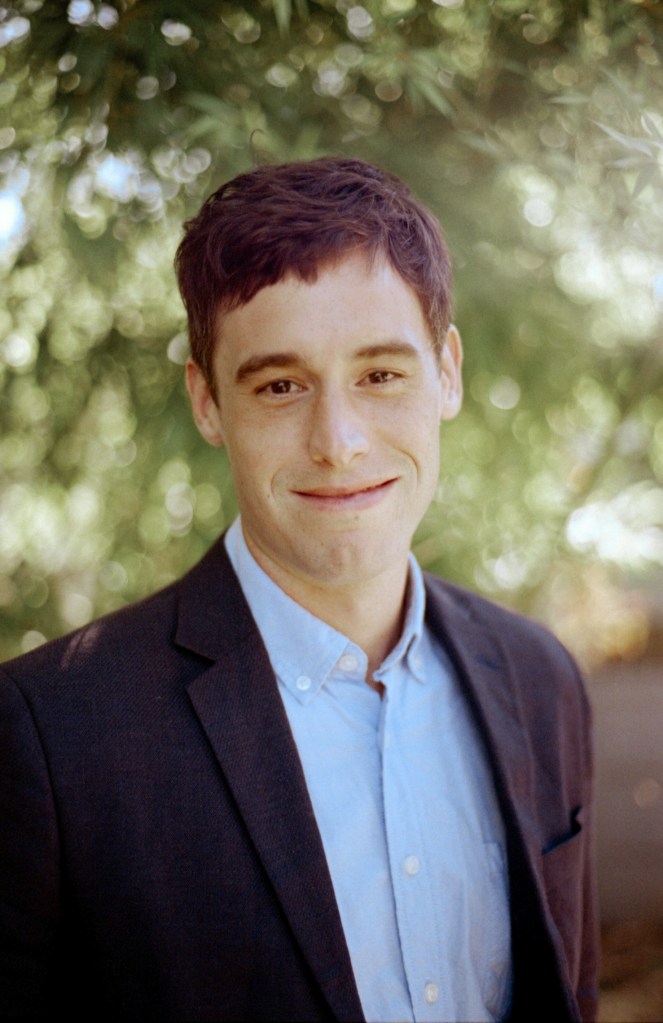
Paul Showler is Assistant Professor of Philosophy.
What’s your area of expertise? What do you primarily research and/or teach? And what drew you to this field?
When it comes to teaching and research, I am somewhat of a generalist, which is to say that I have wide-ranging interests and strive to incorporate a variety of philosophical methods and historical perspectives in both my writing and in the classroom. At SD Mines, I teach Introduction to Philosophy, Ethics, Logic, Philosophy and Literature, and I am excited to be teaching History and Philosophy of Science next fall.
Much of my past and current research focuses on problems in ethics or moral philosophy. Currently, I am especially interested in questions about the basis for our obligations to others. Most of us take it for granted that we have moral responsibilities towards other people, but what about non-human animals or machines displaying intelligence? I am also interested in questions about the nature of moral progress and the processes through which individuals and communities undergo moral transformations.
As an undergraduate student, I had the good fortune of attending a department with an active philosophy club. Among other things, the group organized a weekly “Bagel Tuesday” where students would get together to drink coffee, eat bagels, and talk philosophy. The sense of intellectual community that I discovered through my involvement in that club was something that drew me to philosophy. That and the free bagels.
What’s one of your favorite courses, topics, or specific texts to teach? Why?
Although I don’t have a favorite course, I especially enjoy teaching PHIL 100: Introduction to Philosophy. We get to cover a lot of ground in that class, which is both challenging and exciting. One of my favorite experiences as a teacher is when students make unexpected and illuminating connections between different philosophical topics, problems, or intellectual traditions. Because of its broad scope, I think that PHIL 100 lends itself well to this sort of syncretic thinking.
What’s something you’ve done that you’re really proud of?
In graduate school I was a three-time intramural floor hockey champion. And recently I have returned to the sport of ice hockey after a nearly fifteen-year hiatus.
What is your favorite book, movie, or other work of art or media? Why?
I am a big fan of the director Yorgos Lanthimos. For my part, I enjoy the dark humor in his films as well as their uncanny plots. The characters he depicts often exhibit bizarre behavior (such a brutal honesty or extreme pettiness) and inhabit worlds whose social norms differ in striking ways from our own. The result is something marvelously not-quite-human. If I had to choose, I would say The Lobster is my favorite film of his.
Tell us something about yourself outside of work. What do you enjoy doing? What’s a detail about you that your students might not already know?
Along with some of my colleagues in the Humanities and Social Sciences department, I have recently taken up the venerable sport of curling. For those who are unfamiliar, it is sort of like shuffleboard but played on a large sheet of ice.






 The Novum