By Markus Sonnenfeld
I became increasingly intrigued by wildfires in the western U.S given how crazy the 2020 season was. I have family in both Nevada and California, and the effects of that fire season still have impacts on them today. What I didn’t know at the time was that dry thunderstorms, which produce dry lightning, are a major cause for wildfires in the U.S. A recent example is the August Complex fire in 2020, which burnt about 470,000 acres alone in California, making it the state’s largest wildfire ever. It was created when dry lightning sparked multiple smaller fires that grew into a larger complex of fires. The average cost of fighting wildfires is $1 billion annually with millions of dollars in property loss as well (National Interagency Coordination Center (NICC),ND).

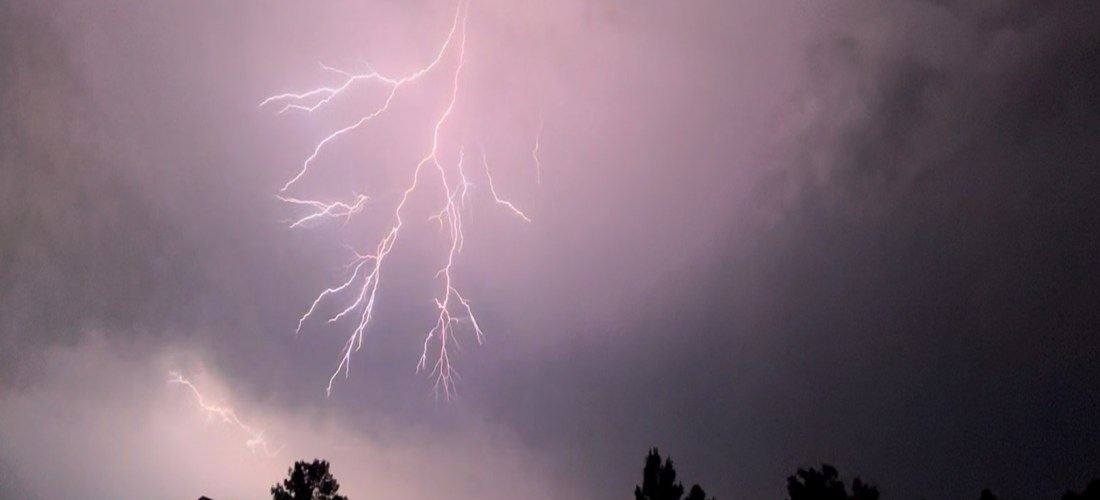
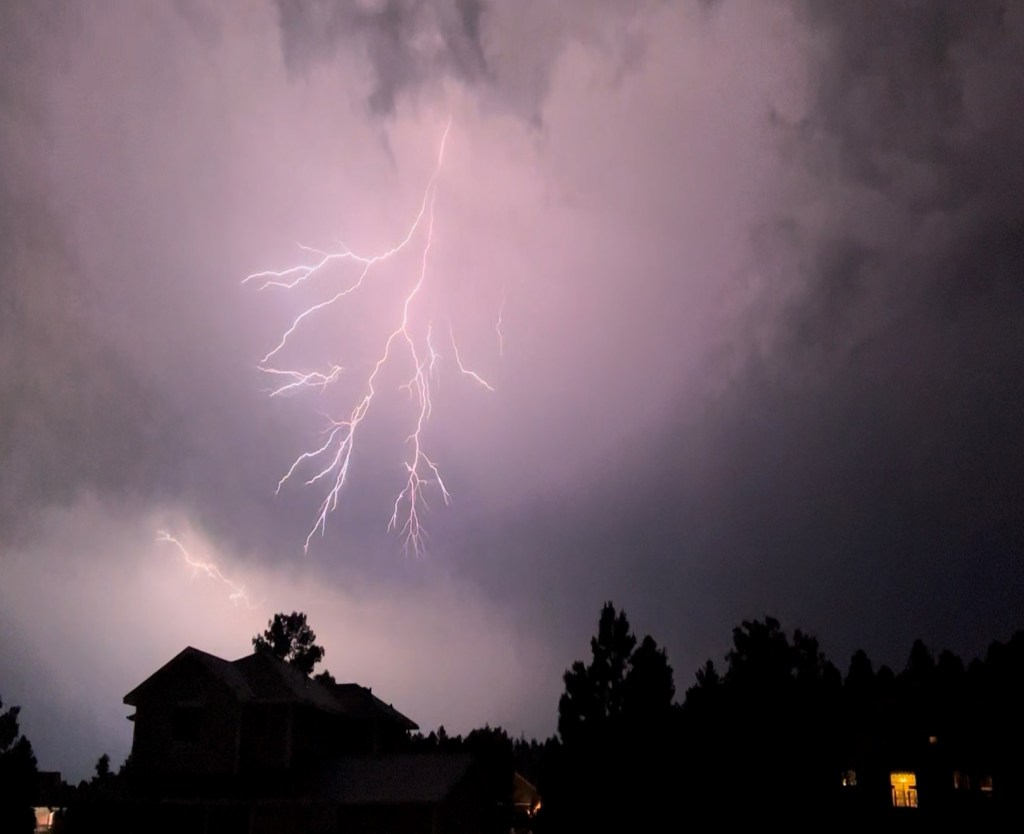
When imagining thunderstorms, most people would probably picture a “wet” thunderstorm, one with rolling thunder and lots of rain. Dry thunderstorms are different in that no more than 0.1 inches of precipitation reaches the ground (Nauslar, 2010). This is because there is a large region of dry air underneath the thunderstorm so most rain drops that fall out of the cloud evaporate before they reach the ground. These storms typically take place in the American West where the terrain is hot and dry, which can make them extra dangerous because of the risk of lightning striking dry vegetation. There is no rain reaching the ground from the thunderstorm to put out fires, thus, with the winds of the storm, the fires would continue to grow.
In my capstone, my goal is to identify key characteristics of dry thunderstorm events through the use of weather maps and sounding data to better predict these events. Soundings are where meteorological instruments are attached to a high-altitude balloon to detect various changes in weather variables (typically wind speed/direction, temperature, and moisture, among others) as it floats up through the atmosphere. My data with come from case studies of past dry thunderstorm events in the American West. So far, I am analyzing 3 events: August 16-17, 2020; June 20-21, 2008; and another I am still pinning down. We can learn from past weather events to better predict future dry thunderstorms. This is important because it would allow a longer window of preparation to address dry lightning strikes. If we know that dry lightning has a likelihood of occurring, we can station firefighters in those areas so the fires can be put out before they grow too large. It also is important to warn anyone in the area of dry thunderstorms as they may not have enough warning to get into shelter safely.
It wasn’t until recent years that research into dry thunderstorms improved our understanding of this type of weather phenomenon. As a better understanding of how and why they form becomes clearer, better warnings and preparation time for the dry lightning strikes can save natural resources, money, and lives. As the climate warming trend appears to have no end in sight, neither does the risk of drought-stricken regions in the American West to catch fire from these powerful sources of heat.
References:
Nauslar, N. J. (2010, December). A forecast procedure for dry thunderstorms. Reno ProQuest Dissertations Publishing
NICC Predictive Services. (N.D.) Incident management situation report. http://www.predictiveservices.nifc.gov/IMSR/2007/20070717IMSR.pdf. Last date accessed 8 November 2023.
Markus Sonnenberg is an Atmospheric and Environmental Sciences major. I have always been fascinated by the unknowns of the world and especially the weather. The roots of this fascination stem back to two things. First was when I was at my grandparents’ house near Bowdle, SD, in 2010 when a strong tornado went by. The second was watching the Discovery Channel series Storm Chasers. These two things started my path to pursuing weather as a career and majoring in Atmospheric and Environmental Sciences. After graduation, I am going to graduate school to get my Master’s, after which I hope to get a job at the National Weather Service to help predict and inform people about weather events or in the wildfire realm. In my non-academic time, I am either outdoors enjoying nature/storms or indoors writing.
 The Novum