By Christy Tidwell
The Exorcist. Hereditary. The Ring. Texas Chain Saw Massacre. These are often named some of the scariest movies out there. They’re also among the most popular horror movies, ones that are watched and re-watched, considered classics. Horror movie fans want to be scared, after all.
But what makes these movies – and others like them – so scary? And which is really the scariest?
Since 2020, the Science of Scare Project has run an experiment to try to answer the second of these questions. The project asks a panel of 250 people to watch horror movies while measuring their physiological responses to them and then ranks the scariest movies based on those responses. In past years, they have relied simply on heart rates, but – after some criticisms from horror fans that this emphasizes only one sudden type of fear – they have updated this for 2023. Now their study includes not only heart rate as way to measure excitement and fear but also heart rate variance, arguing that “the lower the heart rate variance the more stressed our audience members became, a good indicator of slow burn fear and dread.”
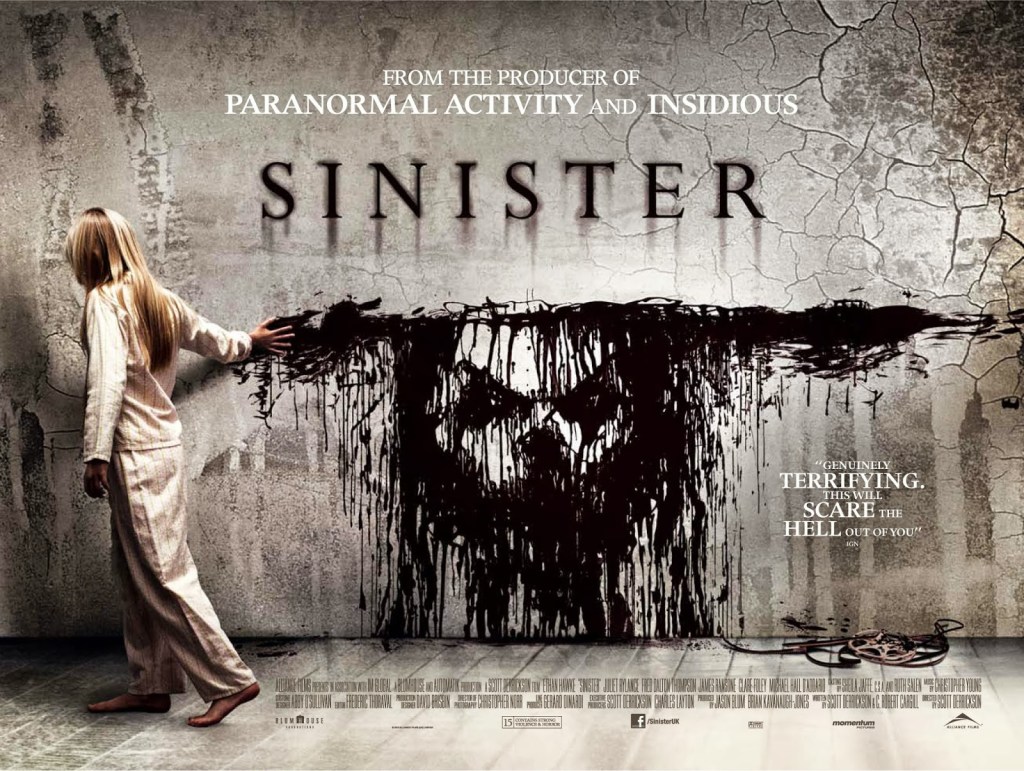
With these parameters in mind, Sinister (2012, dir. Scott Derrickson) topped the list in 2020 and again in 2023. In the most recent study, its viewers recorded an average heart rate of 86 bpm and a heart variance of 21%.
The fact that Sinister has been named scariest movie twice is definitely meaningful, but the movie has competition. Last year, Host (2020, dir. Rob Savage), with its Zoom-based horrors, took the top position. And this year – even though Sinister ranked first again and Host ranked second – Skinamarink (2022, dir. Kyle Edward Ball) came close. The average heart rate for Skinamarink was 84 (just two bpm lower than Sinister and four lower than Host) and the heart rate variance was 22% (1 percentage point higher than Sinister and four higher than Host), so it’s not far behind in the rankings.
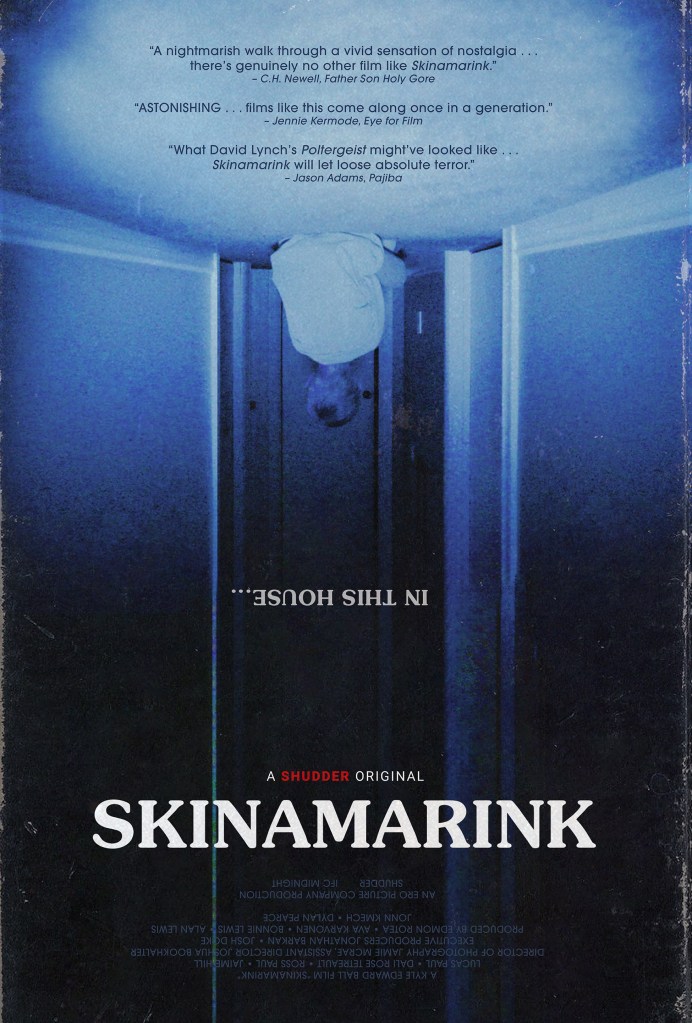
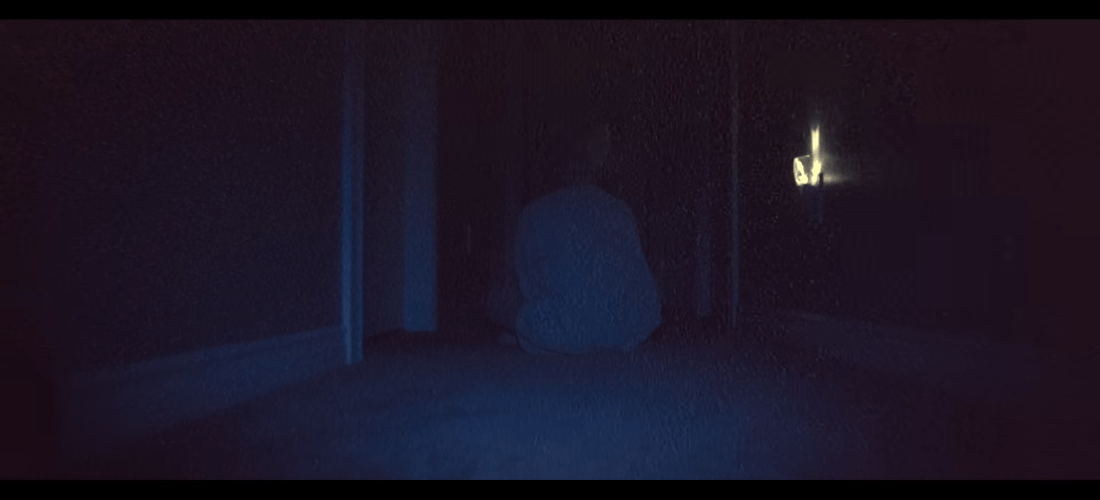
Skinamarink‘s high score is likely possible in part because of the change to the system, although it does include a good jump scare or two, since this movie is an exercise in extended tension and anxiety. The basic plot summary of Skinamarink is this (from IMdDb’s page): “Two children wake up in the middle of the night to find their father is missing, and all the windows and doors in their home have vanished.” This is the setup, and after we learn of these disappearances, virtually nothing actually happens for the movie’s hour and 40 minute runtime. So what is there to be scared of?
For me, the nothingness is itself the source of fear. As a horror fan, Skinamarink was the scariest movie I had seen in ages. It seems like a movie in which almost nothing happens would be boring (and it wasn’t not boring, I suppose), the lack of action intensified my fear. Lingering shots of dark corners, angles between ceilings and walls, children’s toys, and televisions left me uncertain about what would happen next. I watch a lot of horror movies, and I am generally pretty good at predicting what might happen. Not the details, necessarily, but the structure. When are jump scares likely to occur? When are we due for a major event? What kind of resolution is possible? Skinamarink refused to play by these rules, and so the dread just grew and grew because I had no idea what was coming – or when.
So what makes a movie scary? The Science of Scare’s study doesn’t actually answer that question. But my response to Skinamarink illustrates one type of fear that a horror movie can induce: fear of the unknown. Not knowing what will happen regularly induces fear in audiences as we wait to discover who the monster is or were threats are lurking. This movie took this even further; not even knowing what kinds of possibilities existed in this movie terrified me.
This is not solely captured by the metrics in the Science of Scare study, however. Scientific measurements can tell us something, and the Science of Scare study is fascinating and something I look forward to checking on every year around this time. But where science leaves off in its ability to measure emotions, the humanities take over.
I slept with the lights on after I watched Skinamarink. The corners in my bedroom just looked too much like the terrifying corners from the movie. That’s not something easily captured by numbers.
If you’re feeling brave or just want to get a better sense of the movie’s feel, check out the trailer below:
 The Novum
One thought on “Measuring Fear: What the Science of Scare Can – and Cannot – Tell Us”