Mary Witlacil is Assistant Professor of Political Science.
What’s your area of expertise? What do you primarily research and/or teach? And what drew you to this field?
As a Fine Arts Major during my undergraduate studies, I would find myself getting into impassioned political discussions with my art professor. At some point, he mentioned his love of political science. The next semester, I registered for my first American Politics class, and I was hooked. By the following Fall, I changed majors to Political Science. Then, after working outside of academia, I decided to return to graduate school to study the politics of climate change.
By training, I am an environmental political theorist, and I have broad expertise and interest in environmental politics and policy, critical theory, the politics of climate change, contemporary political theory, and international relations. It might sound peculiar to some, but I am fascinated by the study of politics.
My research draws on contemporary political thought and critical theory to consider how we cope with climate change and environmental injustice. I am curious about what it means for politics and what it means to be human during a moment of massive and catastrophic environmental change.
As a professor at SD Mines, I cover all the political science courses including American Political Issues, Political Ideologies, American Government, and Introduction to International Relations. Next semester I am excited to teach Environmental Law and Policy, and in the Fall of 2024, I look forward to teaching the Politics of Nature and Technology.
What’s one of your favorite courses, topics, or specific texts to teach? Why?
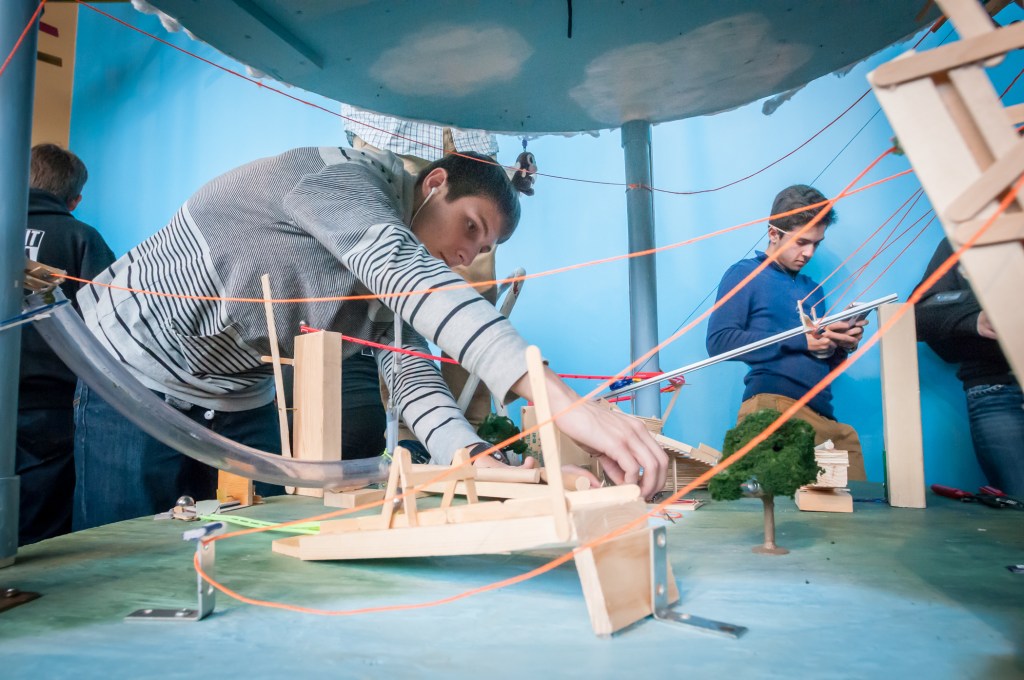
While I do not have a favorite course yet, I love teaching about political ideologies as well as the intersection between politics and the environment. This semester I have enjoyed watching students make connections between the functions (or dysfunctions) of American politics and more local or personal political issues. American politics is like a Rube Goldberg machine—or a chain-reaction machine designed to perform simple tasks in an absurdly indirect manner—where political institutions affect the functioning of the whole in bizarre and surprising ways. Whenever someone proposes or enacts a solution to a political problem, it alters and affects all the intermediary chain reactions, in a way that can be difficult to understand for years or decades. It has been fun to explore this conundrum with students.
What’s something you’ve done that you’re really proud of?
As a first-generation college graduate, I am proud to be not only the first person in my family to have earned a college degree, but the first to have earned a Master’s and a PhD.

Tell us about a book you’ve read recently, a movie you’ve seen recently, or another work of art or media you’ve engaged with recently that you really enjoyed and would like to recommend.
Outside of my reading pursuits for research, I love to read novels and poetry. Recently, I read (and loved) The Night Watchman by Louise Erdrich, which is a work of historical fiction that takes place in the 1950s. The story is set on the Turtle Mountain Reservation and follows several members of the Ojibwe Nation as they learn about and resist a US policy that would have ended federal recognition of Indigenous sovereignty. The book was inspired by Erdrich’s grandfather who resisted the Termination policies enacted by the US government in the middle of the 20th century, which aimed to assimilate Indigenous people into American culture and society.
Tell us something about yourself outside of work. What do you enjoy doing? What’s a detail about you that your students might not already know?
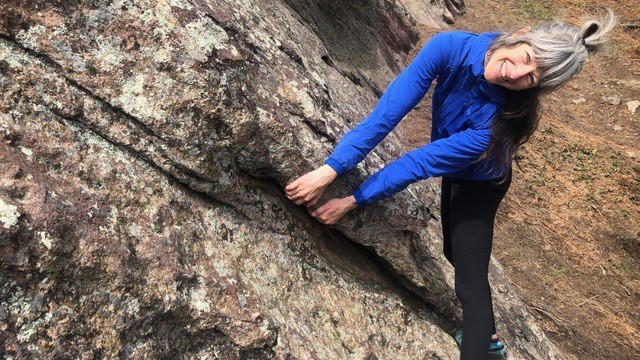
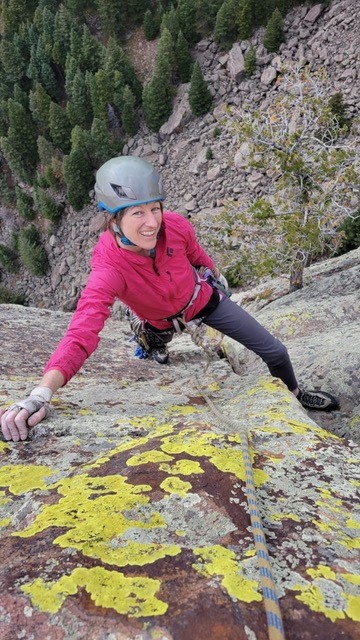
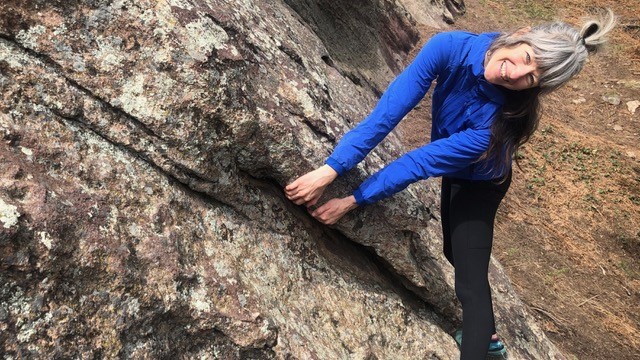
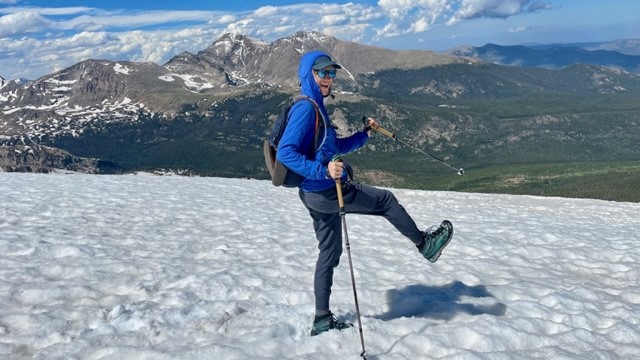
When I’m not nose-deep in a book, you’ll find me tromping around and climbing rocks in the back country. I have been lucky to climb rocks all over the American West. Some of my favorite places to climb include the High Sierras, Rocky Mountain National Park, Indian Creek, Zion, and Vedauwoo. Recently, I took a trip to the Tetons, where a friend and I climbed Mount Moran over two days via the Direct South Buttress and the South Ridge. I am beyond thrilled to explore the granite and limestone in the Black Hills.
 The Novum