Women in Science & Technology II: Medicine and Health

Women in STEM

For the second entry in our series on women in science and technology, we turn to women working on medicine and health. These women have forged new ground in medical education, done important work alongside men, and helped fill gaps in medical research by paying attention to women’s bodies.

The Edinburgh Seven – selected by Laura Kremmel

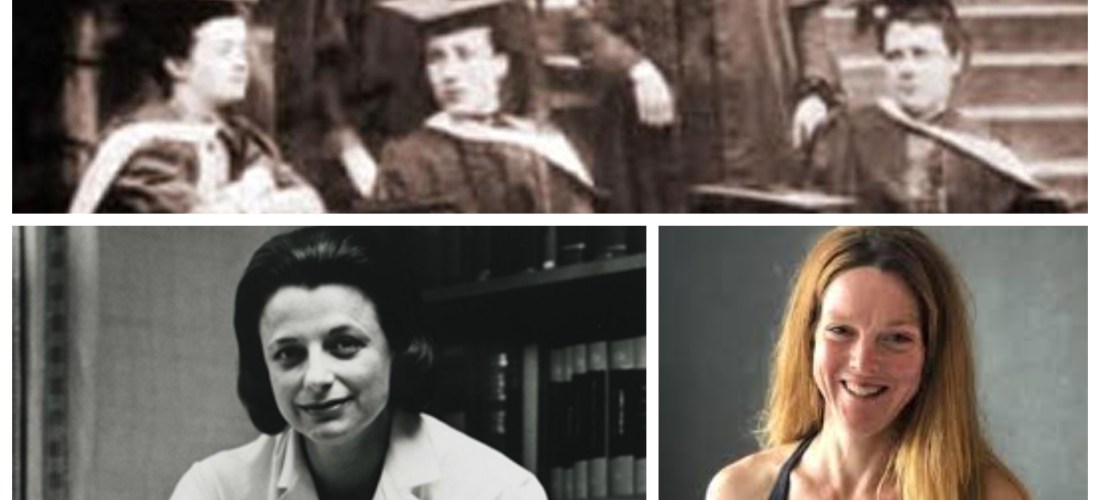
The Edinburgh Seven were not only the first women medical students in Britain, they were also the first British women to be undergraduates of any field. They included Sophia Jex-Blake, Mary Anderson, Emily Bovell, Matilda Chaplin, Helen Evans, Edith Pechey, and Isabel Thorne. After being admitted to the University of Edinburgh in 1869, they had to fight for every advancement, including assessments and clinicals, sometimes against the system and its policies and sometimes against their own professors and the men in their classes. The following year, building anger against the women culminated in the Surgeon’s Hall Riots, in which a hostile crowd of hundreds (and one sheep) attempted to prevent them from entering the building to take an exam. Despite their perseverance, they were ultimately denied their degrees. In response, they started the London School of Medicine for Women. Sophia Jex-Blake became the first woman doctor in Edinburgh, and the others continued to work in medicine in various ways.

The story of the Edinburgh Seven resurfaced in the public eye in 2019, when seven women medical students received posthumous degrees on their behalf, finally giving them the recognition for which they worked so hard. Learn more in this short video about the 2019 event.


Virginia E. Johnson – selected by Kayla Pritchard

When she was hired by gynecologist William Masters in 1970 to be his assistant in his sexology lab, their work dramatically shaped our understanding of human sexual response. As half of the “Masters and Johnson” duo, they studied the physiology and biomechanics of human sexual response, identifying what they called the “sexual response cycle,” a predictable pattern of Excitement, Plateau, Orgasm, and Resolution. Despite not having a college degree, Johnson was integral to the success of Masters’ lab. Because they were observing and measuring people actually have sex, it was Johnson’s soothing and comforting mannerisms that put people at ease and allowed the work to take place, and she also collaborated on the development of the instruments they were using. While their work is not without controversy, they fundamentally changed how researchers, doctors, and psychiatrists talked about and approached sex with their patients.

Stacy Sims – selected by Olivia Burgess
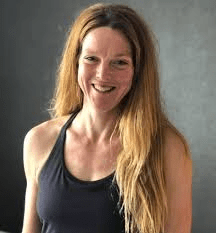
As someone with an interest in endurance sports, I’m always on the lookout for information related to nutrition, training, and health. However, most research takes a “shrink it and pink it” approach to women: take what you do for a man and then extrapolate it for a woman. Exercise physiologist and nutrition scientist Dr. Stacy Sims challenged that paradigm by researching how women’s training and nutrition needs are unique from men’s. As she says, “women are not small men.” She launched her own educational website and sports performance nutrition brand after serving as a research scientist at Stanford University from 2007-2012. In 2017, she was recognized as “one of the top 4 visionaries” in the outdoor sports industry by Outside Magazine

I consider her a scientist worthy of note for two main reasons: 1) she saw a gap in research related to women’s health and responded by researching women to understand women, and 2) she successfully balances her academic and scientific research with effective mainstream communication to educate women around the world. In 2016, she published Roar: How to Match Your Food and Fitness to Your Unique Female Physiology for Optimum Performance, Great Health, and a Strong, Lean Body for Life. She is currently a Senior Research Associate at Auckland University of Technology in New Zealand.

If you missed it, check out our first entry in this series, too!
Women in Science & Technology I: Making History

Women in STEM

Women have made many important and fascinating contributions to science and technology. When asked to name a woman scientist, however, too often the only woman people can think of is Marie Curie. She is of course a very important part of women’s history in science, but she’s only one of many women influencing science and engineering!

To celebrate Women’s History Month and help kick off the STS blog, this is the first of three posts about women in science & technology who are not Marie Curie. For this series, members of our STS faculty have chosen women in science and technology – both historical and contemporary – who they think are worth our attention. In this post, we share three women in science and technology who helped make history.

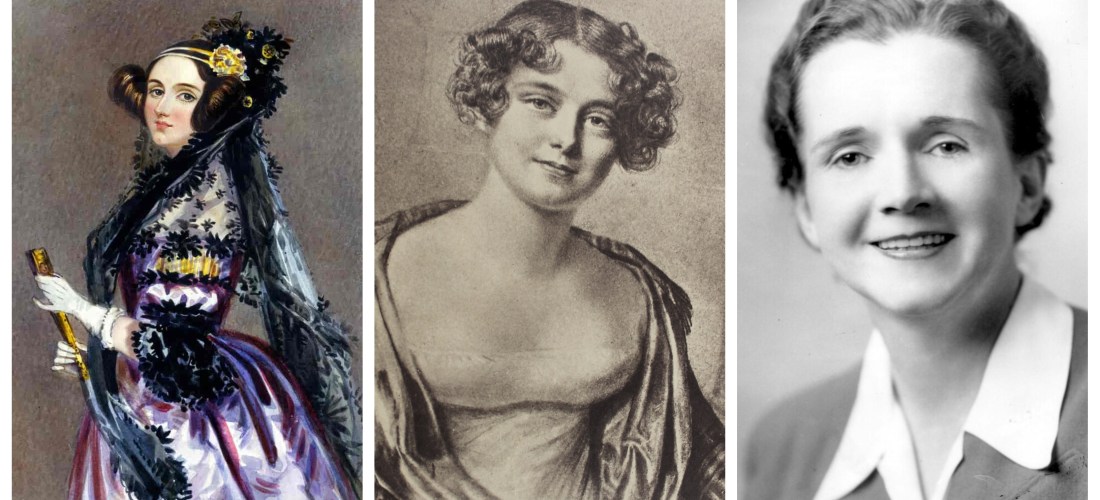
Ada Lovelace – selected by Erica Haugtvedt

Ada Lovelace wrote arguably the first computer program for Charles Babbage’s hypothetical mechanical computer, the “analytical engine.” She was the only legitimate daughter of George Gordon, Lord Byron, the famous Romantic poet, peer, and politician. Lovelace’s parents separated when she was an infant; the estrangement was bitter. Lovelace’s mother, herself considered a youthful prodigy in mathematics, committed herself to educating Lovelace in mathematics and science as an antidote against Byron’s poetic influence. Lovelace, however, remained attached to the legacy of her father and would not only name her two sons Byron and Gordon, but would request that she be buried next to her father upon her death. Lovelace rejected her mother’s opposition between mathematics and poetry. In her thirties, Lovelace wrote to her mother that if she couldn’t have poetry, could not she at least have a “poetical science.” That poetical science would be computer science. Lovelace’s experience of mathematics was laden with metaphor and intuition. She valued metaphysics equally to mathematics, seeing both as ways of exploring the “the unseen worlds around us.” Lovelace’s insight into the potentialities of mathematics beyond strict utility allowed her to translate Babbage’s invention into a vision of programming that anticipated what computing would become for the world. Lovelace died of uterine cancer at 36 years old.

Lady Jane Franklin – selected by John Dreyer

Born in 1791 to a British businessman, Lady Jane married her husband Sir John Franklin in 1828. With her husband as Governor in Tasmania she sponsored lectures on botany, science, and ethnography, often replacing the grand balls in the colony. She also was the driving force behind Tasmania’s first State College in 1840. Upon his return from Tasmania, Sir John was appointed to lead the final expedition to find the Northwest passage in the high Canadian Arctic in 1845. When the expedition failed to return, Lady Jane proved to be the force behind no less than seven expeditions to find her husband. Through sponsorship, influence and reward, she also backed numerous other searches, many by the Royal Navy. Through these backings, Lady Jane proved to be the force behind the geographical exploration of the Arctic regions. For this she was awarded the Founder’s Gold medal of the Royal Geographical Society in 1859. It was said about her “What the nation would not do, a woman did.”

Julia R. Pearce – selected by Bryce Tellmann

Julia R. Pearce was the first woman appointed to a United States Department of Agriculture Soil Survey team, in 1901. She reportedly created this opportunity for herself shortly after graduating from UC Berkeley by contacting the Secretary of Agriculture and telling him that she was willing to help fill the department’s shortage of skilled technicians. However, because her supervisor was uncomfortable with the idea of a woman doing fieldwork, she mainly worked as a map copyist. Shortly thereafter she transferred to Washington where she did laboratory work. Prior to this time, and for decades thereafter, women’s contributions to soil science in the United States often occurred in vital but unrecognized settings, assisting their husbands or maintaining maps and records.

Rachel Carson – selected by Christy Tidwell

“What is silencing the voices of spring in countless towns in America?” This question from the opening “Fable for Tomorrow” in Rachel Carson’s Silent Spring (1962) drew attention to DDT, other pesticides, and the poisoning of the US landscape. Carson’s Silent Spring is widely acknowledged as one inspiration for the 20th century environmental movement, contributing to the creation of the Environmental Protection Agency (1970) and the passage of the Clean Air Act (1970) and the Federal Water Pollution Control Act (1972). When the book was published, however, she was met with harsh criticism, despite her years of experience as a biologist and her academic training (a master’s in zoology and much work toward a PhD). Reviewers and readers reacted with obviously gendered dismissals, calling her “hysterically emphatic” and “emotional and one-sided,” for instance. One letter to The New Yorker (which published the original articles that became the book) wrote, “As for insects, isn’t it just like a woman to be scared to death of a few little bugs!” The dismissal of her as a scientist, naturalist, and writer continued until her early death from cancer in 1964.

Silent Spring is the most memorable part of Carson’s career, but her other writing is worth remembering, too: Under the Sea-Wind (1941), The Sea Around Us (1951), and The Edge of the Sea (1955). She loved the natural world and shared her love for it in her books and public appearances throughout her life. Her final book, The Sense of Wonder (published posthumously in 1965), emphasizes this. Based on a brief article published in Woman’s Home Companion, the book argues for the importance of sharing this kind of love with children.

Welcome to the Novum!

Uncategorized

We are excited to launch this site to share the ideas and accomplishments of faculty and students from the Science, Technology, and Society degree at South Dakota Mines. Check back soon for more content, including reflections on women in science and technology in honor of Women’s History Month, features on ethical issues related to STS topics, and posts about what some of our students are up to!

In the meantime, please explore the site and learn more about us, including our faculty and our courses.