By Maggie O’Connor
AI is technology that simulates human intelligence and possesses the ability to evolve based on its designated purpose. In the hospitality industry (including tourism, hotels, and restaurants), the use of AI is on the rise because of the greater efficiency compared to human employees. Artificial intelligence can’t steal from the cash register, doesn’t take sick days, and won’t leave a manager short-staffed. Business owners are interested in the switch to AI “employees” because they significantly save on labor costs, can communicate in every language, and perform menial tasks which allows for human employees to work larger tasks.
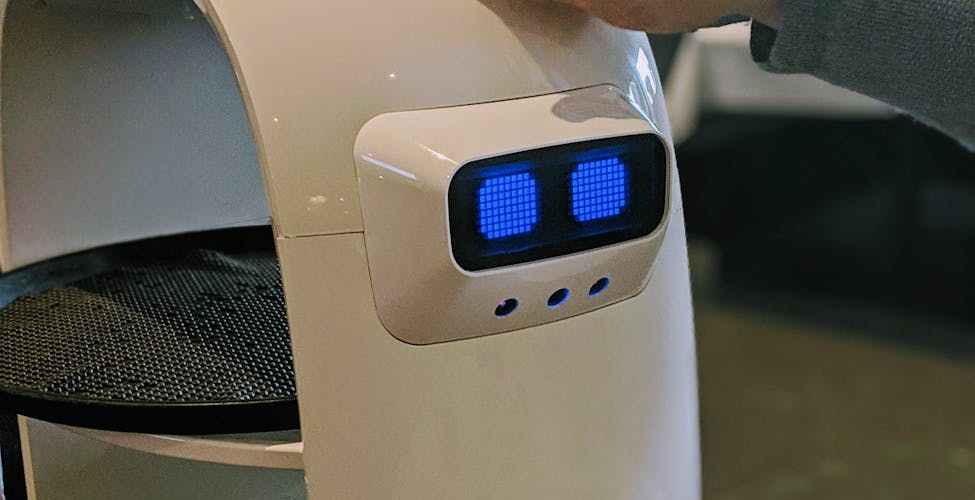
AI is currently in the hospitality industry through chatbots on websites and restaurants like one McDonalds in Texas. Some people, though, say that “feelings” jobs are not at risk, only “thinking” jobs are. “Feelings” jobs are those that require an understanding of human thought processes and resolving various situations if a customer is unsatisfied. “Thinking” jobs include making reservations or preparing food and beverages, which are repetitive and do not require emotion-based responses (Vorobeve, et al., 2022). To implement AI in hospitality, there are a few necessary steps. First, the technology must be purchased or rented. The initial startup cost is significant, which can potentially turn away business owners or push them to rent instead. Next, the business must adjust current staffing to accommodate the new “employees.” A decision must be made to move human employees into different roles or entirely let them go. It is projected that there will be twelve million job shifts by 2030 because of AI technology (Ellingrud et al., 2023).
There are many views on how the implementation of AI will change the hospitality industry. The CASA (Computers Are Social Actors) Theory suggests that “feelings” jobs are perhaps not safe from AI. This theory explains that computers, like AI, possess the technology to apply and follow social constructs to communicate effectively. CASA creates outlines for the social interactions; computers can “act” as humans and carry out conversations as such. Tests of the CASA theory demonstrate that computers, and AI, can be viewed as human by humans (Huang & Rust, 2020). Since CASA theory states that AI and other technologies do communicate as a human can, they are then able to proficiently work “feelings” jobs.

With varying opinions on how artificial intelligence will impact the hospitality industry, it is no wonder that employees in this field are worried about job security. One study found that over ten thousand workers feared losing their job to AI. The pandemic accelerated this shift with jobs becoming remote and fewer in-office jobs being filled, especially lower wage positions. AI can perform the tasks required in these lower wage positions, and the implementation process to do so is relatively simple. Acquire the needed technology and have the AI programmed to do X, Y, and Z on a repetitive basis. This is seen in restaurants with AI cooking food.
With AI, customers can experience communication in their native languages or shorter wait times. However, humans may face unemployment and job shifts. So, what’s next? As AI employees increase, what will happen to those working the “thinking” jobs? There are many unknowns, yet we know for a fact that AI is here to stay. My interest in this question is what drove my research question for the STS Capstone, What is AI, what is its role in the hospitality industry, and how is it affecting current and future employees?
Sources:
Ellingrud, K., Sanghvi, S., Dandona, G. S., Madgavkar, A., Chui, M., White, O., & Hasebe, P. (2023, July 26). Generative AI and the future of work in America. McKinsey & Company. https://www.mckinsey.com/mgi/our-research/generative-ai-and-the-future-of-work-inamerica#/
Huang, M. H., & Rust, R. T. (2020). Engaged to a robot? The role of AI in service. Journal of Service Research, 24(1), 30–41. https://doi.org/10.1177/1094670520902266
Vorobeva, D., El Fassi, Y., Costa Pinto, D., Hildebrand, D., Herter, M. M., & Mattila, A. S. (2022). Thinking skills don’t protect service workers from replacement by artificial intelligence. Journal of Service Research, 25(4), 601–613. https://doi.org/10.1177/10946705221104312
Maggie O’Connor is a Science, Technology, & Society major. I am both fascinated and concerned with the rise of artificial intelligence (AI). It’s everywhere: social media, customer service, and even self-driving cars. I am a Science, Technology, and Society (STS) student because of my interest in the Humanities and STEM. STS is the perfect mixture of both fields as it allows for me to understand STEM, while applying technical concepts to people and cultures. Artificial intelligence is a captivating topic in STS as it is a technical advancement that is rooting deeper into our daily lives.
 The Novum